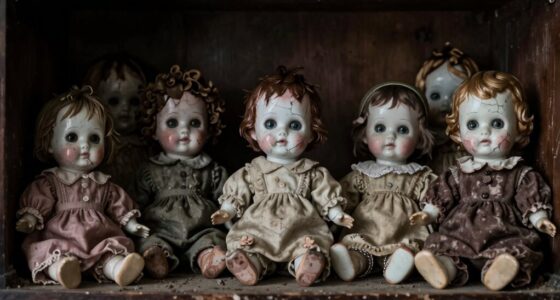
You’ll notice chupacabra showing up in Halloween imagery because its wild backstory and mythical origins make it a perfect fit for spooky season. Its mysterious legend, with stories of blood-draining creatures and sharp teeth, adds an eerie and mesmerizing element. Its folklore roots and creepy appearance turn it into a popular symbol of fear and fascination. If you want to explore more about this intriguing creature, keep going to uncover even more spooky secrets.

Get decor and gifts delivered free with Prime
- Fast, free delivery on millions of items
- Prime Video, Amazon Music and more included
- Member-only deals all year
Key Takeaways
- Its spooky, vampiric appearance aligns with Halloween costumes and decorations, enhancing its visual appeal during the season.
- The creature’s mysterious origins and folklore add an element of intrigue and fear fitting for Halloween storytelling.
- Chupacabra’s status as a cryptid embodies the supernatural, making it a perfect symbol for Halloween’s theme of the unknown.
- Its rise in urban legends and pop culture fuels its popularity as a Halloween icon and costume choice.
- The wild backstory and eerie reputation evoke curiosity and fear, making it an ideal character for Halloween festivities.

As Halloween approaches, the chupacabra has become a popular figure in spooky decorations and costumes, blending folklore with festive imagery. You’ve probably seen it on posters, masks, or even as part of haunted house themes. That’s no accident. The chupacabra’s rise in Halloween imagery ties directly to its roots in urban legends and cryptid folklore. It’s a creature that captures the imagination because of its mysterious origins and the wild stories that surround it. People love the idea of an unknown beast lurking in the shadows, and Halloween provides the perfect backdrop to bring that fear to life.
The chupacabra’s spooky appeal makes it a perfect Halloween symbol, blending mystery and folklore in festive decorations.
The story of the chupacabra started in the early 1990s, primarily in Puerto Rico, where farmers began reporting mysterious livestock deaths. These animals were drained of blood, and the creature was described as a strange, hairless, vampiric beast with sharp teeth and glowing eyes. Over time, tales of the chupacabra spread across Latin America and into the United States, transforming from local legends into a broader part of cryptid folklore. Its bizarre appearance and bloodsucking habits made it an ideal figure for spooky stories, especially in a holiday that celebrates the mysterious and the macabre.
What makes the chupacabra so compelling for Halloween is how it embodies the mysterious qualities of cryptid creatures—those elusive beings that defy scientific explanation. Unlike ghosts or zombies, cryptids like the chupacabra are rooted in urban legends, giving them a contemporary, almost real-world mystique. They’re the kind of stories that get passed around campfires or shared in online forums, fueling fears and fantasies alike. When you see the creature in Halloween imagery, it feels like part of this ongoing folklore—something that’s just slightly outside your understanding, yet undeniably intriguing.
The wild backstory of the chupacabra’s emergence feeds into its popularity during October. Its narrative is a mix of fear, curiosity, and a dash of the supernatural, making it a perfect symbol for the season. Halloween is all about embracing the unknown, and the chupacabra’s cryptid folklore makes it a fitting icon. It’s easy to see why it shows up in costumes and decorations—its eerie, otherworldly look and story-like origins make it a natural choice for those wanting to tap into the thrill of the mysterious. The creature’s presence in Halloween imagery isn’t just about scare tactics; it’s about celebrating the eerie stories that keep us captivated during this spooky season. Additionally, its cryptid origins contribute to its enduring appeal as a symbol of the unknown, engaging our curiosity about creatures that defy scientific explanation. Its ability to inspire both fear and fascination lies in its status as a mysterious creature, making it a perfect icon for Halloween festivities.
As an affiliate, we earn on qualifying purchases.
Frequently Asked Questions
When Was the First Reported Sighting of the Chupacabra?
The first reported sighting of the chupacabra was in 1995 in Puerto Rico. You might find it fascinating that this cryptid quickly became part of urban legends, fueling numerous cryptid sightings across the Americas. Its eerie reputation and mysterious origins make it a popular figure during Halloween, where it symbolizes fear and the unknown. Its story shows how urban legends can transform into cultural phenomena, especially around spooky seasons.
Are There Different Types of Chupacabras Worldwide?
Yes, there are different types of chupacabras worldwide, reflecting various cryptid classifications and cultural variations. In North America, the classic chupacabra is a reptilian creature with spines, while in Puerto Rico, reports describe a more dog-like creature. These differences show how local beliefs influence sightings. You’ll find that each region’s version echoes unique folklore, making the chupacabra a fascinating example of how cryptids adapt to cultural contexts.
How Has the Chupacabra Myth Evolved Over Time?
You might think the chupacabra’s myth has stayed static, but it’s actually evolved wildly. Originally rooted in cryptid origins from Puerto Rican folklore, it symbolized fear of the unknown. Over time, tales grew more elaborate, blending horror and humor, turning it into Halloween’s favorite monster. Its story now reflects changing fears and cultural symbolism, transforming from a mysterious beast into a pop culture icon that’s as adaptable as your costume ideas.
Is There Scientific Evidence Supporting the Chupacabra’s Existence?
You won’t find scientific evidence supporting the chupacabra’s existence, as cryptozoology debates often highlight, with many experts viewing it as folklore influenced by local legends and misidentified animals. Researchers haven’t documented verified specimens, and most sightings are debunked or attributed to animals like coyotes or dogs with mange. While the myth persists, the scientific community remains skeptical, emphasizing the chupacabra as a fascinating part of folklore rather than a confirmed creature.
Why Is the Chupacabra Associated With Horror and Folklore?
You see, the chupacabra’s association with horror and folklore stems from its role in cryptozoological folklore, where it embodies fear of the unknown. Its mysterious origins and frightening appearance make it a perfect symbol of cultural symbolism that captures imaginations during Halloween. The creature’s eerie reputation fuels stories and imagery that evoke suspense and terror, making it a compelling icon for celebrating fears and legends during this spooky season.
Conclusion
So, next time you see the chupacabra in Halloween decor, remember it’s more than just spooky fun. Some believe its appearance taps into deep fears of the unknown, making it a perfect symbol for the holiday’s thrill of mystery. Maybe, in a way, the creature’s wild backstory reminds us that our fears often stem from stories we’ve told ourselves—blurring the line between myth and reality, just like Halloween itself.
Halloween Picks
halloween
As an affiliate, we earn on qualifying purchases.