
The dark side of Christmas folklore reveals stories of witches, devils, and deal-makers rooted in ancient fears. You might hear about Krampus punishing naughty children or legends of spirits and demons symbolizing chaos and malevolence. These tales served to warn against making dangerous pacts or engaging with harmful spirits, reflecting societal concerns about moral conduct and supernatural threats. If you continue exploring, you’ll uncover more hidden truths behind these eerie traditions.
Key Takeaways
- Christmas folklore often includes dark figures like Krampus, punishing naughty children to enforce discipline.
- Witches and spirits appear in legends as malevolent beings involved in deals and curses during the holiday season.
- Many stories depict supernatural punishments, reflecting societal fears of chaos, malevolence, and moral failure.
- Ancient Yule customs and myths emphasize confronting winter fears through symbolic sacrifices and fire rituals.
- These darker elements reveal Christmas traditions rooted in ancient fears of spirits, chaos, and the consequences of making pacts with supernatural entities.
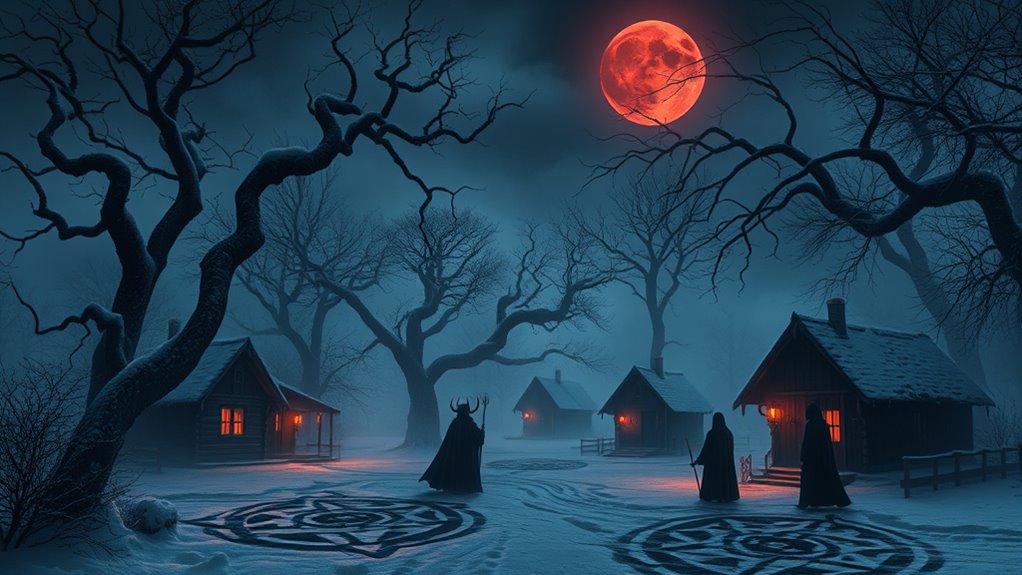
While Christmas is often celebrated as a joyful season filled with cheer and goodwill, its folklore harbors darker origins and stories that reveal a more sinister side. You might think of Santa Claus bringing gifts, but many traditions involve figures who punish, scare, or test people’s morality. Take Krampus traditions, for example. In Alpine regions, Krampus is a horned creature that accompanies Saint Nicholas, punishing naughty children rather than rewarding the well-behaved. His fearsome appearance with snarling teeth, chains, and switch in hand isn’t just for show; it’s rooted in ancient fears of punishment and chaos. During Krampusnacht, the night dedicated to him, townspeople dress as this demonic figure, parading through streets to remind children that misbehavior won’t go unnoticed. This tradition embodies the darker side of Christmas folklore, emphasizing discipline over mere celebration.
Similarly, Yule myths from Norse and Germanic traditions cast a shadow over the holiday season. Yule, originally a pagan winter festival, involved stories of gods, giants, and spirits engaging in battles that reflected the harshness of winter and the struggle for survival. These myths often featured witches and deal-makers who would craft spells or bargains to influence the natural world or manipulate human fate. You might not realize that many Christmas customs, like the burning of Yule logs or the symbolic sacrifices, stem from these ancient beliefs. It’s a reminder that Christmas’s roots lie deep in fears of darkness and chaos, rather than just joy and peace.
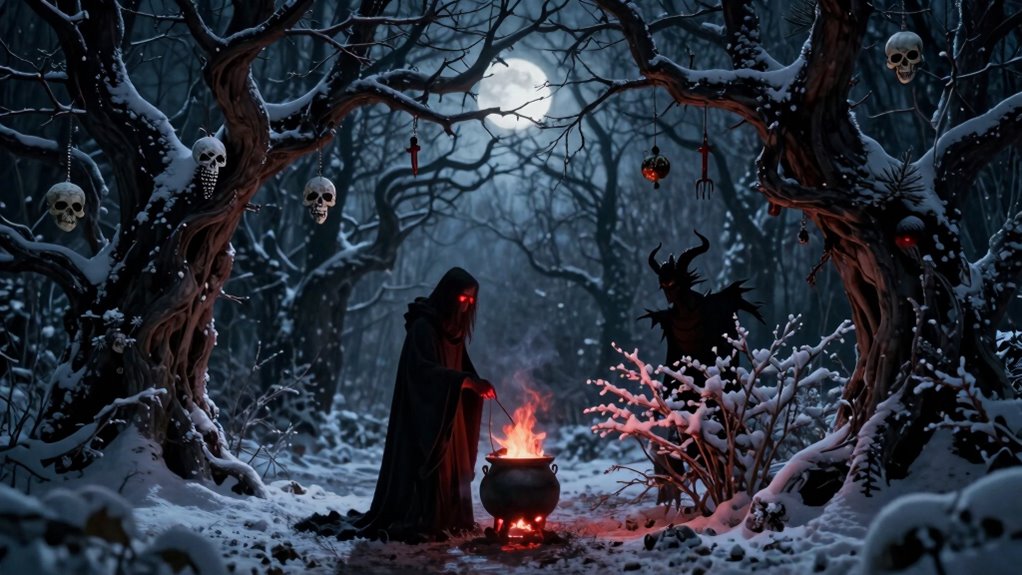
In these darker stories, witches were seen as powerful, sometimes malevolent beings who could cast spells or bargain with spirits. Deal-making with supernatural forces was a common theme, where humans sought favors or protection, often risking dire consequences. These stories served as warnings, reinforcing social norms through tales of those who made pacts with dangerous beings and paid the price. The folklore surrounding Christmas, thus, isn’t just about celebration; it’s about confronting fears—of punishment, of malevolent spirits, and of the unknown. Additionally, supernatural beings played a significant role in shaping these legends, often embodying the fears and anxieties of ancient societies regarding the natural and spiritual worlds.
Frequently Asked Questions
How Did Christmas Folklore Evolve to Include Sinister Characters?
You see, Christmas folklore evolved to include sinister characters because traditions like Santa’s origins merged with older pagan and folk beliefs. Gift-giving rituals, once linked to spirits and spirits of the dead, gradually incorporated figures like witches and devils to explain mischief or moral lessons. Over time, these characters added a darker layer, warning children to behave, blending festive joy with cautionary tales rooted in ancient fears.
Are There Historical Figures Behind Christmas Devil Legends?
You might say there’s more bark than bite behind Christmas devil legends. While no specific historical figures directly inspired these tales, Santa’s origins as a gift bringer evolved alongside legends of mischievous spirits and devils, blending folklore and cultural fears. These stories serve as cautionary tales, warning children to behave, and reflect societal anxieties more than actual historical figures. The devil figures symbolize chaos, making the legends a mirror of collective anxieties during festive times.
What Role Did Pagan Traditions Influence Christmas Dark Folklore?
Pagan traditions, especially those centered around winter solstice celebrations, heavily influenced Christmas dark folklore. You can see this in the way pagan rituals, like bonfires and gift-giving, merged with Christian practices. These customs often carried a darker tone, reflecting fears of spirits or malevolent forces during the longest nights. As a result, many Christmas legends incorporate elements from pagan winter festivals, blending light and darkness in their stories.
How Did Witches Become Associated With Christmas Myths?
Imagine witches as shadowy guardians of forgotten secrets, their image woven into Christmas myths through medieval superstitions. Over time, folklore transformations cast them as sinister figures lurking during winter, blending pagan fears with Christian narratives. You see, as stories evolved, witches became symbols of chaos and magic, fueling dark tales about holiday mischief and deals with the devil, deepening the folklore’s mysterious, ominous aura during Christmas.
Are There Modern-Day Celebrations Reflecting These Dark Traditions?
Yes, some modern celebrations incorporate dark traditions like Christmas Ghosts and Santa’s Naughty List, reflecting these old myths. You might see themed parties, haunted tours, or spooky events that echo the folklore’s sinister side. These festivities often celebrate the eerie and mysterious aspects of Christmas, blending fun with fright, and remind you of the darker history behind holiday legends. It’s a way to honor the folklore’s darker traditions in contemporary times.
Conclusion
As you’ve seen, Christmas folklore hides a darker side, filled with witches, devils, and deal-makers. Did you know that during the Middle Ages, accusations of witchcraft skyrocketed around winter festivals? It’s fascinating how these stories reflect fears and beliefs of the past. So next time you celebrate, remember there’s more lurking behind the tinsel and lights than you might have realized. Sometimes, uncovering history reveals a surprisingly sinister side to holiday traditions.