
The fear of dolls has roots in folklore and childhood anxieties, where lifelike features and uncanny qualities evoke unease. Stories of spirits trapped in dolls and legends of curses turn innocent toys into symbols of darkness. Over time, pop culture has amplified this fear with horror stories and movies showing dolls as possessed or haunted, fueling their creepy reputation. If you want to understand how this fear evolved, there’s more to uncover below.
Key Takeaways
- Folklore portrays dolls as vessels for spirits or cursed objects, fueling fears of possession and supernatural influence.
- Childhood anxieties stem from dolls’ uncanny, lifelike features that evoke unease and feelings of being watched.
- Horror narratives and urban legends depict dolls as malevolent or haunted, reinforcing their sinister reputation.
- Pop culture, including films and stories, popularized imagery of possessed dolls, expanding societal fears.
- The uncanny valley effect heightens discomfort with realistic dolls, blending fears of lifelessness and near-human appearance.
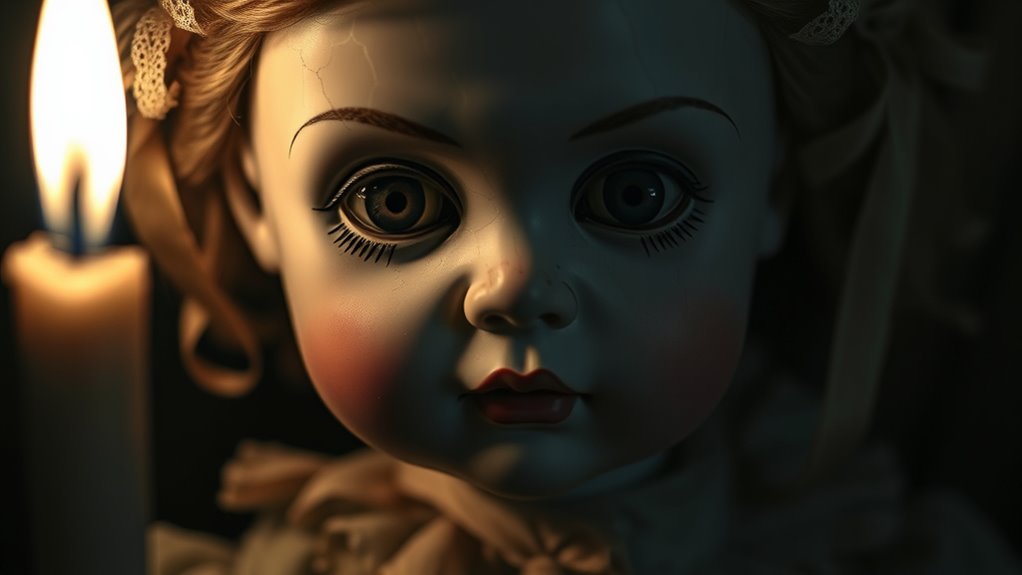
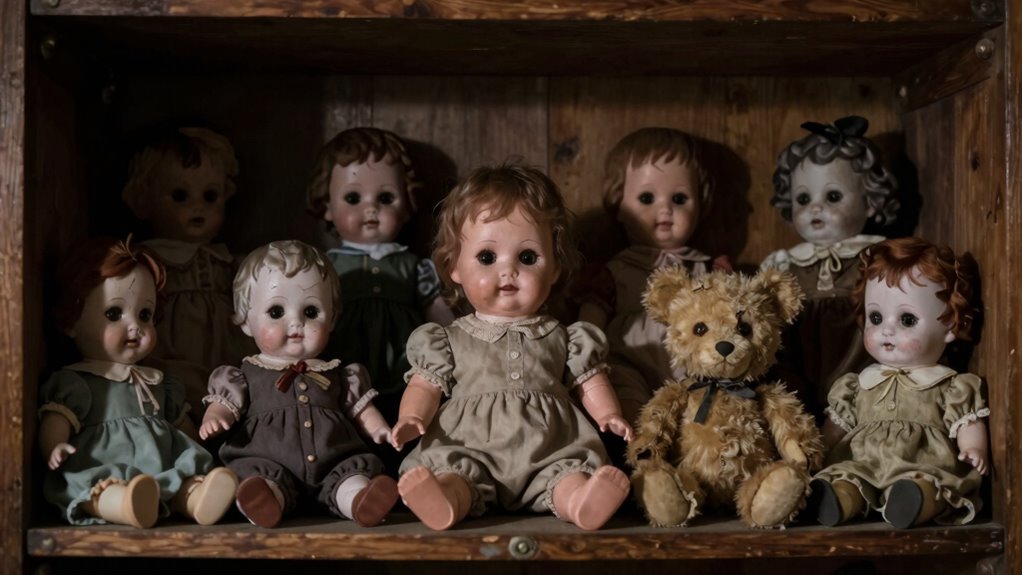
Throughout history, dolls have often been seen as innocent toys, but they also evoke fear and fascination in many people. This dual perception stems from haunting legends and childhood anxieties that have persisted across cultures and eras. Haunted legends about dolls often tell of spirits trapped within porcelain or cloth, creating stories that linger in collective memory. These tales aren’t just superstitions; they tap into deep-seated fears about the unknown and the uncontrollable. As children, many of us develop anxieties around dolls, perceiving them as silent witnesses or even malevolent beings lurking in shadows. These childhood fears aren’t baseless; they’re rooted in the uncanny qualities dolls possess—their lifelike eyes, rigid smiles, and the way they seem to stare even when nobody’s looking. Such features can trigger subconscious unease, turning innocent playthings into symbols of unease.
Over time, these childhood anxieties evolve, blending with cultural narratives and folklore that emphasize dolls’ sinister potential. Haunted legends often portray dolls as vessels for spirits, cursed objects, or cursed entities that enact revenge or serve as warnings. These stories serve to reinforce the idea that dolls are more than toys—they’re portals to the supernatural. Films, stories, and urban legends perpetuate this fear, making dolls appear as the perfect conduit for malevolent forces. The imagery of possessed dolls or dolls with a mind of their own has become a common trope in horror, further cementing their reputation as objects of dread. This evolution from folklore to pop culture has expanded the fear, transforming dolls into symbols of darkness and the uncanny.
A significant factor in this fear is the uncanny valley, where dolls that closely resemble humans can produce discomfort and eeriness, blurring the line between lifeless objects and living beings. Your own childhood fears might have included feeling watched by a doll or being unnerved by their overly realistic features. These anxieties, although often dismissed as childish imagination, are rooted in a natural human response to things that seem alive but lack life—what psychologists call the “uncanny valley.” When dolls resemble humans just enough to seem familiar but are slightly off, they create discomfort. This discomfort is amplified by haunted legends that portray dolls as cursed or haunted, blurring the lines between innocence and malevolence. As you grow older, these fears can morph into fascination, fueled by horror movies and stories that romanticize the creepy or supernatural qualities of dolls. Whether as symbols of childhood fears or as cultural icons of terror, dolls continue to evoke a complex mix of fear and intrigue that spans generations.

Haunted Hill Farm Life-Size Scary Poseable Talking Witch, Halloween Animatronic with Touch Activated Lights and Sound, Battery Operated Indoor or Covered Outdoor Halloween Decorations, Halloween Prop
Life-size Prop: This poseable witch is perfect for indoors or a covered outdoor area so you can display...
As an affiliate, we earn on qualifying purchases.
Frequently Asked Questions
How Do Cultural Differences Influence Doll-Related Fears Worldwide?
You’ll find that cultural differences shape your fears of dolls through specific cultural symbolism and regional superstitions. In some cultures, dolls symbolize spirits or ancestors, heightening fears of possession or harm. Others associate dolls with bad luck or evil, influencing your perception. These beliefs vary worldwide, so your fears are deeply rooted in local traditions and stories, making your reactions to dolls unique based on your cultural background.
Are There Scientific Explanations for the Fear of Dolls?
About 50% of people report some fear of dolls, which has scientific explanations rooted in neuroscientific insights and evolutionary explanations. Your brain may interpret dolls as unfamiliar or uncanny, triggering discomfort or fear. Evolutionarily, humans are wired to detect potential threats, and dolls with lifelike features can activate this response. These fears are natural, driven by your brain’s instinct to protect, even if the threat isn’t real.
How Has Media Portrayal Affected Public Perception of Dolls?
Media influence has profoundly shaped your perception of dolls, often portraying haunted imagery that fuels fear. Movies, TV shows, and horror stories emphasize creepy, sinister dolls, reinforcing their link to supernatural or malevolent forces. This constant exposure makes you more wary and anxious around dolls, as the media’s portrayal taps into deep-seated fears and amplifies the idea that dolls can be vessels for haunted or evil spirits.
Do Certain Types of Dolls Evoke More Fear Than Others?
Imagine a porcelain face staring blankly—certain dolls evoke more fear because of their cultural symbolism and personal associations. Creepy ventriloquist dolls and haunted-looking antique toys often tap into deep-rooted fears, making them feel more sinister. Their unsettling features or histories amplify unease, while modern dolls with friendly appearances usually feel less threatening. Ultimately, the type of doll and your personal memories shape how much fear they inspire.
What Psychological Factors Contribute to Doll Phobias?
You might fear dolls due to psychological factors like childhood trauma, which creates lasting negative associations. The uncanny valley effect makes dolls seem almost human but not quite, triggering discomfort or eeriness. Your brain struggles to distinguish between lifelike and artificial, amplifying fear. These factors combine to make certain dolls especially frightening, tapping into deep-seated anxieties rooted in past experiences and perceptual mismatches.

Haunted Hill Farm 7-Ft Animatronic Soul Harvester by Tekky, Halloween Animatronic, Spooky Prop & Party Decoration, Indoor & Covered Outdoor Creepy Witch Decor Motion-Activated Lights & Sound, LifeSize
Premium Lifesize Animatronic: Extension from top seller Soul Sucker - Frighten guests and trick-or-treaters with this premium quality...
As an affiliate, we earn on qualifying purchases.
Conclusion
So, next time you’re unnerved by a doll’s stare, remember it’s a centuries-old mix of folklore, fears, and pop culture. Ironically, the very objects we fear—innocent toys—are often the ones we’ve imbued with our deepest anxieties. Maybe the real scare isn’t the dolls themselves, but how easily our minds turn harmless objects into symbols of the uncanny. After all, it’s the fear of ourselves reflected in their glassy eyes that truly haunts us.

Gemmy 5'8 Tall Life Size Animated Sally Disney Halloween Prop
Dimensions: 70.08 in x 18.5 in x 19.68 in
As an affiliate, we earn on qualifying purchases.
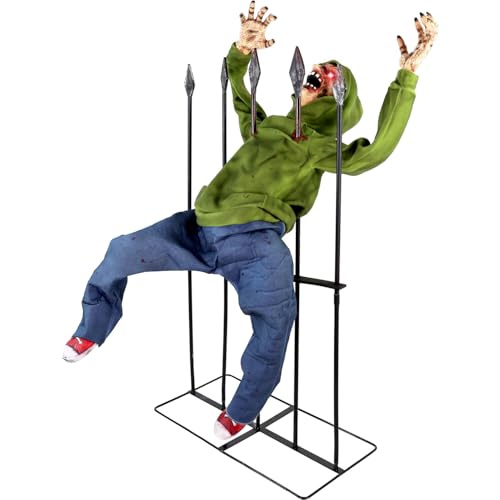
Haunted Hill Farm 4.4-Ft Animatronic Impaled Zombie, Halloween Animatronic, Creepy Party Decoration, Spooky Décor, Macabre Gift for Horror Movie Lovers, Voice-Activated Lights & Sound, Life-Size
Premium Life-Size Animatronic: Frighten guests and trick-or-treaters with this premium quality spine-chilling Halloween decoration
As an affiliate, we earn on qualifying purchases.