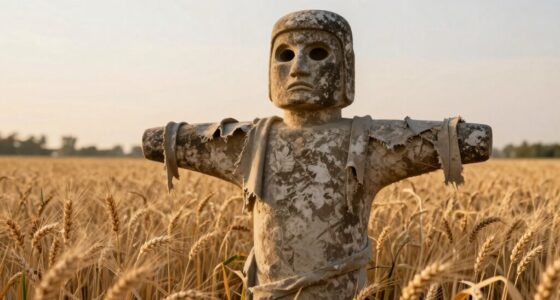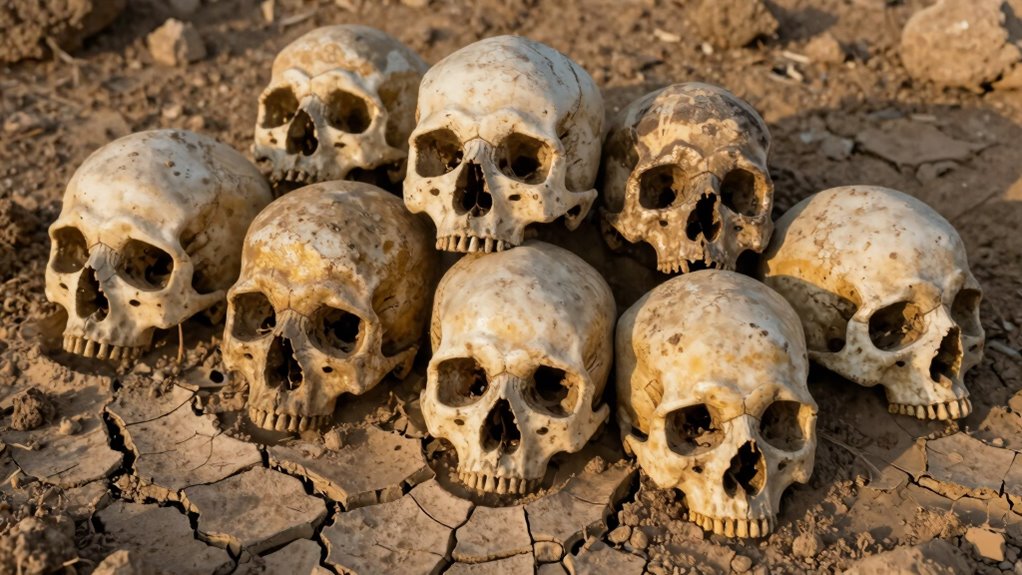

The origin of skull symbolism goes way back to ancient civilizations, long before Halloween or gothic art appeared. You might not realize that early societies used skulls in rituals, believing they held spiritual power, protected communities, or connected to ancestors and the afterlife. These practices showed a deep understanding of mortality and transformation. If you continue exploring, you’ll discover how deeply these ancient beliefs still influence modern symbols and customs today.

Get decor and gifts delivered free with Prime
- Fast, free delivery on millions of items
- Prime Video, Amazon Music and more included
- Member-only deals all year
Key Takeaways
- Skull symbolism predates Halloween and gothic art, dating back thousands of years in ancient civilizations.
- Early cultures used skulls in rituals to honor ancestors and invoke spiritual power.
- Archaeological finds show prehistoric humans arranged or decorated skulls long before written history.
- Skulls represented mortality, power, protection, and spiritual transformation across many ancient societies.
- The universal human tendency to confront death through skull symbolism has persisted for millennia.
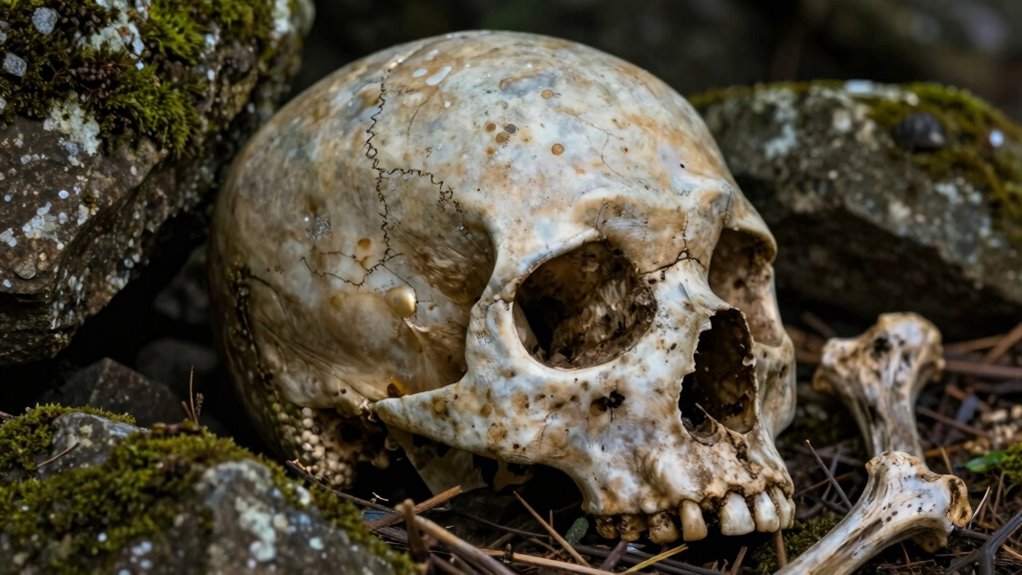
Have you ever wondered where the symbolism of skulls truly originated? You might think it’s a modern concept, tied to Halloween or gothic art, but skull imagery carries ancient roots that stretch back thousands of years. Long before contemporary culture adopted skulls for stylistic or macabre reasons, they held deep significance in various civilizations. Through archaeological discoveries, we’ve uncovered the earliest uses of skulls in ritualistic and symbolic contexts, revealing their importance in human history. These ancient symbols weren’t just decorative; they represented complex ideas like mortality, power, protection, and spiritual transformation.
In ancient symbolism, skulls often signified more than just death. Many early societies believed that the skull was a vessel of the soul or a key to the afterlife. Archaeological discoveries across different regions support this view, showing that skulls were often placed in specific locations or used in rituals meant to honor ancestors or invoke protective spirits. For example, some Neolithic cultures buried skulls with elaborate rituals, indicating that they saw these bones as holding significant spiritual energy. In certain cases, skulls were displayed prominently, possibly as a way to ward off evil or demonstrate dominance over enemies. These practices illuminate how deeply intertwined skulls were with notions of life, death, and spiritual power in ancient times. The symbolic significance of skulls in these cultures underscores their role as powerful tools for spiritual communication and societal identity. Additionally, the consistent appearance of skulls in many early rituals suggests that their symbolism was a universal aspect of human culture, reflecting shared concerns about mortality and the afterlife. Modern research into archaeological evidence continues to shed light on how widespread and enduring these beliefs were.
The earliest evidence of skull symbolism can be traced back to prehistoric times. Archaeologists have uncovered skulls that were carefully arranged or decorated, suggesting that humans were engaging with the concept of mortality well before written history. Such discoveries point to a universal human tendency to confront death through symbolism. In ancient cultures, the skull was often associated with ancestors, revered as a link to the past or as protectors in the spiritual realm. This reverence is evident in burial sites and ritual objects that incorporate skull motifs, underscoring their significance long before modern interpretations. These findings reveal that the early use of symbolism was a vital part of how humans sought to understand and influence their spiritual destiny.
Understanding the origins of skull symbolism offers a window into how ancient peoples perceived life and death. These symbols weren’t just morbid artifacts; they embodied complex beliefs about existence, spiritual power, and societal hierarchy. With each archaeological discovery, we get closer to grasping how ancient civilizations viewed mortality and the afterlife. So, when you see skull imagery today, remember it’s not just a modern trope but a symbol with roots that stretch back deep into human history—an enduring emblem of mortality, power, and transformation that predates many of our modern customs.
As an affiliate, we earn on qualifying purchases.
Frequently Asked Questions
Were Skulls Used as Tools in Ancient Civilizations?
Yes, in ancient civilizations, skulls were used as tools, especially in mystical rituals. You might not realize it, but skulls often appeared in artistic representations, symbolizing power or spiritual beliefs. People believed they held special significance, sometimes using them in ceremonies or as cutting tools. This practice shows how deeply skulls were intertwined with their culture, serving both practical and symbolic roles throughout history.
How Did Skull Symbolism Spread Across Different Cultures?
Like sparks flying from a fire, skull symbolism spread through cultures via trade routes, conquest, and storytelling. You see it in cultural symbolism and artistic representations worldwide, from Aztec skull carvings to European memento mori art. As people exchanged ideas and beliefs, skulls became symbols of mortality, power, or protection, transcending borders and evolving uniquely in each society. This interconnectedness fueled the universal fascination with skulls across history.
Are There Any Famous Historical Skulls With Mysterious Origins?
Yes, there are famous historical skulls with mysterious origins, like the Tzompantli skull racks from ancient Mesoamerica, which often feature mythical representations. These skulls spark archaeological controversies due to debates about their exact purposes and cultural significance. You might find yourself captivated by how such skulls blend myth, ritual, and history, revealing complex beliefs and practices that continue to intrigue researchers and enthusiasts alike.
What Materials Were Ancient Skulls Often Made From?
They say beauty is in the eye of the beholder, and ancient skulls reflect this truth. You’ll find that bone craftsmanship and artistic carvings often made up these relics. Materials like ivory, bone, and sometimes stone were used to create intricate designs, revealing their cultural significance. These materials were chosen for their durability and workability, allowing artisans to craft detailed, meaningful pieces that have survived thousands of years.
Do Skulls Have Spiritual Significance Beyond Death?
Skulls do have spiritual significance beyond death. You might see them as powerful symbols in various spiritual beliefs, representing protection, transformation, or ancestors’ spirits. Their symbolic meanings often reflect a connection to the divine or the cycle of life and death. When you encounter skull imagery, it can evoke reverence, remembrance, or a reminder of mortality, emphasizing their role as meaningful symbols in many cultural and spiritual traditions.
Conclusion
So, next time you see a skull, remember it’s more than a symbol—it’s a century-old artifact rooted in human history. Did you know that skulls have been found in over 80% of ancient burial sites worldwide? That means they’ve been a universal part of our story for thousands of years. Understanding their true origin reveals how deeply connected we are to our past, shaping who we are today. Isn’t it fascinating how much history is hidden in something so small?
Columbus Day / Indigenous Peoples' Day Picks
long weekend sales
As an affiliate, we earn on qualifying purchases.