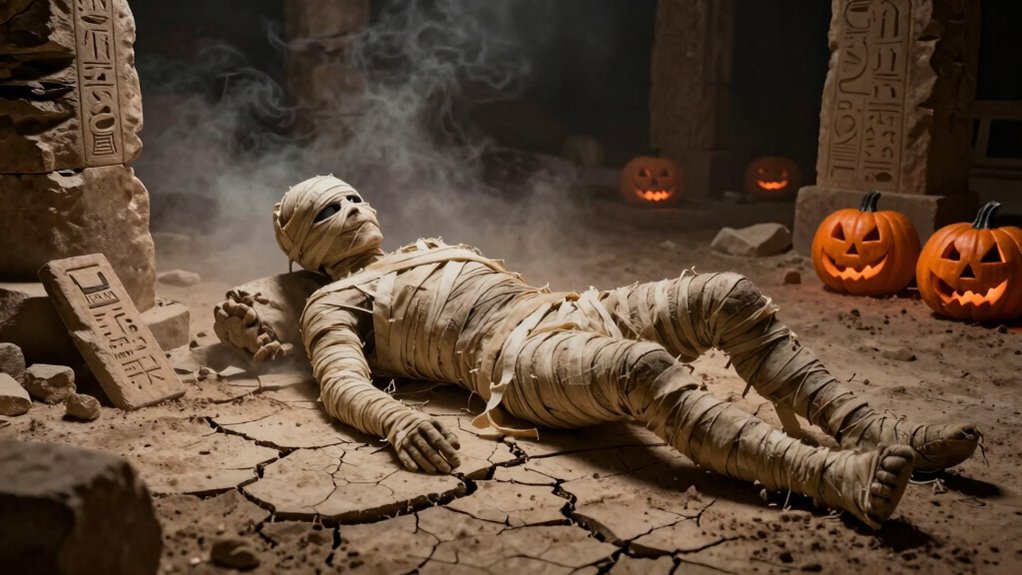

Mummy curses show up in Halloween imagery because ancient legends, sensational stories, and modern entertainment have turned tomb robbing and supernatural retribution into symbols of mystery and fear. People have long believed that disturbing sacred sites could invoke curses, adding an eerie thrill. Hollywood movies and spooky tales amplify these ideas, blending history and fiction to create a mesmerizing myth that’s perfect for Halloween. Want to uncover more of the wild backstory? Keep exploring!

Get decor and gifts delivered free with Prime
- Fast, free delivery on millions of items
- Prime Video, Amazon Music and more included
- Member-only deals all year
Key Takeaways
- Mummy curses are linked to ancient tombs and artifacts, which evoke mystery and fear, fitting Halloween’s spooky themes.
- Stories of curses originated from tomb robbers risking their lives to steal sacred relics.
- Hollywood movies popularized the curse myth, reinforcing its presence in Halloween imagery.
- Cultural perceptions of sacred tombs as cursed amplify the supernatural aura around mummies.
- The myth blends history and superstition, making curses a compelling element in Halloween storytelling.
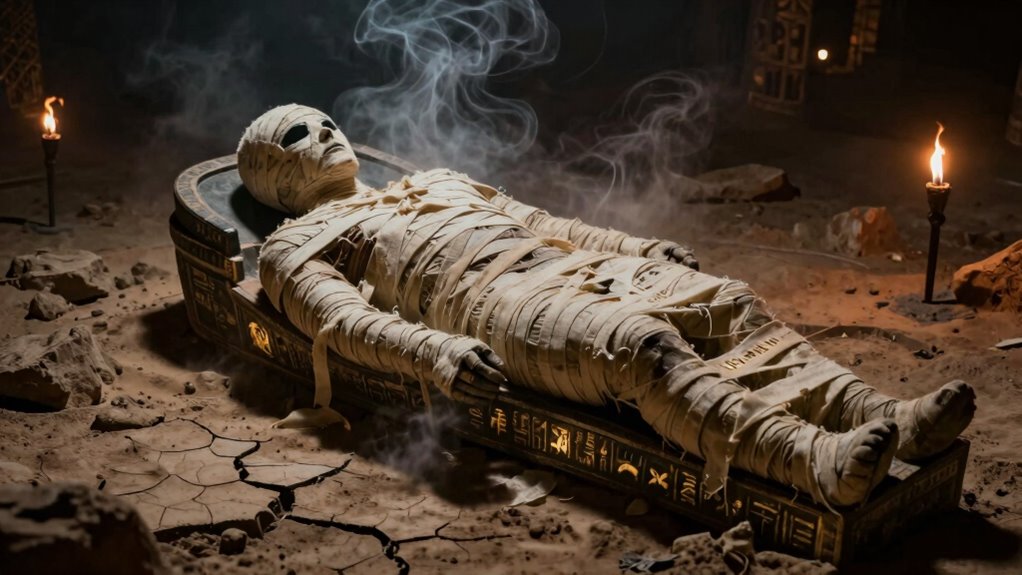
Every Halloween, images of mummies wrapped in bandages and haunted tombs flood our streets and screens, but behind these spooky visuals lies a long-standing myth: that disturbing a mummy’s tomb can release a curse. This idea has persisted for centuries, fueled by stories from ancient Egypt, where tomb robbers risked their lives to steal valuable artifacts. These ancient artifacts, often buried with the dead, were believed to hold magical powers or protect the soul in the afterlife. When modern explorers and treasure hunters disturbed these tombs, tales of curses began to circulate, reinforcing the idea that such acts could unleash supernatural retribution.
What’s interesting is how this myth has evolved into a core element of Halloween imagery. While the actual history of these curses is often exaggerated or misunderstood, it’s the allure of danger and mystery that captures our imagination. Hollywood movies and popular culture have perpetuated the idea that disturbing a mummy’s tomb results in deadly curses, but most archaeologists agree that these stories are largely modern misconceptions. The curses, if they ever existed, were probably exaggerated or even fabricated to discourage grave robbing or to elevate the importance of preserving cultural heritage. Interestingly, this blending of myth and history is also influenced by cultural perceptions of the significance of sacred sites and artifacts in ancient civilizations.
Despite the lack of concrete evidence, the myth persists because it taps into our universal fear of taboo and the unknown. When you see a mummy in a costume or haunted setting, it’s easy to connect it to centuries-old stories of curses that supposedly follow anyone who dares to disturb these ancient relics. The narrative is compelling because it combines history, superstition, and entertainment—creating a spooky aura around the tombs of Egypt’s past. The idea that a curse might be triggered by touching an ancient artifact resonates with our love for suspense and danger, making it a perfect theme for Halloween stories and imagery.
In reality, most ancient cultures, including the Egyptians, saw tombs and artifacts as sacred, but they didn’t necessarily believe curses would be unleashed by outsiders. Instead, the stories grew out of a mix of genuine reverence and human tendency to mythologize the unknown. Today, these myths have become a staple of Halloween, blending history with fiction. You’re drawn to the idea of curses because it adds an extra layer of thrill to the holiday, even if the truth behind it is far less sinister than legend suggests. The myth of mummy curses endures because it’s a captivating mix of ancient history, modern misconceptions, and the timeless appeal of the spooky and mysterious. Additionally, the fascination with curses is reinforced by the cultural significance placed on protecting sacred sites and artifacts in ancient civilizations.
As an affiliate, we earn on qualifying purchases.
Frequently Asked Questions
Are Mummy Curses Real or Just Legends?
Mummy curses are just legends, not real. They stem from superstition origins that fueled fears about ancient tombs and curses, but modern misconceptions have amplified these stories. Back in the day, people believed in curses to explain mysterious deaths, but there’s no scientific proof they exist. Today, these curses are more about storytelling and Halloween imagery than actual supernatural threats, making them fascinating myths rather than reality.
How Did Mummy Curses Become Popular in Pop Culture?
You see, mummy curses became popular in pop culture through a mix of fascination with ancient rituals and modern misconceptions. Films like “The Mummy” and stories about tombs ignited imaginations, blending fact and fiction. Hollywood amplified these tales, making curses seem more mysterious and terrifying. This combination of curiosity about ancient rituals and exaggerated stories fueled the spooky popularity of mummy curses in Halloween imagery.
What Are Some Famous Mummy Curses in History?
You might be familiar with the legend of King Tut’s curse, a famous mummy curse rooted in ancient rituals and tomb guardians. This curse allegedly caused the death of those who disturbed his tomb. Similarly, the curse of the “Black Pharaoh” in Egypt’s Valley of the Kings symbolizes the danger lurking within ancient tombs. These curses highlight the mysterious power of ancient rituals, guarding treasures and secrets for thousands of years.
Why Are Mummies Associated With Ancient Egyptian Curses?
You associate mummies with ancient Egyptian curses because of their rich history of ancient rituals and spiritual beliefs. Egyptians believed that disturbing a tomb could invoke divine punishment, so curses served as spiritual protections. These curses, often involving elaborate spells and warnings, fueled stories of vengeful spirits, making mummies symbols of mystery, danger, and the supernatural—perfect for Halloween imagery.
How Do Mummy Curses Influence Halloween Decorations?
You see mummy curses influence Halloween decorations by tapping into ancient rituals and supernatural fears. These curses evoke mysterious, eerie vibes that make tombs, mummies, and coffins perfect symbols for spooky setups. You might include images of cursed artifacts or hieroglyphs, which heighten the supernatural aspect. This connection to ancient rituals and supernatural fears creates a chilling atmosphere, making mummy curses a popular and effective theme for Halloween decor.
Conclusion
So, next time you see a mummy curse in Halloween decor, remember it’s more than just spooky fun—it’s a story steeped in history, mystery, and legend. It’s a reminder that beneath the wrappings lies a tale of ancient secrets, curses, and cultural fascination. It’s the thrill of the unknown, the allure of the past, and the power of storytelling. Embrace the mystery, enjoy the scare, and let the legend of the mummy curse add depth to your Halloween night.
Columbus Day / Indigenous Peoples' Day Picks
long weekend sales
As an affiliate, we earn on qualifying purchases.