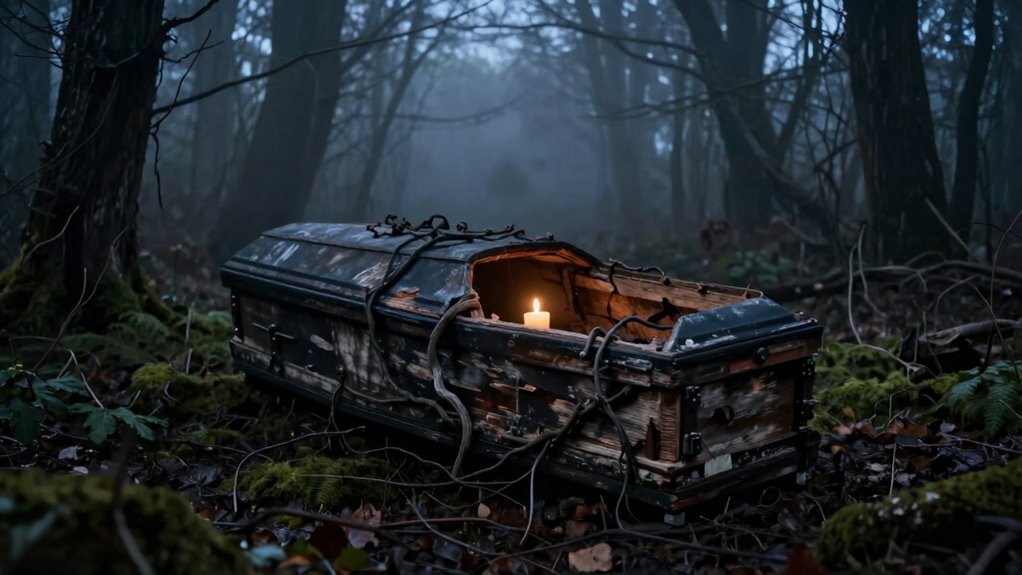

You might be surprised to learn that coffins originally served as respectful burial containers rooted in different cultural traditions. Over time, their design evolved from simple wooden boxes to ornate symbols of status and belief. Today, they’re transformed into spooky icons for Halloween, blending history with horror entertainment. Their dark symbolism now evokes fear and fascination, making them perfect for decorations and costumes. If you keep exploring, you’ll uncover how their meaning shifted from solemnity to playful fright.

Get decor and gifts delivered free with Prime
- Fast, free delivery on millions of items
- Prime Video, Amazon Music and more included
- Member-only deals all year
Key Takeaways
- Coffins evolved from respectful funeral containers to decorative, symbolic objects reflecting societal values and artistic trends.
- Gothic and horror motifs from coffin designs influenced Halloween decorations and horror media.
- Modern coffins blend tradition with playful, spooky elements, shifting from mourning to entertainment symbols.
- Cultural reinterpretation transforms coffins from symbols of death to icons of fear, humor, and curiosity.
- Their dual role highlights the transition from funeral practices to Halloween icons representing both respect and fright.

As Halloween approaches, coffins have become a striking symbol of the holiday’s spooky allure, transforming from somber burial containers to iconic props that evoke fear and fascination. You might see them everywhere—from haunted house decorations to costume accessories—and wonder how this dark image became so intertwined with a celebration that’s meant to be fun and spooky. The answer lies in the long history of funeral traditions and the evolution of coffin design, both of which have played a role in shaping how coffins are perceived today.
In traditional funeral practices, coffins served a serious purpose. They were crafted to honor the departed and respect cultural beliefs about death and the afterlife. Over centuries, funeral traditions varied widely across cultures, but the core purpose remained: providing a respectful resting place. Initially, coffins were simple wooden boxes, often handcrafted with care. As time went on, coffin design evolved to reflect societal values, technological advances, and artistic trends. Ornate carvings, elaborate metal fittings, and personalized motifs became common, turning coffins into symbols of status and reverence. This evolution made them more than just containers—they became expressions of identity, faith, and memory.
Coffins evolved from simple wooden boxes to symbols of status, faith, and personal expression across diverse cultural funeral traditions.
Fast forward to today, and you see how the design evolution of coffins has influenced their role outside funerals. Modern coffins are often designed with aesthetics in mind, incorporating themes that resonate with cultural interests—like horror motifs or gothic styles—perfect for Halloween. Their transformation from somber, functional objects to stylized props is driven by this rich history. The creepy, sometimes exaggerated coffin shapes we see in haunted houses or horror movies borrow from centuries of funeral art, but they also take on a new, playful meaning. It’s as if the dark symbolism of death has been reimagined and culturally adapted, becoming symbols of fear, thrill, or even humor. Additionally, the design evolution of coffins reflects changing societal attitudes toward mortality and entertainment, blending tradition with modern pop culture. This ongoing cultural reinterpretation has further cemented their status as versatile symbols, capable of both respecting tradition and entertaining modern audiences.
You can think of Halloween coffins as a kind of cultural reimagining—an evolution from their original funeral traditions into symbols of entertainment and fright. The design evolution of coffins has made them versatile, allowing them to serve as both respectful memorials and spooky icons. By understanding their history, you see how these dark containers have traveled from respectful burial practices to the centerpieces of Halloween décor. They evoke a mixture of fear, fascination, and curiosity, making them perfect for a holiday that celebrates all things eerie and macabre.
As an affiliate, we earn on qualifying purchases.
Frequently Asked Questions
When Did Coffins First Appear in Halloween Decorations?
Coffins first appeared in Halloween decorations in the early 20th century, especially as part of haunted house setups and spooky imagery. You might notice them during Halloween as props that evoke mystery and fear, helping to create a chilling atmosphere. Their inclusion grew popular as Halloween celebrations leaned into themes of death and the supernatural, making coffins a staple in spooky displays and haunted house attractions.
Are Coffins Used in Other Cultural Celebrations Besides Halloween?
You’ll find coffins used in cultural celebrations beyond Halloween, especially in festivals symbolizing death and rebirth, like Mexico’s Día de los Muertos. Coffin symbolism often represents shift or remembrance, shaping cultural perceptions of mortality. In some traditions, coffins appear in rituals or art, emphasizing respect for ancestors or confronting mortality. These uses highlight how coffins serve as powerful symbols, extending beyond Halloween’s spooky imagery into broader cultural contexts.
How Have Coffin Designs Evolved Over the Years?
You see coffin designs have evolved from simple wooden boxes to elaborate, Gothic-inspired structures that emphasize coffin symbolism. Modern coffins often feature intricate carvings, dark colors, and ornate details, reflecting Gothic aesthetics and a fascination with death’s mystery. This evolution highlights a shift from purely functional to artistic expressions of mortality, making coffins both a somber symbol and a cultural statement, especially during Halloween celebrations.
Do Coffin Symbols Have Different Meanings Worldwide?
Coffin symbols vary worldwide, reflecting different cultural symbolism and beliefs about death. In some cultures, they represent protection or shift, while in others, they symbolize mortality or danger. Artistic interpretations often adapt these symbols to convey complex emotions or social messages. You’ll find that across cultures, coffins serve not just as burial containers but as powerful symbols that communicate diverse ideas about life, death, and what lies beyond.
What Are the Origins of Coffins in Funeral Traditions?
You’re holding a piece of history that’s as old as civilization itself. Coffins originated from ancient burial rituals, where funeral customs aimed to honor the dead and protect the living. Early societies used simple wooden or stone containers, evolving over time into elaborate designs reflecting cultural beliefs. These burial rituals and coffin traditions symbolized respect, passage, and hope for an afterlife, shaping how we honor loved ones even today.
Conclusion
So, next time you see a coffin on Halloween, remember it’s more than just spooky decor. While it might seem like a simple costume or prop, it’s tied to centuries of history and symbolism. Some might think it’s morbid, but it’s really about honoring the mystery of life and death. Embrace the tradition, and you’ll see how coffins have transformed into a powerful, intriguing Halloween icon that sparks curiosity rather than fear.
Fall Picks
fall essentials
As an affiliate, we earn on qualifying purchases.