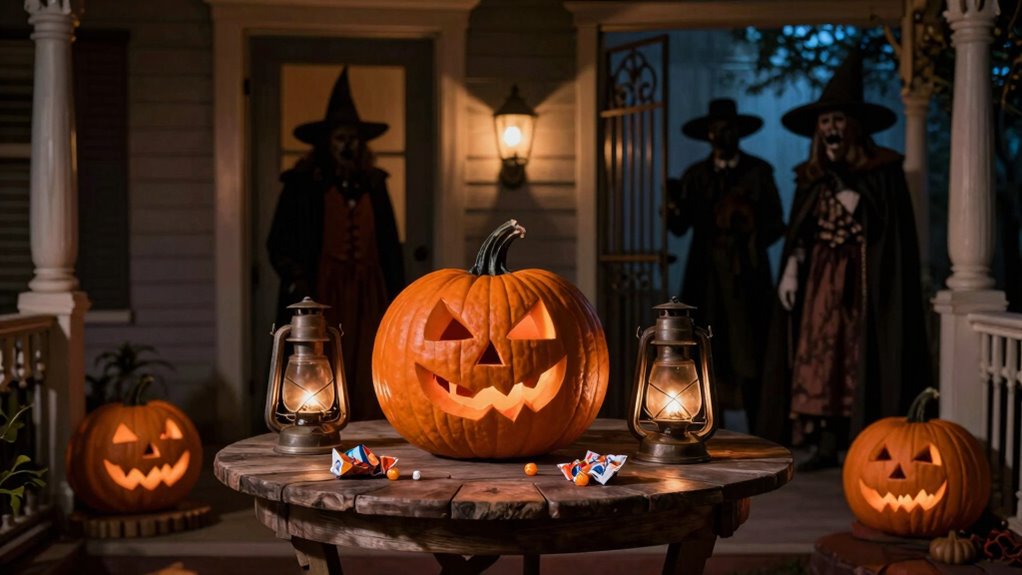

The “trick” in trick-or-treat actually comes from medieval times when neighbors exchanged gifts, often with playful threats of tricks if no treats were given. These harmless pranks, like small antics or warnings, were part of seasonal customs to entertain and bond communities. Over time, this tradition evolved into the modern idea of kids offering tricks in exchange for treats. Want to discover more about how these traditions came together? Keep exploring to find out.
Key Takeaways
- The “trick” in trick-or-treating originates from playful threats used historically to encourage giving treats.
- Medieval customs involved children threatening mischief if they did not receive offerings.
- These threats were intended as humorous, not malicious, fostering community bonding.
- The tradition evolved from these playful warnings into the modern “trick” component.
- The concept emphasizes fun and mischief, rooted in ancient practices of seasonal celebration.

Many people today enjoy dressing up in costumes and going door-to-door for candy on Halloween, but the tradition of trick-or-treating has roots that date back centuries. To truly understand the origins of the “trick” in trick-or-treat, you need to explore the history of Halloween customs and the playful mischief that once characterized the season. Halloween has long been a time for costumes, pranks, and community rituals, stretching back to ancient times when different cultures celebrated the harvest and honored the spirits of the dead. Over centuries, these customs evolved, blending pagan rituals with Christian traditions, creating a rich tapestry of Halloween festivities.
Back in Medieval times, communities engaged in various Halloween customs, many involving pranks and playful tricks. These medieval pranks often aimed to entertain or challenge neighbors, sometimes at their expense, by playing lighthearted tricks during the season. For example, in some regions, children and adults alike would carve turnips or gourds, then use them to play tricks on neighbors, such as leaving strange or humorous objects in their homes. These antics weren’t malicious but served as a way to celebrate the liminal period between seasons and to ward off evil spirits. The pranks were part of a broader tradition of community bonding, where humorous mischief was seen as a way to chase away the winter’s gloom and welcome the harvest season.
As time went on, these customs began to influence more organized forms of Halloween celebration. The practice of asking for treats, for instance, can be traced back to medieval England and Ireland, where people would leave food offerings or perform small tricks for their neighbors, expecting something in return. Over the centuries, these exchanges became more standardized, eventually morphing into the modern trick-or-treating we know today. The “trick” element, however, has roots in the playful threats or warnings used during medieval times, when children or pranksters might threaten to play a trick if they weren’t given a treat. This playful blackmail was more about fun than real malice, but it established the core idea that refusing treats could result in a humorous or harmless trick.
Frequently Asked Questions
When Did “Trick” First Become Associated With Halloween?
You’ll find that “trick” first became associated with Halloween in the early 20th century, around the 1920s and 1930s. During this time, children started engaging in costumed pranks and mischievous antics, often threatening to play tricks if they didn’t receive treats. This playful threat became linked to Halloween traditions, turning “trick” into a symbol of mischievous pranks, rather than serious threats, shaping modern trick-or-treating customs.
Are There Other Halloween Traditions Linked to Tricks?
You might notice other Halloween traditions linked to tricks, like costume contests and pumpkin carving. These activities often involve playful challenges or creative displays, encouraging participants to showcase their skills and win prizes. While not directly related to tricks, they embody the festive spirit of mischief and fun. So, if you’re into decorating pumpkins or dressing up, you’re engaging in traditions that celebrate Halloween’s playful and competitive side.
How Did the Phrase “Trick-Or-Treat” Evolve Over Time?
You probably wonder how “trick-or-treat” came to be. It started with children’s costumes evolving, making the tradition more playful and mysterious. As candy’s popularity skyrocketed, kids began demanding treats, turning the phrase into a fun challenge. Over time, “trick-or-treat” solidified as a call for sweets, blending costume magic with candy cravings. Today, it’s a ritual that keeps kids guessing and adults indulging in spooky delight.
Did Different Cultures Have Similar Halloween Practices?
Yes, different cultures have similar Halloween practices, reflecting diverse cultural practices and international customs. You’ll find countries like Mexico celebrating Dia de los Muertos with colorful altars, while Ireland and Scotland observe Samhain with bonfires and costumes. These traditions share themes of honoring ancestors and marking seasonal change. By exploring global customs, you see how communities worldwide embrace unique ways to celebrate and connect during this festive season.
What Are Some Modern Variations of the Trick-Or-Treat Tradition?
You can enjoy modern twists like costume contests, where you compete for the best outfit, or visit haunted houses to get spooked. Some neighborhoods organize themed trick-or-treat routes, making it more interactive. Others host community events with scare zones, comedy shows, and prizes. These variations keep the tradition fresh and exciting, blending classic door-to-door candy gathering with fun activities that appeal to all ages.
Conclusion
So, next time you ring a doorbell on Halloween, remember you’re not just asking for candy—you’re part of a centuries-old dance, like a shadow from the past. The true origin of “trick” isn’t what you thought; it’s a reminder that beneath every tradition, there’s a story waiting to be uncovered. Embrace the mystery, and let Halloween’s history add an extra layer of magic to your night. After all, isn’t every trick hiding a story worth telling?