In spring, the fair folk come alive, and their tricks can be far from cute. While many see spring’s beauty and blooming flowers, folklore warns you that these mischievous beings might cause illusions, hide objects, or even lure you away. Their pranks can escalate into real danger if you disrespect their domain. Paying attention to unusual natural signs might reveal their presence—hidden risks hide beneath the season’s charm. If you want to uncover more about their true nature, keep exploring.
Key Takeaways
- Spring’s fair folk are mischievous and unpredictable, often engaging in harmless pranks that can escalate into danger.
- Folklore warns that disrespecting fair folk domains during spring may lead to kidnapping or entrapment.
- Their illusions can cause confusion and fear, making encounters potentially perilous rather than charming.
- Springtime signs of fair folk activity include unnatural blooms and mysterious laughter, indicating hidden risks.
- While often depicted as enchanting, fair folk’s pranks serve as cautionary tales about respecting their realm.
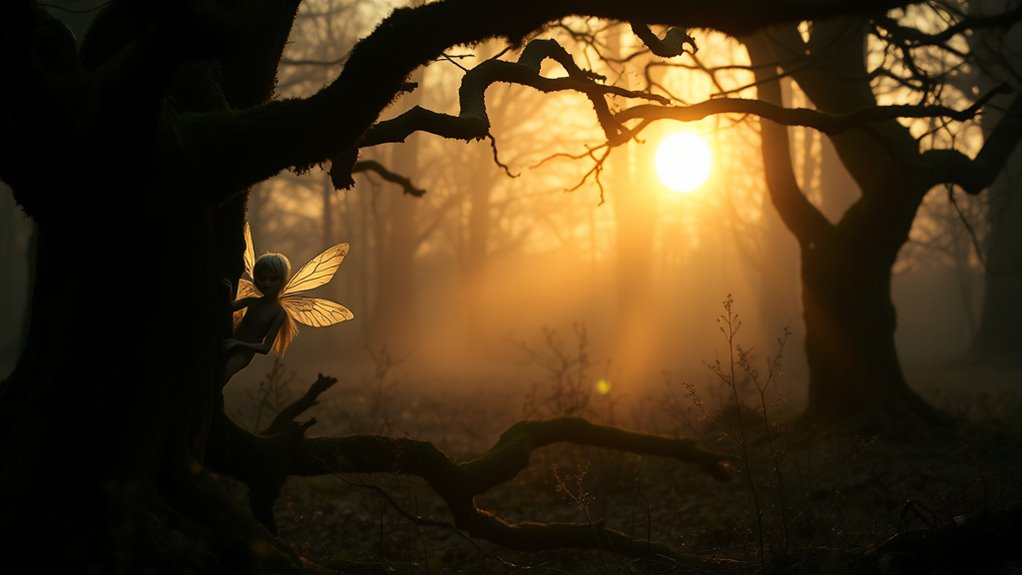
Have you ever wondered if the enchanting fair folk truly come alive during springtime? It’s a tempting thought—when nature blooms and the world feels fresh and vibrant, it’s easy to believe that tiny, magical beings are stirring from their slumber. But folklore warns that not all aspects of the fair folk are as charming as they seem. During spring, these mysterious entities are said to be especially active, playing mischievous pranks on humans who wander too close to their hidden domains. They might tie shoelaces together, hide objects, or cause strange illusions that lead you astray. While some see these acts as harmless tricks, others warn that beneath their playful exterior lie hidden dangers. The fair folk, according to legend, are unpredictable; their pranks can escalate from mere annoyance to something more sinister if they feel slighted or misunderstood. European folklore often depicts these beings as both enchanting and perilous, emphasizing the dual nature of their presence. Springtime, with its blossoming trees and longer daylight hours, creates perfect cover for their activities. You might find yourself walking through a forest and suddenly notice a flower blooming in an impossible place or hear laughter echoing in the distance. These signs are often dismissed as natural sounds or coincidences, but folklore suggests they’re clues that the fair folk are nearby, watching and waiting. Sometimes, their tricks serve a purpose—perhaps as warnings or tests—but more often, they’re simply mischief. It’s vital to stay alert and respectful, especially during spring, when they’re most active. Ignoring their presence or disrespecting their domain could lead to real trouble, as the stories warn of hidden dangers lurking behind their playful facade. Many tales recount humans who got too comfortable or careless around the fair folk, only to find themselves ensnared in confusing situations or lost in unfamiliar woods, unable to find their way back. Their pranks aren’t always harmless; they can manipulate perceptions, causing confusion or fear. Some stories even tell of fair folk who take people away, especially children, as part of their mysterious rituals. Such tales serve as cautionary warnings, emphasizing that spring is not just a season of renewal but also a time when the veil between worlds thins, and the mischievous pranks of the fair folk can turn dangerous if you’re not cautious. So, as spring awakens the world around you, remember that beneath its beauty lies an enchanting yet unpredictable domain where mischief and hidden dangers dance side by side.
Frequently Asked Questions
Are Springtime Fair Folk Dangerous to Humans?
Yes, springtime fair folk can be dangerous to humans. They’re known for mythical mischief and might play tricks or lead you astray if you encounter them during seasonal warnings. While they’re often portrayed as charming, don’t underestimate their power. Approaching them with caution is wise, especially in folklore that emphasizes their unpredictable nature. Respect their boundaries, and avoid provoking them, to stay safe from potential harm.
How Do You Recognize a Fair Folk in Spring?
You recognize a fair folk in spring through seasonal disguises, like blooming flowers or shimmering light that feels otherworldly. Look for fairy sighting signs such as sudden whispers, flickering shadows, or flickering reflections. They often blend into the season’s natural beauty, but you might notice an unnatural stillness or an inexplicable feeling of being watched. Trust your instincts—these signs can help you identify their presence.
Do Fair Folk Have Specific Seasonal Behaviors?
You sense it when the fair folk shift with seasonal transformations, their folkloric symbolism shifting too. In spring, they emerge more lively, playful, perhaps even mischievous, blending into blooming landscapes. As seasons change, their behaviors darken or soften, reflecting nature’s cycles. You might notice subtle signs—whispered rumors, fleeting shadows—that reveal their seasonal moods. Pay close attention; these creatures respond to nature’s rhythm, revealing their true nature through seasonal shifts.
Are There Any Cultural Variations in Springtime Fairy Legends?
You’ll find that springtime fairy legends vary widely across cultures, reflecting unique cultural symbolism and seasonal myth variations. In some traditions, fair folk herald renewal and fertility, while in others, they serve as cautionary spirits. These differences highlight how cultural beliefs shape fairy lore, emphasizing themes like protection, trickery, or transformation. Exploring these variations reveals how seasonal myths adapt to local histories, environments, and societal values, making fairy legends rich and diverse worldwide.
Can Fair Folk Be Appeased or Placated?
You can often appease fair folk through respectful human interaction rooted in folklore symbolism, but success isn’t guaranteed—about 60% of tales suggest offerings or respectful gestures can influence their behavior. Fair folk are complex, embodying both trickery and benevolence, so understanding their symbolism helps you navigate interactions carefully. Approaching them with sincerity and respect may sometimes lead to better outcomes, though caution remains essential—these beings aren’t always predictable or forgiving.
Conclusion
So, next time you hear about the fair folk, remember they’re not always gentle, not always kind. They can be mysterious, mischievous, even menacing. They hide in the beauty of spring, yet they carry shadows of danger. Respect their power, respect their secrets, respect their stories. Because sometimes, beneath the charm, lies a warning. And in the world of folklore, not all fairy tales are sweet, and not all legends are safe.