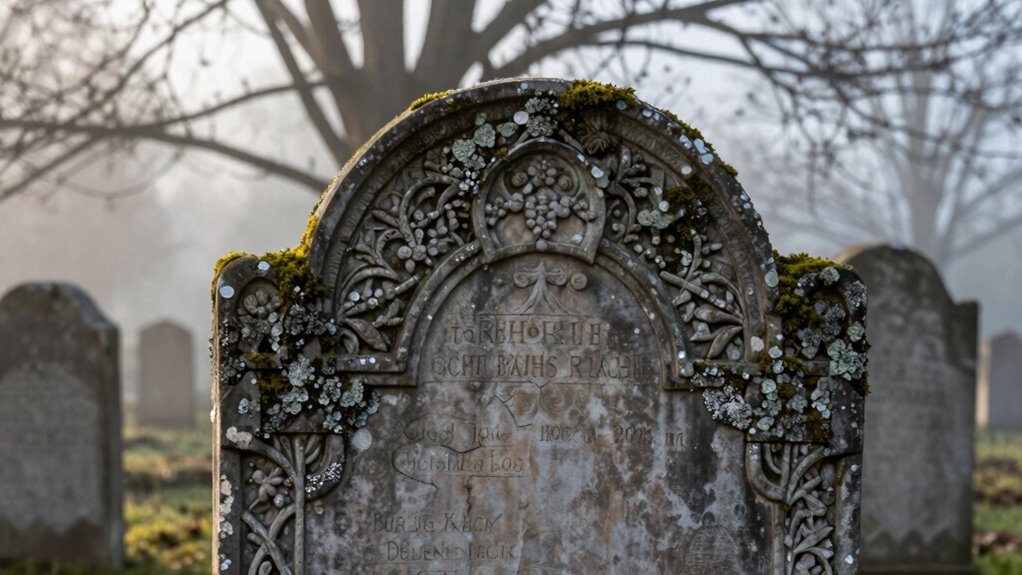

Many people think tombstones are just markers for death, but their true meaning is much richer. They carry symbols that tell stories about loved ones, beliefs, and cultural traditions. These symbols foster respect, preserve heritage, and reflect community values across generations. By understanding what these symbols mean, you can appreciate the deeper significance behind each monument. Keep exploring to discover how these symbols connect us to history, culture, and shared memories in ways you might never have considered.

Get decor and gifts delivered free — and shop member deals
- Fast, free delivery on millions of items
- Access to Prime Big Deal Days deals on October 6–7
- Prime Video, Amazon Music and more included
Key Takeaways
- Tombstones symbolize more than death markers; they reflect cultural beliefs, values, and personal stories.
- Carved symbols convey meaningful messages about faith, peace, and community traditions.
- They serve as cultural storytelling devices, preserving heritage and collective memories across generations.
- Recognizing tombstone symbols deepens understanding of diverse mourning customs and cultural identities.
- Tombstones are complex symbols of respect, legacy, and cultural heritage, not just simple grave identifiers.

Many people believe that tombstones serve solely as markers of death, but this is a common myth. While they do mark where someone is buried, tombstones carry much deeper significance rooted in grave symbolism and cultural interpretations. Instead of just being somber stones, they often embody respect, memory, and cultural values. You might not realize it, but the symbols carved into a tombstone can tell stories about the person, their beliefs, and the community’s traditions. For example, a cross on a grave reflects religious faith, while a dove might symbolize peace or the soul’s ascent to heaven. These symbols aren’t random; they’re deliberate choices that convey meaning, offering comfort and understanding to the living and honoring the deceased’s identity. grave symbolism also plays a crucial role in how communities express their collective values and beliefs about mortality. Recognizing these symbols can deepen our appreciation for cultural memorial practices and their significance. Moreover, understanding the cultural significance of symbols can foster greater respect for diverse ways of honoring loved ones across different societies. Interestingly, symbolic meanings are often passed down through generations, reinforcing cultural identities and shared histories. Additionally, these symbols can serve as a form of storytelling that preserves a community’s heritage over centuries.
tombstone symbol interpretation guide
As an affiliate, we earn on qualifying purchases.
As an affiliate, we earn on qualifying purchases.
Frequently Asked Questions
Are Tombstone Myths Based on Historical Facts or Folklore?
Tombstone myths are mostly rooted in folklore rather than historical facts. You’ll find that funeral customs and cemetery art often influence these legends, creating stories that evolve over time. These myths may reflect cultural beliefs or superstitions associated with tombstones, but they don’t usually have a factual basis. Instead, they serve to preserve traditions and add a layer of mystery to cemetery traditions, making the stories more engaging.
How Did the Myth About Tombstones Originate?
You might find that the myth about tombstones originated from early cemetery traditions and memorial customs, where people believed that inscribed stones could trap spirits or serve as curses. Over time, these beliefs blended with folklore, creating stories that emphasized danger or superstition around tombstones. As a result, many legends grew, often exaggerating the significance of memorial customs and cementing the myth’s place in popular culture.
Do Tombstone Symbols Have Universally Agreed Meanings?
You see the engraved symbols on tombstones—do they have universal meanings? Not really. Funeral customs and cultural symbolism vary widely across traditions, so a symbol like a lamb might represent innocence in one culture, but peace in another. You can’t assume a symbol’s meaning applies everywhere; instead, explore its specific cultural context to truly understand its significance. Each symbol tells a story rooted in unique beliefs and customs.
Can Tombstone Inscriptions Be Misleading or Misinterpreted?
Tombstone inscriptions can be misleading or misinterpreted, especially because graveyard traditions and memorial symbolism vary widely. You might see symbols or wording that seem straightforward but hold deeper, sometimes personal or cultural, meanings. It’s important to understand that memorial symbolism often reflects individual or family beliefs, which can differ from common interpretations. So, don’t assume you fully understand a tombstone’s message without considering its context and the traditions behind it.
How Do Modern Practices Challenge Traditional Tombstone Legends?
Modern practices dramatically challenge traditional tombstone legends, turning them upside down like a whirlwind. You see, cultural variations and modern interpretations revolutionize how we view death symbols, making old myths seem like child’s play. Today, tombstones often tell heartfelt stories or reveal personal truths, breaking away from the stiff, solemn legends of the past. This shift encourages a more genuine, diverse, and sometimes even humorous reflection of lives once lived, defying outdated conventions.
Conclusion
So next time you see those grave markers, remember the real stories behind them. It’s easy to fall for the myth that tombstones hold curses or dark secrets, but the truth is often much simpler and more human. Legends grow, but facts ground us. By understanding what’s real, you see the past more clearly—and that’s a story worth telling. Don’t let myths overshadow the genuine history waiting to be uncovered.
Evergreen bestsellers Picks
bestsellers
As an affiliate, we earn on qualifying purchases.