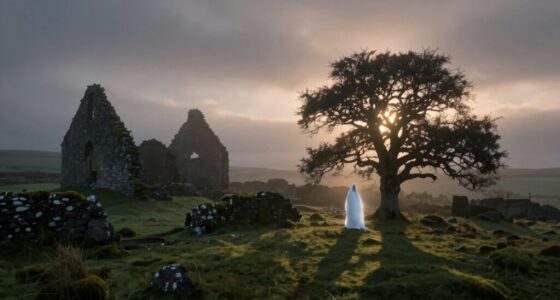
Graveyards used to be peaceful places where ancestors rested, but over time, stories of ghosts and unexplained events emerged, giving them a darker reputation. Folklore and legends depicted spirits as restless, blurring the line between life and death. Movies, books, and TV shows then popularized haunted cemeteries, embedding the spooky image into pop culture. If you’re curious about how these myths evolved and shaped modern perceptions, there’s much more to uncover.
Key Takeaways
- Originally, graveyards were peaceful, sacred sites for ancestor remembrance, not associated with fear or the supernatural.
- Folklore and legends gradually depicted graveyards as haunted, blurring the line between life and death.
- Media such as movies and literature popularized ghost stories set in cemeteries, reinforcing spooky imagery.
- Cultural narratives and storytelling transformed the perception of graveyards from resting places to haunted locations.
- Modern entertainment continues to depict graveyards as eerie sites, maintaining their spooky reputation in pop culture.
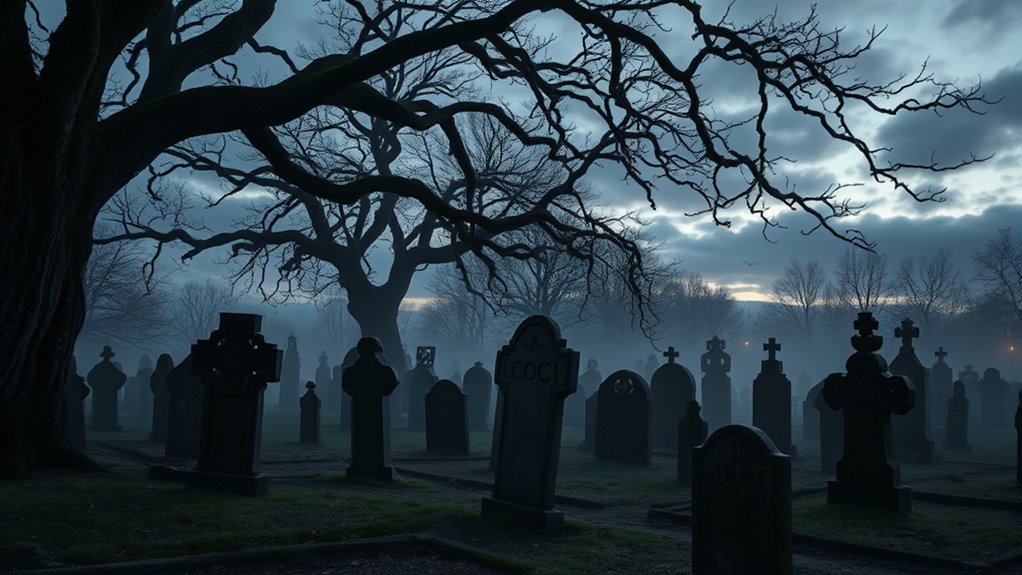
Have you ever wondered why graveyards often appear in movies, TV shows, and literature? It’s because they’re deeply embedded in our collective imagination as places of mystery, fear, and the supernatural. Historically, graveyards were simply resting places for the deceased, quiet spots meant for remembrance. But over time, they transformed into symbols of ghost stories and haunted legends, fueling our fascination with the unknown. This shift didn’t happen overnight; it’s the result of centuries of storytelling, cultural beliefs, and media portrayals that have turned these somber sites into spooky settings.
Graveyards evolved from peaceful resting places into symbols of ghost stories and haunted legends.
In the earliest days, graveyards were seen as sacred, respectful spaces. People believed that spirits lingered, but they were mostly viewed as ancestors watching over the living. However, as stories of apparitions, restless spirits, and unexplained phenomena spread, graveyards took on a darker reputation. These tales, often passed down as ghost stories, added an eerie layer to the idea of death and the afterlife. As communities shared haunted legends about graveyards being sites where the line between the living and the dead blurred, the idea of spooky cemeteries became ingrained in folklore.
Movies and literature played a significant role in amplifying this transformation. Writers and filmmakers found in graveyards a perfect backdrop for tales of haunting, mystery, and the supernatural. Think of classic horror stories or ghostly encounters that take place among tombstones—these images reinforce the perception of graveyards as places where the supernatural is close at hand. Over time, pop culture reinforced this idea, turning these quiet, solemn spaces into iconic settings for spooky stories and haunted legends. The thrill of encountering a ghost or witnessing an eerie phenomenon in a graveyard taps into our primal fears of death, the unknown, and what lies beyond.
Today, it’s hard to separate graveyards from their spooky reputation in pop culture. Films, TV shows, and even Halloween attractions use graveyards to evoke suspense and fear. The association with ghost stories has cemented their role as haunted landscapes, even though many of these stories are purely fictional. Still, the idea persists that beneath the surface of these peaceful resting places, something mysterious and otherworldly may be lurking. That’s the power of storytelling—turning quiet cemeteries into haunted legends that continue to captivate our imaginations and keep us wondering about what really lies beyond the grave. Additionally, the cultural evolution of these sites has contributed to their haunted reputation, blending folklore with modern media portrayals.
Frequently Asked Questions
When Did Graveyards Start Appearing as Spooky Settings in Media?
You’ll notice graveyards started appearing as spooky settings in media around the 19th century, influenced by superstitions origins and haunted legends. As stories of ghosts and spirits grew popular, writers and filmmakers used graveyards to evoke fear and mystery. This shift turned them into symbols of death and the supernatural, cementing their spooky reputation in pop culture and making them a common backdrop for horror stories and haunted tales.
Are There Cultural Differences in How Graveyards Are Portrayed?
You’ll notice that cultural differences shape how graveyards are portrayed—some see them as sacred resting places, emphasizing funeral traditions and respect, while others view them as eerie symbols of mortality. In many cultures, symbolism like tombstones or rituals reflects beliefs about life and death, influencing their spooky or solemn depictions. These variations evoke deep emotions, revealing how cultural symbolism transforms graveyards from places of mourning into powerful cultural icons.
Which Movies Popularized the Spooky Graveyard Trope First?
You should know that early movies like “Nosferatu” (1922) and “The Phantom Carriage” (1921) helped popularize the spooky graveyard trope by featuring ghost stories and haunted legends. These films cast graveyards as eerie, mysterious places, setting the stage for later horror classics. Their chilling atmospheres and supernatural themes made spooky graveyards a staple in pop culture, influencing countless horror movies and stories that followed.
How Have Graveyard Designs Evolved in Pop Culture Over Time?
You’ll notice graveyard designs have evolved from simple, functional cemetery architecture to more elaborate, eerie settings in pop culture. Funeral symbolism now emphasizes darkness and mystery, shaping spooky environments. Modern depictions often feature Gothic arches, tombstones, and mausoleums that evoke fear and fascination. This shift reflects a fascination with death and the afterlife, turning once solemn spaces into iconic symbols of horror and intrigue in movies, books, and art.
Do Real-Life Events Influence the Spooky Portrayal of Graveyards?
Real-life events do influence the spooky portrayal of graveyards, often fueled by superstitions, folklore, and urban legends. You might notice that tragic stories or mysterious disappearances turn graveyards into places of fear, blending fact with fiction. These tales deepen the eerie atmosphere, making you feel unsettled. By intertwining actual events with myths, pop culture amplifies the spooky image, transforming graveyards into symbols of the unknown and the supernatural.
Conclusion
So, next time you pass by a quiet graveyard, remember it’s not just a somber resting place but a canvas for stories and imagination. Over time, the shadows and whispers have woven a spooky aura, turning peaceful grounds into mysterious domains in pop culture. But beneath that eerie veneer, there’s a gentle reminder of life’s fleeting nature—an invitation to reflect, dream, and appreciate the quiet beauty of life’s final chapter.