
Yule symbols deeply influence modern Halloween, as they stem from ancient winter customs focused on warding off spirits and celebrating light during dark times. Think of lanterns carved from root vegetables, illuminating the darkness to protect homes, or masks used to hide from restless spirits. These symbols of protection, illumination, and seasonal change have evolved into the candles, masks, and decorations you see today. If you look closer, you’ll find these ancient traditions quietly shaping Halloween’s iconic imagery.
Key Takeaways
- Ancient Yule symbols like fire and light evolved into Halloween’s candles, lanterns, and glowing decorations used to ward off spirits.
- Carved turnip and root vegetable lanterns from Yule traditions influenced the development of jack-o’-lanterns.
- Evergreen trees and ornaments representing protection and resilience in winter became integrated into Halloween festive decorations.
- Masks and disguises from winter rituals to conceal identities and ward off spirits laid the groundwork for Halloween costumes.
- Themes of protection, illumination, and seasonal change from Yule customs are reflected in Halloween’s symbols and practices.
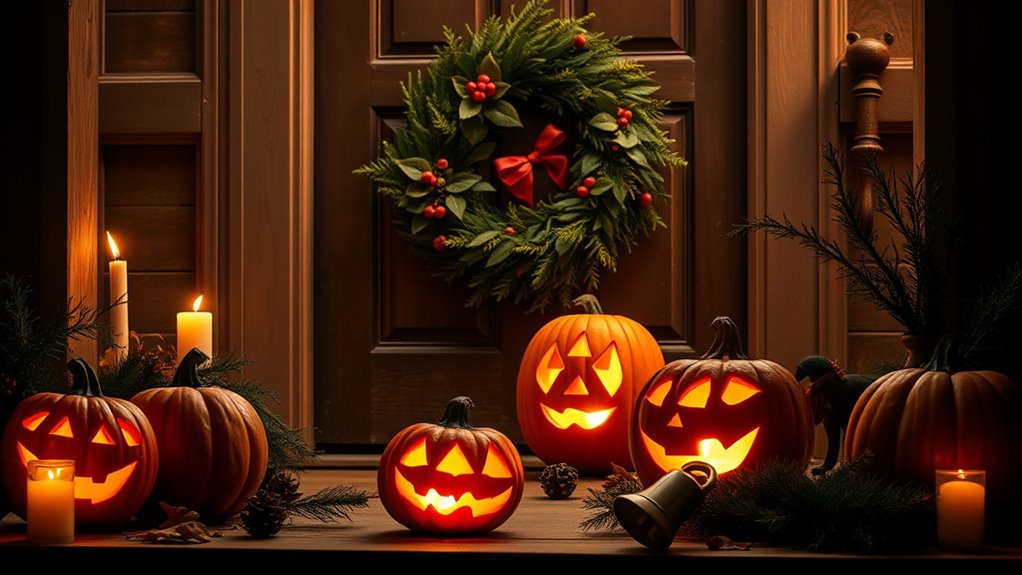
Yule symbols, rooted in ancient winter traditions, have profoundly influenced modern Halloween imagery and customs. As you explore the origins of Halloween, you’ll notice how elements from Christmas traditions and winter solstice celebrations subtly blend into its symbols. These ancient practices centered around marking the darkest days of the year, celebrating light’s return, and warding off spirits. Over centuries, many of these symbols evolved, but their roots remain woven into Halloween’s fabric. For example, the use of fire and light during winter solstice celebrations aimed to chase away darkness and evil spirits, a theme that persists in Halloween’s glowing jack-o’-lanterns and flickering candles. These lanterns, originally carved from turnips or other root vegetables, served both as decorations and as protective charms, echoing the ancient idea of illuminating darkness to prevent malevolent spirits from entering homes. The connection extends further when you consider Christmas traditions, which also borrow symbols from older winter rituals. Christmas trees, with their evergreen branches, symbolize eternal life and resilience amid winter’s bleakness. Similarly, the tradition of hanging ornaments and lights on these trees echoes the ancient practice of decorating with bright objects to attract positive spirits and ward off darkness. You can see how these symbols of protection and hope seamlessly transitioned into Halloween’s emphasis on spirits, ghosts, and the supernatural. The fear of wandering spirits during winter solstice celebrations evolved into the playful hauntings and spooky decorations of Halloween. The use of masks during Halloween, for example, can be traced back to winter solstice customs where disguises were worn to hide from restless spirits or to confuse them. These masks, often made from natural materials, served as both protection and symbolic barriers against negative energies. The idea of mischief and the thin boundary between the living and the dead also echoes ancient winter festivals, where rituals aimed to appease or ward off spirits. Over time, these customs merged with Christian influences and local folklore, but their core themes remain rooted in ancestral practices of protection, illumination, and celebrating the cycle of seasons. Additionally, the ancient winter rituals often incorporated symbols that have persisted into modern Halloween, such as the use of fire and light to symbolize hope and ward off malevolence. In essence, many symbols you associate with Halloween—candles, masks, lanterns, and spooky motifs—are echoes of Yule and winter solstice traditions. They reflect humanity’s long-standing desire to confront darkness, honor cycles of nature, and protect loved ones from malevolent spirits. Recognizing these connections enriches your understanding of Halloween, revealing it as a modern reflection of ancient winter customs that have quietly shaped its imagery and practices over centuries.
Frequently Asked Questions
How Did Yule Symbols Influence Halloween Costume Designs?
Yule symbols influence Halloween costume designs by inspiring Yule symbolism in fashion, which you see in festive patterns and motifs like holly, ivy, and pinecones. You might notice Yule-inspired storytelling reflected in costumes that depict mythical creatures or seasonal symbols, creating a mystical or wintery vibe. These elements blend holiday traditions with spooky themes, giving costumes a richer, more layered meaning rooted in ancient Yule celebrations.
Are There Any Yule Symbols Still Used in Halloween Decorations Today?
Yes, you’ll still see Yule symbols in Halloween decor today, like the Yule tree and mistletoe traditions. These symbols act as timeless bridges, connecting past to present, and evoke a sense of continuity. You might notice miniature Yule trees on porch displays or mistletoe hanging in doorways, reminding you of ancient winter celebrations. They silently whisper stories of old, adding a touch of history to your spooky festivities.
What Are the Differences Between Yule and Halloween Traditions?
You’ll find that Yule winter traditions focus on warmth, light, and celebrating the solstice, emphasizing family and renewal. Halloween fright, on the other hand, thrives on spooky costumes, ghosts, and playful scares. While Yule symbols like evergreens and candles promote hope and continuity, Halloween traditions highlight fun scares and the supernatural. The key difference is that Yule centers on winter’s return, whereas Halloween embraces the eerie and mysterious aspects of fall.
Did Yule Symbols Impact the Development of Halloween’s Spooky Themes?
Yes, Yule symbols like Yule fire symbolism and Yule tree traditions influenced Halloween’s spooky themes. You see, the Yule fire represented protection and warded off evil spirits, which parallels Halloween’s focus on warding off malevolent forces. Additionally, Yule tree traditions, with their evergreens, inspired the eerie, haunted forest scenes. These symbols helped shape Halloween’s mysterious, supernatural atmosphere, blending ancient winter rites with modern spooky celebrations.
Are There Any Yule Symbols Incorporated Into Modern Halloween Foods?
Yes, you can find Yule food symbolism in modern Halloween foods through seasonal edible motifs. For example, pumpkin-shaped treats and apple arrangements echo Yule’s emphasis on harvest and abundance. These motifs, rooted in Yule traditions, subtly influence Halloween’s spooky snacks and decorations, creating a connection between winter solstice celebrations and fall festivities. By incorporating these symbols, you honor seasonal cycles while adding a touch of historical tradition to your Halloween feasts.
Conclusion
As you see, the ancient symbols of Yule have woven their way into the fabric of modern Halloween, like threads in a tapestry. These quiet echoes from centuries past remind you that tradition is a living story, constantly reshaping itself. So next time you carve a pumpkin or hang a wreath, remember you’re part of a centuries-old dance, where past and present blend like shadows in the flickering candlelight, whispering secrets of the season’s true origins.