

To craft lightweight, realistic chains and shackles from foam, start by designing your pieces with sketches, then cut and shape foam using sharp knives or cutters. Connect the links with strong adhesives and reinforce stress points with wire or fabric. Add details like rust and scratches with textured paints, and seal your work for durability. For comfortable wear, pad the inside and use adjustable straps. Keep exploring to discover detailed techniques that will elevate your foam chain project.
Key Takeaways
- Select durable, lightweight foam and use appropriate cutting tools to shape chains and shackles accurately.
- Reinforce foam connection points with wire or fabric and bond with strong adhesives for durability.
- Add realistic texture and details like rust, scratches, and bolts using paint techniques and surface treatments.
- Ensure comfort and fit by incorporating padding and adjustable straps for wearable foam shackles.
- Seal and reinforce seams, then test strength to achieve long-lasting, realistic foam chains and shackles.

Spirit Halloween 4 Ft 6 In Scary Sitting Scarecrow Animatronic, Multicolor
Bring any Halloween display to life by adding this Scary Sitting Scarecrow Animatronic to your home decor. This...
As an affiliate, we earn on qualifying purchases.
Gathering Materials and Tools

Before you start crafting your foam chains and shackles, gather all necessary materials and tools. First, choose foam with the right density; a medium-density foam offers durability without being too heavy or fragile. Next, you’ll need a reliable adhesive; select one suited for foam, such as contact cement or hot glue, to guarantee strong bonds. Measure and cut your foam pieces accurately, so have scissors or a craft knife ready. Additional tools like a ruler, markers, and shaping tools will help you achieve clean, precise shapes. Don’t forget safety equipment like gloves and a well-ventilated workspace, especially when working with adhesives. Organizing everything beforehand keeps your project smooth and prevents interruptions, ensuring your foam chains and shackles turn out just as you envision.

Haunted Hill Farm 7-Ft Animatronic Soul Harvester by Tekky, Halloween Animatronic, Spooky Prop & Party Decoration, Indoor & Covered Outdoor Creepy Witch Decor Motion-Activated Lights & Sound, LifeSize
Premium Lifesize Animatronic: Extension from top seller Soul Sucker - Frighten guests and trick-or-treaters with this premium quality...
As an affiliate, we earn on qualifying purchases.
Designing Your Chain and Shackles

To create realistic and comfortable foam chains and shackles, start by sketching your design on paper or directly onto the foam. Focus on your chain design, considering how each link will connect smoothly and look authentic. Think about the overall aesthetic considerations—whether you want a heavy, industrial look or a more delicate, ornate style. Keep proportions in mind to guarantee comfort and realism. Decide if you want the shackles to be simple or detailed, adding elements like bolts or straps if desired. Planning your design beforehand helps you visualize the final product and makes the cutting process easier. Take your time refining sketches until you’re satisfied, as this step sets the foundation for a successful foam project. Incorporating leadership skills such as attention to detail and strategic planning can also enhance your crafting process.

JOYIN 67" Halloween Decorations Outdoor Life Size Animatronics Grim Reaper with Chain, Sound-Actived Party Decor with Creepy Sound, Scary Haunted House Props for Garden Yard Lawn
SUPER VALUE PACK. This Creepy Halloween Outdoor Decor includes 1 pack Life Size Standing Grim Reaper with Chain,...
As an affiliate, we earn on qualifying purchases.
Cutting and Shaping Foam Pieces

Once you have your design sketched out, it’s time to carefully cut and shape the foam pieces. The key is selecting the right cutting tools based on your foam’s density. For softer foam, a sharp utility knife or craft knife works well, providing clean, controlled cuts. If you’re working with denser foam, consider using a serrated knife or hot wire cutter for smoother edges and precise shaping. Always secure the foam on a stable surface to prevent slipping. Take your time to follow your outlines closely, applying steady pressure. If needed, mark your cut lines with a pencil beforehand. Properly cutting and shaping your foam ensures your chains and shackles will look realistic and fit together seamlessly. Additionally, vetted foam cutting tools can help you achieve the best results for your project.

Gemmy 5'8 Tall Life Size Animated Sally Disney Halloween Prop
Dimensions: 70.08 in x 18.5 in x 19.68 in
As an affiliate, we earn on qualifying purchases.
Connecting the Foam Links

When connecting foam links, choosing the right foam type guarantees flexibility and strength. Reinforcing materials like wire or fabric can improve durability, while proper joining techniques prevent breakage. Focus on these points to create a sturdy, realistic chain from your foam pieces. Incorporating Mazda Tuning concepts such as material selection and structural reinforcement can further enhance the chain’s durability and authenticity.
Selecting Appropriate Foam Types
Choosing the right foam type is essential for creating durable and flexible chains and shackles. You should consider foam density carefully; higher density foam offers more strength and resilience, making your creations last longer. Lower density foam is lighter and more flexible, ideal if you want a softer feel. Your choice of adhesive is equally important, as it influences how well the foam bonds and holds together. Select adhesives compatible with your foam type to prevent peeling or weakening over time. For heavier or more stressed links, opt for a foam with higher density and a strong adhesive. Balancing foam density with adhesive selection ensures your chains and shackles are both sturdy and flexible, giving you a reliable, DIY solution that holds up through use. Additionally, understanding foam properties can help you make more informed choices for your project’s durability and comfort.
Using Reinforcing Materials
Reinforcing foam links with additional materials can considerably improve the strength and durability of your chains and shackles. Metal reinforcement is a popular choice because it adds structural support, preventing the foam from bending or breaking under pressure. You can insert thin metal rods or strips into the foam links before shaping them, ensuring they stay sturdy. When selecting adhesive, opt for a strong, flexible glue like epoxy or contact cement. This ensures the foam and metal stay bonded during use. Be sure to apply the adhesive evenly and allow it to cure fully before handling your links. Proper reinforcement and adhesive selection are key to creating durable, realistic foam chains and shackles that hold up during display or wear. Additionally, understanding topical authority in your craft can help improve the overall quality and credibility of your project.
Joining Techniques for Durability
To guarantee your foam links stay securely connected and maintain their strength over time, selecting the right joining technique is essential. Metal bonding offers a strong, durable connection when attaching foam links, especially if you want a seamless look. Use an appropriate adhesive designed for foam and metal, ensuring you apply it evenly and press the pieces together firmly. Foam shaping also plays a key role; shaping the foam links before joining helps create tight, interlocking connections that resist separation. When shaping, consider small notches or holes to improve adhesion and connection points. Combining metal bonding with precise foam shaping results in a sturdy, long-lasting chain or shackle. This approach ensures your project holds together under stress, providing both durability and a professional finish. Proper surface preparation before bonding will further enhance the strength and longevity of your foam connections.
Adding Details and Texture
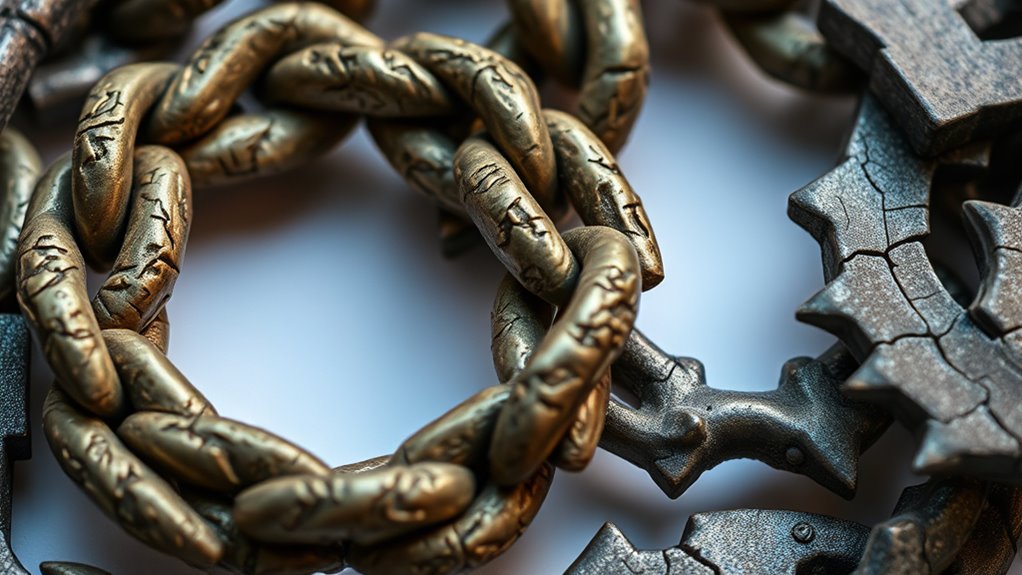
To make your foam chains and shackles look more realistic, start by applying surface treatments that mimic metal wear or rust. Then, create textures like scratches or dents to add depth, using simple tools or paints. Finally, enhance your pieces with small details such as rivets or bolts to give them a more authentic appearance. Incorporating textural contrast can further emphasize the realism of your craft.
Applying Surface Treatments
Adding surface treatments is a crucial step to make your foam chains and shackles look more realistic and detailed. You can achieve this by applying metal finishes that mimic the appearance of worn or polished metal, enhancing the authenticity of your piece. Weathering effects are also essential; they add depth by simulating rust, dirt, or scratches, giving your foam props a used, aged look. Use dry brushing to highlight edges and create subtle metallic sheen, or apply washes to settle into crevices for added texture. Combining these techniques helps transform simple foam into convincing metallic chains and shackles. Remember, the goal is to subtly enhance detail without overdoing it, so take your time and build up effects gradually for a natural, realistic finish. Incorporating proper surface treatments can also help prevent premature wear and tear, ensuring your props maintain their appearance over time.
Creating Realistic Textures
Creating realistic textures brings your foam chains and shackles to life by adding depth and tactile detail. To simulate metal corrosion, use dry brushing with metallic paints, focusing on areas where rust would naturally accumulate, like joints and edges. Vary the paint application to create uneven, aged effects that mimic real wear. Adjust the chain length physically by slightly bending or shortening sections to give a more natural, irregular look. Incorporate subtle surface imperfections, such as scratches or pits, by lightly carving or stippling the foam with tools or brushes. These small details enhance the realism, making your foam chains and shackles appear weathered and authentic. Pay close attention to these textures, as they considerably elevate the overall believability of your project. Additionally, understanding material properties can help you choose the best techniques for achieving durable and realistic finishes.
Enhancing With Small Details
Enhancing your foam chains and shackles with small details can considerably boost their realism and visual interest. Adding chain embellishments, such as tiny rivets or textured links, creates depth and authenticity. Decorative accents like painted scratches, rust spots, or worn edges make the pieces look aged and used. Use fine brushes or sculpting tools to carve subtle grooves and patterns into the foam surface, mimicking real metal wear. Incorporate small, raised details like rivets or bolts to emphasize the mechanical aspect. These tiny touches catch the eye and make your foam chains more convincing. Paying attention to realistic textures and thoughtfully placed embellishments not only enhances visual appeal but also helps convey the story or theme behind your project. Remember, the key is to focus on realistic textures and thoughtfully placed embellishments that enhance the overall look without overwhelming the piece.
Painting and Finishing Touches
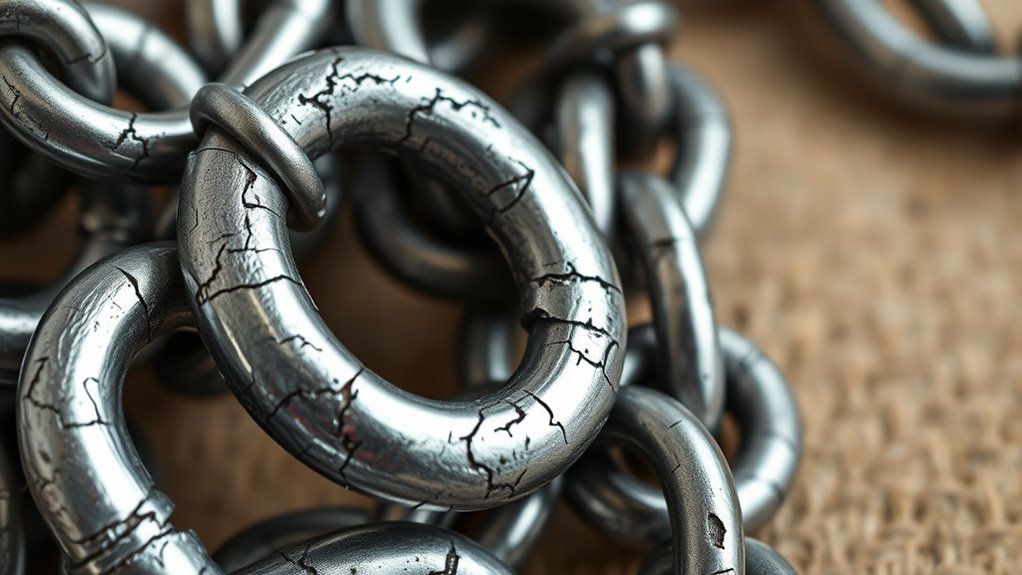
Once you’ve finished shaping your foam chains and shackles, the next step is to bring them to life with paint. Start by applying a base coat that matches your desired metal finish, such as silver, bronze, or steel. Use a sponge or brush to add texture, mimicking the look of real metal. For added realism, incorporate color blending techniques—gradually mix darker shades into lighter ones to create depth and highlights. Don’t forget to focus on details like rust, scratches, or patina, which give your pieces an aged, authentic appearance. Pay attention to finish quality to ensure a professional look. Seal your work with a clear spray to protect the paint and give a slight sheen, making your foam chains and shackles look convincingly metallic and finished.
Creating Comfortable Wearable Shackles

To make certain your foam shackles are comfortable to wear, start by choosing the right padding and straps. Proper padding reduces pressure points, while adjustable straps ensure a secure fit without restricting movement. Focus on chains design that balances aesthetic appeal with comfort; avoid bulky or rigid components. To help you customize, here’s a quick guide:
| Aspect | Tips |
|---|---|
| Padding Material | Use soft foam or fabric for comfort |
| Strap Type | Choose adjustable, wide straps for even pressure |
| Shackles Fit | Ensure snug but not tight, avoid pinching |
| Chains Design | Opt for smooth, lightweight designs |
| Comfort Tips | Regularly check fit and adjust as needed |
Additionally, considering ergonomic design principles can improve overall comfort during wear. This approach enhances shackles comfort, making your DIY project both functional and comfortable.
Tips for Strengthening and Durability

For your foam shackles to withstand regular use, focus on reinforcing critical stress points with durable materials like lightweight plastic or reinforced foam. Metal reinforcement is essential at hinges and connection areas to prevent cracking or breaking. You can embed small metal rods or washers inside the foam to add strength without adding much weight. Additionally, foam weatherproofing helps protect your shackles from moisture and wear, extending their lifespan. Seal seams and vulnerable spots with a waterproof coating or spray, ensuring they resist water damage and maintain integrity over time. Always test reinforced areas for durability before full use. Proper reinforcement and weatherproofing make your foam shackles more resilient, allowing you to enjoy their creative design without sacrificing strength or longevity. Referencing park operating hours can help plan the best time for outdoor crafting and testing your shackles in suitable conditions.
Creative Ideas for Customization

Customizing your foam shackles allows you to turn functional pieces into personalized accessories that stand out. You can experiment with custom paint schemes to create unique looks, from metallic finishes to distressed effects. Adding themed embellishments like symbols, decals, or foam accents enhances their visual appeal. Use the table below for inspiration:
| Custom Paint Schemes | Themed Embellishments | Unique Textures |
|---|---|---|
| Metallic finishes | Fantasy symbols | Faux leather effects |
| Weathered look | Superhero logos | Rough or smooth surfaces |
| Bright colors | Sci-fi motifs | Patterned textures |
| Monochrome tones | Gothic designs | Glitter or matte |
Get creative by mixing paint techniques and embellishments to make your foam shackles truly one-of-a-kind. Additionally, exploring WWE Raw’s financial impact can inspire you to invest in high-quality materials that ensure durability and striking appearance.
Frequently Asked Questions
How Long Does a Typical Foam Chain Last With Regular Use?
A typical foam chain lasts about 3 to 6 months with regular use. Foam durability depends on factors like material quality and how often you handle it. If you use it gently and keep it dry, it can stay intact longer. However, frequent stretching or exposure to sunlight and moisture can decrease its material longevity. To extend its lifespan, handle it carefully and store it properly when not in use.
Can Foam Chains Be Safely Worn Around Children or Pets?
Foam chains aren’t safe to wear around children or pets because they pose risks to child safety and require pet precautions. Kids might chew or swallow the foam, leading to choking or ingestion hazards. Pets could chew and damage the chains, risking ingestion or injury. Always supervise children and pets around foam accessories and consider safer, non-toxic options to guarantee everyone’s safety.
What Are the Best Storage Methods to Prevent Foam Damage?
You might find it surprising, but proper foam preservation starts with choosing the right storage containers. To prevent foam damage, always store your foam items in airtight, acid-free containers away from direct sunlight and extreme temperatures. Keep them in a cool, dry place, and avoid stacking heavy objects on top. This way, your foam stays intact, maintaining its shape and color over time, ready for your next creative project.
Is There a Recommended Budget for Creating Multiple Foam Chains?
You should budget around $20 to $50 per foam chain, depending on size and complexity. Start with a clear cost estimation by sourcing affordable foam and sturdy connectors, which you can find at craft stores or online suppliers. Keep your costs low by comparing prices and buying in bulk when possible. This approach guarantees you create multiple foam chains within your budget without sacrificing quality or durability.
How Do I Repair Broken or Damaged Foam Links Effectively?
Fix fractured foam links firmly by first applying foam glue to the broken parts, ensuring a secure stick. For added strength, use reinforcement techniques like wrapping with thin, durable wire or taping tightly with strong adhesive tape. Clamp the links until the glue sets completely. This combination of foam glue and reinforcement techniques will restore your foam chains, making them strong and functional once more.
Conclusion
Now that you’ve crafted your foam chains and shackles, you hold the power to transform imagination into reality. With every cut and connection, you’re shaping more than just foam—you’re building confidence and releasing creativity. These pieces are like a painter’s brushstroke, adding color and character to your world. Keep experimenting, and let your DIY journey shine brighter than gold—because your unique touch makes everything truly special.