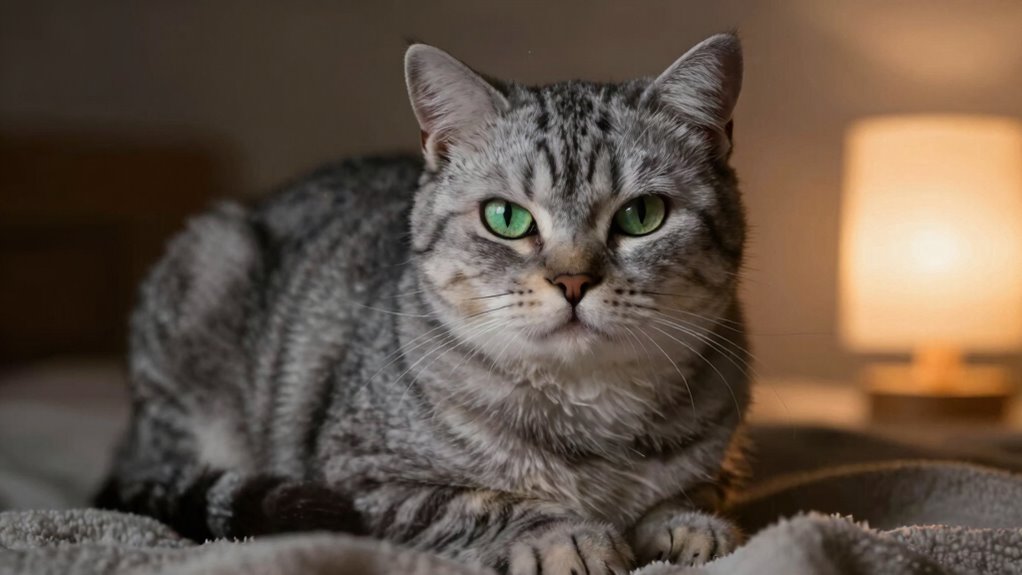

If your pet seems stressed tonight, look for subtle signs like withdrawal, changes in appetite, or excessive licking. Create a calm space with dim lights, soft sounds, and a cozy bed, and use gentle petting or calming music to soothe them. You can also try pheromone diffusers or treats as positive distractions. Keep observing their reactions and adjust your approach as needed. For more helpful tips on calming your pet, keep exploring the ideas ahead.
Key Takeaways
- Recognize subtle signs of stress like withdrawal, aggression, or excessive licking to identify your pet’s discomfort early.
- Create a calm, safe space with dim lighting, soft bedding, and reduced noise to help your pet relax.
- Use calming products such as pheromone diffusers, calming treats, or gentle music to soothe your pet during stressful moments.
- Monitor your pet’s response and adjust calming strategies or seek veterinary advice if stress persists.
- Build trust through gentle care, patience, and providing a secure environment to support your pet’s emotional well-being.
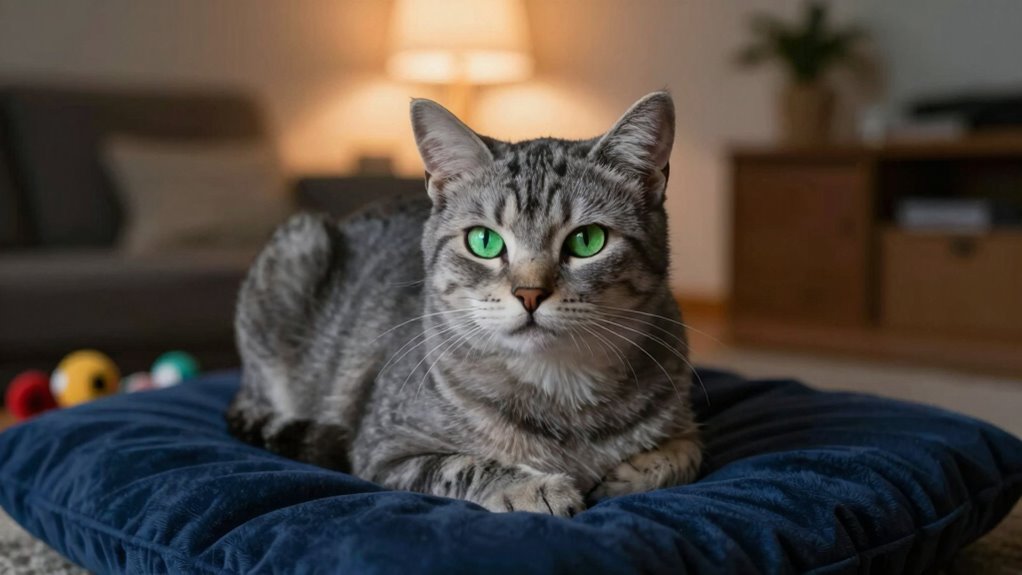
Have you ever wondered if your pet is secretly stressed? It’s easy to overlook the subtle signs that indicate your furry friend isn’t feeling their best. Pets don’t always show stress the way humans do, but their behavior signs can give you clues. Maybe they’re more withdrawn, lose their appetite, or suddenly become more aggressive or clingy. Some pets might lick their lips excessively, yawn often, or pace around the room. These behaviors are your pet’s way of communicating discomfort or anxiety. Recognizing these signs early allows you to step in and help reduce their stress before it worsens.
Pets may hide stress through withdrawal, loss of appetite, or unusual behaviors—recognize early to help them feel safe.
When you notice these behavior signs, it’s important to respond with calming techniques that can soothe your pet. Start by creating a quiet, safe space where they can retreat and feel secure. Dimming the lights, reducing noise, and offering a cozy bed or blanket can make a big difference. You might also consider gentle petting or talking softly to reassure them. Some pets respond well to calming music or white noise, which can drown out stressful stimuli and create a more peaceful environment. Providing toys or treats can also serve as positive distractions, helping your pet shift focus from their stress triggers.
Incorporating calming techniques into your routine doesn’t have to be complicated. Use pheromone diffusers or sprays designed for pets, which release soothing scents that mimic natural calming signals. These products are especially helpful during thunderstorms, fireworks, or when guests arrive—common stressors for many animals. Regular exercise also plays a key role in managing stress; a tired pet is often a calmer pet. Even short walks or play sessions can help burn off excess energy and improve their overall mood. Additionally, understanding the importance of biodiversity, including the variety of calming products and techniques available, can help you choose the most effective strategies for your pet. Exploring a range of calming options can be particularly beneficial, as what works for one pet might not work for another. Utilizing new technologies, such as pet monitoring cameras, can also help you observe their behavior and respond promptly to signs of distress.
It’s equally important to observe your pet’s reactions and adjust your approach accordingly. Every animal responds differently, so patience is key. If your pet continues to show signs of distress despite your efforts, consult your veterinarian. They can recommend additional strategies or check for underlying health issues that might be contributing to their stress. Developing a stress management plan tailored specifically for your pet can be very effective in preventing future episodes. Recognizing the significance of behavioral signs and applying calming techniques not only helps ease their current stress but also strengthens your bond. When you pay attention to their needs and respond with kindness, you create a more secure environment for your pet, helping them feel safe and loved even during stressful moments.

TherapetMD Dog Calming Diffuser – for Stress, Destructive Behavior, Pee Accidents, Separation Anxiety, Barking, Aggression & Chewing – 2 count Refill Included 30-Day each – Packaging May Vary
Revolutionary Dual-Pheromone Blend Stops Stress Peeing & Barking – Only Dog Pheromone Diffuser combining mother-comfort AND territorial-peace pheromones…
As an affiliate, we earn on qualifying purchases.
As an affiliate, we earn on qualifying purchases.
Frequently Asked Questions
Can Stress Cause Health Issues in Pets?
Yes, stress can cause health issues in pets, especially if it leads to pet anxiety. When your pet’s stressed, it may experience physical symptoms like changes in appetite, digestion problems, or even a weakened immune system. You can help by using calming techniques such as gentle pet massage, creating a quiet environment, or playing soothing music. These methods reduce stress and support your pet’s overall health and well-being.
How Do I Know if My Pet’s Stress Is Severe?
Imagine a once-bright star now flickering in darkness—that’s how severe pet stress can feel. If your pet’s behavior shifts dramatically, like hiding excessively, refusing food, or constant pacing, and anxiety signs persist, it’s a sign of serious stress. You’ll notice these behaviors more intensely, indicating their stress is severe. Act quickly: consult your vet to assess their health and find ways to soothe your anxious companion.
Are Certain Breeds More Prone to Stress?
Yes, some breeds are more prone to stress due to their genetic predisposition. Breeds susceptibility varies, with high-energy or sensitive breeds like Border Collies, Chihuahuas, and Dachshunds often experiencing stress more easily. You should pay extra attention to these breeds, especially during changes or loud environments. Knowing your pet’s breed tendencies helps you recognize signs of stress early and take steps to keep them calm and comfortable.
Can Diet Influence My Pet’s Stress Levels?
Yes, diet impact can influence your pet’s stress levels. A well-balanced diet with proper nutritional balance helps support their mental health and overall well-being. Foods rich in omega-3 fatty acids, antioxidants, and vitamins can reduce stress and promote calmness. Avoiding fillers and artificial additives also minimizes discomfort. Ensuring your pet gets the right nutrients helps regulate hormones and nerves, making them less prone to stress and anxiety.
How Long Does Pet Stress Typically Last?
Pet stress typically lasts from a few hours to several days, depending on behavior cues and environmental triggers. You can help by observing your pet’s reactions, like trembling or hiding, and addressing stressors such as loud noises or new surroundings. Consistent comfort, calm interactions, and creating a cozy environment can shorten stress duration. Remember, patience and proactive care help your pet bounce back quickly from stressful situations.

Nutramax Solliquin Calming Behavioral Health Supplement for Small to Medium Dogs and Cats – With L-Theanine, Magnolia / Phellodendron, and Whey Protein Concentrate, 75 Soft Chews
Helps support balanced behavior and relaxation.
As an affiliate, we earn on qualifying purchases.
As an affiliate, we earn on qualifying purchases.
Conclusion
Remember, just like a sudden storm can unsettle a calm sea, your pet’s stress might seem minor but deeply affects them. When I noticed my dog trembling before a thunderstorm, I gently held him close, offering comfort. That simple act helped soothe his fears. You have the power to be that comforting anchor. With patience and love, you can turn their stormy night into a peaceful one—show them they’re safe, and they’ll calm down in time.

Yogasleep Pawzz White Noise Machine for Dogs, Home & All Pets. with Integrated Bark Sensor, 6 Automatic Relaxing Natural Sounds, Help Keep Pets Calm, Anti-Barking with Training, Noise Canceling
EFFECTIVELY CANCELS NOISE: Our signature sound has helped millions experience better sleep for generations—including our furry family members….
As an affiliate, we earn on qualifying purchases.
As an affiliate, we earn on qualifying purchases.

Calming Chews for Cats – Cat Anxiety Relief + Helps Reduce Stress – Behavioral Support & Promotes Relaxation for Travel, Boarding, Vet Visits, Separation Anxiety – Chicken (30-Day Supply)
RELAX INTO BENEFITS: Eat, sleep, play, poop–we think our cats have the easiest lives, but there are a…
As an affiliate, we earn on qualifying purchases.
As an affiliate, we earn on qualifying purchases.