

Planning fun indoor and outdoor scavenger hunts involves choosing engaging themes, clear clues, and age-appropriate challenges. Incorporate team activities, natural landmarks, or seasonal elements to boost excitement and learning. Use creative puzzles, technology, and personalized rewards to keep everyone motivated. Safety remains key, especially outdoors, so prepare for hazards and communicate safety guidelines. Want tips on customizing your hunt and making it unforgettable? Keep exploring for expert advice and ideas.
Key Takeaways
- Plan themed scavenger hunts tailored for indoor or outdoor settings, incorporating natural landmarks or household items.
- Use creative clues, riddles, or puzzles aligned with the environment and participants’ interests.
- Incorporate safety measures, technology, and interactive elements like QR codes or GPS for engaging experiences.
- Add seasonal or cultural themes to enhance relevance and excitement for indoor or outdoor hunts.
- Personalize challenges and rewards to increase engagement and create memorable, inclusive events.
Planning Your Indoor Scavenger Hunt

When planning your indoor scavenger hunt, start by choosing a clear theme or goal that will guide the clues and items you include. This helps keep participants focused and engaged. Consider incorporating team building activities to promote cooperation and communication among players. Clearly define your educational objectives, whether it’s encouraging problem-solving, enhancing observation skills, or teaching specific concepts. Select clues that align with these goals and are appropriate for the age group. Keep the hunt organized by mapping out each step beforehand, ensuring clues are challenging yet achievable. Remember, a well-structured plan makes the experience fun and meaningful, fostering teamwork while meeting your educational or developmental aims. This thoughtful approach sets the foundation for an enjoyable and productive indoor scavenger hunt. Additionally, understanding quorum sensing can inspire clues related to bacterial communication or biofilm formation, adding an educational science element to your activity.
Creative Themes for Outdoor Hunts

You can make your outdoor scavenger hunt exciting by choosing creative themes like nature-based treasure trails that encourage exploration of the outdoors. Costume challenges add a fun twist, prompting participants to dress up according to a theme or season. Seasonal adventures, such as autumn or winter hunts, bring the spirit of the time into your game, making it more memorable. Incorporating camping gear tips can also enhance the experience by teaching participants about essential equipment and safety practices.
Nature-Based Treasure Trails
Nature-based treasure trails transform outdoor spaces into exciting adventures by weaving creative themes around local flora, fauna, and natural landmarks. You can focus on wildlife tracking, encouraging participants to observe animal footprints, nests, or other signs of local wildlife. This adds an element of mystery and discovery to your hunt. Plant identification is another engaging activity, where explorers learn to recognize different trees, flowers, and shrubs along the trail. Incorporate clues that challenge participants to find specific species or natural features, making the experience educational and immersive. These themes connect players with nature, fostering curiosity and awareness of the environment. By highlighting natural elements and encouraging observation, you create a memorable outdoor adventure that celebrates the beauty and diversity of your local landscape. Additionally, incorporating cost considerations such as supplies or permits can help ensure your treasure hunt remains budget-friendly and sustainable.
Themed Costume Challenges
Themed costume challenges add a fun and imaginative twist to outdoor hunts by encouraging participants to dress up according to specific creative themes. When planning these challenges, focus on costume design that aligns with the theme, whether it’s pirates, superheroes, or fairytale characters. To enhance the experience, incorporate themed decorations around the area, creating an immersive environment that sparks excitement. Encourage everyone to get creative with their outfits, mixing accessories and details that fit the chosen theme. Not only does this increase engagement, but it also makes the hunt more memorable. Keep the costumes comfortable and suitable for outdoor conditions, ensuring everyone can participate fully. Incorporating themed decor and rustic elements can further elevate the atmosphere, making the event truly special. These challenges turn a simple scavenger hunt into a lively, visual adventure for all ages.
Seasonal Scavenger Adventures
Seasonal scavenger adventures bring a fresh and exciting twist to outdoor hunts by tailoring themes to the time of year. During autumn, you might focus on urban exploration, encouraging participants to discover hidden gems and architectural details in city streets. In winter, create a holiday-themed scavenger hunt with festive clues and seasonal sights. Spring offers opportunities for nature-focused adventures, while summer invites outdoor exploration in parks and beaches. You can also incorporate historical scavenger hunts, guiding players through local landmarks and telling stories of the area’s past. These themed hunts encourage learning and exploration, making them perfect for family outings or community events. By aligning your scavenger hunt with seasonal themes, you keep participants engaged and enthusiastic to discover new aspects of their environment. Incorporating special themes into your scavenger hunts can further enhance engagement and excitement throughout the year.
Essential Tips for a Successful Scavenger Hunt

To guarantee your scavenger hunt runs smoothly, focus on creating clear clues that everyone can understand. Keep tasks simple so participants stay engaged without frustration. Be prepared to adapt your plan if needed, allowing flexibility for unexpected situations. Additionally, understanding market volatility can help in planning diverse activities that maintain excitement regardless of changing circumstances.
Clear Clues, Easy Tasks
Clear clues and simple tasks are the backbone of a successful scavenger hunt. You want your participants to stay engaged without feeling overwhelmed. Incorporate DIY puzzles that are easy to assemble and understand, ensuring everyone can participate without frustration. When crafting clues, keep them straightforward and avoid overly obscure references. This helps maintain momentum and keeps teams motivated. Good team strategies involve assigning roles or establishing a systematic approach to solving clues and completing tasks. Use clear language and visual hints when possible. Remember, the goal is to make the hunt fun and accessible for all ages and skill levels. By keeping clues clear and tasks simple, you create a smooth, enjoyable experience that encourages teamwork and keeps everyone excited to find the next clue. Additionally, paying attention to clue clarity can significantly improve overall enjoyment and effectiveness of the scavenger hunt.
Plan With Flexibility
Planning a scavenger hunt requires more than just setting up clues and tasks; it’s important to build in room for adjustments as you go. Cultural traditions and historical references can add richness, but be flexible if participants struggle or if certain clues don’t resonate. Be prepared to adapt your clues on the fly—maybe a historical fact needs clarification or a cultural reference isn’t understood. Keep an eye on the group’s energy and engagement levels, and don’t hesitate to modify tasks to keep the fun flowing. Flexibility ensures everyone stays involved and enjoys the experience, regardless of unexpected twists. By remaining adaptable, you create a more inclusive and memorable scavenger hunt that celebrates both learning and connection. Attention to detail is crucial for ensuring that the clues are clear and understandable for all participants.
Customizing Clues and Challenges

Have you ever wondered how customizing clues and challenges can make a scavenger hunt more exciting? You can create DIY puzzles that match your theme or participants’ interests, adding a personal touch. For example, hide riddles in puzzle boxes or craft clues using everyday items. Reward personalization also plays a big role—consider tailoring prizes to participants’ preferences, like small toys or themed certificates. Making clues more interactive, such as riddles, picture hints, or physical tasks, keeps everyone engaged. Personalizing challenges ensures the activity feels unique and memorable. When you put effort into customizing clues and rewards, you create a more immersive experience that sparks enthusiasm and encourages participants to think creatively at every step. Incorporating interactive payment options can also streamline event registration or purchases, making the overall experience smoother for everyone involved.
Safety Considerations for Outdoor Adventures
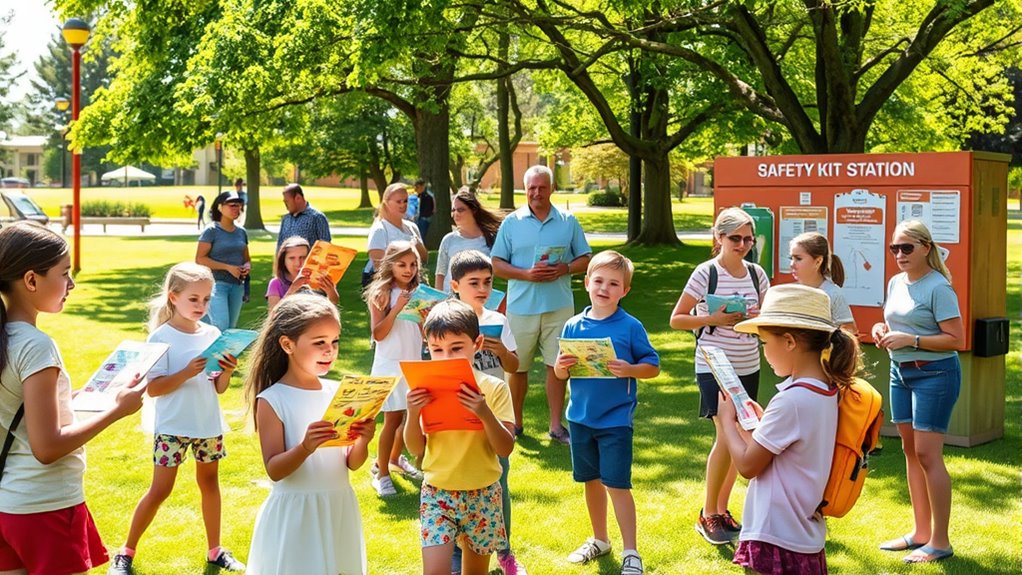
Since outdoor adventures often involve unpredictable elements, prioritizing safety is essential to guarantee everyone stays protected and enjoys the experience. Start by practicing hazard awareness; identify potential risks like uneven terrain, weather changes, or nearby water sources. Make sure everyone understands basic emergency preparedness, including how to respond if someone gets injured or lost. Carry a well-stocked first aid kit, and know how to use it. Keep communication devices charged and within reach, and establish a clear plan for emergencies. Remind everyone to stay alert, follow safety guidelines, and respect nature’s boundaries. Additionally, being aware of local store hours can help you plan your trip efficiently and avoid last-minute inconveniences such as last-minute store closures. By actively managing hazards and being prepared for emergencies, you can ensure your outdoor scavenger hunt remains fun, safe, and memorable for all participants.
Incorporating Technology Into Your Hunt

Integrating technology into your scavenger hunt can make the experience more engaging and efficient. Virtual reality can immerse players in themed environments, adding excitement and a sense of adventure. App integration simplifies gameplay by providing clues, timers, and score tracking all in one place. You can also use QR codes or augmented reality features to reveal hidden clues when scanned. Consider using GPS-based apps for outdoor hunts, guiding players to specific locations. Incorporate digital cameras or smartphones for photo challenges, making it easy to submit evidence. Additionally, virtual reality headsets can create immersive scenarios for themed hunts. By leveraging these tools, you make your scavenger hunt more interactive, streamlined, and memorable for everyone involved.
Frequently Asked Questions
How Can I Adapt Scavenger Hunts for Different Age Groups?
To adapt scavenger hunts for different age groups, tailor the challenges to their abilities. For younger kids, include simple, age-appropriate challenges like finding specific objects or solving basic puzzles. For older kids or teens, add skill-based activities such as riddles or tasks that require critical thinking. Adjust the difficulty level to keep everyone engaged and challenged, making sure each group has fun while building their skills.
What Are Some Budget-Friendly Materials for Creating Clues?
You can create budget-friendly clues using DIY puzzles and recycled materials. Repurpose cardboard boxes for riddles, turn old magazine clippings into picture clues, and write hints on scrap paper. Use items like bottle caps or buttons as markers or puzzle pieces, and get creative with natural objects like leaves or stones. These inexpensive, eco-friendly materials make your scavenger hunt fun, engaging, and easy on your wallet.
How Do I Involve Participants With Disabilities?
To involve participants with disabilities, prioritize inclusive participation through accessible design. Use clear, large print clues and incorporate tactile or auditory elements for those with visual or hearing impairments. guarantee the environment is navigable and free of obstacles. Adapt tasks to different abilities, encouraging everyone to contribute. By designing your scavenger hunt with accessibility in mind, you create an engaging experience where all participants feel valued and included.
What Are Eco-Friendly Options for Scavenger Hunt Supplies?
Like a gardener tending a delicate plant, you can choose eco-friendly scavenger hunt supplies that nurture the environment. Opt for recyclable materials like paper, cardboard, and reusable fabric bags. Use sustainable supplies such as bamboo utensils or plant-based markers. These choices create a ripple effect, reducing waste and encouraging eco-conscious habits among participants, turning your hunt into a celebration of nature’s resilience and your commitment to protecting it.
How Can I Extend the Fun After the Hunt Ends?
You can extend the fun by organizing team-building activities afterward, like group reflections or creative challenges that relate to the scavenger hunt. Celebrate participants with prize ideas such as eco-friendly rewards, personalized medals, or fun certificates. This not only keeps the excitement going but also encourages camaraderie and teamwork. Sharing photos and stories from the hunt can further build connections, making the experience memorable long after the event ends.
Conclusion
Now that you know the secrets to crafting unforgettable scavenger hunts indoors and out, are you ready to set your plan in motion? With each clue and challenge, you’re crafting moments of excitement and discovery. But beware—something unexpected might just be around the corner, waiting to turn your hunt into an adventure you’ll never forget. Are you prepared to open the mystery and make this experience truly legendary? The thrill begins now.