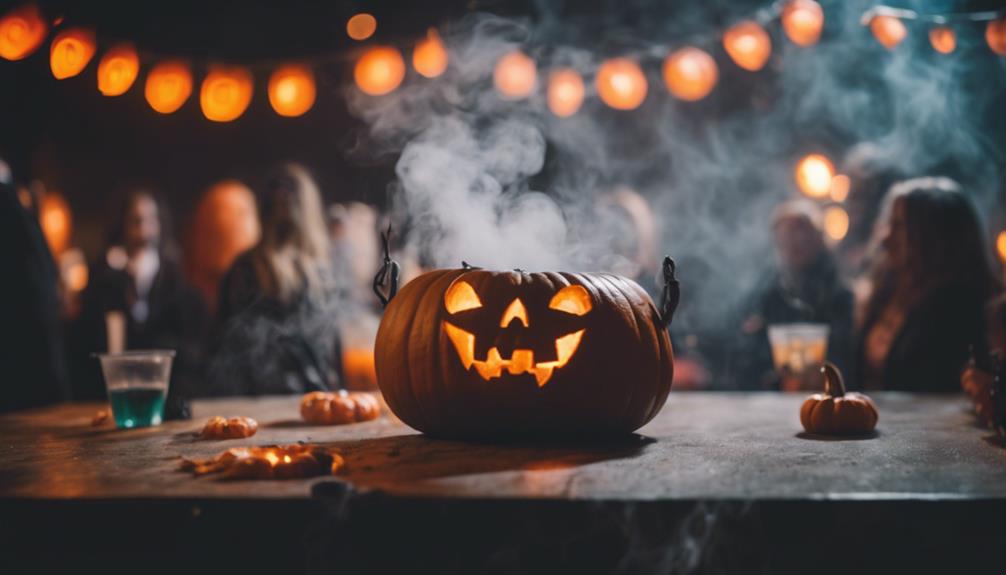
The ‘haunted carnival’ aesthetic comes from early 20th-century circus and fair posters that blend nostalgia with darker themes. It draws on stories of abandoned amusement parks and ghostly legends, mixing bright, whimsical imagery with unsettling details like sinister clowns and faded, distressed visuals. This style captures both innocence and decay, creating an eerie charm. If you keep exploring, you’ll discover how this haunting yet nostalgic look continues to influence art, fashion, and pop culture today.
Key Takeaways
- Rooted in early 20th-century fairs and circuses designed to attract audiences with colorful, exaggerated imagery.
- Evolved from nostalgic circus posters to darker interpretations influenced by horror and ghost stories.
- Clown imagery symbolizes both entertainment and sinister themes, contributing to the aesthetic’s unsettling duality.
- Artistic techniques like high contrast, bold fonts, and distressed visuals enhance the vintage, eerie feel.
- Popularized through horror media, abandoned amusement parks, and modern art, blending innocence with decay.
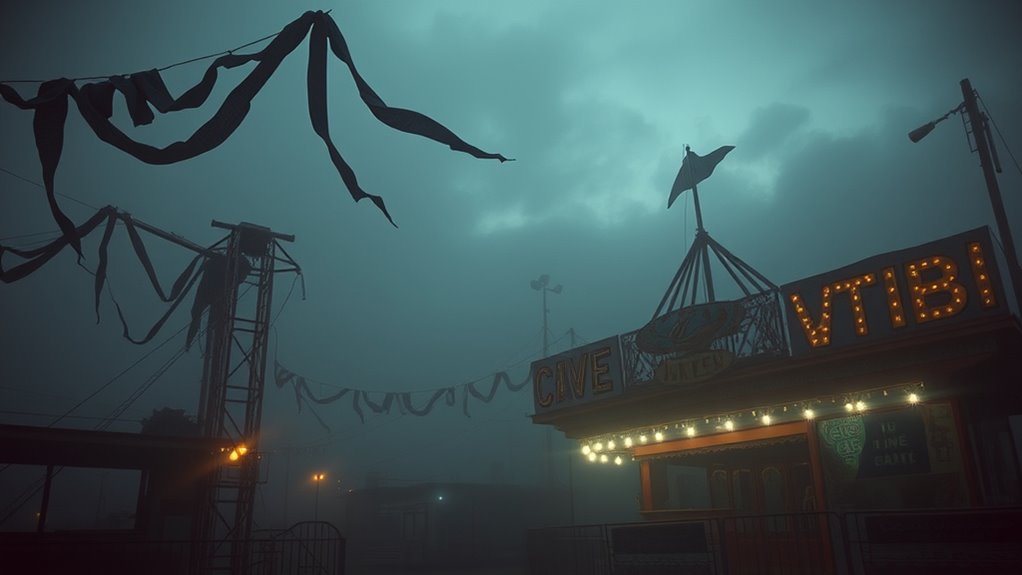
The haunted carnival aesthetic captures a chilling blend of eerie nostalgia and dark whimsy that draws you in with its unsettling charm. It’s a visual style that plays on childhood memories of bright lights and joyful rides, twisted into something darker and more mysterious. Central to this aesthetic is clown imagery, which teeters between playful and sinister. Clowns, once symbols of entertainment, have become emblematic of the unsettling vibe—think of their exaggerated smiles, painted faces, and piercing eyes that seem to hide something more sinister beneath their cheerful veneer. These images often appear in vintage posters, which serve as relics of a bygone era. The posters, with their faded colors and distressed edges, evoke a sense of faded glory and forgotten stories, adding layers of history and haunting nostalgia. They portray circus acts, acrobats, and, of course, clowns, all rendered with a mix of nostalgia and eeriness that fuels the aesthetic.
The origins of this look trace back to early 20th-century fairs and circuses, where the imagery was designed to attract crowds and evoke wonder. Over time, the same imagery took on a darker tone, fueled by stories of haunted amusement parks and ghostly legends that began to circulate in popular culture. The vintage posters, with their bold fonts and vivid illustrations, became iconic symbols of a whimsical yet ominous world. As horror and dark fantasy genres gained popularity, the aesthetic evolved, blending the innocence of childhood with a sinister undertone. Clown imagery, in particular, became a staple because of its dual nature—endearing yet frightening, familiar yet uncanny. This duality makes it perfect for creating an unsettling atmosphere. Additionally, the use of high contrast imagery and exaggerated features in vintage posters amplifies the eerie effect, making the visuals more striking and memorable.
Media like old carnival posters, horror movies, and stories of abandoned amusement parks helped cement the haunted carnival as a symbol of both nostalgia and dread. The aesthetic taps into a collective subconscious, where bright colors and cheerful motifs are tinged with shadows of decay and horror. Today, it continues to influence art, fashion, and pop culture, with vintage posters often serving as inspiration. They remind you of a time when innocence and darkness could coexist, and where the creepy charm of clown imagery adds an extra layer of intrigue. Whether you’re exploring haunted attractions or creating your own dark carnival visuals, understanding the roots of this aesthetic helps you appreciate its complex allure—a haunting echo of joy turned sinister.
Frequently Asked Questions
What Are Common Symbols Associated With the Haunted Carnival Aesthetic?
You’ll notice symbols like circus motifs, such as clowns, skewed tents, and carnival rides, that evoke a spooky vibe. Vintage posters with faded colors and eerie imagery often serve as haunting signs. You might also see broken masks, ghostly figures, and dark, twisted carousel animals. These symbols create a creepy, nostalgic feel, immersing you in that haunted carnival atmosphere that’s both enchanting and unsettling.
How Has the Haunted Carnival Aesthetic Influenced Modern Pop Culture?
You see the haunted carnival aesthetic in modern pop culture through circus-inspired fashion and vintage carnival posters, which evoke nostalgia and mystery. For example, fashion brands incorporate striped patterns and ruffled collars reminiscent of old-time circuses. This influence also appears in movies like “American Horror Story” and Halloween costumes, creating a sense of eerie allure. You can’t ignore how this aesthetic shapes both fashion trends and visual storytelling today.
Are There Specific Colors That Define This Aesthetic?
You’ll notice the haunted carnival aesthetic is defined by vintage color palettes and eerie lighting choices. Think muted reds, faded yellows, ghostly blues, and dark purples that evoke a sense of nostalgia and decay. These colors, combined with dim, flickering lights and shadows, create an unsettling atmosphere. The palette enhances the spooky vibe, making everything feel both nostalgic and ominous, perfect for capturing that haunted carnival spirit.
What Are Some Popular Costumes Inspired by the Haunted Carnival Theme?
You can go for clown costumes with exaggerated makeup and bright, contrasting colors to capture the haunted carnival vibe. Vintage carnival attire, like striped shirts, suspenders, and frilly dresses, also works perfectly. Add spooky touches like tattered fabrics, creepy masks, or ghostly makeup to enhance the haunted feel. These costumes let you embody the eerie, nostalgic spirit of the carnival while standing out at any spooky event.
How Can One Incorporate the Haunted Carnival Vibe Into Home Decor?
To create a haunted carnival vibe in your home, start with DIY haunted carnival decor like spooky lighting, ghostly props, and eerie table settings. Incorporate vintage carnival signage with distressed paint and bold lettering to add authenticity. Use dark, moody colors and unexpected details like tattered banners or creepy clown figures. This combination will evoke the mysterious, eerie atmosphere of a haunted carnival, transforming your space into an unsettling yet enthralling scene.
Conclusion
As you explore the haunted carnival aesthetic, you realize it’s like peering into a ghostly mirror reflecting society’s fears and fascination with darkness. Its eerie charm draws you in, blending nostalgia with a spine-chilling twist. This look isn’t just about spooky sights—it’s about embracing the thrill of the unknown. So, next time you see that faded marquee or tattered clown costume, remember, it’s not just haunted—it’s alive with history and mystery, waiting for you to discover.