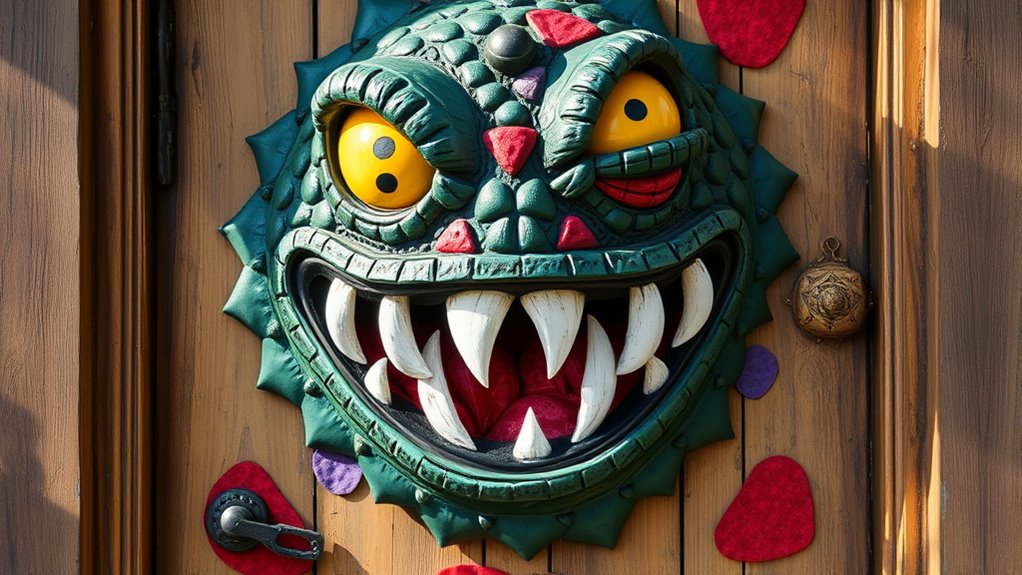

Transforming any entrance into a DIY monster door is easy and fun. Start by gathering supplies like foam, paint, and decorative elements, then plan your design to match your monster theme. Prepare the door surface for better adhesion, craft expressive eyes and features, and add textures for realism. Paint vibrant colors and attach accessories to bring your monster to life. For tips on finishing touches and making your project last, keep exploring for detailed guidance.
Key Takeaways
- Plan your monster design, select vibrant materials, and thoroughly prepare the door surface for optimal adhesion.
- Craft expressive features like eyes, teeth, and claws using foam, paper mache, or paint for a lively look.
- Add textures and details through layering, stippling, and carving to create depth and realism.
- Paint with bright colors, apply protective finishes, and ensure hardware is securely attached for durability.
- Personalize with accessories like googly eyes, fur, or themed embellishments to make your monster door stand out.
Gathering Your Supplies and Planning Your Monster Design
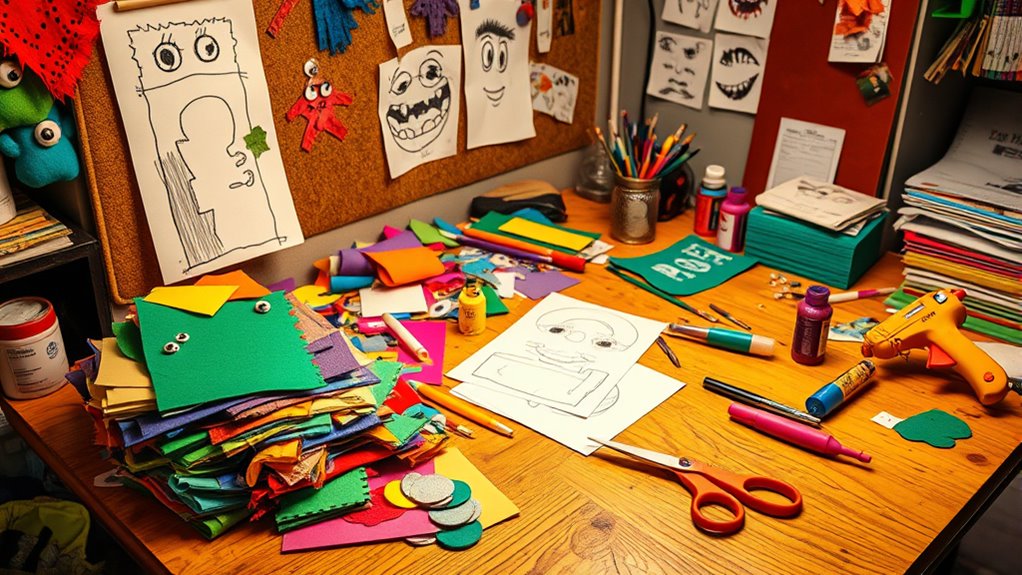
Before you begin building your monster door, it’s important to gather all the necessary supplies and plan out your design. Start by deciding on a monster theme that excites you—think big eyes, sharp teeth, or spooky claws. This will guide your material selection, ensuring you choose items that fit your vision, like foam, cardboard, paint, and fabric. Make a list of everything you’ll need, including adhesives, scissors, and any decorative elements. Sketch out your design to visualize how each feature will come together. Planning ahead helps you stay organized and prevents surprises during construction. Remember, the more detailed your plan, the easier it will be to bring your monster to life exactly as you imagine. Incorporating detailed planning can enhance your overall project success.
Preparing the Door Surface for Decoration
Before decorating your door, make sure the surface is clean and completely dry to guarantee your designs stick well. Next, lightly sand the door to create a smooth base, removing any rough patches. Finally, apply a primer to improve adhesion and help your decorations stay in place longer. Incorporating celebrity lifestyle insights can also inspire creative decorating themes for your DIY monster door.
Clean and Dry Surface
Start by wiping down the door with a damp cloth to remove dust, dirt, and grease. Proper door maintenance begins with a thorough cleaning, guaranteeing the surface is free of debris that could interfere with adhesion. Use effective cleaning techniques like a gentle scrub with mild soap and water, paying attention to corners and crevices. Once cleaned, dry the door completely with a clean towel or cloth to prevent moisture from causing issues later. A dry, smooth surface is essential for a professional-looking finish and helps paint or decorations stick properly. Avoid rushing this step, as any lingering dirt or dampness can compromise your design. Taking the time to clean and dry now ensures your monster door will look great and last longer. Additionally, ensuring the surface is free of irregularities helps achieve a more even and polished final result.
Sand for Smoothness
To achieve a smooth, professional finish on your monster door, it is vital to sand the surface thoroughly. Sand smoothing helps eliminate imperfections, such as rough spots or splinters, guaranteeing the surface is even and ready for decoration. Use a fine-grit sandpaper and apply gentle, consistent pressure as you work across the entire door. Focus on areas with any bumps or uneven patches, paying close attention to corners and edges. Proper surface preparation through sanding enhances paint or decorative materials’ adhesion, preventing peeling or chipping later on. Take your time to remove all roughness and create a uniformly smooth surface. Once finished, wipe away dust with a damp cloth to guarantee the surface is clean and ready for the next step in your monster door transformation. Additionally, understanding city dynamics can help you choose the best placement and style for your door, especially if you want it to stand out or blend in with your surroundings.
Prime for Adhesion
Applying a primer is essential to guarantee your decorative materials stick properly and last longer. An adhesion primer creates a strong bond between the door’s surface and your paint or decorations, ensuring they don’t peel or chip over time. Proper surface prep is key—clean the door thoroughly to remove dust, grease, or old paint that could interfere with adherence. Use an adhesion primer suitable for your door material, whether wood, metal, or composite. Apply the primer evenly with a brush or roller, and let it dry completely before moving on. Skipping this step can lead to uneven finishes or premature wear. Taking the time to prime correctly ensures your monster door will stay striking and durable through all those creative transformations.
Crafting the Monster’s Eyes and Facial Features

Creating the monster’s eyes and facial features is an exciting step that really brings your door to life. Start by shaping your monster eyes with foam, paper mache, or painted circles, giving them a bold, expressive look. Use different sizes and shapes to create a variety of facial expressions—wide eyes for surprise or narrow, slanted eyes for menace. Add eyelids, brows, and pupils to enhance the character’s personality. For facial features, craft a crooked mouth, jagged teeth, or a goofy grin using foam or paper cutouts. Attach these elements securely with glue or adhesive, ensuring they stand out and contribute to the overall personality of your monster. This step transforms a simple door into a lively, eye-catching entrance full of character. Recognizing the importance of proper documentation can help ensure your creative project stays on track and avoids unnecessary delays.
Adding Texture and Details to Bring Your Monster to Life
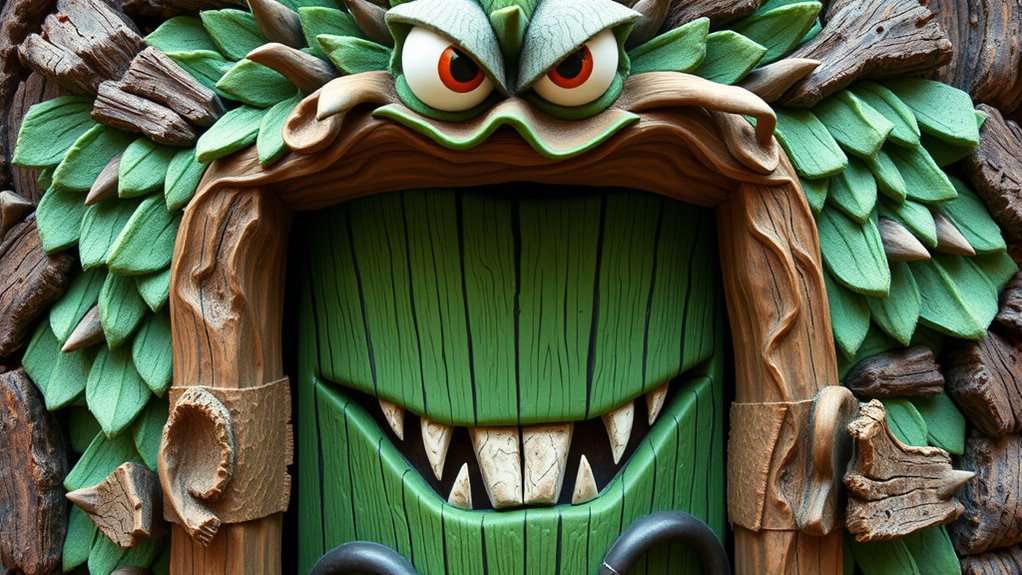
Adding texture and details is what truly makes your monster stand out and feel alive. Using texture techniques like layering, stippling, and carving adds depth and realism. Detail highlights, such as gloss or matte finishes, emphasize features and make your monster pop. To guide your work, consider this table:
| Texture Technique | Effect | Best Use |
|---|---|---|
| Layering | Adds depth | Skin or fur surfaces |
| Stippling | Creates roughness | Scaly or bumpy areas |
| Carving | Defines features | Sharp or prominent details |
| Sanding | Smooths surfaces | Transition zones |
| Highlighting | Emphasizes features | Eyes, teeth, or textured areas |
Additionally, applying proper surface preparation ensures your textures adhere well and last longer.
Painting and Coloring Your Monster Door
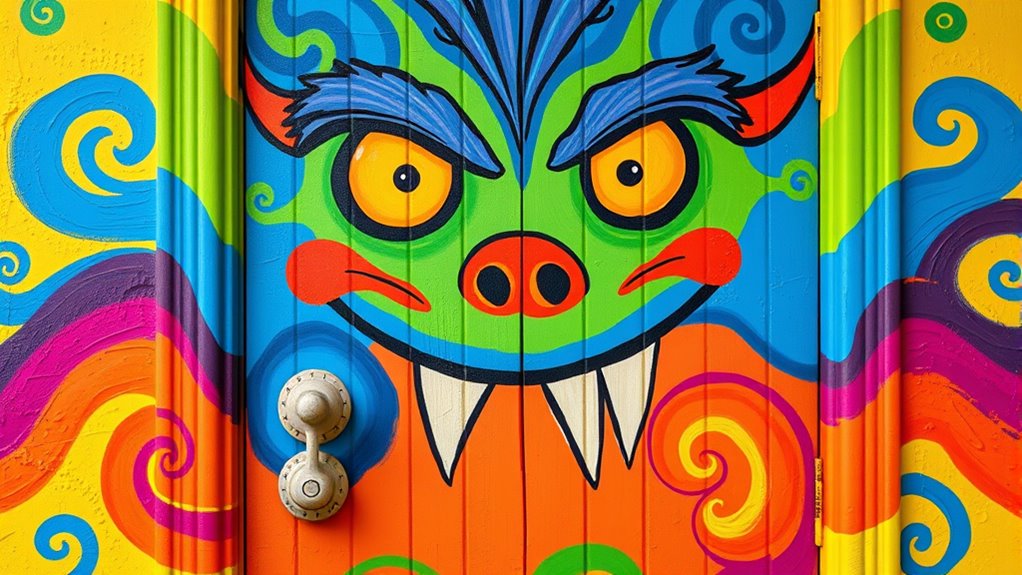
When you start painting your monster door, pick bright colors that make it pop and catch attention. Adding textures and small details can give your monster more character and personality. Make sure to use safe, non-toxic paints so your creation stays vibrant and kid-friendly. Practicing mindful organization during your project can help you keep your workspace tidy and efficient.
Choosing Bright Colors
Have you ever wondered how bright, bold colors can make your monster door really stand out? Choosing the right colors is key to creating an eye-catching design. Consider color schemes that evoke fun and excitement, like vibrant reds, electric blues, or lime greens. Think about color psychology—bright colors can energize or cheer up anyone who sees your door. Use contrasting shades to highlight different features, making your monster come alive. Avoid dull or muted tones if you want a lively, playful look. Instead, pick hues that reflect your personality and the mood you want to set. Remember, the goal is to grab attention and make your door a fun, welcoming entrance that sparks curiosity. Practicing stillness can help you focus on your creative process and bring your vibrant ideas to life with clarity.
Adding Textures & Details
Bright colors set the foundation for a fun and lively monster door, but adding textures and details really brings it to life. To enhance your design, focus on texture enhancement and detail incorporation. First, use different brush techniques or sponges to create textured effects that mimic fur, scales, or rough skin. Second, add small details like highlights, shadows, or tiny accents to give depth and personality. Third, consider layering paints or using mixed media such as fabric or paper to create unique surface textures. These steps help your monster door stand out by adding dimension and visual interest. Additionally, understanding the importance of sound design can inspire creative ways to bring your project to life through sensory detail. Remember, the goal is to make your monster seem more realistic and engaging through thoughtful texture and detail work.
Using Safe Paints
Using safe paints is essential to guarantee your monster door is both vibrant and non-toxic, especially if children will be involved in the project. Opt for non toxic paints that are specifically labeled as child safe materials. These paints prevent harmful chemicals from leaching out and ensure a safe environment for everyone. When choosing your colors, look for water-based or natural options, which are easy to clean and environmentally friendly. Apply multiple thin coats for even coverage and vivid hues. Be sure to work in a well-ventilated area, and wear protective gear if necessary. Using safe paints not only protects your family’s health but also ensures your creative masterpiece remains colorful and fun for years to come. Fostering a safe environment is a key aspect of creative projects involving children.
Creating and Attaching Accessories for Extra Fun
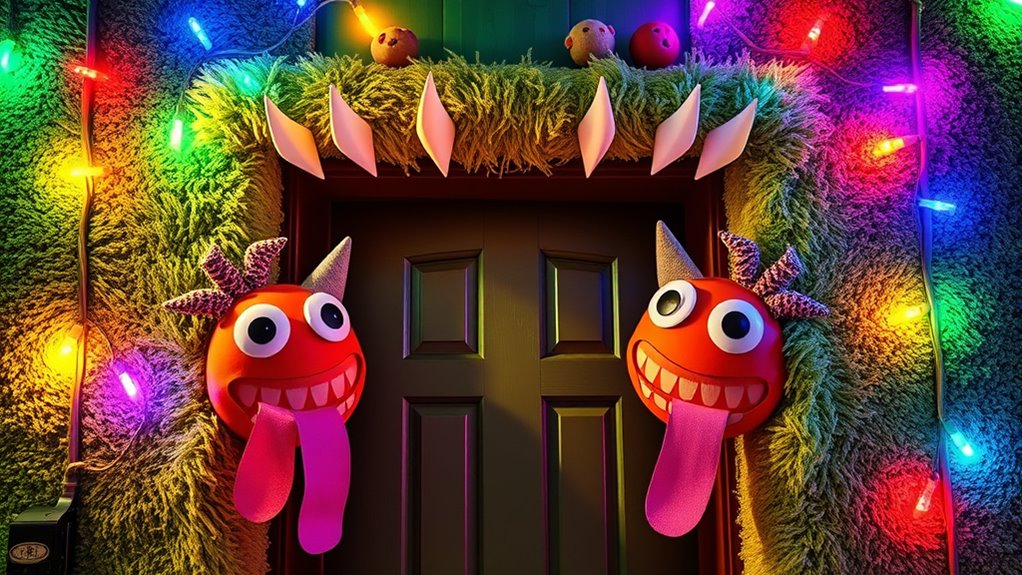
Adding accessories to your monster door can turn a simple project into a fun and interactive feature. To enhance its appeal, consider using monster accessories and themed embellishments that match your desired look. First, attach googly eyes or LED eyes to make your monster appear more lively. Second, add a tongue made from foam or fabric for a playful touch. Third, incorporate themed embellishments like claws, teeth, or fur strips to give your monster character depth. These accessories not only make your door more engaging but also allow you to personalize it easily. Using lightweight materials ensures they stay securely attached, and you can switch out items for different themes or seasons. Additionally, adding dynamic features can make your monster door even more captivating and fun to interact with. Have fun customizing your monster door with these simple, creative accessories!
Final Touches and Ensuring Durability
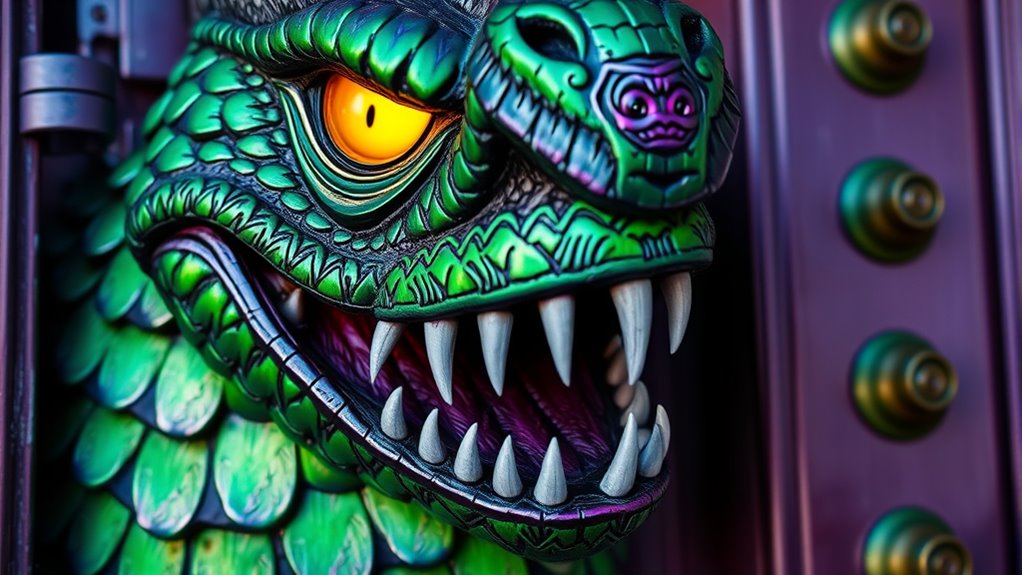
To guarantee your monster door stays impressive and functional over time, focus on applying final touches that enhance its appearance and durability. Start by securely attaching high-quality door hinges to ensure smooth opening and closing, preventing sagging or misalignment. Next, apply a weatherproof coating to protect the surface from moisture, sun damage, and other elements that could cause deterioration. Make sure to cover all painted or decorative areas thoroughly for maximum protection. Additionally, check all hardware periodically and tighten any loose screws or hinges. These small steps help prolong your door’s lifespan and keep it looking great. Remember, investing in durable materials and protective finishes now saves you effort and repairs later, maintaining your monster door’s spooky charm for years to come.
Tips for Customizing and Personalizing Your Monster Door
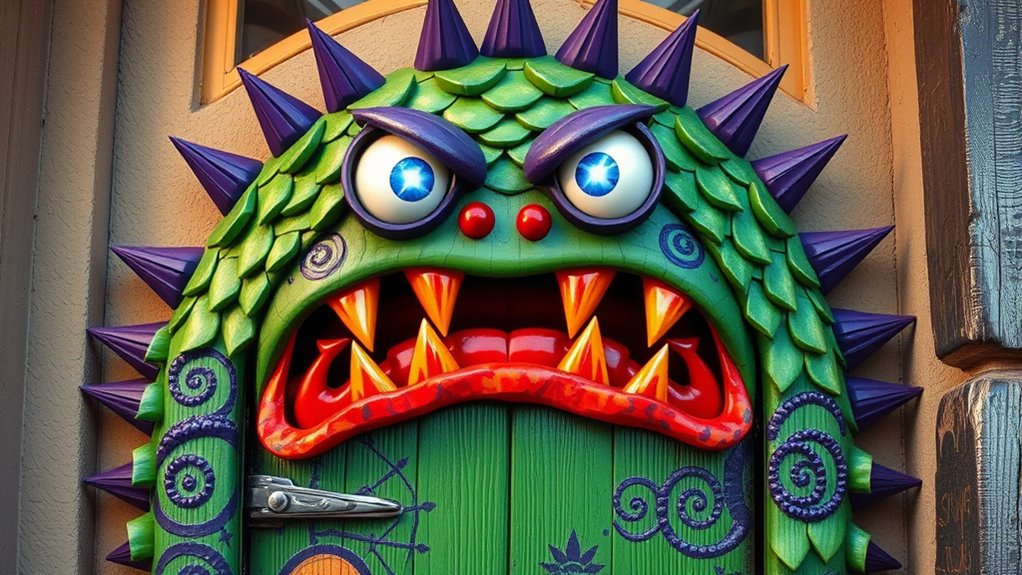
Once your monster door is securely assembled and protected, it’s time to make it uniquely yours. To add a personal touch, consider these customization ideas:
- Paint your monster’s features in bold, vibrant colors that match your style or home decor.
- Add accessories like googly eyes, textured fur, or fabric scraps to give your monster a unique personality.
- Use stencils or freehand techniques to write funny or spooky phrases that reflect your sense of humor or theme.
- Incorporate visualization techniques to help you plan and design your custom monster door with clarity and creativity.
Personalization tips include experimenting with different materials, layering textures, and incorporating small details that make your door stand out. These ideas help you craft a one-of-a-kind monster that’s not only fun but also showcases your creativity.
Frequently Asked Questions
How Can I Make My Monster Door More Weather-Resistant?
To make your monster door more weather-resistant, start by applying weatherproofing techniques like sealing all edges with outdoor-grade caulk. Use durable paint options designed for exterior surfaces, such as acrylic or epoxy-based paints, to safeguard against moisture and UV damage. Consider adding a clear waterproof sealant over the paint for extra protection. Regularly inspect and reapply these coatings to make certain your monster door stays durable and weatherproof through the seasons.
What Safety Precautions Should I Consider During Construction?
You should prioritize safety by keeping child safety and tool safety in mind during construction. Wear protective gear like goggles and gloves, secure tools when not in use, and work in a well-ventilated area. Keep children away from the workspace to prevent accidents. Follow all instructions carefully, use tools properly, and stay alert to potential hazards. Safety precautions protect everyone, making your project safe and enjoyable.
Can I Use Eco-Friendly Materials for This Project?
Yes, you can definitely use eco-friendly materials for your DIY monster door. Opt for sustainable fabrics for any fabric elements, and choose biodegradable paints to reduce environmental impact. These materials are safe, non-toxic, and help you create a fun, eco-conscious project. Just make certain the biodegradable paints are suitable for the surface you’re working on, and follow the manufacturer’s instructions for the best results.
How Do I Ensure the Door Remains Lightweight yet Durable?
To keep your door lightweight yet durable, choose lightweight materials like foam board or blywood, which are easy to handle and eco-friendly. Strengthen the door with structural reinforcement such as wooden frames or metal supports, ensuring it withstands use. Regularly inspect and tighten any fasteners or reinforcements. This combination provides the perfect balance of lightness and durability, making your DIY monster door both fun and long-lasting.
What Are Some Quick Fixes for Common Decorating Mistakes?
You might think fixing decorating mistakes takes hours, but quick fixes can work wonders. Start by using some decorating tips like repositioning misplaced items or adding a fresh coat of paint to cover up imperfections. For uneven surfaces, apply spackle or wall filler, then sand smoothly. Rearrange furniture for better flow, and use accessories to hide flaws. These quick fixes immediately elevate your space without the need for a complete overhaul.
Conclusion
Now that your monster door is complete, step back and admire your masterpiece—it’s a playful guardian ready to surprise and delight. With each detail, you’ve brought a little character to life, transforming an ordinary entrance into a whimsical gateway. Your creativity has painted a smile on the mundane, turning it into a fun, monstrous masterpiece. Get ready to welcome friends with a door that’s as lively and unique as your imagination—welcome to a world where every entry is an adventure!