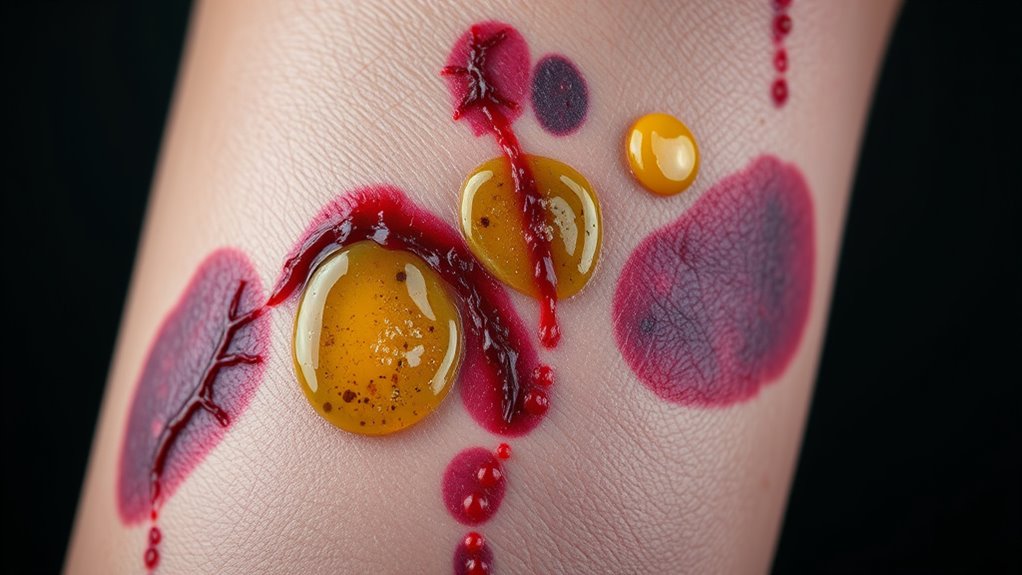

To master SFX makeup for bruises, cuts, and scars, gather essential tools like varied foundation shades, sponges, and fine brushes. Use layered colors—reds, purples, blues for bruises, browns and blacks for scars—and blend carefully with dabbing motions. Focus on seamlessly matching skin tones and building depth with darker shades around edges. Patience and practice improve your skills, so keep experimenting; if you continue exploring, you’ll uncover even more techniques to perfect your effects.

Get decor and gifts delivered free with Prime
- Fast, free delivery on millions of items
- Prime Video, Amazon Music and more included
- Member-only deals all year
Key Takeaways
- Use layered colors like reds, purples, blues, and yellows to create realistic bruise effects through blending and shading.
- Apply darker shades around edges of cuts and scars to add depth and dimension for a more authentic look.
- Select appropriate foundation shades and tools, such as sponges and brushes, for smooth blending and seamless integration with skin.
- Employ stippling, dabbing, and light motions to blend colors naturally and avoid harsh lines in injury effects.
- Practice patience and proper technique, including working from dark to light shades, to achieve convincing and realistic SFX makeup results.
SFX makeup kit for bruises cuts scars
As an affiliate, we earn on qualifying purchases.
As an affiliate, we earn on qualifying purchases.
Essential Materials and Tools for SFX Makeup
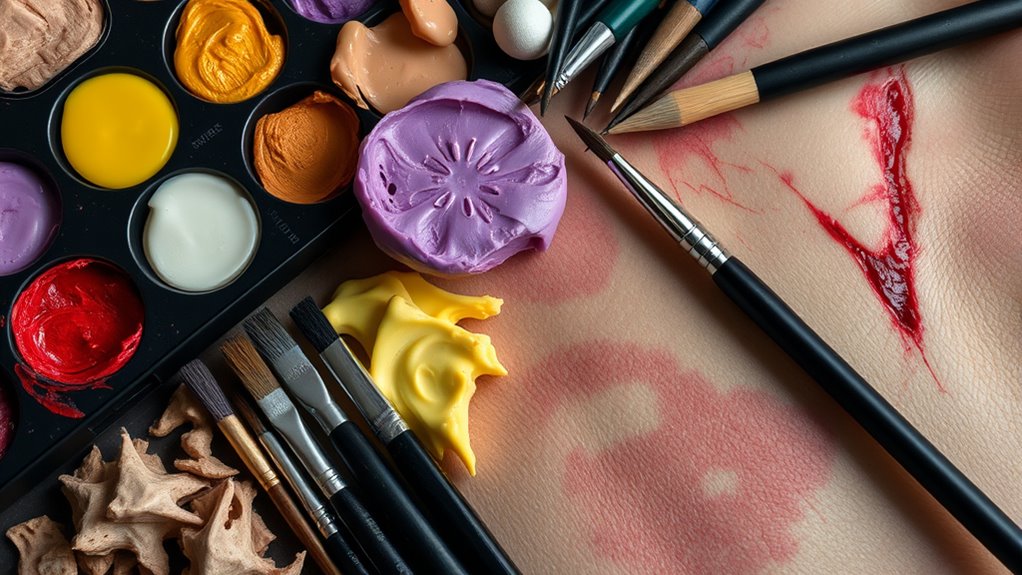
To get started with SFX makeup, you’ll need the right materials and tools. First, gather a variety of foundation shades for accurate color matching to create realistic bruises, cuts, or scars. A good sponge is essential for smooth, even application of base colors and blending. Use different-sized sponges for detailed work and broad coverage. Keep a selection of brushes for precise detailing and stippling. You’ll also want makeup palettes with flesh tones, reds, purples, and blacks to recreate the natural hues of bruises or wounds. Don’t forget setting powders to guarantee your makeup stays put. Having these materials ready helps you achieve seamless blends and realistic effects, making your SFX makeup look more authentic and professional. Proper preparation is key to mastering realistic special effects.
Techniques for Creating Realistic Bruises, Cuts, and Scars
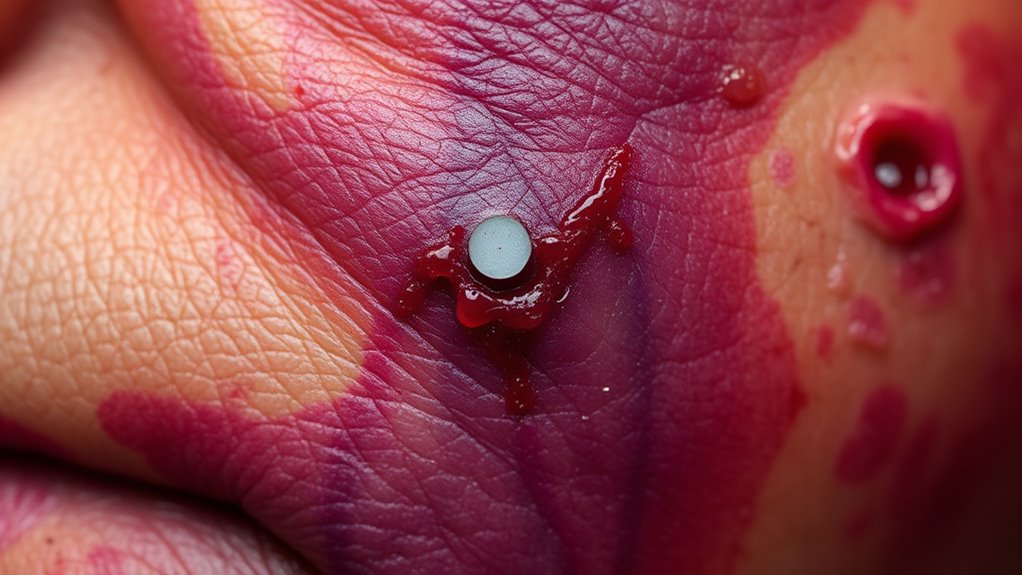
Creating realistic bruises, cuts, and scars involves strategic layering and color blending to mimic natural injuries. Start with a well-chosen color palette that includes purples, reds, blues, and yellows for bruises, and browns, reds, and blacks for scars and cuts. Use light application techniques to build depth gradually, applying darker shades around the edges for dimension. For cuts, layer reds, purples, and browns to simulate fresh or healed wounds. Blending is key—use a stippling or dabbing motion to soften harsh lines and create a more natural appearance. Remember, the application techniques you choose can dramatically affect realism; always work from dark to light shades and blend seamlessly to achieve convincing, lifelike injury effects. Additionally, understanding color blending techniques can significantly enhance the authenticity of your makeup.
Tips for Applying and Blending SFX Makeup Effectively
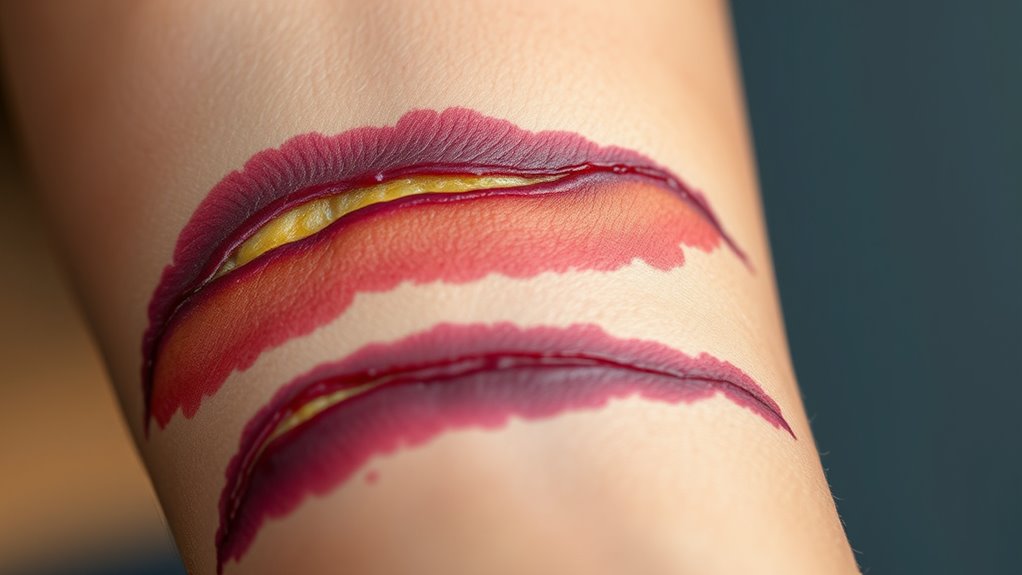
Applying and blending SFX makeup effectively requires attention to detail and patience. Start by accurately color matching your prosthetic or base shades to your skin tone, ensuring a seamless look. Use blending techniques such as light, dabbing motions to smooth edges and avoid harsh lines. When applying colors, layer gradually, building intensity without overdoing it. To merge effectively, keep your brushes or sponges moist but not soaked, and work in small sections. Pay close attention to transitions between different shades, blending carefully to create realistic textures and depth. Remember, steady hands and a gentle touch are key. With practice, you’ll develop a keen eye for matching colors and blending seamlessly, making your SFX makeup look more convincing and professional. Additionally, understanding market trends and news can help you stay current with the latest techniques and styles for more authentic effects.
Frequently Asked Questions
How Long Does SFX Makeup Typically Last Before Needing Touch-Ups?
Your SFX makeup typically lasts about 4 to 8 hours before needing touch-ups, depending on factors like skin type and environment. To maximize makeup longevity, keep your skin clean and avoid excessive sweating or touching your face. For touch-up tips, carry a small set of products like setting spray, adhesive, and extra makeup. This way, you can quickly refresh your look and maintain your realistic effects throughout the day.
Can Beginners Create Professional-Looking Effects Without Prior Experience?
Yes, you can create professional-looking effects even as a beginner. Focus on DIY techniques like layering colors and blending to add realism. Use professional tools such as sponges, brushes, and stippling brushes to enhance your work. Practice regularly, watch tutorials, and experiment with different products. With patience and attention to detail, you’ll improve quickly and achieve impressive effects that look like they were made by a pro.
What Are the Best Methods for Removing SFX Makeup Safely?
A stitch in time saves nine, so always use gentle makeup removal techniques. To remove SFX makeup safely, opt for oil-based makeup removers or gentle cleansers, and avoid harsh scrubbing. Consider skin sensitivity by testing products first and using soft cotton pads or wipes. Pat, don’t rub, to protect your skin. This way, you’ll preserve your skin’s health while effectively removing makeup.
How Do Lighting Conditions Affect the Appearance of SFX Effects?
Lighting impact is vital in highlighting or softening your sfx effects, while shadow play adds depth and realism. Bright, even lighting can make scars and bruises look flat, whereas dim or directional lighting enhances shadows, emphasizing texture and contour. You should adjust your lighting setup based on the mood you want to create, ensuring your effects appear convincing and striking under different conditions.
Are There Skin Types or Conditions That Should Avoid Certain SFX Materials?
You should avoid certain SFX materials if you have skin sensitivities or allergies. Always check for allergy considerations before applying products, especially latex or adhesives, which can cause reactions. Test new materials on a small skin patch first. If you notice redness, itching, or swelling, remove the product immediately and consult a dermatologist. Being cautious helps prevent uncomfortable or harmful reactions during your makeup application.
Conclusion
With the right tools and techniques, you can transform your SFX makeup into a masterpiece that tells a story. Practice makes perfect, so don’t be afraid to experiment and embrace your creative chaos. Remember, your skills will grow like a wildflower in spring—beautiful and unstoppable. Keep honing your craft, and soon, your bruises, cuts, and scars will look so real, even the most skeptical will be convinced.
Halloween Picks
halloween
As an affiliate, we earn on qualifying purchases.