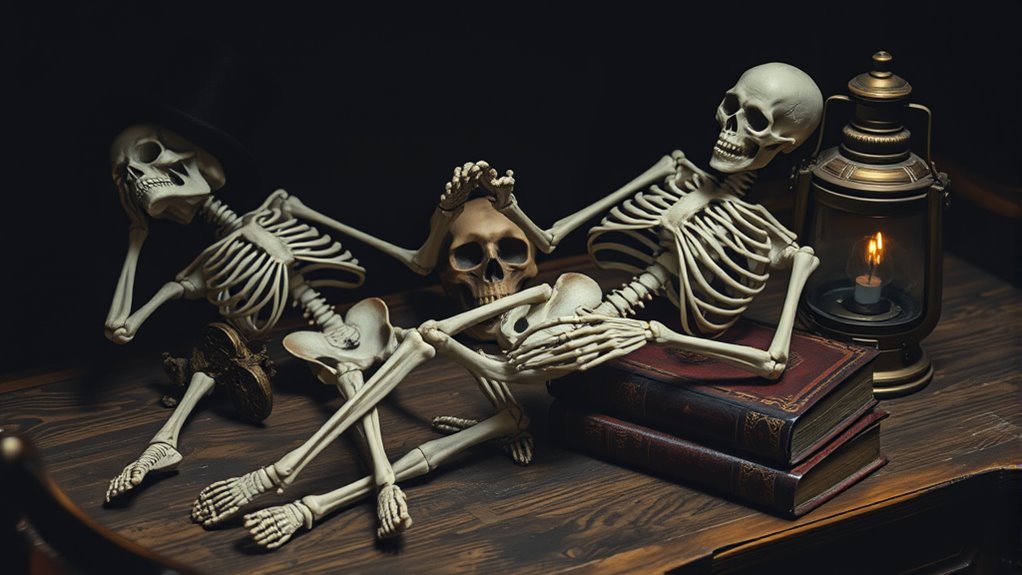

To create mesmerizing skeleton scenes, focus on choosing dynamic poses that convey motion, emotion, or relaxation. Use props like miniature furniture, tools, or themed accessories to add storytelling elements, and play with lighting and shadows to set a haunting atmosphere. Arrange skeletons in interactions or group scenes to boost storytelling depth. Incorporate background details and consider themed costumes for special occasions. Want to explore more ideas for impressive skeleton displays? Keep going to discover how!
Key Takeaways
- Use expressive skeleton poses with dynamic limb angles and facial cues to convey emotion and action in scene storytelling.
- Incorporate scene-specific props like furniture, weapons, or accessories to enhance realism and narrative depth.
- Position skeletons around props with natural gestures such as pointing or leaning to suggest interaction.
- Apply lighting techniques and shadow effects to create mood, highlight key features, and add mystery or drama.
- Combine costume styles, posture, and props to craft immersive, themed scenes like battles, rituals, or conversations.
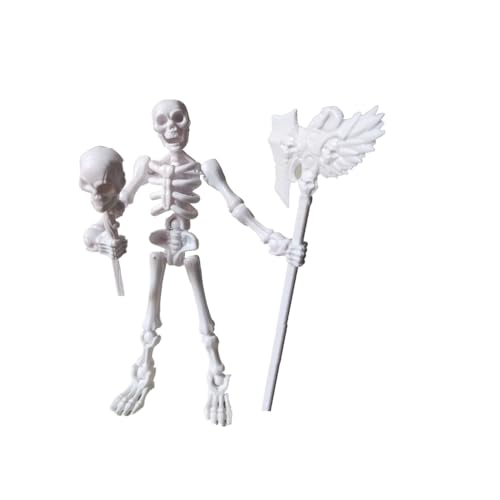
QWZFirst T13 Skeleton Action Figure, Movable Articulated Human Skeleton, 5.12-in Action Figure Wearing Multiple Sets of Weapons, Can Be Painted, Suitable for Collectors As Desktop Decorations (1pcs)
Multiple applicable scenarios : You can use T13 skeleton action figure on desks, backpacks, and more, all of…
As an affiliate, we earn on qualifying purchases.
As an affiliate, we earn on qualifying purchases.
Classic Gesture Poses for Skeletons

Classic gesture poses for skeletons serve as an essential foundation for creating lifelike and expressive character animations. These poses communicate emotion and intent through the skeleton’s bone articulation, allowing viewers to interpret the character’s mood. Focus on skull symbolism—how the skull’s tilt or orientation can suggest curiosity, menace, or joy—adding depth to your skeleton’s expression. Properly arranged limb positions and spine curves help convey movement and attitude without overcomplicating the figure. Remember, the key is to emphasize natural, balanced gestures that highlight the skeleton’s structure. By mastering these classic poses, you establish a strong base for more dynamic scenes, ensuring your skeletons appear believable and engaging, whether in static stances or preparatory steps for action.

Rileryan 53 Pcs 1:12 Scale Magic Witchy Mini House Kit Halloween Miniatures Accessories Wooden Furnitures Bookshelf Bookcase 30 Mini Books Halloween Decoration
Rich Scene: Contains various mini Halloween figurines like witch hats, cauldrons, and magic wands, easily creating a miniature…
As an affiliate, we earn on qualifying purchases.
As an affiliate, we earn on qualifying purchases.
Dynamic Action Poses to Capture Movement
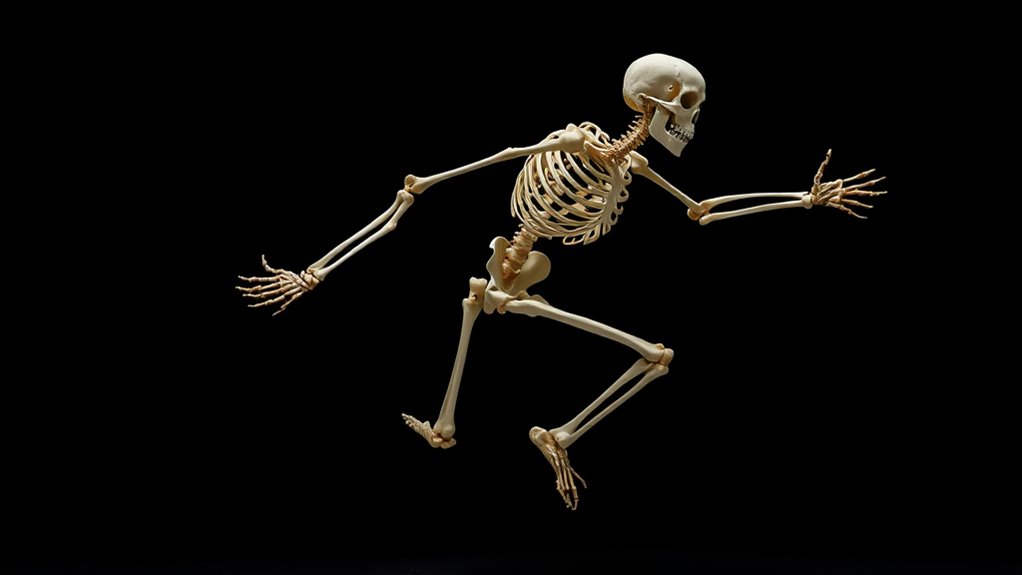
To effectively capture movement in your skeleton scenes, focus on dynamic action poses that convey energy and momentum. Understanding bone articulation and skeleton anatomy helps you create realistic poses that feel alive. Think about how joints bend and stretch, emphasizing motion rather than static positions. Use these tips to enhance your scene: – Exaggerate limb angles to suggest speed or strain – Shift weight to one leg for balance and dynamism – Extend limbs to show reaching or jumping – Tilt the torso to imply turning or twisting – Play with line of action to unify the pose and enhance flow. Additionally, observing how joint movement contributes to natural positioning can improve the believability of your figures.
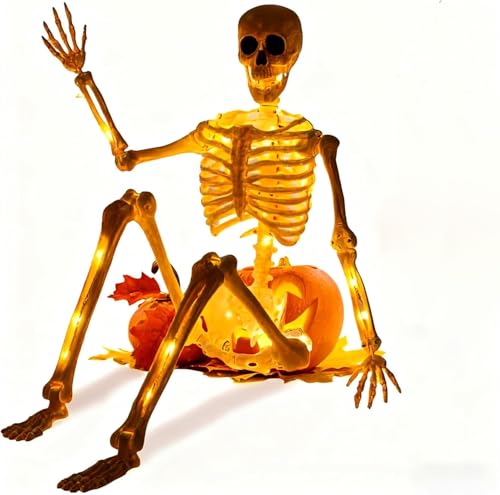
NMM 5.5 FT Halloween Posable Skeleton Life Size, Full Body Moveable Joints Giant Skeleton with LED Light and Lanyard, Halloween Decoration Outdoor Skeletons for Haunted House, Spooky Scene Theme Party
【Giant Skeleton with 8-Mode LED Lighting】 Skeletons for Halloween create the ultimate spooky atmosphere with 8 adjustable LED…
As an affiliate, we earn on qualifying purchases.
As an affiliate, we earn on qualifying purchases.
Resting and Relaxed Skeleton Positions
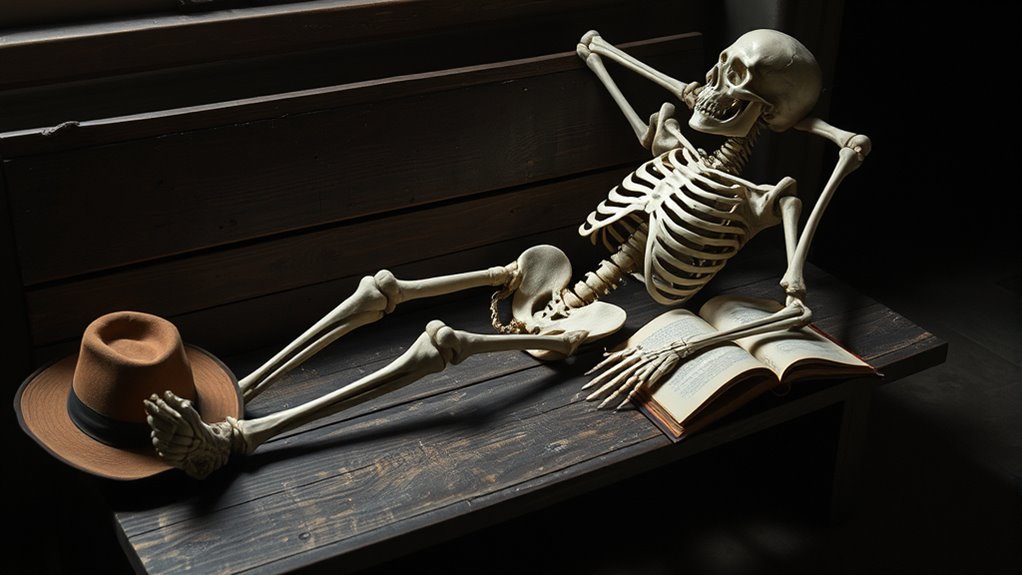
When your skeleton is at rest, it adopts natural postures that reflect comfort and ease. You’ll notice relaxed limb arrangements, with joints slightly bent or loosely positioned, avoiding tension. Casual sitting poses, like leaning back or crossing legs, help bring these relaxed states to life in your sketches.
Natural Rest Postures
Skeletons naturally settle into specific postures when at rest, reflecting their relaxed state. These poses often feature subtle, natural alignments that convey calmness and ease. You’ll notice that their limbs might gently curve, with ribs softly expanding and contracting. When designing scenes, consider the decorative motifs that enhance these resting postures, such as ornate borders or symbolic elements. The color schemes used for these skeletons tend to be muted or earthy, emphasizing serenity. Key aspects include:
- Slight tilts of the skull, suggesting peaceful sleep
- Relaxed shoulder blades, indicating tranquility
- Legs casually crossed or extended
- Hands resting on hips or lap
- Surrounded by calming, harmonious hues
- Contrast ratio plays a role in highlighting the subtle details of these poses, making the scene more visually appealing and realistic.
This approach creates a sense of quiet repose, emphasizing the skeleton’s natural resting state.
Relaxed Limb Arrangements
Relaxed limb arrangements deepen the sense of calmness in resting skeletons, highlighting their natural ease. When positioning your skeleton, let the arms and legs fall naturally, avoiding stiff or tense angles. This relaxed posture makes decorative skulls appear more serene, emphasizing a peaceful vibe. You can add skeletal jewelry, like necklaces or rings, to suggest a gentle touch of personality, further enhancing the calm mood. Keep the limbs slightly bent or loosely draped to avoid rigidity. Such arrangements evoke a sense of repose and comfort, making the scene feel more authentic and inviting. Additionally, choosing appropriate lighting can accentuate the relaxed atmosphere and highlight the natural ease of the pose. By avoiding overly strict or formal poses, you emphasize the skeleton’s natural state of rest, creating a visual story of tranquility and effortless repose.
Casual Sitting Poses
To create a casual sitting pose that feels natural and inviting, position your skeleton so it appears comfortably at rest. This relaxed stance works well for various scenes like dining setups or classroom arrangements, where a laid-back posture enhances authenticity. You can have the skeleton slouch slightly, with arms resting on the thighs or the back of a chair. Keep the shoulders relaxed and avoid stiff angles for a more genuine look. Consider adding small details, such as a tilted head or loosely crossed legs, to emphasize ease. These subtle touches make your scene more relatable and engaging. Be mindful of posing techniques to achieve the most realistic and approachable appearance. Use these tips to craft scenes where your skeleton appears approachable and comfortable, perfect for depicting everyday moments or social interactions.
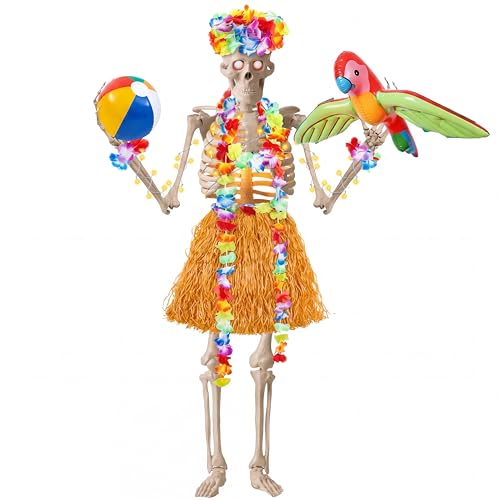
Lunmon 8 Pcs Summer Hawaiian 12 ft Skeleton Costume Accessories Hawaiian Hula Grass Skirt Tropical Flower Garlands Wristbands Beach Ball Skeleton Outfit for Garden Lawn Decor Luau Party
12 Ft Skeleton Summer Hawaiian Costume Set: This package comes with 7 pcs 12 ft Skeleton Summer Hawaiian…
As an affiliate, we earn on qualifying purchases.
As an affiliate, we earn on qualifying purchases.
Skeletons in Dramatic and Expressive Stances
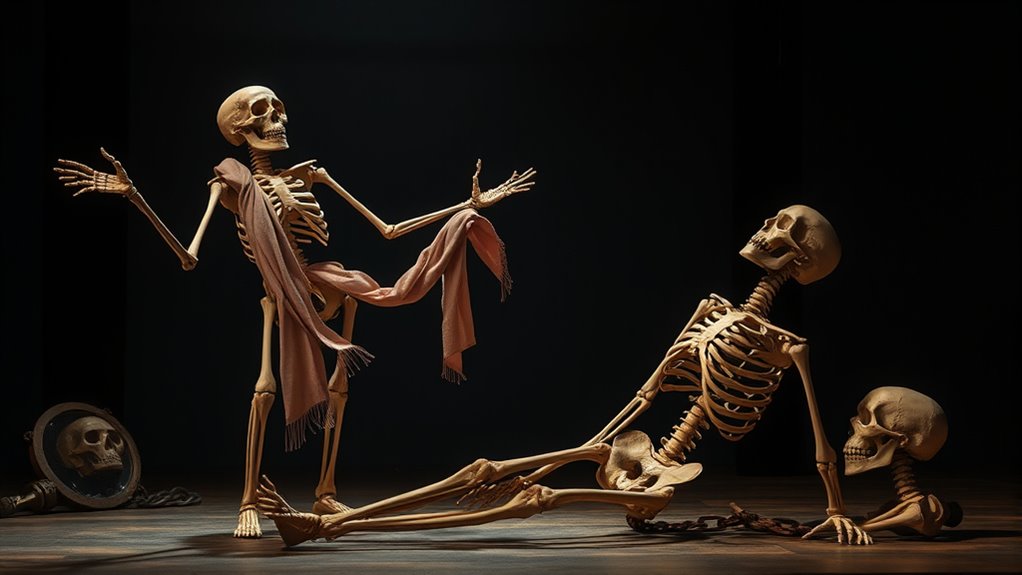
You can use dynamic body language and expressive gestures to convey powerful emotions through your skeleton. Your posture choices and gestures influence the mood and story you’re telling. By intentionally selecting dramatic stances, you enhance the impact of your scene and connect more deeply with your audience. Incorporating body positioning techniques can further amplify the emotional expression and storytelling effectiveness.
Dynamic Body Language
Skeletons come alive through their dramatic and expressive stances, conveying emotion and intent without words. You can enhance this by emphasizing their facial expressions—a raised brow or clenched jaw adds tension. Use costume variations to suggest character or mood, from tattered rags to regal robes. Dynamic body language involves deliberate poses that communicate strength, hesitation, or despair. Consider these key elements:
- Sharp angles and open limbs to suggest aggression or confidence
- Curled or hunched shoulders to show vulnerability
- Leaning forward or backward to indicate engagement or retreat
- Gestures that direct attention or emotion
- Facial cues like eye focus or mouth shape to reinforce feelings
Mastering these techniques helps bring your skeletons to life, making their silent stories powerful and compelling. Incorporating dynamic poses inspired by animated movies can further elevate their expressiveness and storytelling impact.
Gesture and Gesture Influence
Gesture is a powerful tool for conveying emotion and intent in skeleton scenes, shaping how characters communicate beyond words. Your facial expressions can amplify a gesture’s meaning, emphasizing feelings like fear, joy, or anger. For example, a clenched jaw paired with a sharp hand movement intensifies tension, while a soft smile with open arms suggests openness or warmth. Costume choices also influence gesture impact; flowing fabrics can accentuate sweeping arm motions, while tight costumes restrict movement, making gestures more deliberate. Carefully coordinated gestures, facial cues, and costume details work together to create a compelling presence, guiding your audience’s emotional response. Mastering gesture influence allows you to craft more expressive, dramatic scenes that resonate deeply without uttering a single word. Additionally, understanding how emotional expression impacts viewer perception can help you craft more nuanced performances.
Emotional Posture Choices
Choosing the right emotional posture can transform a skeleton scene from simple movement into a powerful expression of character and mood. Your pose communicates mood expression and enhances emotional storytelling. To do this effectively, consider these key points:
- Use open or closed stances to suggest confidence or vulnerability
- Adjust limb angles to convey tension or relaxation
- Incorporate head tilts or drops to show sadness or curiosity
- Play with asymmetry for unease or excitement
- Emphasize posture height or slouching to reflect authority or despair
- Remember that naturalistic movement in poses can make characters more believable and engaging.
Group Scenes and Interactions Between Skeletons
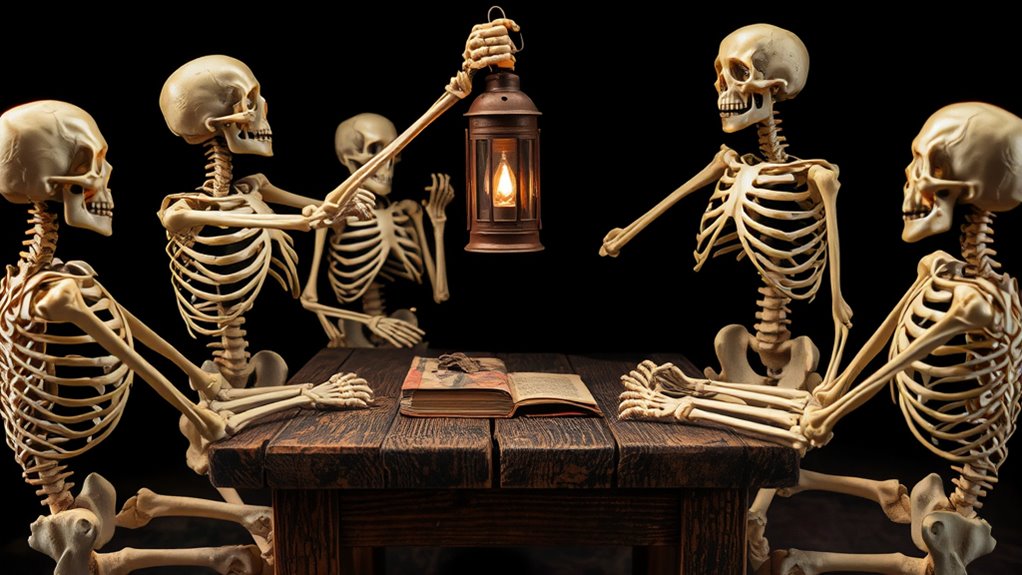
When skeletons come together in group scenes, their interactions can create a dynamic and sometimes humorous atmosphere. You might set up dollhouse scenes with miniature furniture, making it look like skeletons are hosting tiny gatherings or dramatic confrontations. Position them around chairs, tables, or beds to suggest conversation, teamwork, or conflict. Play with their poses to show interaction—one skeleton pointing, another leaning in, or a group huddled together. These arrangements add life and storytelling to your scene. Using miniature furniture helps establish context and scale, making the skeletons’ actions more believable and engaging. Remember, the key is to create a sense of activity and relationship, turning simple figures into characters with stories to tell. Incorporating interaction and storytelling helps bring your skeleton scenes to life and capture viewers’ imaginations.
Incorporating Props: Tools, Accessories, and Objects
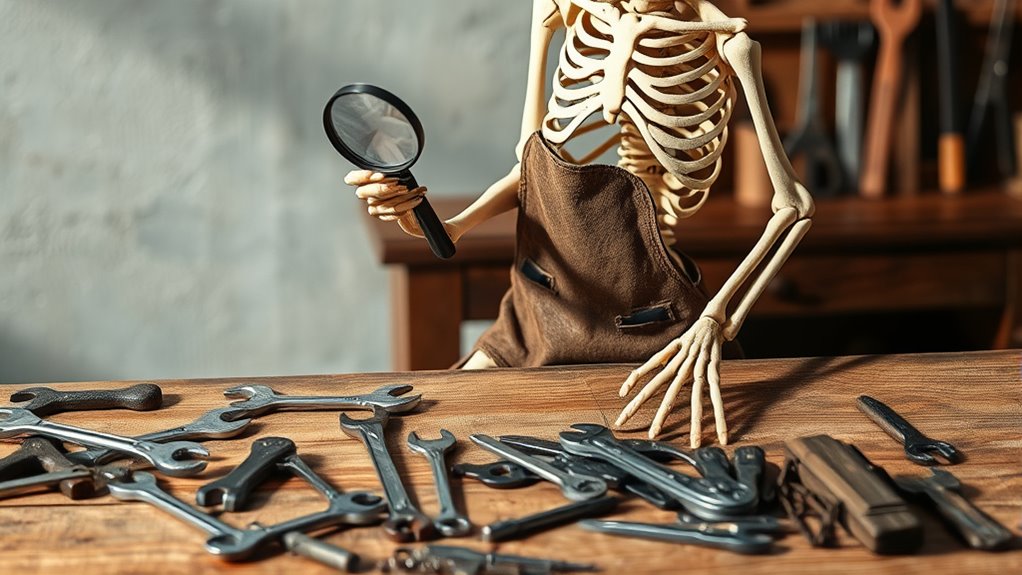
Choosing the right tools and accessories can make your skeleton scenes more convincing and engaging. Carefully select props that fit the scene’s context to enhance realism without overwhelming the skeletons’ poses. Striking a balance guarantees your props support the story rather than distract from it. Incorporating aesthetic wall organization solutions can also help display your scene elements effectively, adding to the overall visual appeal.
Selecting Appropriate Tools
Selecting the right tools and props is essential for creating effective skeleton scenes, as they help bring authenticity and detail to your setup. Focus on tools that facilitate precise positioning and realistic textures. When working with digital sculpting, choose software that offers advanced material selection options to mimic bone and fabric textures convincingly. For physical props, opt for lightweight materials that are easy to handle yet durable. Consider the following:
- Fine-tipped brushes for detailed digital sculpting
- Textured brushes for realistic surface effects
- Customizable digital palettes for accurate material choices
- Small, versatile tools for positioning props
- High-quality, lightweight physical objects for scene elements
Using these tools ensures your scene looks believable and visually compelling. Always match your tools to your project’s specific needs for suitable results. Incorporating industry-standard techniques can further enhance the realism and professionalism of your scenes.
Enhancing Scene Realism
Incorporating the right props, accessories, and objects can substantially boost the realism of your skeleton scenes. Using items that reflect real-world environments helps viewers connect with your setup. When selecting props, consider skeleton anatomy to ensure they fit naturally and support pose stability. For example, adding a chair or tree branch can anchor the skeleton and create a believable context. Accessories like hats, tools, or small objects add depth without overwhelming the scene. Here’s a quick overview:
| Prop Type | Purpose | Example |
|---|---|---|
| Tools | Enhance activity realism | Hammer, wrench |
| Accessories | Add character and context | Hat, scarf |
| Objects | Ground scene or setting | Rock, bench |
| Environment | Improve overall believability | Plants, furniture |
These elements make your scene more authentic and visually engaging. Incorporating scene realism through thoughtful props helps create a more immersive experience for viewers.
Balancing Props and Poses
To create a convincing skeleton scene, you need to strike a balance between props and poses so that neither overwhelms the other. Incorporate props thoughtfully to complement skeleton anatomy and enhance storytelling without compromising pose stability. Too many accessories can distract or cause instability, while too few may look bare. Focus on supporting the skeleton’s natural posture with appropriate tools or objects. Here are some tips:
- Use props that align with the skeleton’s pose and scene context
- Ensure props don’t obstruct key anatomical features
- Select lightweight items to maintain pose stability
- Position accessories to support or emphasize certain bones
- Keep a balance so props enhance rather than overpower the scene
- Consider the visual harmony between props and pose to create a cohesive and believable scene.
This approach helps maintain realism and visual harmony.
Creating Atmosphere With Background and Lighting

How can background and lighting transform a skeleton scene from simple to haunting? By carefully choosing background settings, you set the scene’s mood—dark forests, abandoned halls, or shadowy caves deepen the atmosphere. Lighting techniques play a vital role; dim, directional lights cast eerie shadows, while colored gels add unnatural hues that evoke mystery or danger. Use low-intensity lighting to create subtle, unsettling effects, or high-contrast setups for dramatic impact. Position lights to highlight specific props or poses, drawing attention and enhancing the scene’s narrative. Combining thoughtful background choices with strategic lighting instantly elevates your skeleton scene from basic to atmospheric, immersing viewers in a spooky or mysterious environment without overwhelming the core elements. Exploring best beaches can also inspire scenic backdrops and natural lighting scenarios that enhance your scene’s mood.
Themed Skeleton Poses for Holidays and Events
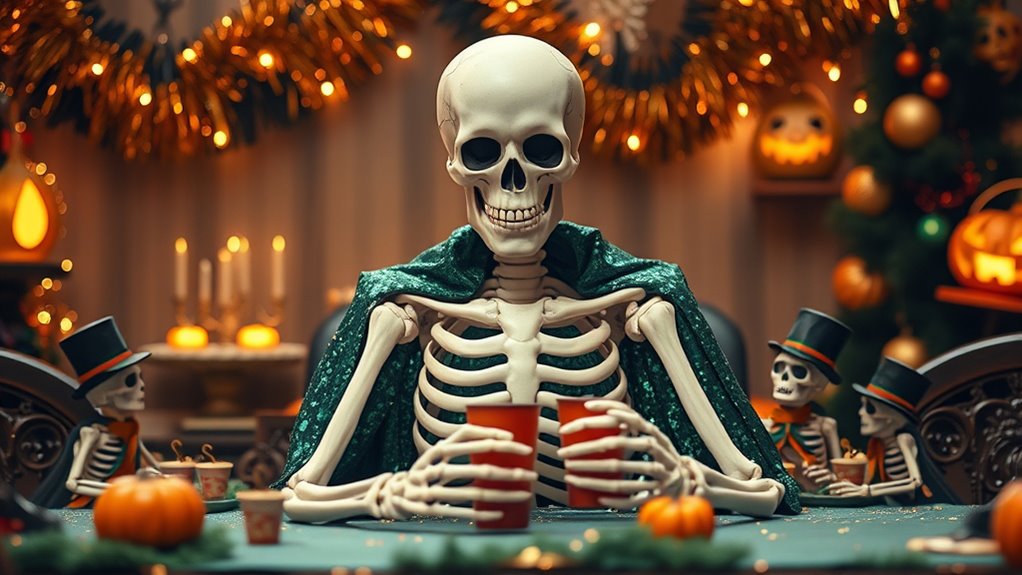
Themed skeleton poses instantly bring holiday and event spirits to life, making your displays more engaging and relevant. By adopting playful themes, you create an inviting scene that captures attention and sets an eerie ambiance. Whether for Halloween, Christmas, or themed parties, these poses add character and fun. Consider these ideas:
Themed skeleton poses bring festive spirit and eerie fun to your displays, perfect for any celebration or spooky occasion.
- Dancing skeletons in festive costumes
- Skeleton holding a spooky lantern
- Skeleton reaching for candy or gifts
- Playful skeletons with props like hats or masks
- Skulls intertwined with seasonal decorations
Using these poses, you evoke a lively yet eerie ambiance perfect for celebrations. They help your skeleton scenes resonate with the theme’s mood, whether spooky or playful, making your display unforgettable. Tailor poses to match your event’s spirit for maximum impact.
Using Shadows and Silhouettes to Enhance Scenes
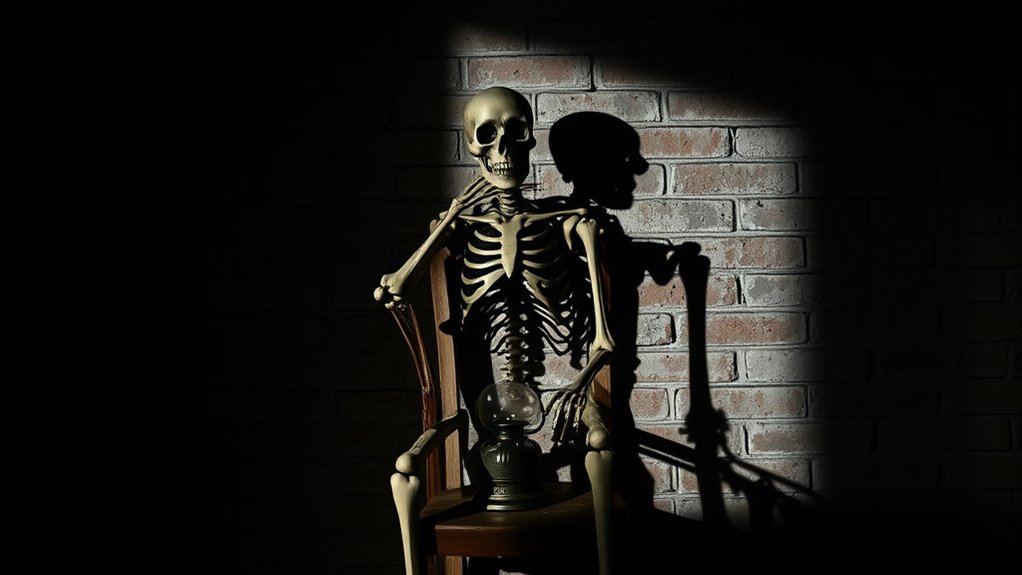
Adding shadows and silhouettes to your skeleton scenes can dramatically amplify their spooky atmosphere and visual impact. Shadows create depth and mystery, making your scene more immersive and intriguing. Position your light source carefully to cast long, eerie silhouettes of skeletons and props, enhancing their shapes and gestures. Using stark contrast between light and dark emphasizes key elements, drawing viewers’ attention and heightening the scene’s drama. Shadows and silhouettes also help hide unnecessary details, allowing you to focus on the most striking features. This scene enhancement technique transforms simple skeleton displays into enthralling, haunting setups. Experiment with different lighting angles and intensities to find the perfect balance that amplifies the eerie mood without overwhelming the scene. Proper lighting techniques are essential for creating compelling shadow effects that truly enhance your spooky displays.
Creative Ideas for Custom Skeleton Displays
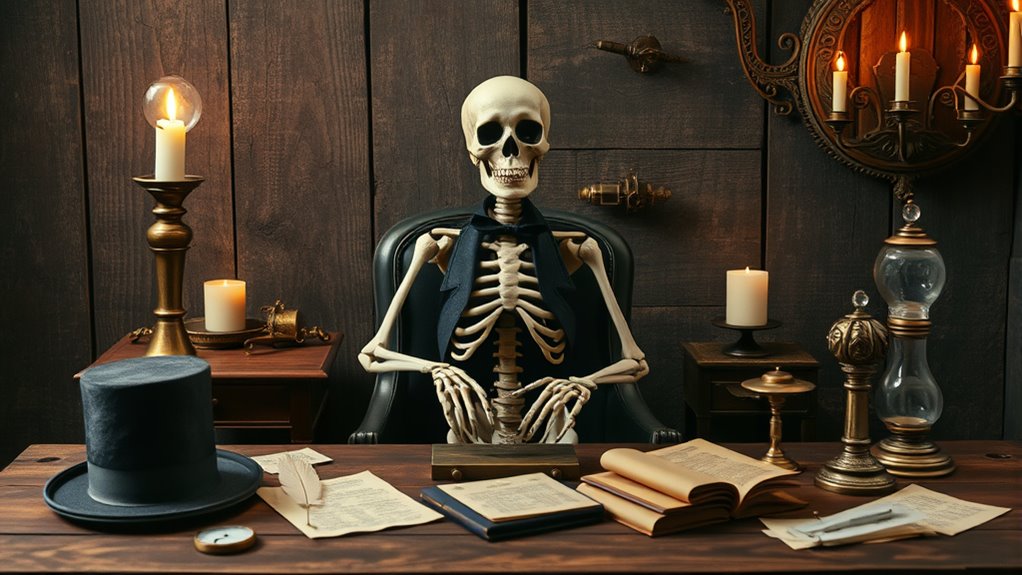
Creative skeleton displays can turn a simple Halloween setup into a mesmerizing centerpiece by showcasing your unique style and storytelling. To make your display stand out, incorporate elements like medieval armor to give skeletons a knightly or warrior feel. Use fantasy costumes to transform skeletons into wizards, elves, or mythical creatures, adding a magical touch. You can pose skeletons as if they’re engaged in a scene, such as battling or feasting. Props like treasure chests, enchanted staffs, or mystical scrolls enhance the theme. Consider creating a story with layered scenes or group arrangements that tell a narrative. Here are some ideas to inspire you:
Transform your Halloween with creative skeleton displays featuring medieval armor, fantasy costumes, and storytelling scenes.
- Skeletons in medieval armor reenacting battles
- Fantasy-costumed skeletons around a cauldron
- Skeletons wielding miniature weapons or shields
- Displaying skeletons as part of a magical ritual
- Creating a scene with multiple skeletons in an enchanted forest
Adding dynamic poses and creative storytelling can elevate your display by engaging viewers and sparking their imagination.
Frequently Asked Questions
How Can I Make Skeleton Poses Look More Realistic?
To make skeleton poses look more realistic, focus on anatomy accuracy and pose dynamics. Study human anatomy to understand how bones move and connect, ensuring your poses reflect natural muscle and joint behavior. Use dynamic angles and weight distribution to add realism, avoiding stiff or unnatural positions. Adjust the skeleton’s posture to match the intended action, giving your scene a lively, believable feel that resonates with viewers.
What Materials Are Best for Creating Durable Skeleton Props?
Creating durable skeleton props is like building a sturdy sculpture. Use metal wire for internal support—it’s flexible yet strong. Cover it with durable foam to shape realistic bones without adding excessive weight. This combination guarantees your skeleton can withstand handling and display, making it perfect for long-term use. So, opt for metal wire and durable foam to craft skeleton props that last and look authentic.
How Do I Animate Skeletons for Stop-Motion Scenes?
To animate skeletons for stop-motion, you should use marionette techniques to create flexible movement. Focus on joint articulation by designing each joint to bend smoothly, allowing realistic poses. Use lightweight, durable materials like wire and foam for easy manipulation. Carefully plan your keyframes, and move the skeletons incrementally between shots. This approach gives you precise control and fluid motion, making your skeleton animations lively and convincing.
What Safety Precautions Should I Take When Handling Skeleton Props?
While handling skeleton props, you should always wear protective gear like gloves and goggles to prevent injuries. Use proper handling techniques, lifting with your legs and avoiding sudden movements, to stay safe. Keep the workspace clear of obstacles to prevent accidents. Always inspect props for damage before use, and store them securely after filming. Safety measures guarantee you enjoy your creative process without risking harm.
How Can I Customize Skeleton Accessories for Different Themes?
You can customize skeleton accessories for various themes by using costume customization techniques. Attach accessories securely with glue, velcro, or safety pins to guarantee they stay in place. Paint or add fabric to match your theme, like spooky, festive, or humorous styles. Be creative with props such as hats, jewelry, or masks, and make sure all attachments are safe and easy to remove, allowing for flexible costume changes.
Conclusion
Now that you’ve explored a variety of skeleton scenes, you’re ready to bring your spooky setups to life. Mix classic gestures with dynamic actions, play with lighting like a true Renaissance artist, and craft themed displays that wow. Remember, even a skeleton can steal the spotlight at your next Halloween party—just like a modern-day influencer of the 18th century. Get creative, have fun, and let your imagination raise the dead!