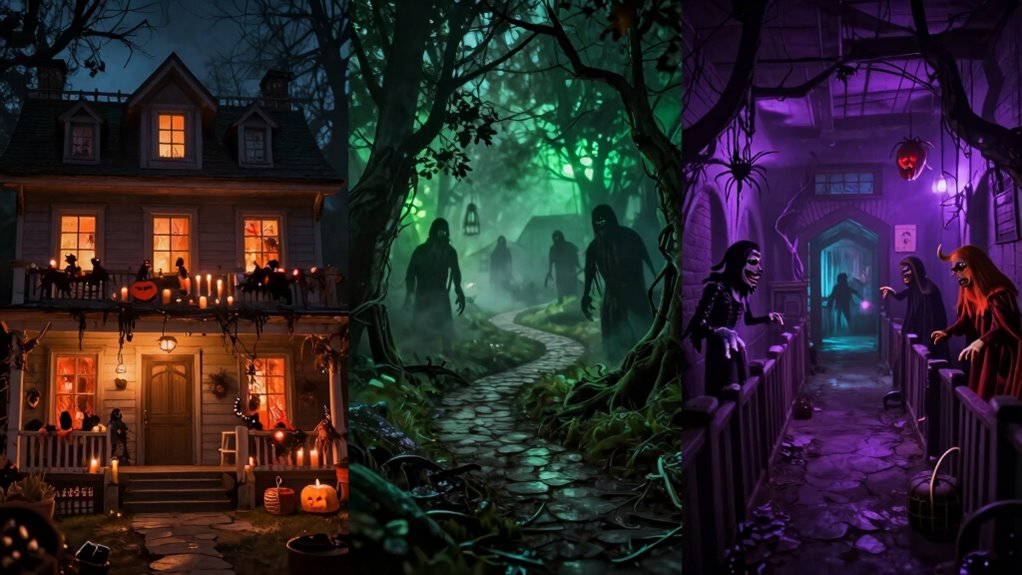

Home haunts are intimate setups near your porch or yard, emphasizing DIY creativity and close-up scares perfect for small groups. Trails take you outdoors into forests or fields, blending costumes with the environment for a more immersive and unpredictable experience. Walkthroughs are structured indoor attractions with detailed scenes and theatrical effects, guiding you through a narrative. Each offers a unique thrill—continue exploring to discover which haunt type best suits your spooky ideas.
Key Takeaways
- Home haunts are small, customizable setups often on porches or yards, emphasizing DIY creativity and personal touches.
- Trails are outdoor scare attractions set in natural environments, using terrain and environmental elements for immersive scares.
- Walkthroughs are structured indoor or building-based attractions with a narrative focus and theatrical effects.
- Costumes vary by haunt type, with home haunts favoring DIY and creative outfits, while trails and walkthroughs feature elaborate, themed costumes.
- Scare tactics differ: home haunts use close-up jumps, trails rely on environment and hiding spots, walkthroughs employ choreographed actor scares.
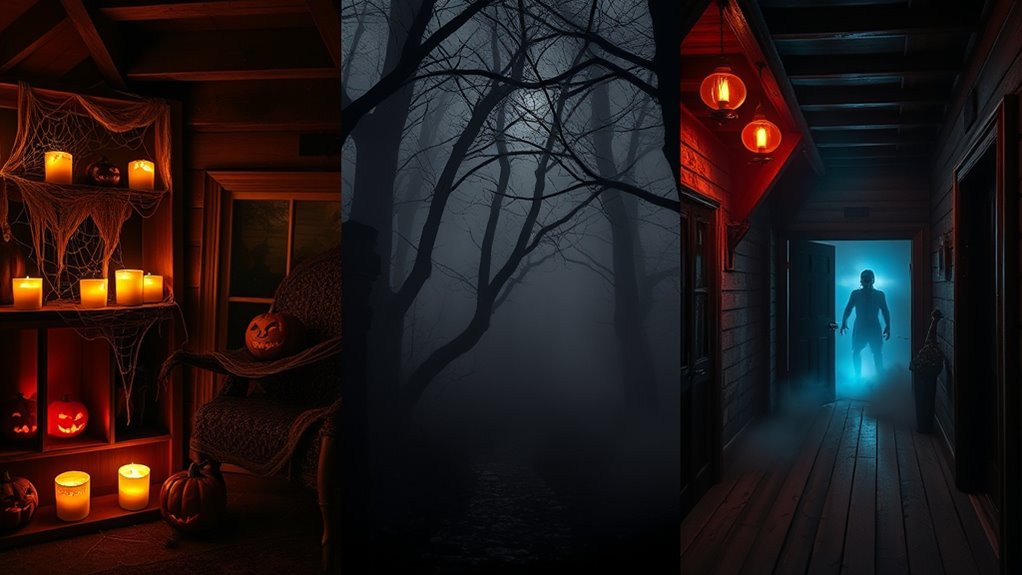
Haunts come in many forms, each offering a unique experience for thrill-seekers and horror fans alike. When exploring different haunt types, you’ll find that the setup, scare tactics, and overall atmosphere can vary widely, depending on whether you’re visiting a home haunt, trail, or walkthrough. If you’re planning to create your own haunted experience, considering costume ideas and scare tactics is essential to make it memorable and effective. Each type offers its own advantages and challenges, so understanding what sets them apart helps you choose the best fit for your audience or personal thrill.
Explore various haunt types and scare tactics to craft your perfect spooky experience.
A home haunt is often the most intimate and customizable option. You might transform your porch, yard, or entire house into a spooky setting, using creative costume ideas for your characters and DIY scare tactics to surprise visitors. Here, you control every element, from lighting to sound effects, making it a perfect project for Halloween enthusiasts who enjoy personal touches. The scare tactics in home haunts tend to be close-up and personal—think sudden jumps, creepy props, or startling sound effects—aimed at catching visitors off guard in tight spaces. This type allows you to get creative with costumes, from classic monsters to your own twisted characters, and tailor scares based on your guests’ reactions. It’s ideal for small groups or neighborhood gatherings, offering a cozy yet chilling experience that’s as much about the effort and creativity as the scares themselves. Additionally, since the setup involves personal spaces, it allows for more detailed costume ideas and custom scare tactics tailored to your specific environment.
Trails, sometimes called outdoor scare attractions, stretch out over longer distances and are often set in forests, fields, or other expansive outdoor areas. For these, your costume ideas might lean toward more elaborate or horror-themed outfits that blend into the natural surroundings, enhancing scare tactics like sudden shadows, animal sounds, or unexpected appearances from around trees or corners. Because trails are more spread out, you can incorporate elements like hiding spots, props along the path, or timed scare moments that create suspense as visitors move through. The scares tend to be more dynamic, using the environment to amplify fear—think fog machines, sound effects, and actors hidden behind trees. This type is excellent for larger groups and offers a more immersive, unpredictable experience, but it requires more planning and resources to pull off effectively.
Walkthrough haunts are structured attractions, often set up in buildings or large indoor spaces, designed to guide visitors through a series of scenes and scares. Here, scare tactics focus on creating a narrative thread that keeps visitors engaged and on edge. Your costume ideas might be more detailed and thematically consistent, and your scare tactics more choreographed, with actors jumping out at just the right moment or using theatrical effects to heighten suspense. Because walkthroughs are confined spaces, you can craft intricate environments with detailed sets, lighting, and sound to intensify the experience. This type is perfect for those who want to immerse visitors in a story while delivering controlled, timed scares. It’s popular at haunted houses and community events, offering a balance between theatricality and scare precision.
No matter the type you choose, understanding how costume ideas and scare tactics work together helps you create a haunt that’s both terrifying and memorable. Each offers a different way to deliver thrills, so pick the one that best matches your vision, space, and the kind of scares you want to share.
DIY outdoor haunted house props
As an affiliate, we earn on qualifying purchases.
As an affiliate, we earn on qualifying purchases.
Frequently Asked Questions
How Do I Choose the Right Haunt Type for My Budget?
To choose the right haunt type for your budget, consider your budget considerations and space requirements. If you have limited funds and space, a home haunt might be best, as it typically costs less and fits in smaller areas. For bigger budgets and open outdoor spaces, trails or walkthroughs can offer more elaborate experiences. Assess what you can afford and the space you have to create a haunt that’s both impressive and manageable.
What Safety Precautions Are Essential for Each Haunt Type?
You must conduct hazard assessments, guarantee clear emergency exits, and keep pathways unobstructed for each haunt type. You should install visible signage, train staff or volunteers in safety procedures, and regularly inspect structures for stability. You ought to have fire extinguishers accessible, establish communication plans, and monitor guest flow. Prioritizing these safety precautions guarantees a fun, frightful experience without unnecessary risks or accidents.
Can I Combine Different Haunt Types in One Event?
Yes, you can definitely combine different haunt types in one event by creating hybrid haunt designs. By integrating mixed themes, you offer guests a unique experience that shifts smoothly between home haunt, trail, and walkthrough elements. Focus on cohesive storytelling and layout flow to guarantee guests stay engaged without confusion. Remember to prioritize safety and atmosphere, blending elements seamlessly for an immersive, memorable event.
How Long Does It Typically Take to Set up Each Haunt?
Setting up each haunt typically takes anywhere from a few hours to several weekends, depending on complexity. For a home haunt, you might need 10-20 hours, while trail or walkthrough setups could take 30-60 hours. To stay on track, focus on a clear setup timeline and resource planning. Break tasks into manageable steps, gather materials early, and allocate time efficiently to guarantee everything’s ready before the big night.
Are There Specific Insurance Requirements for Operating Haunts?
Protect your passion by preparing proper insurance and liability coverage before opening your haunt. You’ll want to check specific insurance requirements, which often include liability coverage to shield you from spooky surprises or accidents. Securing suitable safety safeguards not only safeguards your setup but also shows your seriousness and professionalism. Don’t delay — deliberate on these details to defend your daring endeavors and deliver delightful, worry-free fright nights.
Halloween scare props for home haunt
As an affiliate, we earn on qualifying purchases.
As an affiliate, we earn on qualifying purchases.
Conclusion
Now that you’ve learned about home haunts, trails, and walkthroughs, you might find it funny how the perfect haunt often appears just when you’re not looking for it. Maybe it’s the spooky coincidence of a late-night fog rolling in or a sudden gust that sends shadows dancing. Whatever the case, knowing the differences helps you appreciate the magic behind each experience—and who knows? The best haunt might be hiding just around the corner, waiting for you to stumble upon it.
themed costume ideas for haunted trail
As an affiliate, we earn on qualifying purchases.
As an affiliate, we earn on qualifying purchases.
indoor haunted walkthrough decorations
As an affiliate, we earn on qualifying purchases.
As an affiliate, we earn on qualifying purchases.