
TL;DR

Get decor and gifts delivered free with Prime
- Fast, free delivery on millions of items
- Prime Video, Amazon Music and more included
- Member-only deals all year
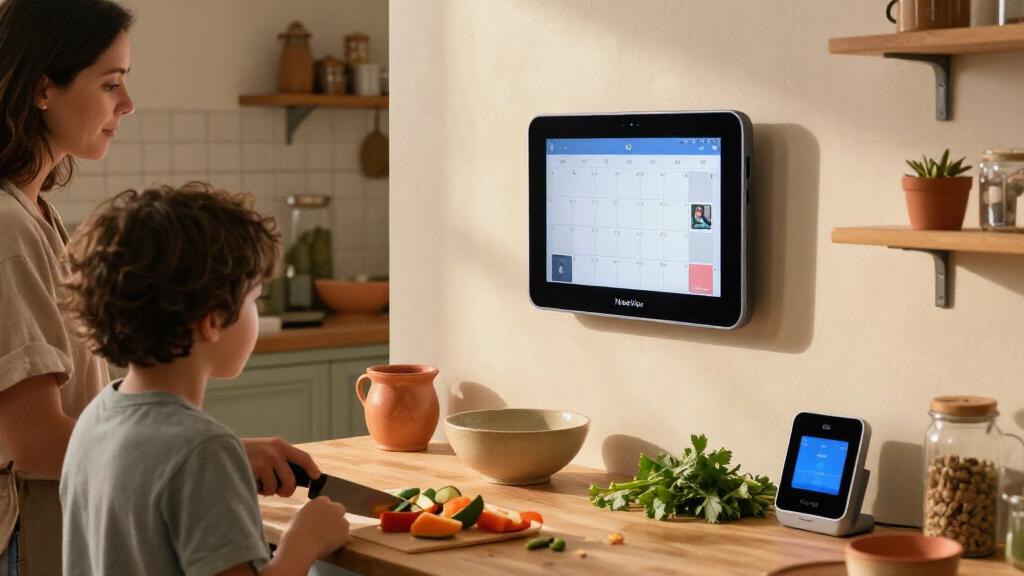
Apple and Amazon have introduced smart displays that aim to serve as shared household screens for calendars, smart-home controls and other daily tasks. A hands-on report says their faster hardware and family-focused software address shortcomings in older displays, but the devices’ real-world performance remains untested; the HomeView costs $299 and the Echo Show 16 costs $499.99.
Apple and Amazon have launched new smart displays aimed at giving households a shared screen for calendars, meal planning and smart-home controls: the $299 HomeView and $499.99 Echo Show 16. In an early hands-on report, The Verge’s reviewer said both devices appear to address long-standing weaknesses in the category, though further testing is needed to judge how well they work in everyday use.
The two displays bring more capable hardware to a product category that has often been held back by slow performance and limited software. Apple’s HomeView uses an A18 chip and a Liquid Retina display. Amazon’s Echo Show 16 has a MediaTek processor and the Nanomatte display used in its new Alexa Tablet, according to the report.
The products take different approaches to shared use. Amazon presents the Echo Show 16 as a household-first device that can be set up without a phone, while Apple’s HomeView is more closely tied to the iPhone. The report says HomeView has communal features, but some functions depend on a nearby phone and the device recognizing the person using it.
Amazon’s Echo Show 16 includes a household homescreen with options such as a calendar and smart-home dashboard, as well as a meal-planning feature. The report also describes an Omnisense demonstration in which a person approaching a home appeared on a map and could be viewed through a Ring camera. These are features shown or described in the report; their performance in routine use has not yet been established.
The products are aimed at a practical gap: household information can be scattered across individual phones, even when calendars, grocery lists, chores and connected devices affect everyone at home. A shared display could give family members a common place to check plans or adjust lights without finding one person’s phone.
The distinction between a device that serves a household and one that extends an individual’s phone may shape who can use it and how much setup is required. Amazon’s approach could be more accessible to people who do not use iPhones, while Apple’s integration may offer more personal information to users who already rely on its devices. Those are potential advantages, not confirmed outcomes.
Price is a notable barrier. The HomeView costs about three times as much as the $85 Echo Show 5 and $99 Nest Hub cited in the report as 2023 examples. The higher cost makes the quality of the shared features, software support and everyday reliability central to whether these devices can appeal beyond early adopters.
Popular right now

Sony BRAVIA 5 85-Inch Mini LED 4K HDR Smart TV (K-85XR50)

Roborock F25 BX Cordless Wet Dry Vacuum Mop

Vitamix Propel Series 750 Professional-Grade Blender, 4 Programs, Black
As an affiliate, we earn on qualifying purchases.
Why Smart Displays Were Reconsidered
The report’s author wrote three years ago that smart displays were struggling to justify themselves, describing older devices as underpowered and unfocused. The new launches revisit that assessment with faster processors, larger displays and a clearer pitch: a screen for the household, rather than simply a smart speaker with touch controls.
Tablets can also serve as shared screens, but the author points to two limitations: multiuser support can be limited, and portable devices can be moved around or left without power. The report recounts a personal trial of Google’s Pixel Tablet, whose detachable display and smart-home support did not work well for the author’s household; Google reportedly canceled a successor 18 months later.
Interest in dedicated household displays is also reflected in products such as the Skylight Calendar, according to the report. The new Apple and Amazon devices combine that shared-screen idea with voice assistants and connected-home controls, but their launch alone does not show whether they will meet household needs better than existing alternatives.
“These could finally turn the smart display into what it should have been all along: the family computer.”
— The Verge reviewer
Real-World Performance Still Untested
The report is based on brief hands-on time, so it does not establish how responsive or reliable either device will be after extended use. It also does not settle whether the shared-user features will work smoothly across different household members, or how much functionality will depend on particular phones, accounts or connected-home products.
It is also unclear whether the new software and hardware justify the prices for households that already use phones, tablets or smart displays. The report describes demonstrations and product features, but supplies no long-term testing or comparative results showing how often families would use them.
Full Reviews Will Test the Promise
The next useful evidence will come from extended testing of both displays: whether their interfaces remain quick, whether household members can access shared tools without friction, and how well calendars, cameras and smart-home controls work together. Testing will also need to clarify what HomeView can do without an iPhone nearby and which Echo Show 16 features require Amazon or Ring services.
Until those assessments are available, the launches show a clearer direction for smart displays, not proof that either product has become an indispensable family device. Buyers weighing the two can compare their prices and ecosystems now, while treating claims about the household experience as provisional.
Key Questions
What are the Apple HomeView and Amazon Echo Show 16?
They are smart displays designed for household use, with features including calendars and smart-home controls. The report frames them as shared screens for daily coordination, not as devices primarily intended for homework or bill-paying.
How much do the two displays cost?
The HomeView is priced at $299, while the Echo Show 16 costs $499.99, according to the source report.
How do Apple and Amazon’s approaches differ?
The report describes Amazon’s Echo Show 16 as a household-centered device that can be set up without a phone. Apple’s HomeView is more closely linked to the iPhone, and some features appear to depend on a nearby phone and user recognition.
Have the devices been fully tested?
No. The assessment is based on brief hands-on time. The reviewer said proper testing is still needed, so long-term performance and ease of shared use remain unconfirmed.
Source: theverge.com