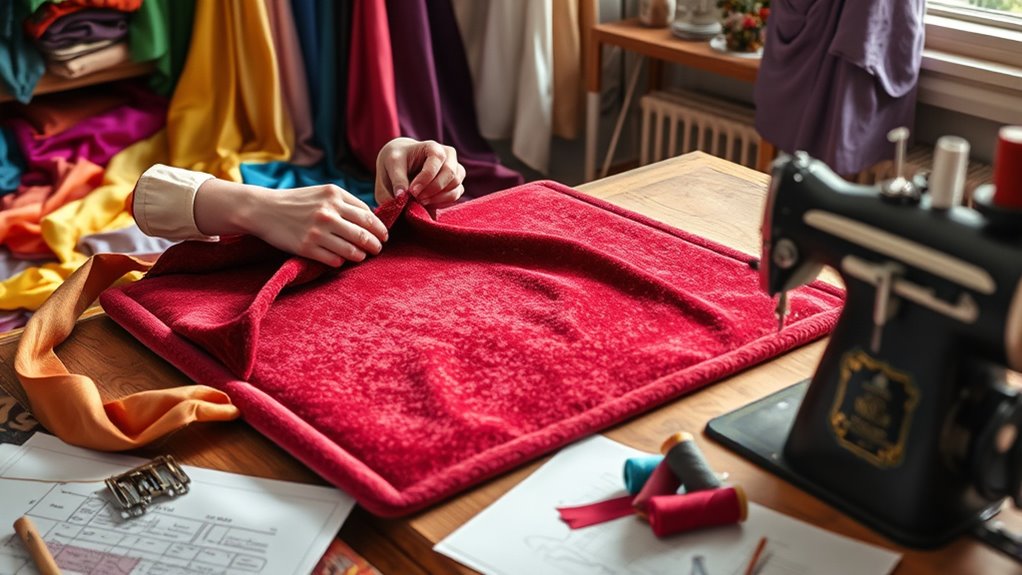

To craft capes and cloaks, start by choosing fabrics that match your style and durability needs, like wool or lighter silk. Draft your pattern by measuring yourself and adding ease for comfort. Cut your fabric precisely, aligning grains and using sharp tools. Sew the main pieces together with neat seams and press carefully. Finish with decorative touches such as trim or embroidery. Continuing will reveal more tips to customize your design and perfect your sewing skills.

Get decor and gifts delivered free — and shop member deals
- Fast, free delivery on millions of items
- Access to Prime Big Deal Days deals on October 6–7
- Prime Video, Amazon Music and more included
Key Takeaways
- Begin by drafting a simple rectangular or circular pattern based on body measurements for capes and cloaks.
- Use lightweight, flowing fabrics like wool or velvet to create drape and ensure ease of movement.
- Ensure proper grain alignment when cutting to maintain the garment’s shape and drape.
- Sew shoulder seams securely, then attach side or front closures such as buttons, clasps, or ties.
- Finish edges with hemming or binding techniques, and add personal touches like decorative trims or embroidery.
As an affiliate, we earn on qualifying purchases.
Selecting Fabrics and Materials for Capes and Cloaks
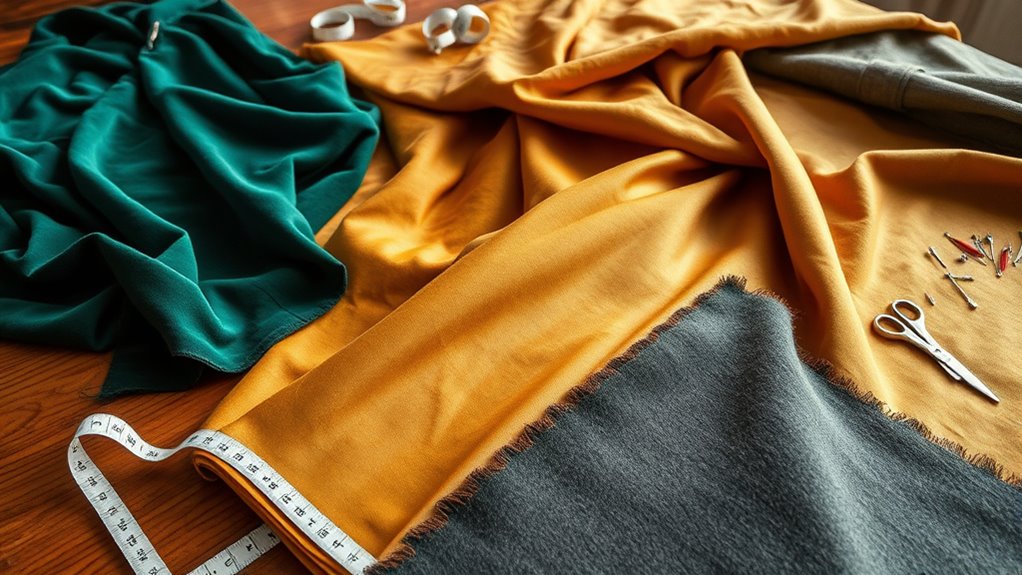
Choosing the right fabrics and materials for your cape or cloak is essential to achieve the desired look and functionality. The fabric texture influences how your garment drapes and feels, so consider whether you want a smooth, matte, or textured surface. Fabric durability is equally important, especially if you’ll wear your cape frequently or outdoors. Durable fabrics like wool or heavy canvas can withstand wear and tear, ensuring your cloak remains intact over time. If you aim for a lightweight, flowing appearance, opt for softer, lighter fabrics such as silk or chiffon, but be mindful of their longevity. Balancing fabric texture with durability helps you create a cape that not only looks great but also stands the test of time. Incorporating natural materials ensures your garment maintains its rustic charm and authenticity.
Drafting a Basic Pattern for Your Garment
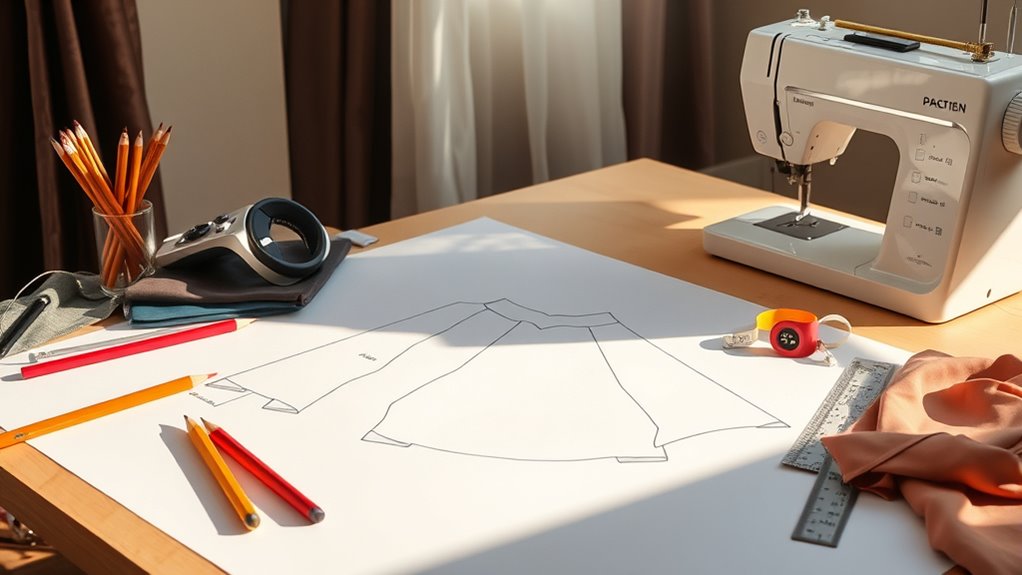
Have you ever wondered how to create a custom pattern that fits perfectly and achieves the look you want? Start by sketching your design, then translate it onto pattern paper. Use fitting techniques like measuring your body carefully and making adjustments for ease and style. Pattern alteration is key—you might need to add or remove length, reshape armholes, or adjust the neckline to suit your body. Trace your alterations onto your pattern, ensuring smooth lines for seamless sewing. Remember, drafting a basic pattern is an iterative process; don’t be afraid to make small tweaks until it fits just right. With practice, you’ll develop a keen eye for pattern alteration and fitting techniques that help you craft garments that look professional and feel comfortable. Additionally, understanding remote hackathons can inspire new ideas for innovative design solutions or collaborative projects in your sewing journey.
Cutting Your Fabric Accurately
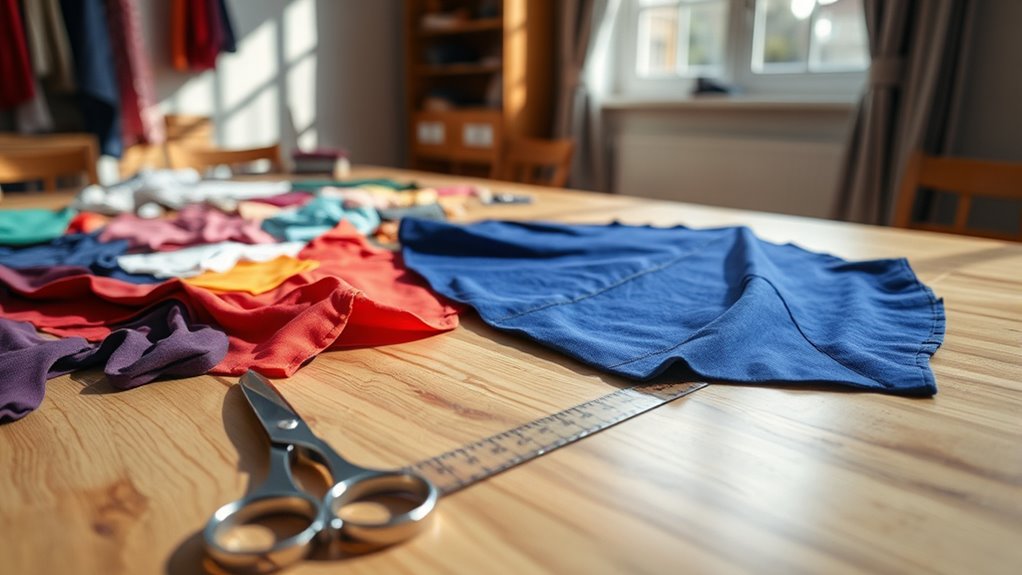
Once your pattern is ready, the next step is to cut your fabric accurately to guarantee your garment turns out just right. Start by aligning your fabric with the grain measurement indicated on your pattern. Ensuring the fabric’s grain runs parallel to the pattern’s grainline prevents distortion and maintains the proper drape. Use sharp cutting tools like fabric scissors or rotary cutters for clean, precise edges. Always cut smoothly and steadily, avoiding jagged or uneven cuts that could impact the final fit. Pin your pattern securely before cutting to prevent shifting. Double-check the grain alignment and measurements before making any cuts. Properly cutting along the pattern lines with the right tools and attention to grain measurement sets a solid foundation for a well-finished cape or cloak. Additionally, verifying the color accuracy of your fabric can help ensure your final garment has the desired visual effect.
Assembling and Sewing the Main Components
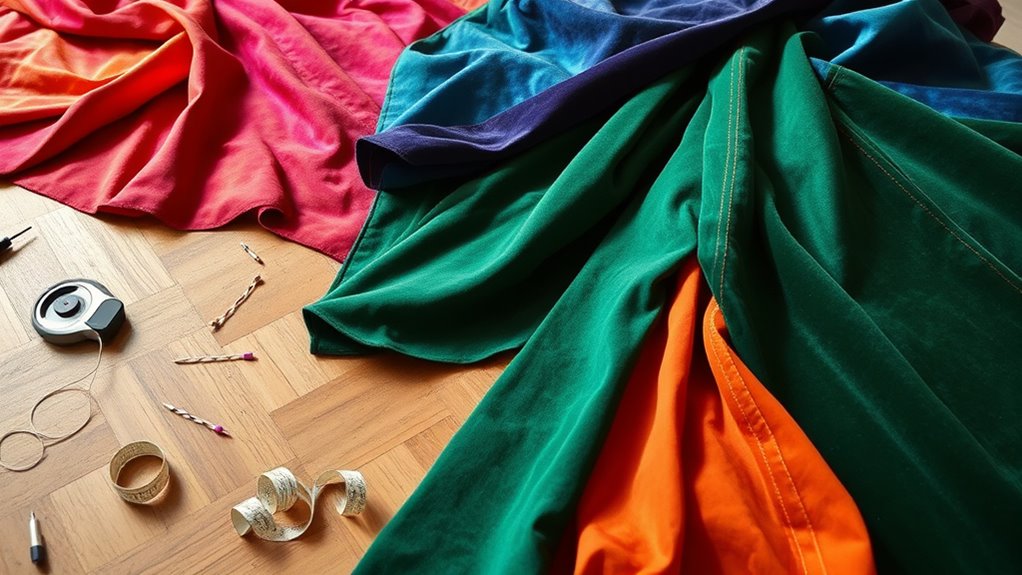
To begin assembling and sewing the main components of your cape or cloak, lay out your cut fabric pieces according to your pattern instructions. Carefully pin or clip the pieces together to guarantee proper alignment. As you sew, consider incorporating embellishment techniques like decorative topstitching or appliqué accents for added elegance. Use fabric care tips, such as maintaining consistent stitch length and avoiding stretching the fabric, to keep your project looking professional. Here are key steps to follow:
- Sew shoulder seams securely, pressing open for a smooth finish
- Attach any lining or facing to ensure clean edges
- Reinforce seams with stay-stitching where needed
- Check for loose threads or skipped stitches before proceeding to the next stage
- Pay attention to seam allowances and proper handling of the fabric to prevent distortion during construction seam allowances. This method ensures durability and a polished look for your finished cape or cloak.
Adding Finishing Touches and Details
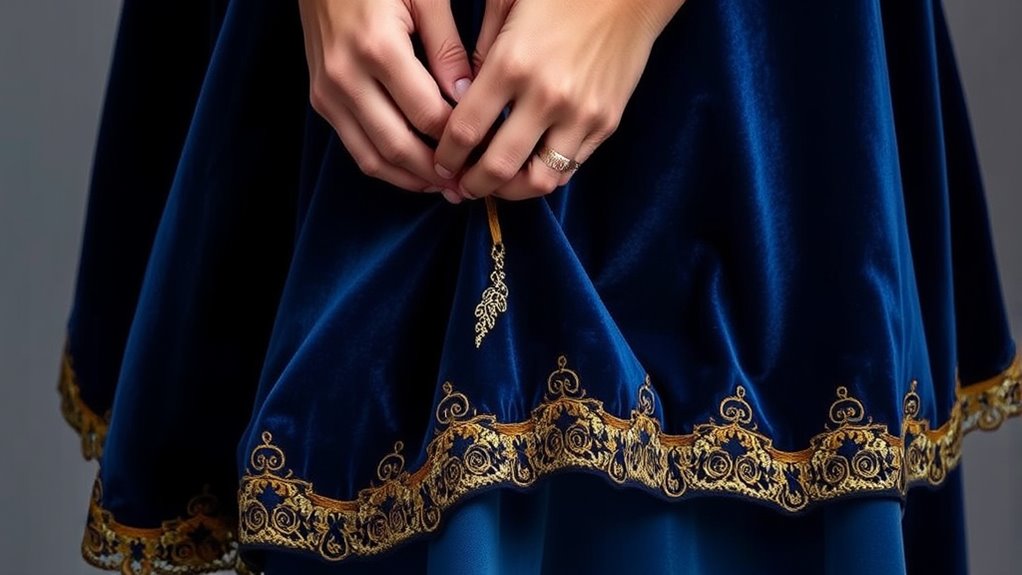
Adding finishing touches and details is the perfect way to elevate your cape or cloak from simple to stunning. Embellishment techniques like embroidery, appliqué, or decorative trim can add personality and style. You might choose to add beads, sequins, or lace for extra elegance. When considering finishing method options, think about hemming techniques, edge binding, or adding decorative buttons and clasps. These small details can dramatically improve the overall look and durability of your garment. Take your time selecting the right embellishments to match your design vision. Use contrasting or complementary colors, textures, and patterns to make your cape or cloak stand out. Finishing touches are your chance to showcase creativity and craftsmanship, creating a truly personalized and polished piece. Paying attention to the cost-effective production of your finishing materials can help maintain your project’s budget while achieving a high-quality result.
Tips for Customizing and Personalizing Your Design

To make your cape or cloak truly stand out, start by choosing fabrics that reflect your personality and style. Consider adding decorative elements like embroidery, patches, or unique trims to give it a personalized touch. These details not only enhance the look but also make your design uniquely yours. Incorporating high-quality fabrics can also improve comfort and durability for your costume.
Choosing Unique Fabrics
Choosing the right fabric can instantly elevate your cape or cloak, making it stand out and reflect your personal style. When selecting fabrics for costumes, consider how texture, color, and weight contribute to your overall look. To customize and personalize effectively, keep these tips in mind:
- Explore unique fabrics like velvet, brocade, or metallic textiles for a distinctive appearance.
- Opt for sustainable fabric choices such as organic cotton, hemp, or recycled polyester to add eco-friendly value.
- Consider fabric durability and ease of sewing, especially if you’ll wear your cape frequently.
- Mix fabrics to create contrasting textures that enhance visual interest and character depth.
Adding Decorative Elements
Decorative elements can transform a simple cape or cloak into a stunning statement piece that truly reflects your personal style. To do this, explore embellishment techniques like embroidery, appliqué, or beading to add texture and visual interest. Decorative stitching is another effective way to enhance your design—try contrasting threads or intricate patterns along hemlines, seams, or borders. These techniques allow you to customize your garment, making it unique and eye-catching. Be careful with your choice of embellishments; guarantee they complement your fabric and overall design. Keep your sewing precise to maintain a polished look. Paying attention to cookie preferences ensures your design process remains smooth and enjoyable. With a little creativity and attention to detail, these decorative elements will elevate your cape or cloak, turning it into a wearable work of art.
Frequently Asked Questions
How Do I Choose the Right Cape or Cloak Style for My Body Type?
You should pick a cape or cloak style that complements your body type by considering fabric textures and historical styles. If you have a petite frame, try shorter capes with lighter fabrics like chiffon for elegance. For a taller figure, opt for longer, flowing cloaks with rich textures like velvet or brocade. Analyzing these factors helps you select a style that enhances your silhouette and fits your personality.
What Are Common Mistakes to Avoid When Drafting a Pattern?
When drafting a pattern, avoid common mistakes like neglecting proper pattern fitting and ignoring seam allowances. You should double-check measurements and make adjustments for a precise fit. Don’t skip adding seam allowances, as they guarantee you can sew seams smoothly and make future alterations. Always trace your pattern carefully and stay consistent throughout the process. These steps help prevent fitting issues and ensure your cape or cloak looks professional.
How Can I Make My Cape or Cloak More Weather-Resistant?
To make your cape or cloak more weather-resistant, start by choosing waterproofing fabrics that repel water effectively. Apply seam sealing techniques to all seams to prevent leaks, using specialized seam tape or sealant. Consider adding a waterproof coating or spray for extra protection. These steps will help keep you dry in wet conditions, ensuring your cape or cloak remains functional and stylish regardless of the weather.
What Sewing Techniques Ensure Durability for Wearable Capes and Cloaks?
You want your cape or cloak to last, so focus on seam reinforcement and hem finishing. Use a zigzag or serger stitch to strengthen seams and prevent fraying. Fold and sew a neat hem, adding bias tape or a facing for extra durability. These techniques create sturdy edges and secure seams, ensuring your wearable piece withstands wear and weather while maintaining a polished look.
How Do I Properly Care for and Clean Finished Garments?
To properly care for your finished garments, always follow the care label instructions. Use fabric softeners sparingly to keep your cape or cloak soft, and avoid over-washing to prevent wear. When stains appear, treat them promptly with stain removal solutions suited to your fabric type. Gently hand wash or use a delicate cycle, and always air dry to maintain the garment’s shape and durability.
Conclusion
Think of creating your cape or cloak as crafting a magical shield that reflects your unique spirit. Every stitch and detail adds a personal enchantment, transforming fabric into armor that empowers you. As you finish your masterpiece, remember you’re wielding the power of craftsmanship—turning simple materials into a symbol of your creativity. Wear it with pride, knowing you’ve conjured something truly special, a wearable piece of your own enchanting story.
Fall Picks
fall essentials
As an affiliate, we earn on qualifying purchases.