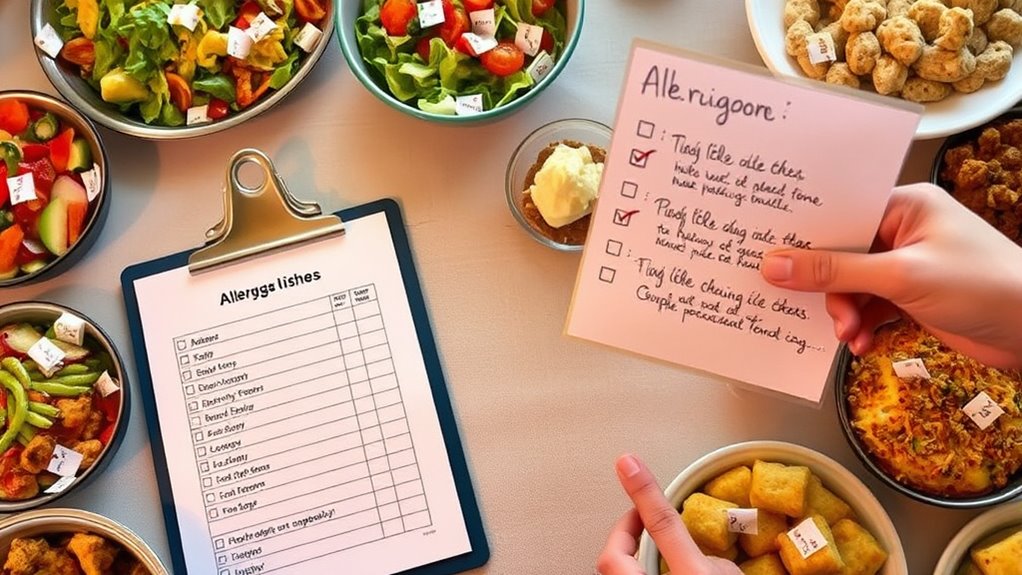

To plan a successful potluck, assign dishes clearly using a shared sign-up sheet, considering variety and dietary needs. Label each dish with ingredients and potential allergens like nuts or gluten to help guests make safe choices. Keep track of allergen information for every dish and encourage guests to disclose special restrictions early. Use simple decoration methods, like icons, to highlight allergen info and create inclusive options. Stick around to learn more effective strategies for a safe, enjoyable event.
Key Takeaways
- Use a shared sign-up sheet to assign dishes, ensuring variety and consideration of dietary restrictions.
- Label all dishes with contributor names and key ingredients, highlighting common allergens.
- Include detailed ingredient lists and allergen information on each dish for guest safety.
- Offer diverse options like vegetarian, gluten-free, and allergen-free dishes to accommodate all guests.
- Communicate with guests beforehand about dietary needs and clearly label special diet dishes at the event.
Top picks for "potluck plann assignment"
Open Amazon search results for this keyword.
As an affiliate, we earn on qualifying purchases.
Organizing Dish Assignments Effectively

To guarantee your potluck runs smoothly, organizing dish assignments effectively is essential. Start by creating a clear plan for who brings what, considering variety and dietary needs. This helps prevent duplicates and ensures there’s enough for everyone. While assigning dishes, don’t forget to coordinate potluck decor to set a welcoming atmosphere. Consider seating arrangements to make conversations flow naturally and accommodate different group sizes. Label each dish with the contributor’s name and any key ingredients, making it easier for guests to navigate. Use a shared spreadsheet or sign-up sheet so everyone can see their responsibilities. Clear organization reduces confusion, saves time, and keeps the event enjoyable. Proper planning with thoughtful seating and decor enhances the overall experience, making your potluck memorable for all. Additionally, understanding Gold IRA options can be beneficial for long-term financial planning beyond the event.
Communicating Dietary Restrictions Clearly

Clear communication about dietary restrictions is key to ensuring everyone feels included and safe at your potluck. Labeling ingredients accurately helps guests identify potential allergens and avoid unwanted reactions. Be specific with allergy awareness by listing key ingredients on dishes. Use a clear, consistent format for labels, such as “Contains nuts” or “Vegan.” Here’s an example:
| Dish Name | Ingredient Labels |
|---|---|
| Pasta Salad | Contains gluten, dairy |
| Fruit Platter | No allergens listed |
| Vegan Chili | No animal products, soy included |
| Chocolate Cake | Contains eggs, nuts |
| Grilled Chicken | No common allergens |
This approach minimizes confusion and fosters a safe, inclusive environment for all guests. Incorporating predictive modeling can help you anticipate common allergens based on ingredient trends, further improving your labeling accuracy.
Tracking Common Allergens in Menu Planning

Tracking common allergens in menu planning is essential to prevent allergic reactions and guarantee everyone’s safety. You should prioritize allergen labeling on dishes, making it clear which ingredients contain potential allergens like nuts, gluten, or dairy. Ingredient transparency helps guests make informed choices and reduces the risk of accidental exposure. Keep detailed records of every dish’s ingredients, especially when preparing or sharing recipes with others. Cross-contact is a common source of allergen exposure, so monitor preparation areas and tools carefully. Communicate allergen information clearly, either through written labels or verbal updates, to ensure everyone understands what’s in each dish. Utilizing clear labeling and proper kitchen practices can further minimize the risk of allergen cross-contact. By staying vigilant and organized, you create a safer, more inclusive environment for all potluck attendees.
Tips for Creating Inclusive and Safe Menus

Creating inclusive and safe menus starts with understanding the diverse needs of your guests. Follow potluck etiquette by clearly labeling dishes with ingredients and potential allergens, making it easier for everyone to make safe choices. Incorporate decoration ideas that highlight allergen information—such as colorful tags or icons—so guests can quickly identify suitable options. Keep the presentation simple and inviting, avoiding cross-contact by using separate utensils for each dish. Consider offering a variety of options, including vegetarian, gluten-free, and allergen-free dishes, to accommodate different dietary needs. Effective decoration ideas not only enhance visual appeal but also communicate important allergen info. Paying attention to food safety practices ensures that all guests can enjoy the meal without health concerns. By paying attention to these details, you create an environment where all guests feel comfortable and included, ensuring a successful, safe potluck experience.
Handling Special Dietary Needs During the Event

To effectively handle special dietary needs during a potluck, you should communicate with guests beforehand to identify any restrictions or preferences. This allows you to plan for gluten-free options and vegan substitutions that accommodate everyone. Encourage guests to specify their needs when they RSVP, so you can label dishes clearly at the event. Offering a variety of gluten-free options ensures those with gluten sensitivities can enjoy the meal without worry. Similarly, providing vegan substitutions guarantees plant-based eaters have satisfying choices. During the event, set up a designated area for allergen-friendly dishes, making it easier for guests to find safe options quickly. Clear labels and thoughtful planning show respect for all dietary needs, making your potluck inclusive and enjoyable for everyone. Regularly clean and update the email list helps maintain engagement and ensures effective communication about special accommodations.
Frequently Asked Questions
How Do I Handle Last-Minute Dish Substitutions?
When faced with last-minute dish substitutions, act quickly by considering emergency replacements or ingredient swaps. Check what ingredients are available and think creatively to adapt your dish without compromising flavor. Communicate with the host or team to guarantee everyone’s aware of the change and avoid allergen issues. Stay calm, be flexible, and focus on making a tasty, safe dish that still fits the potluck’s theme.
What Is the Best Way to Verify Allergen Information?
You might find it surprising, but verifying allergen information is simpler than you think. Start with allergen testing, which can identify potential triggers, and always check ingredient labels thoroughly. Cross-reference labels with allergy lists to guarantee accuracy. By doing so, you minimize risks, protect your guests, and create a safer environment. Always double-check labels and testing results — it’s the best way to keep everyone safe and well-informed.
How Can I Motivate Volunteers to Stick to Assignments?
To motivate volunteers to stick to assignments, you should recognize their efforts regularly and make assignments flexible when possible. Volunteer recognition boosts morale and encourages commitment, while flexible tasks help prevent burnout and frustration. When volunteers feel appreciated and have some control over their roles, they’re more likely to stay engaged and complete their responsibilities. Keep communication open, ask for feedback, and celebrate successes together to foster a motivated, dedicated team.
What Should I Do if a Guest Has an Unexpected Allergy?
When a guest has an unexpected allergy, you should quickly communicate with them to understand their needs and reassure them you’re handling it. For example, if a guest with nut allergies arrives, guarantee the dish is free from allergy-safe ingredients and clearly label it. Keep open guest communication, adapt the menu if necessary, and prioritize their safety to make everyone feel comfortable and included.
How Do I Manage Cross-Contamination Risks During Preparation?
To manage cross-contamination risks during food prep, you should always wash your hands and sanitize surfaces thoroughly. Use separate utensils and cutting boards for allergen-free dishes to prevent accidental transfer. Clearly label all dishes with allergen labels, highlighting potential cross-contact risks. Keep allergen-containing foods separate from others, and consider preparing allergen-free options first to minimize the chance of contamination. These steps help guarantee everyone stays safe and enjoys the potluck.
Conclusion
By carefully assigning dishes, communicating dietary needs, and tracking allergens, you create a safe, inclusive potluck. When everyone’s needs are considered, the event flows smoothly—like a well-practiced dance. It’s true: planning with attention to detail fosters enjoyment and safety. So, trust your process, stay organized, and celebrate the diverse tastes and needs of your guests. With thoughtful preparation, your potluck becomes a memorable, allergen-aware gathering everyone can enjoy.