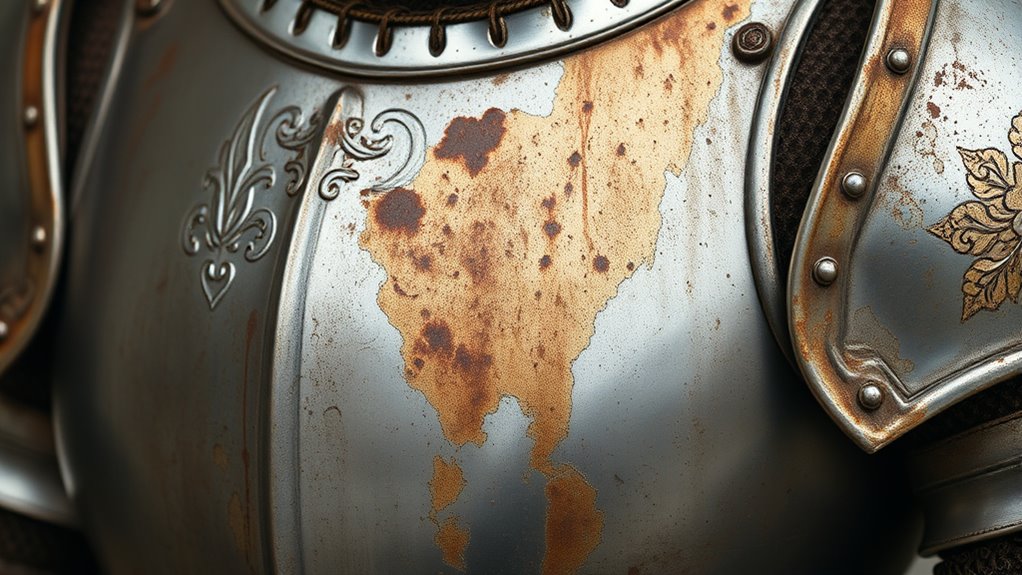

To make armor weathering look real, start by studying natural wear patterns and choose materials that age authentically, like painted metal or bronze. Prep your model by cleaning and priming it, then apply base colors with shaded layers and thin washes to add depth. Use dry brushing and fine chips or scratches to imitate damage, while adding dirt or rust effects for realism. Finish with a protective sealant to guarantee your work remains authentic and durable as you continue perfecting your technique.

Get decor and gifts delivered free — and shop member deals
- Fast, free delivery on millions of items
- Access to Prime Big Deal Days deals on October 6–7
- Prime Video, Amazon Music and more included
Key Takeaways
- Study natural wear patterns and select materials that age authentically, like bronze for patina or steel for scratches.
- Prepare the armor by cleaning, priming, and smoothing surfaces to ensure realistic weathering and paint adherence.
- Apply base colors, then use shading, dry brushing, and washes to create depth, grime, and worn effects.
- Add detailed damage such as chips, scratches, and rust spots with fine brushes or sponges for realism.
- Seal with a matte or satin clear coat to protect the weathered finish and maintain authentic aging over time.
As an affiliate, we earn on qualifying purchases.
Understanding Natural Wear Patterns on Armor
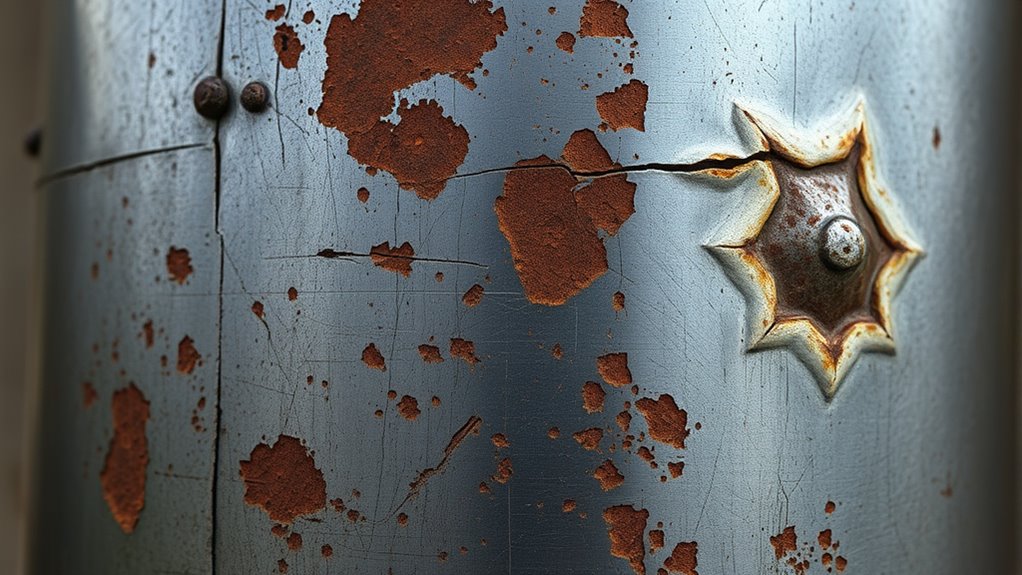
When examining armor, you’ll notice certain wear patterns that develop naturally over time. These patterns are vital for achieving historical accuracy in your weathering process. Different materials, such as steel, bronze, or leather, age uniquely, influencing how they wear. For instance, steel armor shows scratches and dull spots where it’s handled most, while bronze develops a patina that indicates age. Understanding these natural wear patterns helps you replicate authentic aging effects. Proper material selection plays a pivotal role, as it determines how your armor will weather realistically. Studying regional differences in aging and recognizing how different materials age can further enhance the authenticity of your weathered armor. By studying historical examples and recognizing how different materials age, you can create a convincing, authentic look. This attention to detail guarantees your weathered armor reflects genuine history and enhances your overall project.
Selecting the Right Weathering Products and Tools
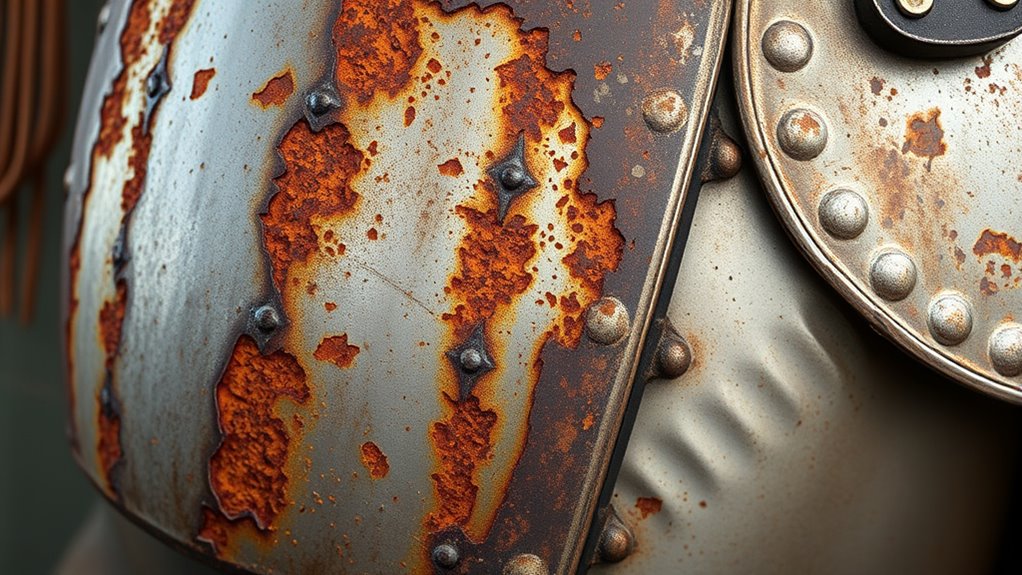
Choosing the right weathering products and tools is essential for achieving realistic and consistent results. To maintain historical accuracy, select products that match the armor’s era and material. For example, oil washes work well for subtle dirt and grime, while pigments can replicate rust and corrosion. Consider the weathering scale you want to achieve; finer powders suit smaller details, while thicker applications create bold effects. Use brushes, sponges, or airbrushes depending on the effect you aim for—each offers different control. Always test products on a spare piece or hidden area first to guarantee compatibility and desired outcome. Proper selection assures your weathering enhances realism without overpowering the model, making your armor look authentically aged and battle-worn. Additionally, understanding anime movies can inspire creative visual effects in your modeling techniques.
Prepping Your Model for Weathering
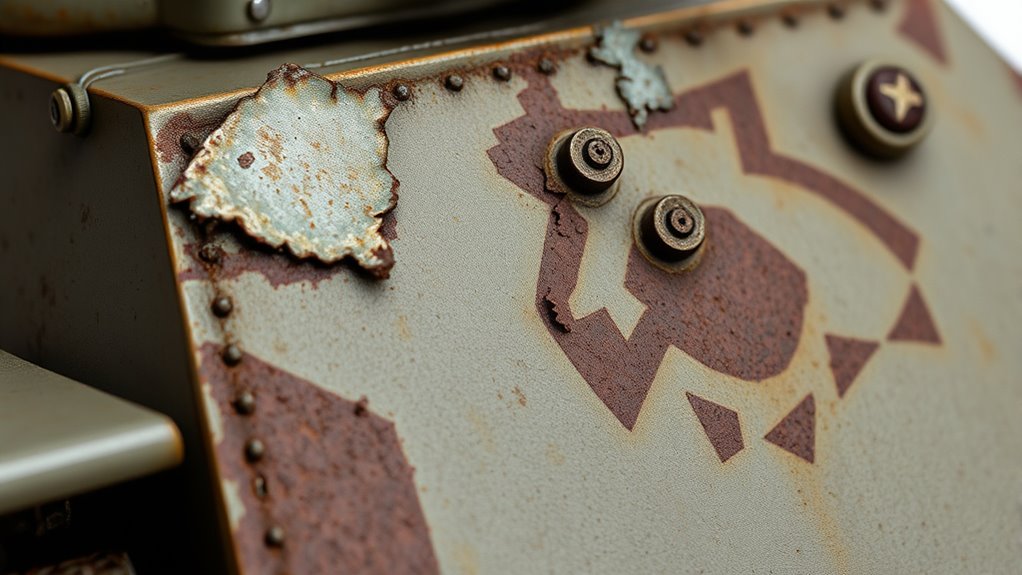
Before applying weathering, you need to prepare your model’s surface properly. Start by cleaning and smoothing it, then add a primer or base coat to guarantee paint adhesion. These steps create a solid foundation for realistic and durable weathering effects.
Surface Preparation Techniques
Proper surface preparation is essential to guarantee your weathering effects adhere smoothly and look realistic. Start by inspecting the metal textures on your armor, ensuring they’re clean and free of dust or oils that can interfere with paint and weathering products. Lightly sanding rough areas helps create a better surface for color blending, allowing the weathering to appear seamless. You might also consider applying a primer or a thin layer of gloss coat to enhance adhesion, but focus mainly on smoothing out the surface and removing imperfections. This step ensures pigments, washes, and pigments will blend naturally, mimicking the natural wear and tear of real armor. Additionally, understanding the automation in business can inspire you to streamline your modeling workflow with tools like airbrushes and masking techniques, making your weathering process more efficient. Proper preparation lays the foundation for convincing, durable weathering effects that enhance your model’s realism.
Primer and Base Coats
Applying a primer and base coats is a crucial step to guarantee your weathering effects adhere properly and look authentic. The primer creates a uniform surface, ensuring paint and weathering materials bond well, preventing issues like uneven metal sheen or delamination. When selecting a primer, consider a matte finish to minimize unwanted gloss effects, which can interfere with realistic weathering. After priming, apply your base coats with thin, even layers to build a solid foundation. This step also helps control shine, avoiding excessive gloss effects that might make weathering look unnatural. Using a neutral or matte color as your base allows weathering techniques, like washes and pigments, to blend seamlessly. Proper priming and base coating set the stage for convincing, durable armor weathering results.
Applying Base Layers and Color Shading Techniques
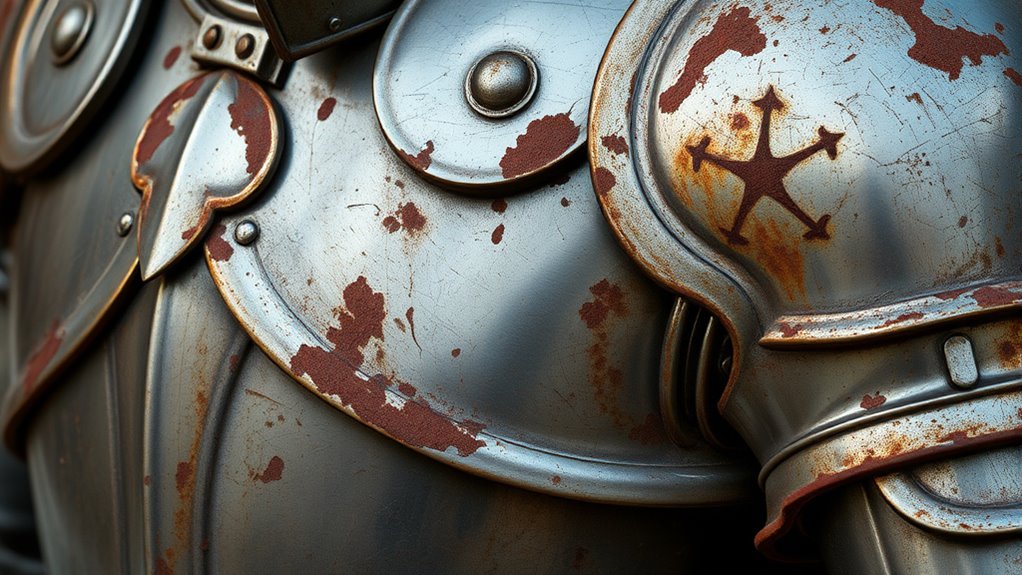
To achieve realistic armor weathering, start by applying a smooth, even base layer of paint that matches the overall color of the armor. Focus on enhancing the metal textures by carefully blending colors to create depth and realism. Use thin, controlled brush strokes to gradually build up shading, emphasizing areas that would naturally experience wear. This technique helps with color blending, ensuring gradual change between light and dark areas look seamless. Avoid harsh lines to maintain a natural appearance. Once the base layer dries, you can add subtle shading around edges and recessed areas to simulate dirt, grime, or shadow effects. This foundational step sets the stage for more detailed weathering, making your armor look convincingly aged and battle-worn. Incorporating proper layering techniques can further enhance the realism of your weathering effects.
Creating Realistic Chipping and Scratches
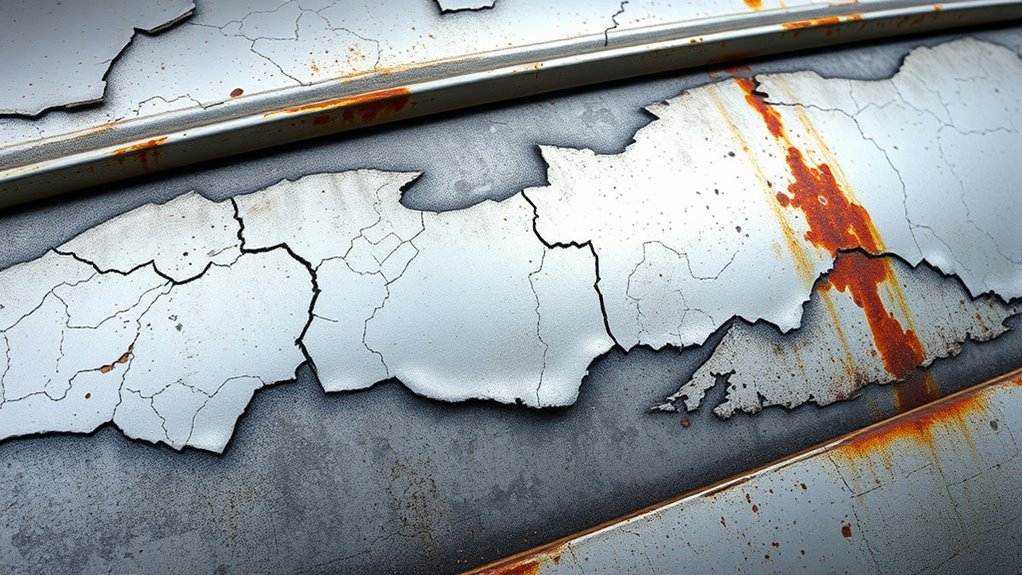
Creating realistic chipping and scratches brings your armor to life by adding signs of wear and battle damage. To achieve this, focus on metal fatigue and paint chipping, which naturally occur over time. Here are four tips to make your effects convincing:
- Use a fine brush or sponge to apply tiny, irregular chips, mimicking paint chipping from constant friction.
- Vary the size and shape of scratches, emphasizing areas prone to impact or movement.
- Incorporate subtle metal fatigue effects with dark washes or dry brushing around edges to suggest wear.
- Focus on high-contact zones, like edges and joints, where chipping and scratches would be most prominent.
- Understanding contrast ratio can help you better visualize how different effects will stand out under various lighting conditions, enhancing realism.
These techniques will help your armor look authentically battle-worn and realistic.
Simulating Dirt, Grime, and Rust Accumulation

Dirt, grime, and rust naturally accumulate on armor over time, especially in areas exposed to the elements and frequent contact. To achieve realistic weathering, focus on areas prone to battle damage, like dents, scratches, or joints where debris collects. Incorporate layers of grime in crevices and around rivets, emphasizing wear from combat and exposure. Rust should appear in areas with chipped paint or exposed metal, adding a sense of deterioration. For historical accuracy, research period-specific dirt and rust patterns, ensuring your effects reflect authentic conditions. Use washes and weathering powders to build these layers gradually, blending them seamlessly into the armor’s surface. This approach enhances realism, making your armor look genuinely aged and battle-worn. Understanding AI-driven personalization can help tailor weathering techniques to specific historical contexts, ensuring more authentic results.
Adding Subtle Effects for Depth and Realism

Adding subtle effects to your armor can considerably enhance its depth and realism without overwhelming the overall look. To achieve this, focus on refining metal textures and smooth paint blending. Here are four techniques to help you:
- Use fine brushwork to add light dry brushing, highlighting raised edges for a natural metal sheen.
- Apply thin washes of darker paint in crevices to create depth and shadow, emphasizing metal textures.
- Blend colors carefully to transition smoothly between weathered areas and clean surfaces, mimicking real wear.
- Add tiny scratches or subtle chipping with a fine brush or sponge to introduce realism without clutter.
- Incorporate metallic finishes to further enhance the authentic appearance of weathered armor.
These subtle effects create visual interest and make your armor appear convincingly aged and used, bringing your weathering to life.
Sealing and Protecting Your Weathered Finish
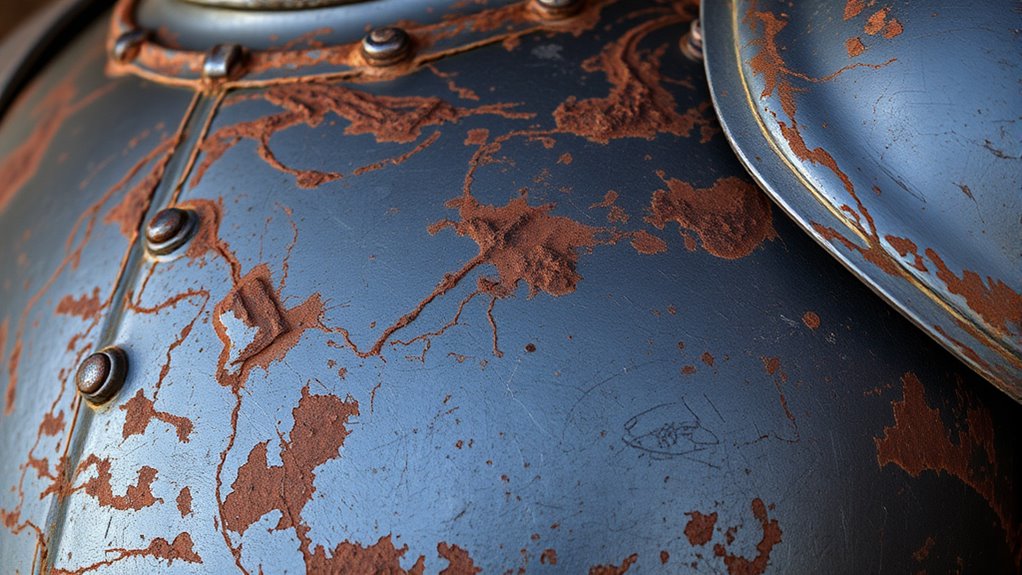
Once you’ve achieved the desired weathered look on your armor, sealing it is essential to preserve your hard work. A good sealant protects against metal corrosion and prevents paint chipping over time. Choose a clear, matte or satin finish sealant compatible with your paints and weathering techniques. Apply it evenly in thin coats, allowing each layer to dry thoroughly before adding the next. This step locks in the realistic effects and creates a durable barrier against moisture and handling. Proper sealing also enhances the sustainable aspect of your project by reducing the need for repairs or touch-ups. Without proper sealing, your armor’s weathered details can fade or deteriorate quickly. Remember, sealing not only preserves the aged appearance but also extends the lifespan of your work, keeping your armor looking authentic and well-maintained for years to come.
Frequently Asked Questions
How Can I Make Weathering Effects Look Consistent Across Different Armor Pieces?
To make weathering effects look consistent across different armor pieces, you should focus on color matching and texture consistency. Use the same weathering techniques, such as washes and dry brushing, across all parts. Keep your color palette uniform, blending weathering powders or pigments similarly. Pay attention to the surface texture, ensuring that scratches, rust, and dirt effects are applied evenly, creating a cohesive, realistic appearance.
What Are Common Mistakes to Avoid During Armor Weathering?
You should avoid color mismatch and uneven application during armor weathering. To do this, stay consistent with your color choices and test on scrap material first. Use thin, even layers and build up gradually to prevent streaks or blotches. Keep your tools clean and work in good lighting. Rushing can lead to uneven application, so take your time. This helps your weathering look authentic and cohesive across all armor pieces.
How Do I Fix Mistakes or Over-Weathered Areas on My Model?
To fix mistakes or over-weathered areas, start by carefully applying color correction with a fine brush or airbrush to lighten or darken spots. Then, blend textures seamlessly using a soft sponge or blending tool to smooth harsh edges. Focus on texture blending to integrate the fixes naturally into the surrounding areas, and layer gradually for a realistic look. Patience and subtle adjustments make your armor weathering look authentic.
Can Weathering Techniques Be Used on Different Types of Armor Materials?
Yes, you can use weathering techniques on different armor materials. You’ll want to take into account the metal finishes and surface textures of each material, adjusting your approach accordingly. For instance, metallic surfaces respond well to washes and dry brushing, while textured surfaces benefit from pin washes or stippling. Tailoring your techniques ensures realistic weathering, whether you’re working with metal, plastic, or other materials, bringing your armor’s story to life.
How Long Does a Typical Armor Weathering Process Take?
You might think armor weathering takes forever, but it usually takes just a few hours to a day, depending on your desired effect. The weathering timeline varies with the process duration, which includes steps like dirt, rust, and paint chipping. Rushing it can ruin the look, so take your time. With patience, you’ll get a realistic, battle-worn finish that truly enhances your model’s authenticity.
Conclusion
By mastering these weathering techniques, you’ll transform your armor into a stunning masterpiece that looks like it’s survived centuries of battle. Each scratch, stain, and chip adds depth, making your model come alive with realism. Don’t be afraid to experiment and push your skills—you’re crafting a piece so convincing, it’ll make even the most seasoned veterans do a double-take. Keep honing your craft, and soon your armor will look like it’s traveled through time itself.
Halloween Picks
halloween
As an affiliate, we earn on qualifying purchases.