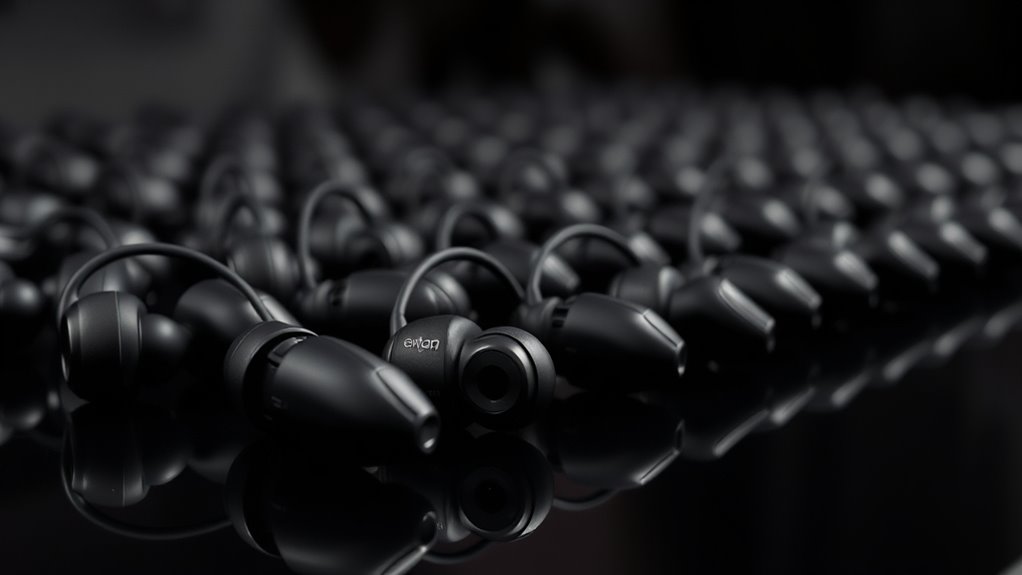

Choosing the right in ear monitor system for haunts involves balancing performance, reliability, and ease of setup. The best systems deliver clear audio with low latency to ensure actors and performers stay in sync, while also offering robust range and stable connections. The top picks include the Phenyx Pro 4-Channel UHF Mono Wireless In-Ear Monitor System for overall reliability, and the LEKATO Wireless In-Ear Monitor System 2.4GHz for its affordability and user-friendly features. However, tradeoffs often include range limitations, latency issues, or complex setup processes. Continue reading for a detailed breakdown of these options to find the best fit for your haunt needs.

Get decor and gifts delivered free with Prime
- Fast, free delivery on millions of items
- Prime Video, Amazon Music and more included
- Member-only deals all year
Complete the kit


Key Takeaways
- Top-performing systems balance low latency with stable UHF or 2.4GHz signals for reliable stage performance.
- Ease of setup and user interface are critical for haunt environments where quick adjustments are often needed.
- Higher channel counts and adjustable frequencies help prevent interference in busy haunted attraction settings.
- Build quality and durability are essential, especially for venues with frequent setup and teardown.
- Price varies significantly, with premium models offering superior performance but not always necessary for smaller haunts.


| in ear monitor system for haunt | Battery Life | Range |
|---|---|---|
| Phenyx Pro 4-Channel UHF Mono | — | 140-164 ft |
| POGOLAB Wireless In-Ear Monito | up to 5 hours | 164ft |
| Stereo Wireless In-Ear Monitor | 10 hours | — |
| UHF Wireless In-Ear Monitor Sy | 5 hours | — |
| Phenyx Pro UHF Stereo Wireless | — | 160 ft |
| Phenyx Pro UHF Wireless In-Ear | — | 164 ft |
| LEKATO Wireless In-Ear Monitor | 5 hours | — |
| JOYO Wireless In-Ear Monitor S | Over 8 hours | — |
| LEKATO Wireless In-Ear Monitor | 6-8 hours | — |
| UHF Wireless In-Ear Monitor Sy | 5-8 hours | 300 ft |
| Phenyx Pro UHF Mono Wireless I | — | — |
| Xvive U45 Wireless In-Ear Moni | up to 5 hours | 100 ft |
| Xvive U4 Wireless In-Ear Monit | 5 hours | — |
| Xvive U4 Wireless In-Ear Monit | up to 5 hours | 90 feet |
More Details on Our Top Picks
Phenyx Pro 4-Channel UHF Mono Wireless In-Ear Monitor System PTM-33-4B
This Phenyx Pro system excels in providing interference-free operation across four channels, making it ideal for multi-performer environments. Compared with the Xvive U45, its UHF bandwidth reduces interference risks, though it only offers mono monitoring, limiting stereo experience. Its long-range capability of up to 164 feet supports large stages, but the reliance on line-of-sight can hinder performance in complex setups. The rack-mount design simplifies integration into existing audio rigs, and the clear audio quality ensures performers hear themselves accurately. However, the system’s need for batteries adds ongoing maintenance, and its mono-only output restricts spatial audio effects.
Pros:- Multiple channels with interference-free UHF frequencies
- Long-range operation up to 164 feet
- Easy to rack-mount and compatible with various setups
- Crystal-clear audio quality for performers
Cons:- Mono monitoring only, no stereo option
- Requires line of sight for optimal range
- Includes batteries that need replacement over time
Best for: Stage managers or performers needing reliable multi-channel mono monitoring in large venues.
Not ideal for: Musicians or performers seeking stereo sound for immersive in-ear experience, or those with limited setup space.
- Channels:4
- Frequency Range:UHF 25 channels
- Range:140-164 ft
- Power Supply:AA batteries, power adapter
- Included:Transmitter, 4 receivers, in-ear earphones, antennas, rackmount kit, user manual
Our verdict“This system is perfect for stage setups where reliable mono monitoring and long-range coverage are priorities.”
POGOLAB Wireless In-Ear Monitor System, UHF 7-Channel, 1ms Ultra-Low Latency, 164ft Range, Rechargeable Transmitter & Belt Receiver
The POGOLAB system offers a significant advantage in latency, making it ideal for performers requiring real-time feedback. Unlike the Phenyx Pro PTM-33-4B, which is limited to mono, POGOLAB provides stereo sound with 7 channels and a robust 164-foot range, suitable for large venues. Its professional XLR and AUX inputs appeal to serious stage setups, but battery life of around 5 hours can be restrictive for longer gigs, and the lack of weight details makes portability uncertain. The quick USB-C charging and long-lasting batteries support busy schedules, yet optimal performance still depends on line-of-sight.
Pros:- Ultra-low 1ms latency for real-time monitoring
- Stable UHF with 7 channels to avoid interference
- Includes professional XLR and AUX inputs
- Rechargeable batteries with quick charging
Cons:- Battery life may be insufficient for very long sets
- No detailed weight information; portability could vary
- Requires line-of-sight for optimal range
Best for: Professional performers or stage crews prioritizing ultra-low latency and stereo fidelity for live performances.
Not ideal for: Casual or smaller venue performers who don’t need extensive channel options or prolonged battery life.
- Channels:7
- Frequency Response:35Hz–16.5kHz
- Range:164ft
- Battery Capacity:450mAh (TX), 400mAh (RX)
- Battery Life:up to 5 hours
- Charging Time:approximately 2 hours
Our verdict“This pick is best suited for professionals demanding minimal delay and stereo clarity during large-scale live shows.”
Stereo Wireless In-Ear Monitor System with Transmitter and Receiver
This system shines with its straightforward operation on the 2.4GHz band, offering easy automatic pairing and a generous 10-hour battery life, making it suitable for long performances. Compared with the UHF systems, the 2.4GHz band can face congestion in crowded environments, but the automatic pairing reduces setup complexity for less tech-savvy users. Supporting up to six receivers, it allows multiple performers to monitor simultaneously. However, wireless setup can be somewhat daunting for beginners, and the lack of waterproof features leaves it vulnerable in damp or outdoor conditions. Its 24-bit/48KHz audio quality ensures clear sound with decent bass presence.
Pros:- High-quality clear sound with good bass
- Automatic pairing for quick setup
- Long battery life of 10 hours
- Supports multiple receivers simultaneously
Cons:- Wireless setup can be complex for beginners
- Limited to in-ear monitoring only
- No waterproof or weatherproof features
Best for: Performers or stage teams seeking a user-friendly, long-lasting wireless system with multiple receivers.
Not ideal for: High-demand, interference-prone environments or outdoor shows in rainy conditions, due to its limited water resistance.
- Frequency Band:2.4GHz
- Audio Processor:24-bit/48KHz
- Battery Life:10 hours
- Includes:Wireless receiver, transmitter, in-ear headphones, cable, 6.35mm jack, user manual
- Supports:Up to 6 receivers
Our verdict“Ideal for performers prioritizing ease of use and extended battery life in less congested wireless environments.”
UHF Wireless In-Ear Monitor System with Pro Earphone, 16 Adjustable Channels, Rechargeable Transmitter and Bodypack Receiver
This UHF system offers excellent stability with 16 adjustable channels and noise cancellation up to 33dB, making it well-suited for crowded venues. Compared to the Phenyx Pro PTM-33-4B, it provides more channels and noise reduction, but its five-hour battery life limits prolonged use without frequent recharging. Its manual frequency adjustment can be challenging in very crowded RF environments, requiring more technical setup. The included earbuds with multiple sizes enhance comfort during extended wear, and the durable build supports demanding professional use. Still, its higher price reflects the advanced features and interference resistance offered.
Pros:- Stable UHF signal resistant to interference
- High-fidelity sound with noise cancellation
- Comfortable earbuds with multiple sizes
- Rechargeable with quick charging
Cons:- Limited to 5 hours of battery life per charge
- Requires manual frequency adjustment in crowded RF environments
- Higher cost due to professional features
Best for: Performers or sound technicians needing a highly stable, interference-resistant system for busy or noisy venues.
Not ideal for: Casual performers or those with limited technical knowledge, as manual frequency tuning can be complex.
- Frequency Range:UHF
- Adjustable Channels:16
- Battery Life:5 hours
- Noise Cancellation:Up to 33dB
- Includes:Headphones, XLR to 6.35mm adapter, charge cable
Our verdict“This system is ideal for professionals seeking maximum interference resistance and noise reduction in complex RF scenarios.”
Phenyx Pro UHF Stereo Wireless In-Ear Monitor System, 900MHz Band, Rack Mountable, 160 ft Range
This Phenyx Pro system offers flexible stereo or mono monitoring on a reliable 900MHz band, making it suitable for professional stage and studio use. Its notable 160-foot range and adjustable EQ and volume controls allow precise sound tailoring, surpassing many 2.4GHz options in stability and frequency flexibility. The durable metal transmitter and professional accessories support demanding environments, but operating on batteries adds ongoing costs and maintenance. Its higher price reflects the professional-grade components, and setup complexity may challenge beginners. Overall, this system balances versatility with reliability, ideal for multi-purpose venues.
Pros:- Reliable 900MHz frequency with minimal congestion
- Long-range transmission up to 160 feet
- Flexible stereo/mono modes with adjustable EQ and volume
- Durable metal transmitter and professional accessories
Cons:- Requires batteries for operation
- Setup can be complex for beginners
- Higher price point due to professional features
Best for: Stage professionals or studio engineers in need of flexible stereo/mono monitoring with long-range stability.
Not ideal for: Casual performers or those seeking a lightweight, portable setup, due to its heavier build and professional features.
- Frequency Band:900MHz
- Range:160 ft
- Modes:Stereo, Mono
- Frequencies:89 tunable channels
- Includes:Transmitter, receiver, earbuds, rackmount kit, carrying case
Our verdict“This system is best for professionals who need robust, long-range, flexible stereo/mono monitoring with high reliability.”
Phenyx Pro UHF Wireless In-Ear Monitor System for Musicians, Mono 2-Channel with 2×50 Frequencies, 164ft Range
This system stands out for its reliable UHF performance and durable, rack-mountable design, making it ideal for live performances where signal stability is critical. Its dual-channel capability allows for simple monitoring setups, but the mono-only output limits stereo experience, unlike the LEKATO or LEKATO MS-02, which support stereo. Compared to the LEKATO models, the Phenyx Pro offers a more robust build and a longer range, though it demands more complex setup and numerous batteries. It’s best for performers or venues needing dependable, interference-free mono monitoring with flexible routing options—though beginners may find installation daunting.
Pros:- Reliable UHF performance with minimal interference
- Daisy chain capability for versatile monitoring
- Durable metal construction with rack-mount design
Cons:- Requires multiple batteries, increasing operational complexity
- Limited to mono audio, restricting stereo playback
Best for: Professional musicians, stage operators, or venues requiring stable, interference-resistant mono monitoring across large areas.
Not ideal for: Hobbyists or small-band setups that prefer stereo sound or simpler setup without rack-mount hardware.
- Frequency Range:UHF 900MHz band
- Channels:Mono 2-Channel
- Range:164 ft
- Includes:Transmitter, 4 Bodypacks, Earphones, Power Adapter, Antennas, Batteries, Rackmount Kit, Carry Case, User Manual
Our verdict“This system is best suited for professionals needing dependable, large-area mono monitoring with robust build quality.”
LEKATO Wireless In-Ear Monitor System 2.4GHz, Stereo Monitoring with Transmitter and Receiver, Auto-Pairing, 6-Device Support, 5H Battery, 100Ft Range
The LEKATO MS-1 offers excellent stereo sound and supports up to six devices simultaneously, making it a top pick for bands and rehearsal spaces. Its auto-pairing feature simplifies setup, and the 24-bit/48kHz resolution delivers clear, detailed audio. Compared with the Phenyx Pro, it supports multiple receivers in one system, though its range is slightly shorter at 100 feet. This makes it better suited for smaller venues, practice, or studio use, where ease of use and multi-device support trump the need for ultra-long-range or mono-only systems. The main tradeoff is that it requires stereo sources for full stereo experience, and obstacles may reduce effective range.
Pros:- Supports up to six devices simultaneously
- Auto-pairing for quick setup
- High-quality stereo audio with low latency
- 5-hour rechargeable battery
Cons:- Limited to environments within 100-foot range
- Requires stereo source for stereo playback
Best for: Small bands, rehearsal studios, or musicians who prioritize stereo sound and multi-user support within a confined space.
Not ideal for: Large venues or outdoor events where longer range and mono operation are necessary.
- Frequency Band:2.4GHz
- Supports:Up to 6 devices
- Battery Life:5 hours
- Wireless Range:100 feet
- Audio Resolution:24-bit/48kHz
- Frequency Response:20Hz-20kHz
Our verdict“This system offers a solid balance of stereo sound, multi-device support, and ease of use for small venues and rehearsals.”
JOYO Wireless In-Ear Monitor System 2.4G with Transmitter and Receiver
The JOYO JW-07 delivers high clarity with a latency of less than 5ms, making it ideal for studio, guitar, DJ, or practice environments where timing precision is vital. Its wide operating range of 40-60 feet and 12-channel banks offer flexibility, although the single transmitter connection limits multi-user applications. Compared with the LEKATO models, it excels in latency and versatility for individual use but falls short for multi-user scenarios. This pick is perfect for musicians needing tight timing, but those seeking multi-user support or longer range should consider alternatives like the UHF systems.
Pros:- Ultra-low latency under 5ms ensures tight timing
- Stable, interference-resistant connection
- Over 8 hours of battery life
- Wide operating range
Cons:- Only supports one receiver per transmitter
- Limited to small/medium stage environments
Best for: Individual performers or DJs requiring ultra-low latency monitoring during practice or recording sessions.
Not ideal for: Large stage performances or multi-user setups that demand support for multiple receivers simultaneously.
- Frequency:2.4GHz
- Audio Quality:48kHz/16bit
- Latency:<5ms
- Operating Range:40-60ft
- Battery Life:Over 8 hours
- Channels:12 Channel banks
Our verdict“This system is perfect for performers who prioritize timing accuracy during practice or studio work over multi-user capability.”
LEKATO Wireless In-Ear Monitor System MS-02, 2.4G Stereo, Low Latency, Upgraded with Transmitter and Beltpack Receiver
The LEKATO MS-02 stands out for its ultra-low latency under 4.5ms and support for multiple receivers from a single transmitter, making it ideal for live performances where real-time monitoring is critical. Its 100-foot range and support for mono/stereo modes give performers flexibility, though earbuds are sold separately, which can add to the cost. Compared to the JOYO system, it offers better multi-receiver support and lower latency, but setup may require some technical comfort. This makes it a strong choice for performers who need tight timing and multiple monitoring options without sacrificing sound quality.
Pros:- Ultra-low latency for real-time feedback
- Supports up to 4 receivers from one transmitter
- Long wireless range of 100 feet
- Supports mono and stereo modes
Cons:- Earbuds are sold separately, increasing overall cost
- Setup may be slightly complex for less tech-savvy users
Best for: Performers or sound engineers needing ultra-low latency, multiple receivers, and flexible mono/stereo modes in live settings.
Not ideal for: Beginners or those seeking an all-in-one package with earbuds included, or larger outdoor setups beyond 100 feet.
- Latency:<4.5ms
- Wireless Range:100 feet
- Battery Life:6-8 hours
- Sampling Rate:24bit/48KHz
- Connection:2.4GHz
- Modes:Mono/Stereo
Our verdict“This system is best for live performers and engineers who prioritize real-time monitoring with support for multiple users and ultra-low latency.”
UHF Wireless In-Ear Monitor System for Stage, 902-927MHz, 300ft Range
This UHF system offers a robust 300-foot range and a stable signal, making it a prime choice for touring musicians or large venues. Its auto-scan feature simplifies setup, and the rugged metal construction withstands demanding environments. Compared with the LEKATO and JOYO models, it emphasizes long-distance performance over multi-user or stereo features, which are limited here. The mono-only output may be a drawback for those wanting stereo, but the extended range makes it ideal for outdoor or large-stage applications. The main tradeoff is slightly lower customer rating and the absence of stereo support, which could impact sound fidelity for some users.
Pros:- Long 300-foot range for outdoor or large-stage use
- Stable, interference-resistant signal with auto-scan
- Rugged, durable metal construction
- Easy setup with one-touch sync
Cons:- Limited to mono sound, not stereo
Best for: Touring musicians or event professionals needing a reliable, long-range mono system for large venues or outdoor events.
Not ideal for: Small bands or studio environments where stereo sound and multi-user support are priorities.
- Frequency Range:902-927MHz
- Range:300 ft
- Channels:50
- Battery Life:5-8 hours
- Battery Capacity:1200mAh
- Material:Metal
Our verdict“This system excels for long-range applications, ideal for touring and large outdoor events where mono monitoring suffices.”
Phenyx Pro UHF Mono Wireless In-Ear Monitor System (PTM-11)
The Phenyx Pro UHF Mono Wireless In-Ear Monitor System stands out for its robust wireless performance with up to 164 feet of range and 50 selectable frequencies, making it ideal for dynamic stage environments. Compared to the Xvive U4, which offers lower latency and stereo sound, the PTM-11 focuses on mono audio, which may be limiting for performers needing stereo clarity. The system’s durability and easy setup make it suitable for touring or fixed installations, but its mono-only output may frustrate those wanting immersive sound. Its separate outputs allow for personalized monitoring, a feature not consistently available in all alternatives. The main tradeoff is the mono-only design; if stereo monitoring is essential, this might not be the best choice. Overall, this pick is best suited for performers prioritizing reliable wireless mono sound and portability over stereo features.
Pros:- Reliable wireless with up to 164 feet range
- Easy to set up with durable, portable design
- Multiple frequency options for interference avoidance
- Separate outputs for personalized monitoring
Cons:- Limited to mono audio, not stereo
- Performance may suffer behind thick walls or metal obstacles
- Requires multiple receivers for multi-user setups
Best for: Performers or stage managers needing reliable, long-range mono monitoring in live settings.
Not ideal for: Musicians who require stereo sound during performances or those who need multi-channel setups in complex environments.
- Frequency Range:UHF 900MHz band
- Operating Range:164 ft
- Selectable Frequencies:50
- Power Supply:Power Adapter, 2 x AA Batteries
- Includes:Transmitter, Bodypack Receiver, Earphone, Antenna, Rackmount Kit, Carry Case, User Manual
Our verdict“This system is ideal for performers who prioritize stable mono monitoring with reliable wireless coverage in live environments.”
Xvive U45 Wireless In-Ear Monitor System 5.8GHz with Transmitter and Bodypack Receiver
The Xvive U45 excels due to its 5.8 GHz operation, providing a stable RF connection up to 100 feet, which is sufficient for most stage setups. It offers a straightforward channel scan mode that simplifies setup, making it perfect for users who want quick, hassle-free operation. In comparison to the Phenyx Pro PTM-11, which emphasizes long-range coverage, the U45 prioritizes ease of use and high-quality audio with 24-bit/48kHz resolution. However, its battery life of around 5 hours may be limiting for longer performances, and manual channel matching after scanning can add complexity. The system’s broad RF bandwidth reduces interference, but the shorter range makes it less suited for very large venues. Overall, this makes the most sense for stage performers who need reliable, high-quality audio with quick setup.
Pros:- Stable RF connection at 5.8 GHz with minimal interference
- Easy channel scanning for quick setup
- High-resolution 24-bit/48kHz audio
- Long battery life with USB-C charging
Cons:- Limited to 100 feet range, less ideal for large venues
- Manual channel matching can be time-consuming
- Battery life may be insufficient for extended gigs
Best for: Performers or setup crews needing high-fidelity sound with quick, simple pairing in medium-sized venues.
Not ideal for: Performers working in very large or obstacle-rich environments where longer range is critical.
- Frequency:5.8 GHz
- Range:100 ft
- Audio Resolution:24-bit/48kHz
- Signal-to-Noise Ratio:110 dB
- Battery Life:up to 5 hours
- Charging Port:USB-C
Our verdict“This system is well-suited for performers who prioritize quick setup and high-quality audio over maximum wireless range.”
Xvive U4 Wireless In-Ear Monitor System with Transmitter and Beltpack Receiver
The Xvive U4 offers a compelling blend of low latency under 5ms and high-resolution 24-bit audio, making it ideal for musicians needing real-time feedback without delay. Compared with the Phenyx Pro PTM-11, which is mono and focused on stage coverage, the U4 provides stereo sound, enriching the in-ear experience and supporting detailed performances. Its rugged metal housing and reliable 2.4 GHz signal reduce interference, but it’s limited to two channels simultaneously, which could be restrictive for larger setups. The 5-hour rechargeable battery is decent but might require extra power management during longer gigs. Overall, this system is best suited for solo performers or small groups prioritizing audio clarity and low latency over multi-channel complexity.
Pros:- Low latency under 5ms for real-time monitoring
- High-quality 24-bit/48kHz audio
- Rugged metal housing for durability
- Reliable 2.4GHz signal with minimal interference
Cons:- Limited to 2 channels at once
- Requires charging cable for continuous use
- Higher price point compared to simpler models
Best for: Solo artists or small bands needing low-latency, high-quality stereo monitoring with reliable wireless signal.
Not ideal for: Large ensembles or multi-channel setups that require more than two simultaneous feeds.
- Frequency Band:2.4GHz
- Battery Life:5 hours
- Audio Quality:24-bit/48kHz
- Frequency Response:20Hz-20kHz
- Signal-to-Noise Ratio:107 dB
- Latency:Less than 5ms
Our verdict“This system is ideal for performers needing precise, low-latency stereo monitoring in small-scale settings.”
Xvive U4 Wireless In-Ear Monitor System Set
The Xvive U4 Set provides an extensive wireless range of up to 90 feet and six channels, making it an excellent choice for larger venues or tours where flexibility and interference management are key. Its low latency under 5ms ensures real-time monitoring without noticeable delay, aligning well with the needs of busy haunt or stage environments. Compared to the Phenyx Pro PTM-11, which is mono and less flexible in channel options, the U4 set offers multiple channels, helping prevent signal clashes during multi-user performances. However, its limited battery life of five hours means performers might need backup power sources for longer shows. This system makes the most sense for performers who need multi-channel options and extended wireless coverage at a reasonable price point.
Pros:- Up to 90 feet wireless range for large venues
- Six channels to avoid interference
- Low latency under 5ms for real-time feedback
- Rechargeable batteries with 5-hour lifespan
Cons:- Battery life may be insufficient for very long performances
- Setup and pairing require some initial effort
- Potentially higher cost for multi-channel setups
Best for: Performers or event organizers managing large or multi-act performances requiring multiple channels and wide coverage.
Not ideal for: Solo performers or small venues where extended range and multiple channels are unnecessary or overly complex.
- Wireless Frequency:2.4GHz
- Range:90 feet
- Channels:6
- Latency:Less than 5ms
- Battery Life:up to 5 hours
- Includes:Receiver, Transmitter, 1/4″ to XLR Adapter, Bag
Our verdict“This system is best suited for large-scale performances needing multiple channels and broad wireless coverage.”

How We Picked
Products were evaluated primarily based on audio performance, signal stability, latency, and range. Ease of use, setup flexibility, and durability also played key roles, as haunt environments demand quick, reliable operation. We prioritized systems with adjustable channels to avoid interference and considered price-to-performance ratios to recommend options accessible to different budgets. The ranking reflects a combination of technical specs, user feedback, and how well each system addresses the unique challenges of haunted attractions, such as frequent setup or multi-actor use.
Factors to Consider When Choosing In Ear Monitor System For Haunts
When selecting an in ear monitor system for haunts, it’s vital to consider factors beyond basic specs. Reliability in signal and ease of operation often outweigh fancy features in high-pressure environments. Understanding these key factors can help you avoid common pitfalls and choose a system that fits your haunt’s scale and technical setup.Signal Type and Range
UHF systems generally offer better range and interference resistance, making them suitable for larger venues with multiple actors. 2.4GHz systems tend to be more user-friendly and compatible with consumer devices but might suffer from congestion in crowded wireless environments. Consider your venue size and signal environment to pick the right frequency band, especially if you plan to run multiple channels simultaneously.
Channel Flexibility and Interference Prevention
Having multiple adjustable channels allows you to switch frequencies if interference occurs, which is common in busy haunt settings. Look for models with at least 16 channels or more for larger setups. Avoid systems with fixed frequencies if you need flexibility, as interference can ruin audio clarity and disrupt performances.
Latency and Audio Quality
Low latency is critical to keep actors in sync with audio cues, especially during live interactions. Many wireless systems boast different latency levels; aim for systems with under 10 milliseconds delay. High-quality audio components also reduce distortion, ensuring clear communication during intense moments or complex soundscapes.
Durability and Ease of Use
Haunt environments require gear that withstands frequent handling, setup, and takedown. Look for models with rugged build quality and straightforward controls. Features like auto-pairing and simple transmitter setup save time, especially when managing multiple actors or quick scene changes.
Budget and Value
While premium systems provide the best reliability and features, they come at a higher cost. Smaller or less frequent haunts might find good value in mid-range models, which still offer decent performance. Be wary of very cheap options that may lack stability or durability, leading to more troubleshooting and replacement costs over time.
Frequently Asked Questions
How do I choose between UHF and 2.4GHz systems for my haunt?
UHF systems generally provide better range and are more resistant to interference, making them suitable for larger venues or setups with many actors. 2.4GHz systems are easier to set up and often more affordable, but they can face congestion if multiple devices operate nearby. For a busy haunt with multiple channels and a larger footprint, UHF typically offers more reliable performance, though 2.4GHz can work well in smaller, less crowded environments.
Is it worth paying more for a higher channel count?
Yes, higher channel counts give you more flexibility to avoid interference, especially in environments with many wireless devices. If your haunt involves numerous actors or complex scenes requiring multiple audio feeds, investing in a system with at least 16 channels can prevent audio dropouts and improve overall reliability. However, for smaller setups, fewer channels might suffice, saving money without sacrificing performance.
How important is latency in an in ear monitor system for haunts?
Latency directly impacts how synchronized audio cues are with on-stage actions. In a haunt, delays over 10 milliseconds can cause noticeable mismatches, disrupting the immersive experience. Opt for systems with low latency features, especially if actors rely on precise timing or if audio cues are critical to the performance. This ensures seamless coordination and maintains the illusion of the haunt’s storytelling elements.
Can I use consumer-grade wireless headphones for my haunt?
While some consumer-grade headphones may seem suitable, they often lack the stability, low latency, and durability required in a professional haunt setting. Wireless in ear monitor systems are specifically designed for live performance environments, providing secure fit, interference resistance, and reliable audio transmission. Using dedicated monitor systems reduces the risk of audio dropouts or technical issues during critical moments.
What is the best way to set up multiple in ear monitor systems for a large haunt?
For larger setups, choose a system with multiple channels and clear frequency management features. Properly scan and assign different channels to each actor to prevent interference. Position transmitters to minimize obstacles and maximize range, and consider using rack-mounted units for better stability. Testing each system beforehand and having spare channels or units on hand can save time during busy setup days.
Conclusion
For those seeking the best overall performance, the Phenyx Pro 4-Channel UHF Mono Wireless In-Ear Monitor System stands out thanks to its reliability and sound clarity, making it ideal for professional haunted attractions. Budget-conscious haunters should consider the LEKATO Wireless In-Ear Monitor System 2.4GHz, which offers solid performance at a lower price point. For newcomers or smaller setups, systems with simple interfaces like the Xvive U45 provide an accessible entry point. Meanwhile, larger venues or tech-savvy operators should look at models with extensive channel options and advanced interference management. Ultimately, selecting the right system depends on your haunt’s size, technical demands, and budget constraints, but understanding these core factors will help you make a confident choice.