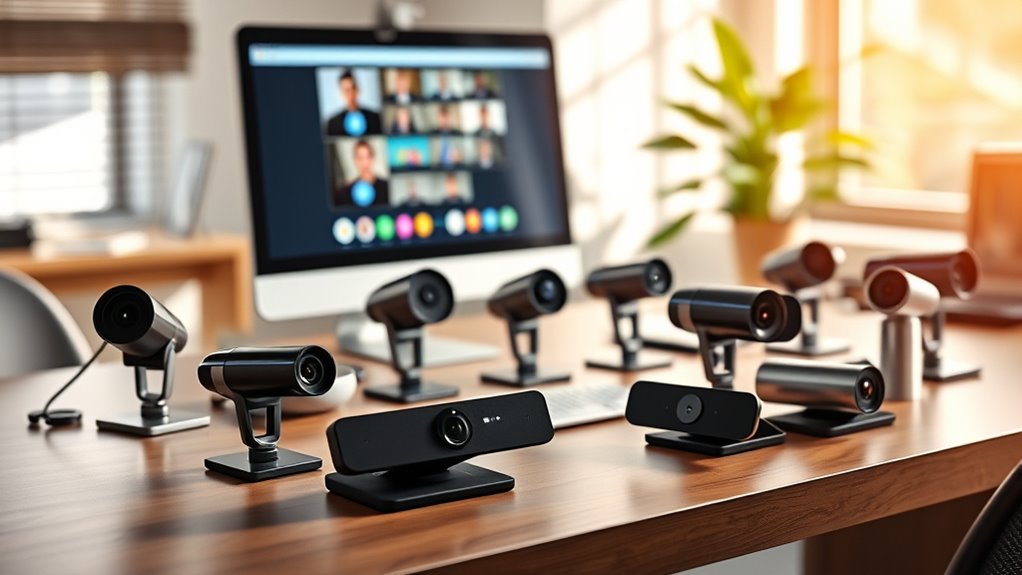

For most Zoom users, I’d start with the Logitech C920x HD Pro: its 1080p video offers a practical balance of clarity and simplicity for routine calls. If you want 4K capture and AI framing, the OBSBOT Meet 2 is a more advanced choice, while the Logitech Brio 101 suits buyers seeking a straightforward Full HD webcam. The main tradeoffs are resolution versus lighting and placement needs, plus whether premium framing features will improve your actual meetings. A sharper camera cannot compensate for a dim room or a poor microphone setup. Read on for the full breakdown of all 15 options and how I’d match them to different Zoom setups.

Get decor and gifts delivered free with Prime
- Fast, free delivery on millions of items
- Prime Video, Amazon Music and more included
- Member-only deals all year
Complete the kit


Key Takeaways
- 1080p is the practical center of this lineup: models such as the Logitech C920x and EMEET C960 1080p target everyday meetings without making 4K a requirement.
- 4K matters most when you can use its extra detail: the Logitech MX Brio, Logitech Brio 4K, OBSBOT Meet 2, and EMEET C960 4K add higher-resolution options, but room lighting and framing still shape the call.
- Framing features set some 4K webcams apart: the OBSBOT Meet 2 pairs AI framing with autofocus, while the EMEET C60E takes a dual-camera approach.
- Privacy covers and shutters are common, not universal: check the specific model’s listed features rather than assuming every webcam has a physical lens cover.
- There are clear entry-level tradeoffs: the Logitech C270 offers 720p rather than Full HD, making it a simpler fit for basic calls than for buyers who prioritize sharper video.
| NexiGo N680E Pro 4K Webcam with Ring Light, PDAF Autofocus, 1080p 60FPS, Dual Noise-Canceling Mics, Privacy Shutter, USB Plug-and-Play for Zoom, Teams, Twitch, Google Meet |  | Best for Built-In Lighting | Video resolution: 4K UHD; 1080p at 60 fps | Sensor: Sony 1/2.5-inch CMOS | Focus: PDAF autofocus | VIEW ON AMAZON | See Our Full Breakdown |
| OBSBOT Meet 2 4K Webcam with 1/2-Inch Sensor, AI Framing, and Autofocus |  | Best for AI Framing | Video resolution: 4K UHD | Sensor: 1/2-inch CMOS | Focus: Autofocus | VIEW ON AMAZON | See Our Full Breakdown |
| Acer A610 1080p Webcam with Dual Microphones and Privacy Cover |  | Best for a Simple Full HD Setup | Resolution: 1080p Full HD | Sensor: 1/3-inch CMOS | Focus: Fixed focus | VIEW ON AMAZON | See Our Full Breakdown |
| NexiGo N60 1080P Webcam with Microphone, Privacy Cover, and Software Control |  | Best for Broad Computer Compatibility | Resolution: 1920 × 1080 (1080p) | Frame rate: 30 fps | Sensor: 2 MP CMOS | VIEW ON AMAZON | See Our Full Breakdown |
| Logitech Brio 101 Full HD 1080p Webcam, Black |  | Best for No-Fuss Zoom Calls | Resolution: Full HD 1080p | Connection: USB-A | Microphone: Built-in | VIEW ON AMAZON | See Our Full Breakdown |
| Shcngqio TWC29 1080p Full HD USB Webcam with Microphone and Privacy Cover |  | Best Simple Plug-and-Play Pick | Model: TWC29 | Video resolution: 1080p (1920 × 1080) | Frame rate: 30 fps | VIEW ON AMAZON | See Our Full Breakdown |
| Logitech Brio Ultra HD 4K Webcam for Streaming and Meetings |  | Best Premium Feature Set | Maximum resolution: 4K | Maximum frame rate: 30 fps | Autofocus and zoom: Autofocus; 5× digital zoom | VIEW ON AMAZON | See Our Full Breakdown |
| EMEET C960 4K Webcam with PDAF Autofocus and Dual Microphones |  | Best for Autofocus and Flexible Mounting | Resolution: True 4K; defaults to 1080p | Focus: PDAF autofocus | Field of view: 73° | VIEW ON AMAZON | See Our Full Breakdown |
| Logitech C270 720p HD Webcam with Noise-Reducing Microphone, Black | 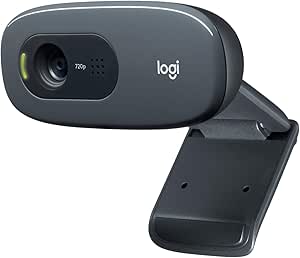 | Best for Basic Video Calls | Model: C270 (960-000694) | Video resolution: 720p | Frame rate: 30 fps | VIEW ON AMAZON | See Our Full Breakdown |
| EMEET C960 1080p Webcam with Dual Microphones and Privacy Cover |  | Best for a Wide Group Frame | Resolution: 1920 × 1080 (Full HD) | Field of view: 90° | Focus: Fixed focus | VIEW ON AMAZON | See Our Full Breakdown |
| Logitech MX Brio Ultra HD 4K Webcam | 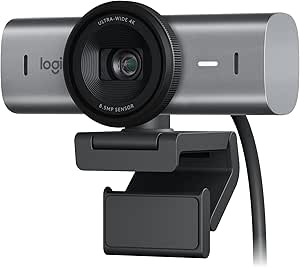 | Best Premium Webcam for Image Control | Resolution and frame rate: 4K at 30 fps or 1080p at 60 fps | Sensor: Logi-designed lens with 70% larger pixels | Microphones: Dual beamforming noise-reducing microphones | VIEW ON AMAZON | See Our Full Breakdown |
| Logitech C920x HD Pro 1080p Webcam |  | Best for Software-Enhanced Backgrounds | Resolution: Full HD 1080p | Frame rate: 30 fps | Focus: Autofocus | VIEW ON AMAZON | See Our Full Breakdown |
| EMEET C60E Dual-Camera 4K Webcam |  | Best for Switching Between Room Views and Close-Ups | Image sensor: 1/2.8-inch CMOS 4K sensor | Cameras: Wide-angle and telephoto | Hybrid zoom: 1x to 11x | VIEW ON AMAZON | See Our Full Breakdown |
| Logitech C920e HD 1080p Webcam with Microphones |  | Best for Straightforward, Privacy-Conscious Office Calls | Resolution: 1080p HD | Field of view: 78° | Microphones: Two integrated omnidirectional microphones | VIEW ON AMAZON | See Our Full Breakdown |
| Trausi 1080p FHD Webcam with Noise-Canceling Mic, Auto Light Correction, Privacy Cover and Wide-Angle Lens | 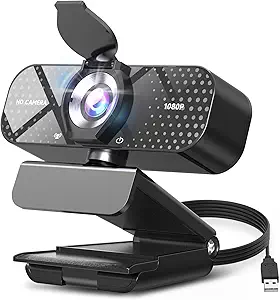 | Best Simple Plug-and-Play Wide-Angle Pick | Resolution: 1080p Full HD | Frame rate: 30 fps | Lens: Wide-angle | VIEW ON AMAZON | See Our Full Breakdown |
| webcams for zoom meeting | Connectivity | Compatibility | Microphones | Focus |
|---|---|---|---|---|
| NexiGo N680E Pro 4K Webcam wit | USB | — | Dual noise-canceling microphones | PDAF autofocus |
| OBSBOT Meet 2 4K Webcam with 1 | USB-C | — | Dual omnidirectional noise-canceling microphones | Autofocus |
| Acer A610 1080p Webcam with Du | USB; Type-A to Type-C adapter included | — | Dual noise-reduction microphones | Fixed focus |
| NexiGo N60 1080P Webcam with M | USB 2.0/3.0 | Windows, Mac OS, Android, Linux, Chrome OS | — | — |
| Logitech Brio 101 Full HD 1080 | — | Microsoft Teams, Zoom, Google Meet | — | — |
| Shcngqio TWC29 1080p Full HD U | USB 2.0, 3.0, 3.1, and OTG | — | — | — |
| Logitech Brio Ultra HD 4K Webc | — | Windows, Mac, and ChromeOS | Dual omnidirectional with noise-canceling technology | — |
| EMEET C960 4K Webcam with PDAF | — | Windows 7/10/11, macOS 10.14+, Android TV 7.0+, Linux | Dual omnidirectional | PDAF autofocus |
| Logitech C270 720p HD Webcam w | USB-A | Windows, macOS, Chrome OS, Skype, Zoom, and Nintendo Switch 2 GameChat | — | Fixed focus |
| EMEET C960 1080p Webcam with D | USB Type-A with A-to-C adapter | — | 2 omnidirectional microphones | Fixed focus |
| Logitech MX Brio Ultra HD 4K W | USB-C | Windows, macOS, Chrome OS, and Linux | Dual beamforming noise-reducing microphones | — |
| Logitech C920x HD Pro 1080p We | — | Windows 11 and Nintendo Switch 2 GameChat | — | Autofocus |
| EMEET C60E Dual-Camera 4K Webc | USB 2.0 Type-A | Windows 10/11 (64-bit), macOS 10.14+, OBS, Twitch, YouTube, and Facebook | Two omnidirectional microphones | — |
| Logitech C920e HD 1080p Webcam | — | Zoom certified; works with Microsoft Teams and other popular video calling applications | Two integrated omnidirectional microphones | HD autofocus |
| Trausi 1080p FHD Webcam with N | USB 2.0/3.0/3.1 and OTG | Windows, macOS, Zoom, Teams, and streaming platforms | — | — |
More Details on Our Top Picks
NexiGo N680E Pro 4K Webcam with Ring Light, PDAF Autofocus, 1080p 60FPS, Dual Noise-Canceling Mics, Privacy Shutter, USB Plug-and-Play for Zoom, Teams, Twitch, Google Meet
The N680E Pro is the most self-contained setup here for Zoom users who need both sharp video and help with uneven room lighting. Its 4K sensor and PDAF autofocus can keep the image detailed and focused as you shift position, while the adjustable tri-tone ring light gives you more control than the Logitech Brio 101’s automatic light balancing. Dual noise-canceling microphones and a privacy shutter add useful meeting-day conveniences.
The tradeoff is that this is more camera than many routine calls need: Zoom meetings often won’t show the full benefit of 4K, and the ring light may feel too bright in very dim rooms. Unlike the compact OBSBOT Meet 2, it also lacks AI framing and weighs more. I’d choose it when lighting and on-camera polish matter more than the smallest travel setup.
Pros:- Built-in adjustable tri-tone ring light provides direct control over meeting illumination.
- 4K video and PDAF autofocus support a detailed image that stays focused as you move.
- Dual noise-canceling microphones are designed to reduce distracting background sound.
- Physical privacy shutter offers a simple way to block the camera between calls.
Cons:- Requires continuous USB power, so it is not suited to untethered use.
- The ring light has only three color temperatures and may be too bright in very low-light settings.
- 4K capability may bring limited visible benefit in ordinary Zoom calls.
Best for: Remote workers who regularly join Zoom from a dim or inconsistently lit room and want a built-in light with autofocus.
Not ideal for: Traveling professionals who prioritize the lightest setup, or buyers who want AI framing rather than an integrated ring light.
- Video resolution:4K UHD; 1080p at 60 fps
- Sensor:Sony 1/2.5-inch CMOS
- Focus:PDAF autofocus
- Lighting:Built-in adjustable tri-tone ring light
- Microphones:Dual noise-canceling microphones
- Connectivity:USB
- Privacy:Built-in privacy shutter
- Weight:0.22 kg
Our verdict“Choose the N680E Pro if you want an autofocus 4K webcam with its own adjustable light, and skip it if portability matters more.”
OBSBOT Meet 2 4K Webcam with 1/2-Inch Sensor, AI Framing, and Autofocus
AI framing is the Meet 2’s clearest Zoom advantage: it can adjust the framing as you move, helping keep you centered without manually repositioning the camera. Its 1/2-inch sensor, 4K video, and autofocus also give it a stronger image-focused feature set than the fixed-focus Acer A610. At just 40.5 grams, it is the easy pick in this group for someone who moves between a home desk and a travel setup.
Compared with the NexiGo N680E Pro, the Meet 2 swaps a built-in ring light for automatic framing and a much lighter body. That makes it less suited to rooms where lighting is the main problem, and the supplied details flag that it may become warm during use. USB-C may also call for an adapter on older computers with only USB-A ports. I’d favor it when staying centered matters more than built-in illumination.
Pros:- AI framing can keep a moving speaker centered without constant manual adjustment.
- Large 1/2-inch CMOS sensor and 4K resolution offer detailed video capture.
- Autofocus is more flexible for movement than the Acer A610’s fixed focus.
- At 40.5 grams, it is exceptionally light for carrying between work locations.
Cons:- May become warm during use.
- No built-in ring light to brighten a poorly lit meeting space.
- USB-C connection may require an adapter for computers with USB-A ports only.
Best for: Frequent travelers and presenters who move during Zoom calls and want automatic framing in a lightweight camera.
Not ideal for: People who need a built-in light for a dim workspace or whose computer lacks USB-C and has no suitable adapter.
- Video resolution:4K UHD
- Sensor:1/2-inch CMOS
- Focus:Autofocus
- Framing:AI framing
- Controls:Gesture control for framing and zoom
- Connectivity:USB-C
- Microphones:Dual omnidirectional noise-canceling microphones
- Weight:40.5 g
Our verdict“Pick the Meet 2 for lightweight 4K video and automatic framing, but choose the N680E Pro if you need an integrated light.”
Acer A610 1080p Webcam with Dual Microphones and Privacy Cover
The Acer A610 keeps the Zoom setup straightforward: it offers 1080p video, automatic low-light correction, dual noise-reduction microphones, and a built-in privacy cover, with plug-and-play USB connection. Its 360-degree rotation helps when you need to aim the camera at a different seat or workspace. The included Type-A to Type-C adapter also gives it more connection flexibility than the USB-A-only Logitech Brio 101 for some newer devices.
Its fixed focus is the main compromise. Unlike the autofocus NexiGo N680E Pro or OBSBOT Meet 2, the A610 is better suited to someone who sits at a consistent distance than to a presenter who moves around. It also lacks the NexiGo’s built-in lighting and the OBSBOT’s AI framing. For routine desk calls, those omissions may be an acceptable trade for a simpler Full HD camera.
Pros:- Full HD resolution is well suited to standard Zoom meetings.
- Automatic low-light correction can help adjust the image in changing room light.
- Dual noise-reduction microphones and a built-in privacy cover address common meeting needs.
- Includes a Type-A to Type-C adapter and supports 360-degree rotation.
Cons:- Fixed focus is less accommodating than autofocus models when the user moves.
- No built-in speakers.
- Lacks the built-in ring light found on the NexiGo N680E Pro.
Best for: Budget-conscious home-office users who sit at a steady distance and want Full HD, a privacy cover, and a simple setup.
Not ideal for: Presenters who move toward or away from the camera, or users seeking 4K, autofocus, or built-in lighting.
- Resolution:1080p Full HD
- Sensor:1/3-inch CMOS
- Focus:Fixed focus
- Viewing angle:83 degrees
- Rotation:360 degrees
- Connectivity:USB; Type-A to Type-C adapter included
- Microphones:Dual noise-reduction microphones
- Privacy:Built-in privacy cover
Our verdict“Choose the A610 for uncomplicated Full HD desk calls if you stay in place; opt for an autofocus model if you move during meetings.”
NexiGo N60 1080P Webcam with Microphone, Privacy Cover, and Software Control
The NexiGo N60 is a practical pick for mixed-device households because it supports a wide range of computer operating systems and connects by USB without requiring extra drivers. For Zoom, its 1080p resolution, built-in noise-canceling microphone, and physical privacy cover cover the basic needs without adding AI framing or a separate lighting system. That makes it a simpler proposition than the 4K OBSBOT Meet 2, which has more advanced framing features but is built around USB-C.
The N60’s fixed focus has a stated range of 19.6 inches to 13 feet, so it suits a stable desk position better than someone who frequently changes distance from the camera. Its 30fps ceiling also gives less motion smoothness than the NexiGo N680E Pro’s 1080p60 mode. The microphone can have audio delay that may require a firmware update, and it does not work with Xbox or PlayStation consoles.
Pros:- Driver-free USB setup supports a broad range of operating systems.
- Physical privacy cover blocks the lens when the camera is not in use.
- Built-in noise-canceling microphone supports basic meeting audio.
- Full HD video and software control cover everyday video-call needs.
Cons:- Fixed focus is less adaptable to changing camera distance than autofocus models.
- Video is limited to 30fps, below the N680E Pro’s 1080p60 option.
- Potential microphone audio delay may require a firmware update; it is not compatible with Xbox or PlayStation consoles.
Best for: Home offices with older or varied operating systems that need a straightforward USB webcam for fixed-position Zoom calls.
Not ideal for: People who move around while presenting, want smoother 60fps video, or plan to use the camera with Xbox or PlayStation.
- Resolution:1920 × 1080 (1080p)
- Frame rate:30 fps
- Sensor:2 MP CMOS
- Lens:3.6 mm glass lens
- Focus range:19.6 inches to 13 feet
- Connectivity:USB 2.0/3.0
- Microphone:Built-in noise-canceling microphone
- Compatibility:Windows, Mac OS, Android, Linux, Chrome OS
Our verdict“Pick the N60 for a broadly compatible, fixed-desk Zoom camera, but choose a newer autofocus model if you move around or need smoother motion.”
Logitech Brio 101 Full HD 1080p Webcam, Black
The Brio 101 prioritizes a familiar, low-effort meeting setup: it connects over USB-A, captures 1080p video, and uses RightLight to brighten the image and reduce shadows. The sliding privacy shutter is easy to operate, and the built-in microphone means there is no extra audio device to set up for routine calls. Compared with the Acer A610, it keeps the feature set more focused on simple desk use rather than adding 360-degree rotation or a Type-C adapter.
That simplicity also sets its limits. The Brio 101 has no listed autofocus or dual-microphone system, unlike the NexiGo N680E Pro, and its USB-A cable may need an adapter for newer computers without that port. RightLight can help with moderate lighting challenges, but it does not give the direct control of the N680E Pro’s ring light. I’d pick it for dependable basics, not advanced framing or lighting control.
Pros:- Full HD 1080p video suits standard Zoom meetings.
- RightLight auto-light balance is designed to brighten the image and reduce shadows.
- Integrated sliding shutter offers convenient lens privacy.
- Built-in microphone and support for common calling platforms simplify setup.
Cons:- USB-A connection may require an adapter on computers without that port.
- No listed autofocus or dual-microphone system.
- Automatic light balancing offers less direct control than the N680E Pro’s ring light.
Best for: Office workers who want a straightforward 1080p Zoom webcam with automatic light balancing and a built-in privacy shutter.
Not ideal for: Users who need USB-C without an adapter, dual microphones, autofocus, or direct control over a built-in light.
- Resolution:Full HD 1080p
- Connection:USB-A
- Microphone:Built-in
- Privacy:Integrated sliding shutter
- Lighting:RightLight auto-light balance
- Lighting claim:Designed to boost brightness by up to 50%
- Compatibility:Microsoft Teams, Zoom, Google Meet
- Recycled plastic:At least 34% post-consumer plastic
Our verdict“Choose the Brio 101 for uncomplicated 1080p calls and a simple privacy shutter, but look elsewhere for autofocus or hands-on lighting control.”
Shcngqio TWC29 1080p Full HD USB Webcam with Microphone and Privacy Cover
The Shcngqio TWC29 suits Zoom users who want Full HD video without managing extra settings: connect it by USB and it is designed to work without installing drivers. Its automatic light correction may help keep your face visible as room lighting changes, while the built-in noise-reducing microphone handles basic calls without a separate mic. Compared with the Logitech C270, it offers 1080p rather than 720p and a wide-angle lens, making it the stronger choice if image detail matters. The tradeoff is its fixed-focus lens, which gives you less flexibility if you sit unusually close or move around during meetings. Its five-foot cable and privacy cover make it a straightforward desk or laptop setup, though available product information provides no independent performance feedback.
Pros:- 1080p video at 30 fps provides more image detail than the Logitech C270’s 720p
- Automatic light correction can help with changing room illumination
- Built-in noise-reducing microphone supports simple calls without a separate mic
- Plug-and-play USB setup and a sliding privacy cover
Cons:- Fixed focus is less adaptable to different seating distances and movement
- No independent performance feedback is provided in the product information
Best for: Remote workers who want a basic 1080p USB webcam with a privacy cover and no driver setup.
Not ideal for: People who move frequently on camera or need adjustable autofocus, since the fixed-focus lens offers less flexibility.
- Model:TWC29
- Video resolution:1080p (1920 × 1080)
- Frame rate:30 fps
- Lens and focus:Wide angle; fixed focus
- Sensor:CMOS
- Connectivity:USB 2.0, 3.0, 3.1, and OTG
- Cable length:5 ft
- Features:Noise-reducing microphone, automatic light correction, sliding privacy cover
Our verdict“Choose the TWC29 for uncomplicated 1080p Zoom calls, but pick an autofocus model if your position changes often.”
Logitech Brio Ultra HD 4K Webcam for Streaming and Meetings
The Logitech Brio is the most feature-rich choice here for people who want a webcam to do more than cover a routine video call. Its 4K video, autofocus, and 5× digital zoom give you more room to frame a close-up or adapt your shot, while automatic exposure adjustments can help with backlighting and glare. Three field-of-view presets also let you choose between a tighter solo view and a wider frame. Compared with the EMEET C960 4K, the Brio adds adjustable framing presets and Windows Hello support; both offer 4K, but the EMEET specifies PDAF autofocus and a privacy cover. The Brio’s 4K mode tops out at 30 fps, and its shutter attaches rather than being built into the body. Its broader feature set makes the most sense for users who will use those controls, not someone seeking a simple plug-in camera.
Pros:- Up to 4K video at 30 fps
- Autofocus, 5× digital zoom, and three field-of-view presets support flexible framing
- Dual noise-canceling microphones and automatic exposure adjustments
- Supports Windows Hello and includes an attachable privacy shutter
Cons:- 4K video is limited to 30 fps
- Privacy shutter is attachable rather than built into the webcam
- Its extra framing and security features may be unnecessary for basic video calls
Best for: Professionals who want adjustable framing, autofocus, 4K capture, and Windows Hello support in one webcam.
Not ideal for: Buyers who want a built-in privacy cover or only need an uncomplicated Full HD camera for standard Zoom calls.
- Maximum resolution:4K
- Maximum frame rate:30 fps
- Autofocus and zoom:Autofocus; 5× digital zoom
- Field of view:65°, 78°, or 90° diagonal
- Microphones:Dual omnidirectional with noise-canceling technology
- Microphone pickup range:Up to 1.2 m
- Compatibility:Windows, Mac, and ChromeOS
- Additional features:Windows Hello support; attachable privacy shutter
- Warranty:1-year limited hardware warranty
Our verdict“Pick the Brio if you want premium framing controls and Windows Hello alongside 4K, rather than a simpler Full HD Zoom camera.”
EMEET C960 4K Webcam with PDAF Autofocus and Dual Microphones
The EMEET C960 4K pairs a true 4K sensor with PDAF autofocus, a useful combination for callers who shift position or want a sharper image than standard Full HD. Its 73° field of view keeps the frame relatively contained, so it is less likely than the 90° EMEET C960 1080p to show as much of a room during a solo meeting. A tripod thread and 360° horizontal adjustment also give you more placement options than a basic screen-mounted webcam. The main Zoom caveat is that video defaults to 1080p; switching to 4K requires camera software or a supported app, so the higher resolution may take extra setup. Dual microphones and a privacy cover help round out a practical meeting setup, but buyers seeking a straightforward Full HD connection may find the 1080p C960 easier to use.
Pros:- True 4K sensor with PDAF autofocus
- 73° field of view keeps the frame more focused than the 90° EMEET C960 1080p
- Dual omnidirectional microphones and automatic light correction
- Privacy cover, 360° horizontal adjustment, and a 1/4-inch tripod thread
Cons:- Defaults to 1080p; 4K requires camera software or a supported app
- USB-A connection may need an adapter on devices without that port
Best for: Zoom callers who want autofocus, a tighter field of view, and the option to mount the webcam on a tripod.
Not ideal for: People who expect 4K to be active immediately without changing software settings, or who want a broad room view.
- Resolution:True 4K; defaults to 1080p
- Focus:PDAF autofocus
- Field of view:73°
- Microphones:Dual omnidirectional
- Connection:USB-A
- Privacy:Privacy cover
- Adjustments:360° horizontal, 15° vertical
- Mounting:1/4-inch tripod thread
- Compatibility:Windows 7/10/11, macOS 10.14+, Android TV 7.0+, Linux
Our verdict“Choose this C960 if autofocus and flexible mounting matter more than having 4K enabled by default.”
Logitech C270 720p HD Webcam with Noise-Reducing Microphone, Black
The Logitech C270 is a no-frills choice for callers who value a familiar, compact setup over sharper video. Its 720p resolution is a step below the 1080p Shcngqio TWC29 and both EMEET models here, so it makes most sense when meetings are routine and a clear-enough face shot matters more than fine detail. The 55° field of view keeps the frame relatively narrow, which can reduce distracting background clutter in a solo office call. Its noise-reducing microphone picks up voices from as far as 1.5 meters, and the adjustable clip can attach to a screen or fold into a stand. Compared with the higher-resolution options, the C270 gives up image detail and autofocus; its fixed-focus lens and USB-A connector also limit flexibility for some setups.
Pros:- Compact 2.56-ounce design with an adjustable clip that can fold into a stand
- 55° field of view creates a relatively tight solo-call frame
- Built-in noise-reducing microphone has a pickup range up to 1.5 meters
- Automatic light correction and 30 fps video
Cons:- 720p resolution provides less detail than the 1080p options in this roundup
- Fixed-focus lens is less adaptable to changes in distance
- USB-A may require an adapter on devices without a USB-A port
Best for: Students and office workers who need a compact, basic webcam for regular Zoom calls and have a USB-A port.
Not ideal for: People who want Full HD detail, a wide group frame, or a connection that plugs directly into a USB-C-only device.
- Model:C270 (960-000694)
- Video resolution:720p
- Frame rate:30 fps
- Field of view:55° diagonal
- Focus:Fixed focus
- Microphone:Built-in noise-reducing; pickup range up to 1.5 meters
- Connectivity:USB-A
- Weight and cable:2.56 ounces; 5 feet
- Compatibility:Windows, macOS, Chrome OS, Skype, Zoom, and Nintendo Switch 2 GameChat
Our verdict“Choose the C270 for straightforward solo Zoom calls if you can accept 720p and have a USB-A connection.”
EMEET C960 1080p Webcam with Dual Microphones and Privacy Cover
The EMEET C960 1080p is the meeting-focused pick for callers who want more than one person to fit comfortably in frame. Its 90° field of view is substantially wider than the 73° view on the EMEET C960 4K, so it better suits a shared desk or a room where people sit side by side. Full HD video and automatic light adjustment cover the basics, while two omnidirectional microphones can capture voices without requiring an external mic. The tradeoff is fixed focus: unlike the Logitech Brio or the 4K EMEET C960, it does not offer autofocus for users who move around or change distance. Its removable privacy cover and included A-to-C adapter add practical setup flexibility, but this model is not compatible with tablets or game consoles and has no built-in speakers.
Pros:- 90° field of view accommodates more than one person more easily than the 73° EMEET C960 4K
- Full HD 1920 × 1080 video with automatic light adjustment
- Two omnidirectional microphones for meeting audio
- Removable privacy cover and included A-to-C adapter
Cons:- Fixed-focus lens lacks the adjustment offered by the autofocus EMEET C960 4K
- Wide view may include more background than a solo caller wants
- No built-in speakers and no compatibility with tablets or game consoles
Best for: Small teams, pairs, or households who share a camera and need a wider frame for Zoom meetings.
Not ideal for: Solo callers who want a tightly cropped view, autofocus, built-in speakers, or compatibility with tablets and game consoles.
- Resolution:1920 × 1080 (Full HD)
- Field of view:90°
- Focus:Fixed focus
- Microphones:2 omnidirectional microphones
- Connectivity:USB Type-A with A-to-C adapter
- Privacy:Removable privacy cover
- Compatible operating systems:Windows 10/11, macOS 10.14+, Android TV 7.0+
- Weight:0.16 kg
- Dimensions:4.88 × 2.65 × 2.04 in
Our verdict“Pick this C960 for shared Zoom calls where fitting multiple people matters more than autofocus or a close solo frame.”
Logitech MX Brio Ultra HD 4K Webcam
I’d choose the MX Brio when video quality and control matter more than keeping the setup simple. Its 4K at 30 fps gives meeting participants a detailed image, while AI-enhanced low-light visibility is useful when your room lighting is less than ideal. Unlike the Logitech C920x, which keeps to 1080p at 30 fps, this model also offers 1080p at 60 fps for smoother motion. The Show Mode is a practical extra for presenting notes or sketches at your desk, and the privacy cover is built in. The tradeoff is setup: fine image controls require Logitech software, and its premium features may be unnecessary for routine calls. I’d skip it if a straightforward 1080p webcam like the C920e is enough.
Pros:- 4K at 30 fps and 1080p at 60 fps provide flexible image and motion options.
- AI-enhanced image processing supports clearer face visibility in low light.
- Show Mode helps share physical notes and sketches during calls.
- Physical privacy cover and dual beamforming noise-reducing microphones are useful for regular meetings.
Cons:- Fine Controls require Logitech software installation.
- Its advanced image features may be unnecessary for buyers who only need standard 1080p calls.
Best for: Remote professionals who want detailed video, low-light help, and manual image adjustments for frequent Zoom meetings or desk demonstrations.
Not ideal for: Buyers who want a basic plug-in 1080p camera or do not plan to use 4K, Show Mode, or software controls.
- Resolution and frame rate:4K at 30 fps or 1080p at 60 fps
- Sensor:Logi-designed lens with 70% larger pixels
- Microphones:Dual beamforming noise-reducing microphones
- Connectivity:USB-C
- Compatibility:Windows, macOS, Chrome OS, and Linux
- Features:AI-enhanced image quality, Show Mode, and privacy cover
- Certifications:Zoom, Microsoft Teams, Chromebook, Google Meet, and Streamlabs
Our verdict“Choose the MX Brio if you want premium image control and desk-sharing features, but choose the C920x or C920e for simpler 1080p meetings.”
Logitech C920x HD Pro 1080p Webcam
The Logitech C920x suits Zoom users who want dependable 1080p video and a software option for tidying the background. Its autofocus and automatic lighting adjustment help keep the image usable when you move or work in uneven light, while the included three-month XSplit VCam license supports background blur, removal, or replacement without a green screen. Compared with the premium MX Brio, it gives up 4K, 60 fps video, and a physical privacy cover; in return, its feature set is more focused on everyday calls. The dual stereo microphones provide onboard audio, though the listing gives no pickup range or noise-reduction claim. I’d pick it over the C920e when background effects matter, but skip it if a lens cover is a must.
Pros:- Full HD 1080p video at 30 fps suits standard video meetings.
- Autofocus and automatic lighting adjustment support changing positions and room light.
- Three-month XSplit VCam license enables background blur, replacement, and removal without a green screen.
- Dual stereo microphones provide built-in audio capture.
Cons:- No privacy shutter or cover is included.
- Video is limited to 1080p at 30 fps, unlike the MX Brio’s 4K and 1080p 60 fps options.
Best for: Windows 11 users who want 1080p Zoom calls and plan to use virtual background effects through the included XSplit VCam license.
Not ideal for: People who want a physical privacy cover, higher-than-1080p video, or a webcam with detailed compatibility information beyond the listed systems.
- Resolution:Full HD 1080p
- Frame rate:30 fps
- Focus:Autofocus
- Audio:Dual stereo microphones
- Compatibility:Windows 11 and Nintendo Switch 2 GameChat
- Included software:Three-month XSplit VCam license
- Privacy shutter:None
- Color:Black
Our verdict“Pick the C920x if background effects matter more than a privacy cover or premium resolution.”
EMEET C60E Dual-Camera 4K Webcam
The EMEET C60E is the most adaptable choice here for a Zoom host who needs to show both a room and a closer subject. Its wide-angle and telephoto cameras, PDAF autofocus, and up-to-11x hybrid zoom offer framing options that a fixed-view webcam like the Logitech C920e cannot match. That flexibility can help a teacher show a workspace, then bring a document or demonstration into view. The tradeoff is that zoom is unavailable in 4K, 60 fps, and YUY2 modes, so you cannot combine every setting. Telephoto close-ups also have a recommended working distance of 13.8 inches. Its USB-A connection and omnidirectional microphones make it practical for a desk, but I’d favor the MX Brio for simpler premium meeting video.
Pros:- Wide-angle and telephoto cameras offer more framing flexibility than fixed-view options such as the C920e.
- PDAF autofocus and up to 11x hybrid zoom support close-up demonstrations.
- Remote and software controls allow image adjustments without reaching for the camera.
- Two omnidirectional microphones have a stated pickup radius of 9.8 feet.
Cons:- Zoom is unavailable in 4K, 60 fps, and YUY2 modes.
- Telephoto close-ups have a recommended subject distance of 13.8 inches.
- USB 2.0 Type-A connection may require an adapter on devices without USB-A.
Best for: Teachers, trainers, and presenters who need to switch between a wider room view and close-ups during Zoom calls.
Not ideal for: People who want to use zoom while recording in 4K or 60 fps, or whose telephoto subjects will sit closer than the recommended distance.
- Image sensor:1/2.8-inch CMOS 4K sensor
- Cameras:Wide-angle and telephoto
- Hybrid zoom:1x to 11x
- Autofocus:PDAF
- Microphones:Two omnidirectional microphones
- Microphone pickup radius:9.8 feet
- Connectivity:USB 2.0 Type-A
- Compatibility:Windows 10/11 (64-bit), macOS 10.14+, OBS, Twitch, YouTube, and Facebook
- Zoom limitations:Zoom is not supported in 4K, 60 fps, or YUY2 modes
Our verdict“Choose the C60E for adjustable wide and close views during presentations, not for zooming while using its highest-resolution or frame-rate modes.”
Logitech C920e HD 1080p Webcam with Microphones
For a conventional Zoom desk setup, I’d favor the Logitech C920e over feature-heavy models that add framing modes you may never use. It combines 1080p video, HD autofocus, and automatic light correction with a flip-up privacy cover, so everyday calls need little adjustment and the lens can be covered between meetings. Its 78° field of view keeps the frame relatively contained, which suits solo calls better than group rooms or demonstrations. Compared with the C920x, the C920e lists a privacy cover and Zoom certification, while the C920x includes an XSplit VCam license for virtual backgrounds. The C920e’s microphones are rated for pickup up to one meter, a narrower reach than the C60E’s stated 9.8-foot radius. I’d skip it if you need broad framing or distant voice pickup.
Pros:- 1080p video, autofocus, and automatic light correction cover core meeting needs.
- Flip-up privacy cover makes it easy to block the lens between calls.
- Adjustable clip and tripod thread allow more mounting options.
- Zoom certification and compatibility with Microsoft Teams suit common office workflows.
Cons:- Fixed 78° field of view limits framing flexibility.
- Microphone pickup range is listed as up to one meter, less than the C60E’s stated radius.
- The C920x includes an XSplit VCam license for background effects, which this model does not list.
Best for: Office workers who want a simple, Zoom-certified 1080p webcam with a physical privacy cover and adjustable mounting.
Not ideal for: People who need a wide room view, longer-range microphone pickup, or virtual background software included with the webcam.
- Resolution:1080p HD
- Field of view:78°
- Microphones:Two integrated omnidirectional microphones
- Microphone pickup range:Up to 1 meter
- Focus:HD autofocus
- Light correction:Automatic
- Privacy cover:Attachable flip-up cover
- Mounting:Adjustable clip and 1/4-inch tripod thread
- Compatibility:Zoom certified; works with Microsoft Teams and other popular video calling applications
Our verdict“Choose the C920e for no-fuss Zoom calls with a privacy cover, but look elsewhere for wider framing or virtual background tools.”
Trausi 1080p FHD Webcam with Noise-Canceling Mic, Auto Light Correction, Privacy Cover and Wide-Angle Lens
The Trausi 1080p webcam is aimed at buyers who want a wide view, built-in microphone, and lens cover without installing drivers. Its automatic light correction can adapt the image to varied room lighting, while the noise-canceling microphone is intended to make speech clearer on calls. Unlike the Logitech C920e, which has a specified 78° field of view and autofocus, Trausi is described only as wide-angle and does not list an adjustable view or autofocus. That makes it a simpler fit for a fixed laptop or desktop setup, but less suitable if you need precise framing or frequent repositioning. The slide-over cover adds privacy, though the product data flags its long-term feel as a concern. I’d choose the C920e for defined specs and Zoom certification; this one favors a straightforward plug-in setup.
Pros:- 1080p video at 30 fps meets typical meeting needs.
- Wide-angle lens can include more of a desk or nearby surroundings than a narrower view.
- Automatic light correction adapts to bright and low-light conditions.
- Plug-and-play USB connection and slide-over privacy cover keep setup simple.
Cons:- Field of view is fixed and its exact angle is not specified.
- No autofocus specification is provided, unlike the Logitech C920e.
- The privacy cover may feel flimsy over long-term use.
Best for: Laptop and desktop users who want a basic wide-angle 1080p camera with automatic lighting, a built-in mic, and a physical lens cover.
Not ideal for: Buyers who need adjustable framing, specified autofocus, confirmed Zoom certification, or a more substantial privacy-cover design.
- Resolution:1080p Full HD
- Frame rate:30 fps
- Lens:Wide-angle
- Microphone:Noise-canceling
- Light correction:Automatic
- Connectivity:USB 2.0/3.0/3.1 and OTG
- Cable length:5 ft (1.5 m)
- Compatibility:Windows, macOS, Zoom, Teams, and streaming platforms
- Privacy cover:Slide-over cover
Our verdict“Choose Trausi for a simple wide-angle USB webcam with a privacy cover, but pick the C920e if you want stated autofocus and Zoom certification.”
How We Picked
I ranked these webcams around the needs of a typical Zoom meeting: dependable video, useful autofocus or exposure features, clear and practical framing, simple setup, privacy controls, and microphone capability. I treated resolution as one factor rather than an automatic win; a 4K label does not tell the whole story if the room is dim, the camera is poorly positioned, or the user only needs a clear head-and-shoulders view.
The order reflects how well each model’s listed features fit common meeting setups and how much extra capability it offers over simpler alternatives. Options with 1080p video and straightforward usability suit the broadest set of callers, while 4K and specialized framing features earn a stronger fit for people who will use them. I also accounted for meaningful compromises, including lower resolution, feature-specific complexity, and differences in privacy and microphone provisions. These are feature-based comparisons, not claims of hands-on testing.
| webcams for zoom meeting | Focus |
|---|---|
| NexiGo N680E Pro 4K Webcam wit | PDAF autofocus |
| OBSBOT Meet 2 4K Webcam with 1 | Autofocus |
| Acer A610 1080p Webcam with Du | Fixed focus |
| NexiGo N60 1080P Webcam with M | — |
| Logitech Brio 101 Full HD 1080 | — |
| Shcngqio TWC29 1080p Full HD U | — |
| Logitech Brio Ultra HD 4K Webc | — |
| EMEET C960 4K Webcam with PDAF | PDAF autofocus |
| Logitech C270 720p HD Webcam w | Fixed focus |
| EMEET C960 1080p Webcam with D | Fixed focus |
| Logitech MX Brio Ultra HD 4K W | — |
| Logitech C920x HD Pro 1080p We | Autofocus |
| EMEET C60E Dual-Camera 4K Webc | — |
| Logitech C920e HD 1080p Webcam | HD autofocus |
| Trausi 1080p FHD Webcam with N | — |
Factors to Consider When Choosing Webcams For Zoom Meetings
I’d choose a webcam by starting with the room and call habits, then matching features to those conditions. These factors can help prevent spending on capabilities that Zoom calls won’t use—or overlooking a practical limitation that affects every meeting.
Match Resolution to Your Meeting Setup
For a typical seated Zoom call, 1080p is often a sensible target: it can show a clear face without making high-resolution capture the deciding factor. 4K can offer extra detail or more room for cropping and reframing, but the benefit depends on the camera, software, connection, and how the image is used in the call. Before paying for 4K, check whether your meeting setup and display make that extra detail useful. A higher resolution also cannot fix a distracting background or a camera placed too far away. I’d put correct camera height and a flattering distance ahead of resolution upgrades. Choose the format that supports your actual calls, not the largest number on the box.
Check Room Lighting Before Blaming the Camera
Uneven or weak light can make even a capable webcam produce a less appealing image. A window behind you may leave your face dark, while a bright screen alone can create harsh shadows. Try facing a window or placing a lamp near the display before buying a camera specifically for low-light correction. Ring lights and automatic exposure features can help, but they do not replace balanced room lighting. If your lighting changes throughout the day, consider how easily you can adjust your setup. The common mistake is buying more resolution when a simple change in light direction would make a larger visible difference.
Decide Whether Autofocus and Framing Solve a Real Problem
Autofocus is useful if you move around, show objects to the camera, or frequently change your distance from the desk. For a fixed seat and steady speaking position, a camera that holds focus reliably may be enough. AI framing can help keep a moving speaker in view, but it may be unnecessary for someone who stays centered during calls. Check whether the feature works with your intended computer and meeting setup rather than assuming every camera function will operate identically in every app. More automation can also mean more settings to learn. I’d pay extra for framing features when movement is part of the meeting, not simply because they sound advanced.
Treat Microphones as a Separate Buying Decision
Built-in microphones can simplify a desk setup, but their presence does not guarantee that they suit your room or speaking distance. Keyboard noise, echo, fans, and other people nearby can matter more than the microphone count in a product description. For occasional calls in a quiet room, an onboard mic may be convenient; for frequent meetings, a headset or dedicated microphone can offer more control over sound. Test your audio in the meeting app before an important call, since app settings and microphone selection affect the result. Avoid choosing a webcam on video specifications alone if clear speech is your main concern. Think of the webcam mic as a useful convenience, not an automatic substitute for a purpose-built audio setup.
Plan for Placement, Privacy, and Compatibility
A webcam works best when it can sit near eye level and remain stable above or beside the display. Check how it mounts to your monitor or laptop, and leave enough room for the cable to reach the intended USB port. Physical shutters and privacy covers offer a quick way to block the lens between calls, but you should verify that the exact model includes one. Also check operating-system support, connection type, and any software needed for advanced controls before buying. A plug-and-play claim may cover basic video while optional framing or image settings still rely on an app. These small setup details can matter more in daily use than a modest resolution difference.
Frequently Asked Questions
Is a 4K webcam worth choosing for Zoom meetings?
It can be worthwhile if you want extra detail, plan to crop or reframe the image, or use the webcam for other video tasks as well. For a standard head-and-shoulders call, a capable 1080p webcam may already meet your needs. Room lighting, camera position, and audio can influence how professional a call feels more than the move to 4K. Check that your computer and meeting setup can make use of the camera’s higher-resolution features. If those benefits do not match your routine, a simpler Full HD model may be the more sensible choice.
Should I choose a webcam with a built-in microphone for work calls?
A built-in microphone is convenient when you want fewer devices and usually take calls in a quiet room. It may be less suited to a noisy space, a room with echo, or calls where consistent speech quality is especially important. A headset or separate microphone gives you another way to control how your voice is captured. Before buying extra audio gear, check whether your current computer or headset already provides acceptable call sound. I’d treat the webcam microphone as a useful starting point rather than a guarantee of the best audio for every room.
When does AI framing make a difference on Zoom?
AI framing is most useful if you move around while speaking, share a workspace with others, or want the camera to keep you centered without adjusting the mount. It usually adds less value when you sit in one position and keep a consistent distance from the camera. Check how the framing feature is controlled and whether it depends on companion software. If you share a screen or presentation, make sure the framing behavior will not distract from the meeting. For a stationary desk setup, a basic webcam placed at eye level may be enough.
What should I upgrade first if my Zoom video looks poor?
Start by checking lighting and camera placement before replacing the webcam. Face a window or a light source, raise the lens to eye level, and position it close enough to frame your head and shoulders. Confirm that Zoom is using the intended camera and that the lens is clean. If the image remains soft or the camera struggles to focus after those adjustments, upgrading the webcam may make sense. If people have trouble hearing you, address the microphone or room noise separately rather than expecting a new camera to fix audio.
Do I need a privacy shutter if my webcam has software controls?
A physical shutter or cover blocks the lens directly, while software controls depend on the device and application behaving as expected. If you want a visible, quick way to cover the camera between meetings, a physical option is convenient. Check the exact model listing because not every webcam in this roundup includes a cover or shutter. You can also unplug the webcam when it is not in use, though that may be less convenient for frequent calls. Choose the approach that fits your privacy preferences and how often the camera stays connected.
Conclusion
For most people who want a straightforward work-call camera, I’d choose the Logitech C920x HD Pro as the best overall direction in this lineup: it offers 1080p video without requiring a 4K-focused setup. For best value, compare the EMEET C960 1080p and NexiGo N60 around the features you need, especially their microphone and privacy provisions. If you want a premium 4K option, consider the Logitech MX Brio; for a beginner, the Logitech Brio 101 keeps the choice simple. For specific needs, the OBSBOT Meet 2 suits buyers seeking AI framing, while the Logitech C270 is a basic pick for callers who can accept 720p. Match the camera to your room, movement, and audio needs, and you’ll have a clearer path to the right Zoom setup.
Fall Picks
fall essentials
As an affiliate, we earn on qualifying purchases.