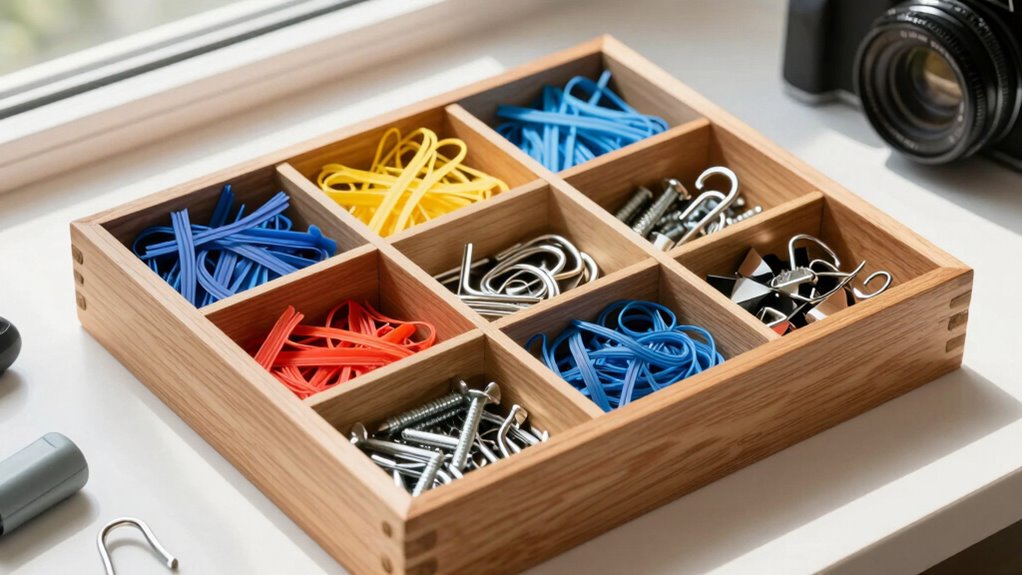

To build a reuse kit for zip ties, hooks, and fasteners, start by setting up a dedicated container to keep everything organized. Collect and clean reusable fasteners during projects, discarding broken or damaged items. Categorize them by type, size, or purpose using small labeled containers or compartments. Regularly review and update your kit to guarantee only functional items stay, making your workspace efficient. Keep exploring for expert tips to make your reuse system even better.

Get decor and gifts delivered free — and shop member deals
- Fast, free delivery on millions of items
- Access to Prime Big Deal Days deals on October 6–7
- Prime Video, Amazon Music and more included
Key Takeaways
- Designate a dedicated container or box to store and organize all reusable fasteners, zip ties, and hooks.
- Sort and categorize fasteners by type, size, and purpose, and store them in labeled compartments for easy access.
- Regularly clean, inspect, and discard damaged or broken fasteners to maintain a functional and safe re-use kit.
- Implement a routine review to replenish supplies, remove unusable items, and update the organization system as needed.
- Incorporate fastener assessment and re-use habits into your workflow to enhance efficiency and promote sustainable practices.
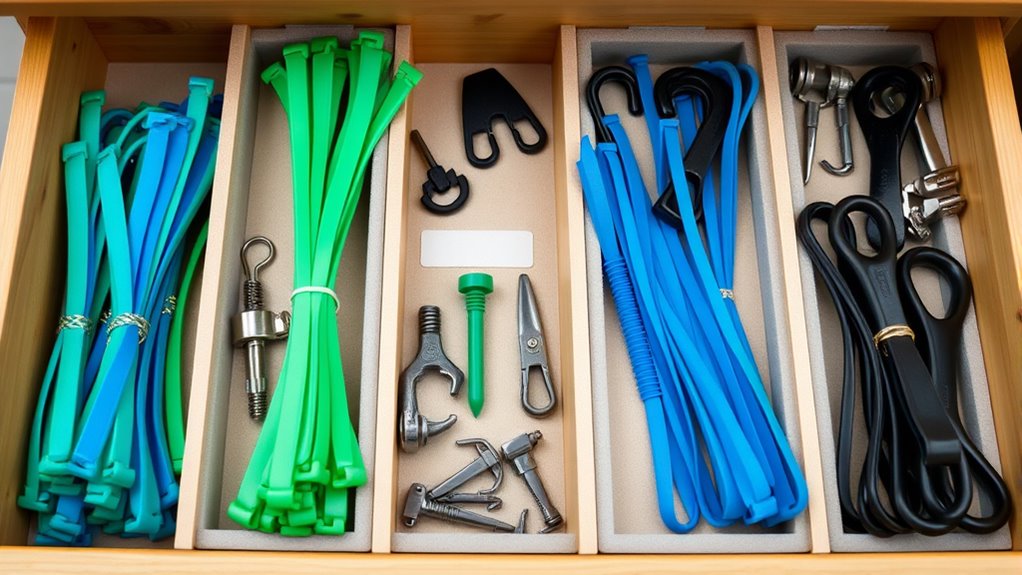
Re-using zip ties, hooks, and fasteners not only saves you money but also helps reduce waste. When you build a dedicated re-use kit, you create a practical system that enhances your storage organization and simplifies tool maintenance. This kit becomes a go-to resource, allowing you to quickly access reusable fasteners instead of constantly buying new ones. It’s an eco-friendly approach that benefits your budget and the environment, while also making your workspace more efficient.
Reuse zip ties, hooks, and fasteners to save money, reduce waste, and keep your workspace organized and efficient.
Start by gathering a container or box that’s specifically for your re-use kit. This keeps your fasteners organized and easily accessible. As you work on projects, set aside any zip ties, hooks, or fasteners that are still in good condition. Check for damage—discard any that are broken or compromised. Clean the reusable fasteners if needed; a simple wipe or rinse can remove dirt and debris, ensuring they remain in good shape for future use. This process supports better storage organization because you’ll always know what’s available without digging through a pile of unused supplies. Additionally, considering the power output of your tools can help you choose the right fasteners for your projects, ensuring durability and safety.
When collecting fasteners for your kit, consider grouping similar items together. Keep zip ties of different sizes separate, store hooks based on their shape and purpose, and organize fasteners by type or material. Using small labeled containers or compartments within your main box can make retrieval quick and effortless. By maintaining this organization, you prevent clutter and make tool maintenance easier—since you’ll have the right fastener at hand whenever you need it, reducing downtime and frustration.
Building your re-use kit also encourages mindful purchasing. Instead of buying new fasteners each time, you’ll learn to evaluate which ones are worth saving. Over time, this habit reduces waste and lowers your overall expenses. Plus, it’s a sustainable practice that aligns with responsible tool maintenance—keeping your tools and fasteners in good shape ensures longevity and ideal performance. When fasteners are properly stored and reused, you extend their lifespan and avoid unnecessary replacements.
Finally, regularly review and update your kit. Remove anything that’s no longer usable and replenish supplies when needed. Keep an eye out for new fasteners that could be useful and add them to your organized system. This proactive approach not only improves your storage organization but also streamlines your workflow. By building a thoughtful re-use kit, you’re making smart decisions that benefit your projects, your wallet, and the planet. It’s a simple yet effective way to stay efficient, practice sustainable habits, and keep your workspace tidy.
As an affiliate, we earn on qualifying purchases.
Frequently Asked Questions
How Do I Organize Different Sizes of Fasteners Efficiently?
To organize different sizes of fasteners efficiently, start with fastener categorization by size, type, and use. Use small labeled containers or compartmentalized storage boxes for each category to prevent mixing. Implement storage optimization by stacking or wall-mounting these containers to save space. Regularly review and declutter your fastener collection, ensuring quick access and minimizing clutter, so you can easily find the right fastener when you need it.
What Storage Containers Are Best for a Re-Use Kit?
Did you know that cluttered storage can waste up to 30% of your workspace? For your re-use kit, choose durable containers like sturdy plastic or metal boxes that withstand wear and tear. Use labeling systems to keep everything organized, so you can quickly find zip ties, hooks, and fasteners. Clear containers are ideal, but labeling guarantees you won’t waste time digging through messes. Keep your tools accessible and well-organized!
How Often Should I Review and Update My Kit?
You should review and update your re-use kit at least every three to six months. Follow a maintenance schedule and use an inventory checklist to track what’s inside. Check for expired or damaged items, and replace or restock as needed. Regular reviews guarantee your kit stays organized, functional, and ready for any project, saving you time and hassle when you need fasteners, hooks, or zip ties quickly.
Can I Include Other Fastener Types Besides Zip Ties and Hooks?
Think of your re-use kit as a toolbox of versatile fastening solutions. Yes, you can include alternative fastener options like velcro, clips, or magnets alongside zip ties and hooks. These additions give you more flexibility for different tasks, making your kit more adaptable. By expanding your fastener types, you make certain you’re prepared for various situations, turning your kit into a well-rounded collection of versatile fastening solutions.
How Do I Clean or Maintain Reusable Fasteners?
To keep your reusable fasteners in good shape, you should regularly clean and maintain them. Use fastener cleaning techniques like wiping with a damp cloth or gentle brushing to remove dirt and debris. For plastic zip ties and hooks, avoid harsh chemicals. Store them in a dry, cool place to prevent degradation. Proper reusable fastener maintenance guarantees they stay strong and reliable for future projects.
Conclusion
Just like a knight keeps their sword sharp for the battles ahead, maintaining your re-use kit ensures you’re always ready for the next project. With a little organization, you’ll save time and money—no more hunting for the right fastener when you need it most. Think of your kit as your trusty sidekick, always there to help you conquer clutter and tackle tasks efficiently. Keep it stocked and ready, and you’ll be prepared for anything life throws your way.
Fall Picks
fall essentials
As an affiliate, we earn on qualifying purchases.