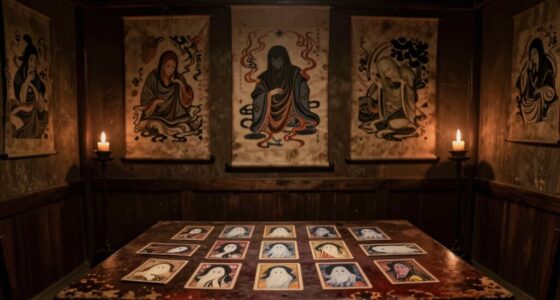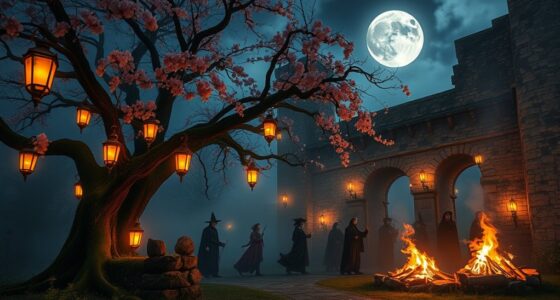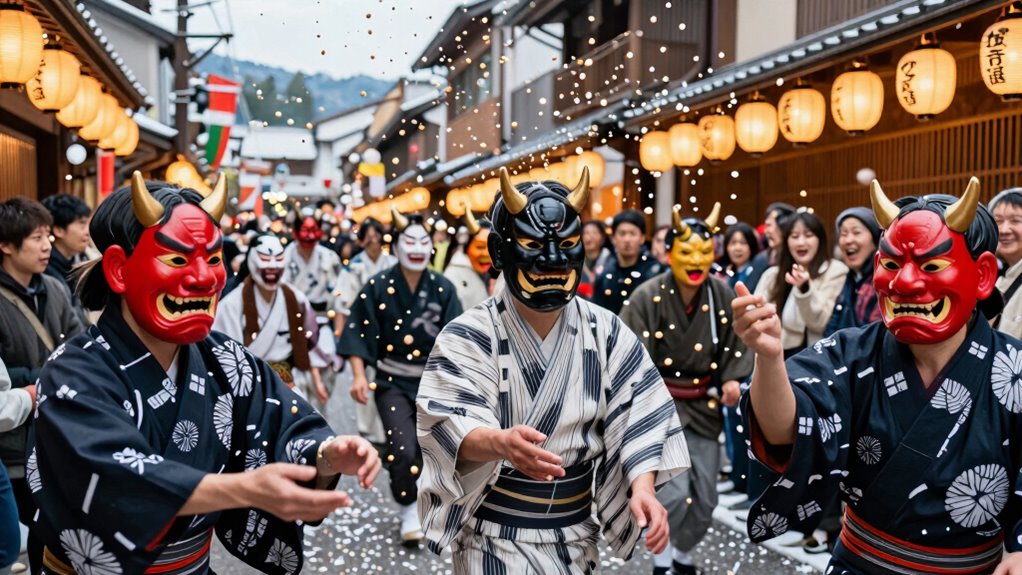

Setsubun is Japan’s vibrant festival where you join in warding off evil spirits and inviting good luck, similar to Halloween’s spooky spirit. You’ll throw roasted soybeans while shouting “Oni wa soto! Fuku wa uchi!” to chase away demons and welcome health and fortune. It’s full of lively rituals, colorful customs, and community spirit that create an energetic, festive atmosphere. If you keep exploring, you’ll discover the rich traditions behind this exciting cultural celebration.
Listen free for 30 days with Audible
Thousands of audiobooks and originals — cancel anytime.
As an affiliate, we earn on qualifying purchases.
Key Takeaways
- Setsubun involves throwing roasted soybeans to drive away evil spirits, similar to Halloween’s theme of warding off darkness.
- The festival features lively rituals, shouting “Oni wa soto! Fuku wa uchi!”, creating an energetic, festive atmosphere.
- Communities celebrate with traditional ceremonies, parades, and costumes, akin to Halloween’s costumes and communal spirit.
- Regional customs include decorations, rituals, and symbolic acts that heighten the festive, spooky ambiance.
- Both festivals emphasize themes of renewal, protection, and community bonding through playful, spirited activities.
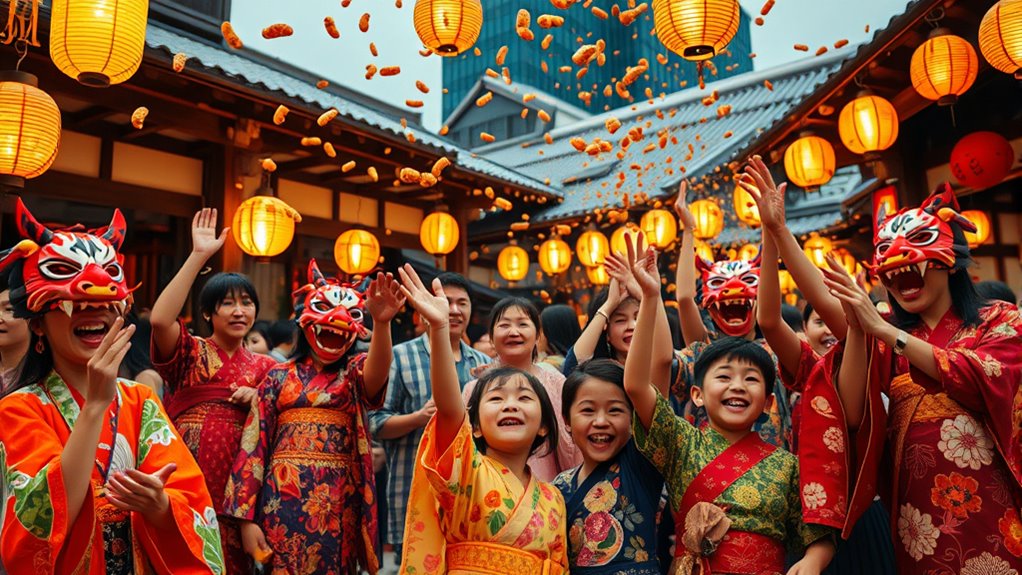
Every year, as winter ends and spring begins, Japan celebrates Setsubun, a lively festival dedicated to driving away evil spirits. During this time, you’ll notice that communities come alive with vibrant rituals and energetic celebrations, all centered around cleansing away bad luck and inviting good fortune. The core of Setsubun involves a series of traditional rituals that have been passed down through generations, each with its unique regional variations. No matter where you are in Japan, these customs create a sense of unity and cultural pride, making the festival feel both familiar and uniquely local.
The most iconic tradition is the bean-throwing ceremony called “mamemaki.” You’re encouraged to throw roasted soybeans either inside your home or at a designated shrine, shouting “Oni wa soto! Fuku wa uchi!” which means “Demons out! Good fortune in!” This act symbolizes casting away evil spirits and welcoming health and happiness. While the core ritual remains the same across Japan, regional variations add unique flavors. In some areas, participants toss beans from elevated platforms, creating lively scenes, while others incorporate local deities or folklore into their celebrations. For example, in some regions, they include a symbolic act of sweeping away beans afterward, symbolizing the clearing of negative energy, or they combine bean-throwing with traditional dance performances. These regional customs make each Setsubun experience distinctive, reflecting local history and beliefs.
You’ll also see that some households and temples hold elaborate ceremonies featuring priests or monks, who perform purification rites to cleanse the space. These traditional rituals often include the use of ritual implements like hossu (bamboo or paper fans) and invoke blessings for health and prosperity. In addition, many communities incorporate festive foods, like ehō-maki sushi rolls, which you’re encouraged to eat silently while facing the year’s lucky direction. Such customs are deeply rooted in tradition but have also adapted over time, blending ancient practices with contemporary festivities. Incorporating proper tools and techniques can help ensure these rituals are performed safely and effectively.
As you observe or participate in Setsubun, you’ll realize it’s more than just a fun event—it’s a powerful expression of hope and renewal. The lively atmosphere, the spirited bean-throwing, and the regional variations all serve to reinforce the cultural importance of warding off evil and embracing new beginnings. Whether you’re inside a temple, a home, or out in the streets, you’ll feel the energy of a community united in its desire for good fortune. This festival’s vibrant traditions make it a unique and spirited celebration that captures the essence of Japan’s cultural resilience and hope for the future.
As an affiliate, we earn on qualifying purchases.
Frequently Asked Questions
What Are the Origins of Setsubun’s Bean-Throwing Tradition?
You might be surprised to learn that the bean-throwing tradition in Setsubun originates from ancient traditional rituals aimed at warding off evil spirits. People believe that throwing roasted soybeans, symbolizing demon symbolism, helps chase away demons and bad luck. This practice dates back centuries, combining folklore with spiritual beliefs, and remains a lively part of the festival, emphasizing the importance of traditional rituals in Japanese culture.
How Do Different Regions in Japan Celebrate Setsubun?
You’ll notice regional variations in how Japan celebrates Setsubun, with each area adding its unique touch. In some regions, people throw beans at shrines, while others hold lively festivals with traditional dance performances. Festival foods also differ; for example, some enjoy special sushi rolls called ehomaki, while others focus on local sweets. These regional customs make each Setsubun celebration distinct, offering you a rich cultural experience across Japan.
Are There Specific Costumes Associated With Setsubun?
You’ll notice that during Setsubun, people often wear demon costumes and traditional masks to embody the mischievous spirits they’re scaring away. These costumes usually feature horns, sharp teeth, and vibrant colors, making the demons look menacing yet playful. Many participants also wear traditional masks representing demons or oni, adding authenticity and fun to the celebration. Dressing up as demons helps you fully immerse yourself in the spirited, lively atmosphere of Setsubun.
What Are the Health Benefits of Participating in Setsubun?
Participating in Setsubun can boost your mental health by reducing stress and fostering a sense of joy. It also strengthens community bonding as you join others in the fun, creating shared experiences. The act of throwing beans and celebrating together helps you feel more connected and uplifted, promoting overall well-being. Engaging in this lively tradition offers both physical activity and emotional benefits, making it a meaningful way to celebrate seasonal change.
How Has Setsubun Evolved in Modern Japanese Society?
You’ve probably noticed how Setsubun has skyrocketed into modern festivities, transforming into a vibrant cultural adaptation that blends tradition with excitement. Today, it’s not just about throwing beans; it’s a lively celebration with colorful costumes, themed events, and social media buzz. This evolution makes the festival feel more inclusive and energetic, allowing you to connect deeply with Japan’s rich heritage while enjoying a fun, contemporary twist that keeps it fresh and relevant.
Conclusion
So, as you toss beans to chase away evil spirits, remember you’re participating in a centuries-old tradition that somehow makes Halloween look like amateur hour. While kids revel in throwing beans, adults secretly relish the excuse to indulge in sake and snacks. It’s a charming reminder that, in Japan, even demon-scares come with a touch of elegance—and just enough silliness to keep everyone smiling through the centuries. Who knew spiritual cleansing could be so sophisticated?
NFL season / tailgating Picks
team gear
As an affiliate, we earn on qualifying purchases.