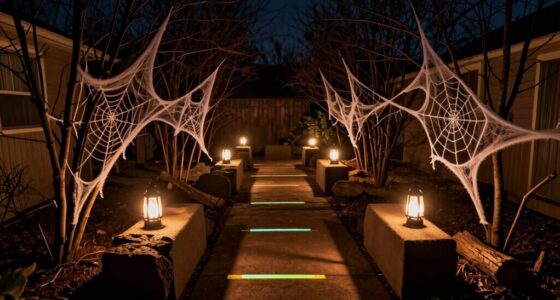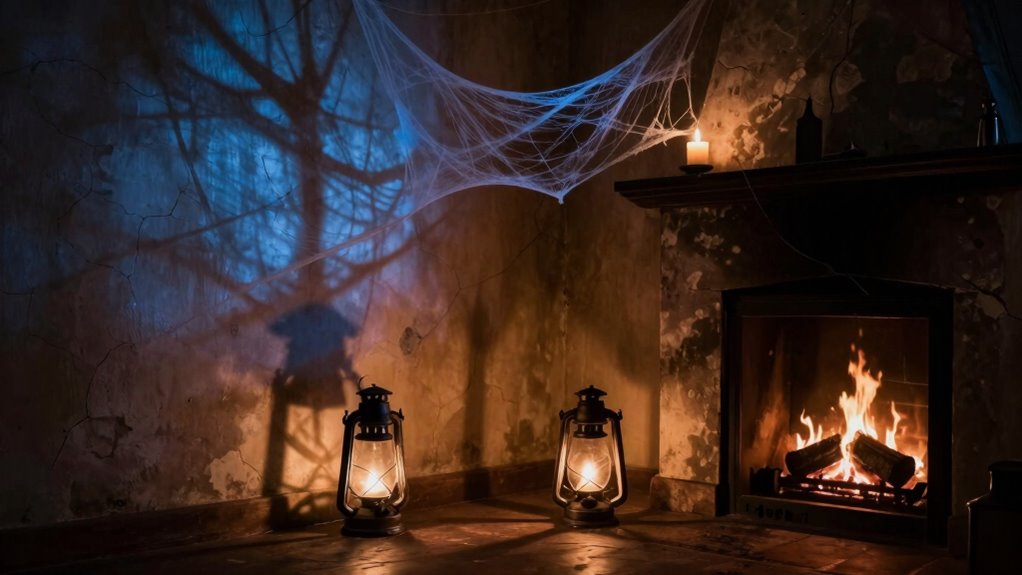
To build layered lighting for a haunted look, combine flickering candles with varied heights and positions to create dynamic shadows. Add spotlights or floodlights behind objects to cast unpredictable, elongated shadows, and use dimmable fixtures to control brightness and mood. Incorporate warm amber bulbs for a flickering candle effect and consider using cool hues for ghostly ambiance. Continuing with these techniques will help you craft a truly eerie and immersive atmosphere.
Key Takeaways
- Use multiple light sources at different heights and angles to create depth and complexity.
- Incorporate flickering candles and dynamic shadows to mimic real fire and lurking figures.
- Vary light color and intensity with warm, cool, and dimmable fixtures for mood control.
- Position lights behind objects or figures to cast unpredictable, flickering shadows.
- Add fog or diffusing elements to soften light and enhance the haunted atmosphere.
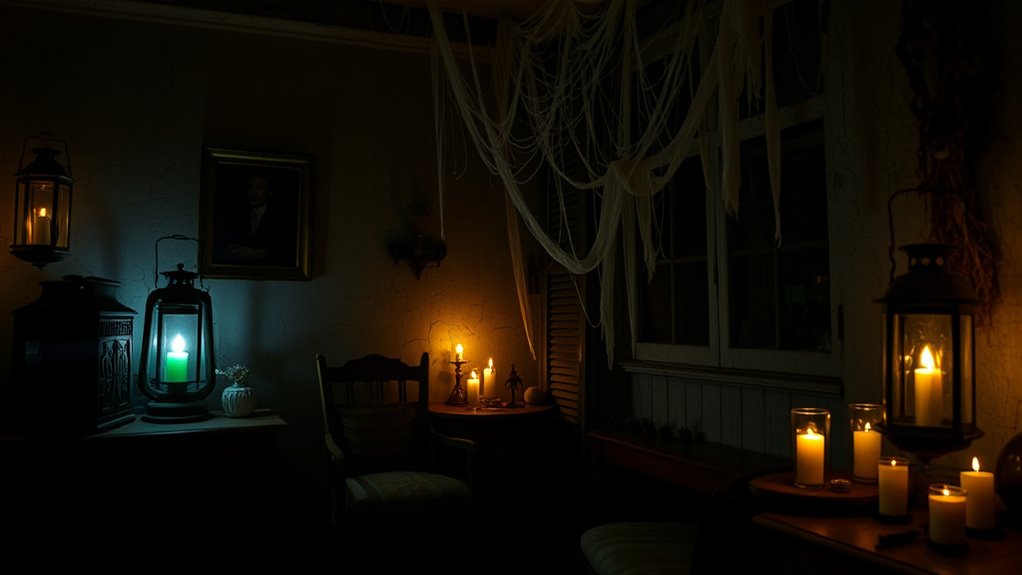
Creating a haunted look isn’t just about spooky decorations; it’s about mastering layered lighting to set the perfect eerie atmosphere. When you start with this approach, you can transform any space into a chilling scene that captivates and unsettles your guests. One of the most effective ways to do this is by using candle flickering and shadow casting to add depth and mystery. Candles with flickering flames mimic real fire, creating a dynamic, unsettling glow that dances across walls and objects. This flickering effect isn’t static; it mimics the unpredictable nature of fire, making the environment feel alive and haunted. You can place candles in various corners or on tables, but it’s essential to vary their heights and distances to prevent uniform lighting. The irregular flickering draws eyes and creates moving shadows that seem to breathe and shift, adding to the spooky vibe.
Master layered lighting with flickering candles and shifting shadows for a haunting, immersive atmosphere.
Shadow casting plays a vital role in layered lighting because it amplifies the sense of mystery. When you position a light source behind objects or figures, you create elongated, distorted shadows that stretch across walls. These shadows can resemble figures lurking in the darkness or ominous shapes that make viewers feel watched. To maximize shadow effects, use directional lights such as spotlights or small floodlights, and aim them carefully behind props or cutouts. Experiment with different angles to cast unpredictable, elongated shadows that seem to flicker with life. The key is to keep some shadows soft and others stark, creating a layered effect where the environment feels complex and alive.
In addition to candles and shadow-casting lights, incorporate dimmable fixtures and colored lights to deepen the layered effect. Warm, amber bulbs enhance the flickering candlelight, while cool, bluish hues can evoke a ghostly chill. Dimming these lights allows you to control the intensity, so the scene feels more immersive and less flat. Use multiple light sources at varying heights and distances to avoid uniformity. For example, combine a low, flickering candle with a focused spotlight behind a faux gravestone or a fog machine that diffuses the light, adding a misty, ghostly glow. This combination of flickering, shadow-casting, and layered intensity creates a dynamic, immersive haunted atmosphere that keeps viewers guessing and feeling unsettled.
Incorporating smart lighting options can further enhance your layered effects by allowing precise control over color, brightness, and timing, making your haunted setup even more convincing and adaptable.
Your goal is to craft a multi-dimensional setting where each layer of light contributes to the overall spooky effect. When you master layered lighting with candle flickering and shadow casting, your haunted scene will come alive, with shadows that seem to move and flickering flames that create a constant sense of unease. This technique transforms simple decorations into a chilling, memorable experience that perfectly captures the haunted atmosphere you’re aiming for.
Frequently Asked Questions
What Are the Best Color Temperatures for Haunted House Lighting?
For a haunted house, choose color temperatures between 2000K and 3000K to create a spooky, eerie light ambiance. These warmer tones cast unsettling shadows and add depth, enhancing the haunted effect. Avoid bright whites or cool blues, which can break the creepy mood. Instead, opt for dim, warm lighting that makes your space feel mysterious and foreboding, perfect for setting an authentic haunted atmosphere.
How Can I Create Flickering or Strobe Effects Safely?
Flickering fun can be fantastic, but safety comes first! To create flickering or strobe effects safely, start with a DIY strobe setup using a compatible strobe light and a flicker switch or dimmer. Always guarantee flickering bulb safety by avoiding overheating or electrical overloads. Use high-quality, flicker-compatible bulbs, and keep fire hazards in mind. Test your setup thoroughly to ensure spooky effects don’t turn into safety issues.
What Types of Fixtures Are Most Effective for Layering Lighting?
You should use a mix of spotlights, floodlights, and accent fixtures to layer your haunted look effectively. Focus on spotlighting techniques to highlight specific features, and carefully plan fixture placement to create depth and shadow. Position fixtures at varying heights and angles to enhance the layered effect. This approach guarantees your lighting looks dynamic and eerie, adding to the haunted atmosphere perfectly.
How Do I Control Multiple Light Sources Simultaneously?
You can control multiple light sources simultaneously by setting up lighting zones and using a dimming system. First, divide your space into zones based on where you want different lighting effects. Then, connect your fixtures to a centralized dimmer or smart lighting system. This allows you to adjust all lights in each zone at once, creating a cohesive haunted atmosphere with just a few simple controls.
What Are Common Mistakes to Avoid When Designing Haunted Lighting?
Imagine your haunted house as a movie set; uneven illumination and shadow oversaturation can ruin the scare. Avoid these mistakes by balancing your lights carefully, ensuring shadows are deliberate, not overwhelming. Don’t rely on just one harsh light, which creates stark shadows, or oversaturate areas with too much light. Instead, layer your lighting thoughtfully, blending shadows and highlights to create a spooky, immersive atmosphere that keeps viewers intrigued and unsettled.
Conclusion
Now that you’ve layered your lighting, your space will feel as spooky as a moonlit fog rolling over a haunted house. Remember, the key is to mix different light sources and intensities to create depth and mystery. Keep experimenting with shadows and highlights until it feels just right. With a little patience, your haunted look will come alive like a ghost emerging from the mist—eerie, mesmerizing, and perfectly spine-tingling.