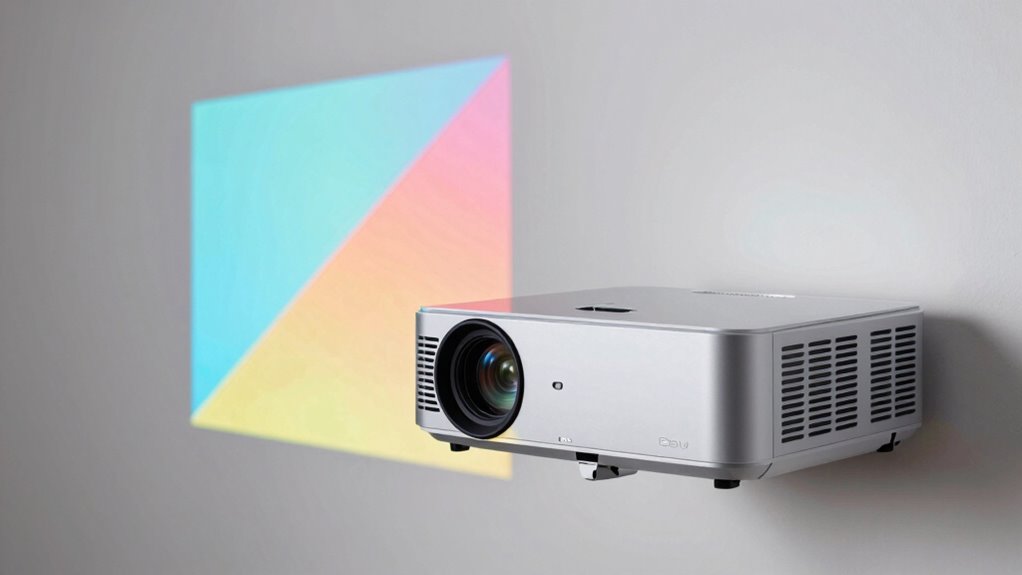
Keystone correction digitally fixes image distortion caused by projecting at an angle, but it can soften or pixelate your picture if overused. Lens shift, on the other hand, physically moves the lens, keeping image quality intact. Many people misunderstand these features, thinking they’re interchangeable. Proper placement reduces the need for correction and improves overall clarity. Keep exploring; you’ll find there’s more to learn about how these features can enhance your projector setup.

Get decor and gifts delivered free — and shop member deals
- Fast, free delivery on millions of items
- Access to Prime Big Deal Days deals on October 6–7
- Prime Video, Amazon Music and more included
Key Takeaways
- Keystone correction digitally adjusts images but can cause quality loss; lens shift physically moves the lens without image degradation.
- Relying heavily on keystone correction can distort image quality, while lens shift maintains original clarity.
- Keystone correction requires fine-tuning for each setup; lens shift offers easier, more precise physical adjustment.
- Keystone correction is common and inexpensive; lens shift is a hardware feature found on higher-end projectors.
- Proper projector placement minimizes the need for correction, preserving image quality and simplifying setup.
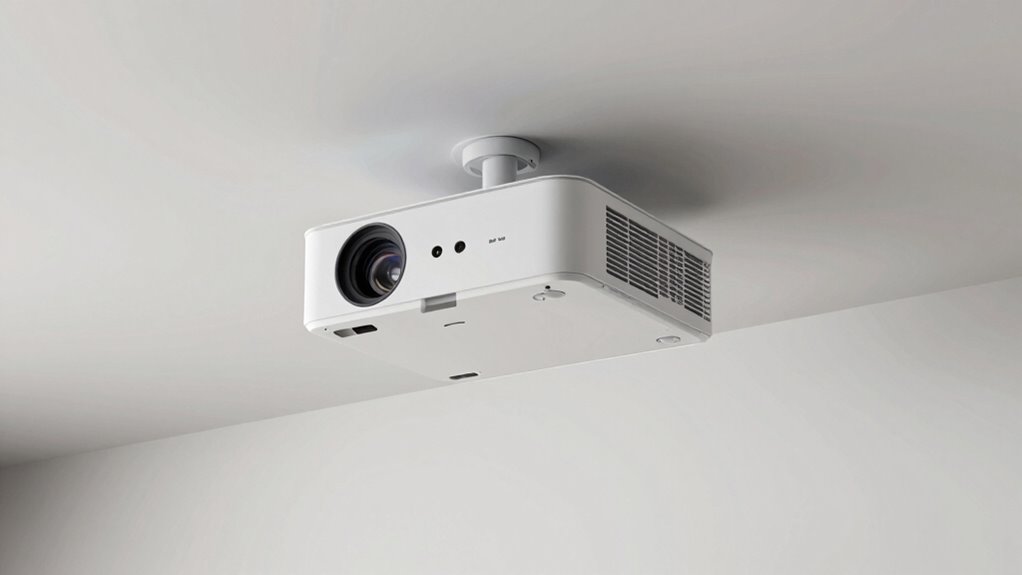
When choosing a projector, understanding the differences between keystone correction and lens shift is essential for achieving a perfectly aligned image. These features often get mixed up, but they serve different purposes and impact your setup in distinct ways. Keystone correction is a digital adjustment that allows you to fix image distortion caused by projecting at an angle. When you position your projector off-center or at an angle, the image might look trapezoidal instead of rectangular. With keystone correction, you can digitally straighten the image, but this often comes at the expense of picture quality. The correction process can introduce some blurriness or pixelation, especially if you push it too far, leading to image distortion. Also, relying heavily on keystone correction can make your setup more complicated because it requires fine-tuning each time you change your projector’s position, adding to setup complexity. Proper placement, however, can minimize the need for correction and improve overall image quality. Additionally, understanding the digital adjustment involved helps in balancing image quality with convenience. Using automatic keystone correction, when available, can also ease setup but might still impact image clarity.
In contrast, lens shift is a hardware feature that physically moves the lens within the projector to adjust the image without digital manipulation. This allows you to shift the image vertically, horizontally, or diagonally without distorting it. Since lens shift moves the entire lens assembly, it preserves image quality and avoids the image distortion that can happen with keystone correction. This makes it a more reliable option if you want a clean, undistorted picture. However, not all projectors come equipped with lens shift, and those that do tend to be more expensive. When you have lens shift, you can position the projector off-center or at an angle without affecting the image’s geometry, simplifying setup and reducing the need for digital corrections. Some models also offer adjustable lens shift ranges to accommodate various room configurations, making them even more versatile for different spaces. Properly utilizing lens shift can significantly enhance your overall viewing experience by allowing flexible placement.
As an affiliate, we earn on qualifying purchases.
Frequently Asked Questions
Can Both Keystone Correction and Lens Shift Be Used Simultaneously?
Yes, you can use both keystone correction and lens shift simultaneously, but it often increases setup complexity and can lead to image distortion. Lens shift moves the image physically without affecting quality, while keystone correction digitally adjusts the image, which may reduce clarity. Combining both requires careful alignment to avoid distortion, so it’s best to use lens shift first and then fine-tune with keystone correction for ideal results.
Which Method Offers Better Image Quality, Keystone Correction or Lens Shift?
Lens shift generally offers better image quality because it physically moves the lens to correct image distortion without affecting brightness. Keystone correction, on the other hand, can cause brightness loss and may introduce image distortion or pixelation. If you prioritize maintaining sharpness and brightness, lens shift is the superior choice. Keystoning is more of a quick fix but often sacrifices image clarity and overall quality.
Are Lens Shift Adjustments Permanent or Do They Require Recalibration?
Lens shift adjustments are typically permanent, but they can sometimes need recalibration if you move the projector or change the lens. Ironically, while you might think you’re avoiding setup complexity, improper adjustments can cause image distortion, forcing you to tinker again. So, yes, lens shift is generally stable, but if you notice image issues, a quick recalibration might be your best bet to keep your picture perfect.
Do All Projectors Include Lens Shift as a Feature?
Not all projectors include lens shift as a feature. If you want easy projection alignment without risking image distortion, look for models with lens shift capabilities. This feature allows you to adjust the image position without tilting the projector, reducing the need for keystone correction. Keep in mind, some projectors only offer keystone correction, which can cause image distortion over time. Choose a model with lens shift for better, more flexible image placement.
How Does Ambient Light Affect the Effectiveness of Each Feature?
Ambient light can reduce the effectiveness of both keystone correction and lens shift by causing glare and washing out the image. With increased ambient light, lens shift helps maintain a clear image without distortion, while keystone correction may introduce image softness or artifacts. To improve picture quality, you should control ambient light and leverage features like lens shift for better glare management, ensuring a brighter, sharper display.
Conclusion
Think of keystone correction and lens shift as two tools guiding your projector’s image—like a painter adjusting a frame. Keystone correction is the quick fix, like nudging a crooked picture back into place, but it can distort your masterpiece. Lens shift, on the other hand, is a gentle breeze that moves the image without distortion, keeping your visuals crisp as a clear sky. Understanding their differences helps you set the perfect scene every time.
Fall Picks
fall essentials
As an affiliate, we earn on qualifying purchases.