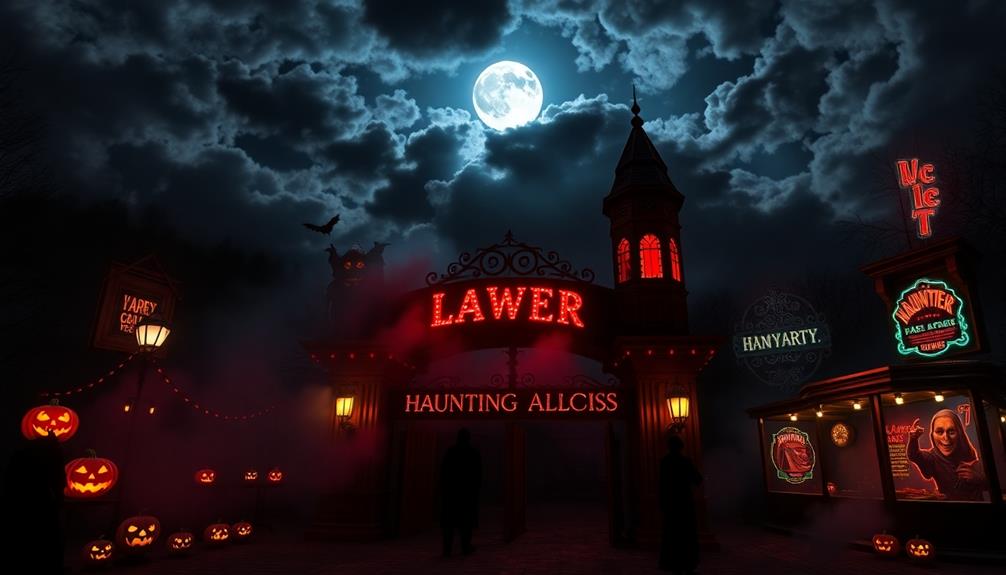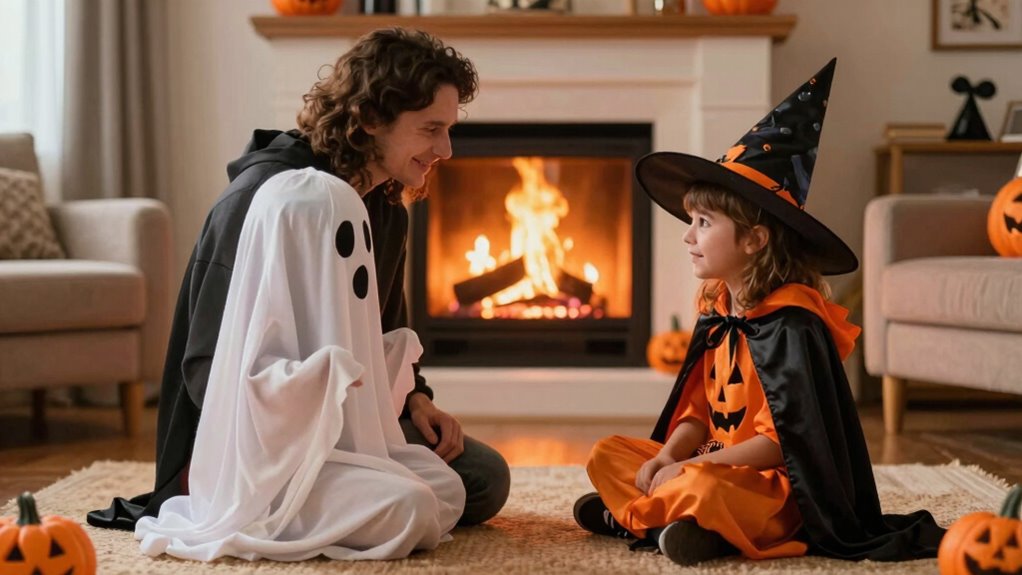

When talking to kids about fear during Halloween, be honest and reassuring. Explain that monsters are just stories from different cultures meant to teach lessons or explain mysteries. Remind children that everyone, even heroes, feels scared sometimes, and facing fears shows bravery. Encourage curiosity and celebrate their courage in trying new things. If you keep these simple steps in mind, you’ll find ways to transform fears into opportunities for confidence and adventure. Keep going for more helpful tips.

Get decor and gifts delivered free — and shop member deals
- Fast, free delivery on millions of items
- Access to Prime Big Deal Days deals on October 6–7
- Prime Video, Amazon Music and more included
Key Takeaways
- Be honest and reassuring, explaining that monsters are stories, not real, to help children differentiate fiction from reality.
- Use positive language to highlight bravery, encouraging children to face fears with curiosity and confidence.
- Share cultural stories about how different traditions create tales to explain fears, fostering understanding and reducing anxiety.
- Engage children in fun activities like costume making or trick-or-treating to build confidence and resilience.
- Remind children of their past acts of bravery to reinforce their ability to handle fears and new experiences.
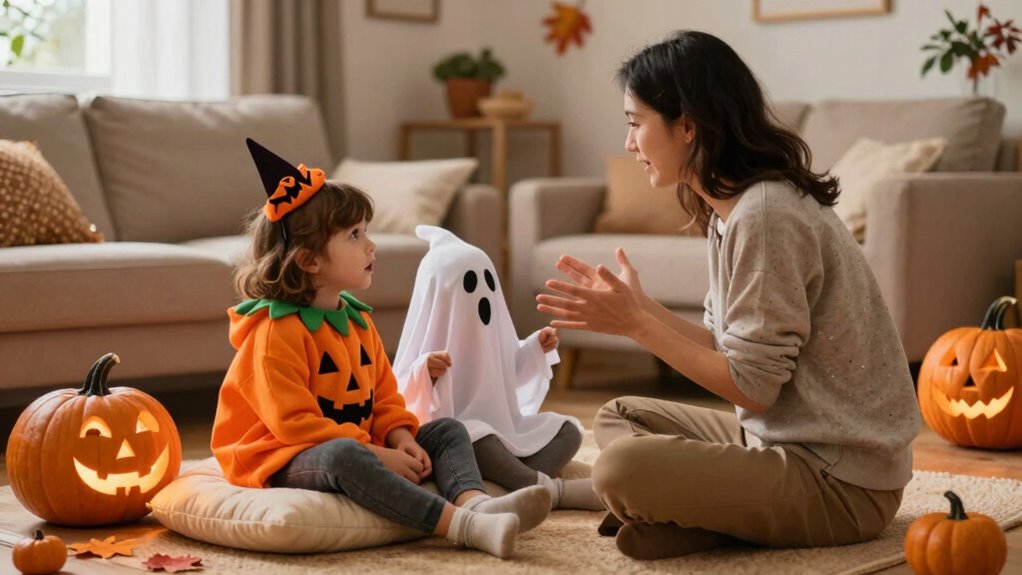
Fear is a natural emotion that everyone experiences, especially children who are still learning about the world around them. As Halloween approaches, it’s common for kids to encounter stories about monsters and spooky creatures. These monster myths can spark fear, but they also present a great opportunity for you to help your child build courage. When you talk to your kids about fear, it’s important to be honest and reassuring. Explain that monsters are just stories, not real, and that their imagination is often more frightening than the truth. This approach helps demystify their fears and shows them that they have control over how they feel.
Fear is natural; talk honestly and reassure children monsters are only stories to help them feel safe and brave.
You can turn Halloween into a moment of courage building by discussing the origins of monster myths. Share fun, age-appropriate stories about how different cultures have created tales to explain the unknown or to teach lessons. Emphasize that everyone, even the bravest heroes in stories, feels scared sometimes. By acknowledging fear as a normal part of life, you help your child see that courage isn’t the absence of fear but the ability to face it. Encourage them to share what scares them and listen without dismissing their feelings. This builds trust and makes them feel understood.
When preparing for Halloween, you might say, “Monsters are just stories people tell to make things exciting or spooky. They aren’t real, and you’re safe.” Reinforce this message by engaging your child in activities like costume making or trick-or-treating, which can boost their confidence. As they participate in these fun, social activities, they learn that they can handle new experiences, which strengthens their courage.
During conversations, use a positive tone and focus on bravery. For example, you could say, “Even if you feel a little scared, you’re brave just by trying. Remember how you faced that big slide at the park last week?” Connecting their past acts of courage to current fears encourages them to see themselves as capable and resilient. Remind them that fears often fade once they understand that what frightens them isn’t real or isn’t as big as it seems. Understanding the role of biodiversity and how different creatures and stories are part of our world can also help children appreciate the diversity of life and reduce fears rooted in unfamiliarity. Recognizing the role of stories in shaping perceptions can further help children distinguish between reality and fiction.
Recognizing that stories are a part of cultural storytelling can help children see these tales as part of human tradition rather than something to fear. Ultimately, talking to your kids about fear during Halloween is about guiding them to understand that monsters are myths designed to entertain or teach. It’s about helping them see that they can be brave in the face of imaginary fears and that their courage grows each time they confront something that makes them nervous. When you approach these conversations with honesty and reassurance, you empower your child to face their fears with confidence and curiosity, turning Halloween into a celebration of bravery rather than fear.
kids Halloween costume making kits
As an affiliate, we earn on qualifying purchases.
As an affiliate, we earn on qualifying purchases.
Frequently Asked Questions
How Can I Tell if My Child Is Genuinely Afraid?
You can tell if your child is genuinely afraid by observing their reactions to fear triggers, like spooky decorations or costumes. Look for physical signs such as trembling, crying, or clinging, and note if they avoid certain situations. Their emotional development influences how they express fear, so pay attention to whether their responses seem intense or persistent. Engaging in a gentle conversation helps clarify if their fear is real or temporary.
What Are Quick Calming Techniques for Anxious Kids?
When your child feels anxious, you can quickly help them calm down with simple techniques. Encourage breathing exercises—have them take deep, slow breaths to ease their nerves. Offer comfort objects, like a favorite stuffed animal or blanket, to provide a sense of security. Remember, even a few minutes of focused breathing or cuddling can make a big difference in soothing their fears and helping them feel safe again.
How Do I Address Fears That Seem Irrational?
When addressing irrational fears, you can use fear storytelling to help your child differentiate fantasy from reality. Gently ask questions to explore their worries, then reassure them with facts, emphasizing the difference between imagined fears and real dangers. Share stories where characters overcome similar fears, helping them see that many fears are just temporary and manageable. This approach encourages understanding and reduces anxiety, empowering your child to face their fears confidently.
When Should I Seek Professional Help for My Child’s Fears?
Like a lighthouse guiding ships, you should seek professional help if your child’s fears persist despite your reassurance and seem to interfere with daily life. When fears hinder childhood resilience or cause significant distress, consulting a mental health professional becomes crucial. Parental reassurance is essential, but sometimes kids need expert guidance to overcome intense fears. Trust your instincts—early intervention can make a lasting difference in building your child’s confidence and emotional health.
How Can I Make Halloween Less Frightening for Sensitive Children?
You can make Halloween less frightening for sensitive children by choosing gentle costume choices and avoiding overly spooky decorations. Opt for friendly characters or animals that make them feel comfortable, and decorate with soft lights and cheerful themes instead of scary imagery. Walk with them during trick-or-treating, and talk about what to expect, so they feel safe. Your calm attitude and thoughtful preparations help reduce their fear and make Halloween enjoyable.
Conclusion
As you step into the night, remember that even brave heroes face fears, much like Harry Potter confronting Dementors. Your words can turn the shadows into stories of courage, showing kids that fear isn’t an enemy but a part of their journey. With gentle guidance, you help them discover their own inner strength—the kind that shines brightest in the darkest moments. Together, you create memories that remind them they’re never truly alone in their fears.
Fall Picks
fall essentials
As an affiliate, we earn on qualifying purchases.