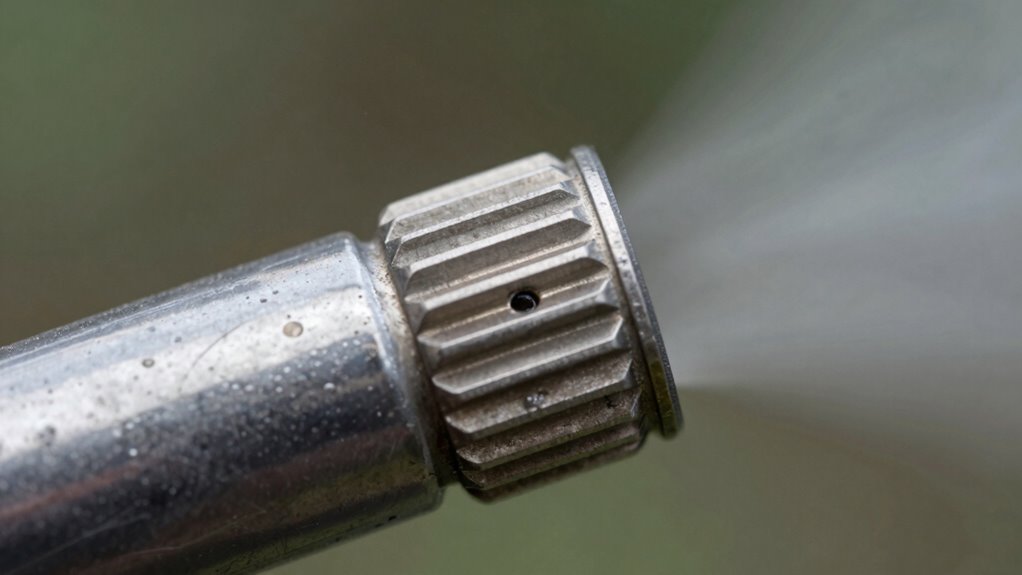
If your fog nozzle is clogged, start by shutting off the water supply and detaching the nozzle carefully. Rinse it with clean water to flush out debris, and use soft brushes or compressed air for stubborn blockages—avoid harsh chemicals or aggressive tools. Soaking in warm, soapy water can help loosen buildup. Regular inspections and gentle cleaning keep your nozzle clear and functioning well. If issues persist, there are additional steps to restore performance—learn more to keep your system in top shape.
Key Takeaways
- Shut off the water supply and detach the nozzle before cleaning.
- Use gentle methods like running water or soft brushes to remove debris.
- Soak the nozzle in warm, soapy water for stubborn clogs, then rinse thoroughly.
- Avoid harsh chemicals or aggressive tools that could damage the nozzle.
- Consult manufacturer guidelines or professionals if clog persists or damage is suspected.
Have you ever noticed that your fog nozzle isn’t spraying as evenly or effectively as it used to? If so, you’re likely dealing with a clog that’s compromising fire safety. A fog nozzle plays a crucial role in firefighting by delivering a fine, wide spray that cools flames and protects both firefighters and victims. When it’s blocked or partially clogged, its performance diminishes, potentially putting lives at risk. The good news is that resolving this issue doesn’t require drastic measures or violence; instead, a simple, methodical approach can restore your nozzle’s functionality.
First, you should prioritize routine maintenance routines, which are essential for preventing clogs from forming in the first place. Regular inspections help identify early signs of buildup or debris that could impede flow. When inspecting, look for any visible obstructions or dirt lodged in the nozzle’s orifice. Performing routine cleaning as part of your fire safety protocols ensures that your equipment remains in peak condition, minimizing the chances of emergency failures. Remember, neglecting maintenance routines can lead to stubborn clogs that become harder to clear over time, risking your overall fire safety effectiveness. Additionally, understanding the functionality of fire safety equipment can help you better maintain and troubleshoot issues like clogs. Staying informed about the components of firefighting systems can also aid in quick problem diagnosis. Incorporating proper cleaning techniques into your regular maintenance can significantly reduce the likelihood of persistent clogs. Regularly reviewing fire safety standards can further ensure your procedures align with best practices, reducing the risk of oversight. Maintaining awareness of fire safety equipment functionality is crucial for effective firefighting operations.
Prioritize regular maintenance and inspections to prevent clogs and ensure your fog nozzle performs effectively in emergencies.
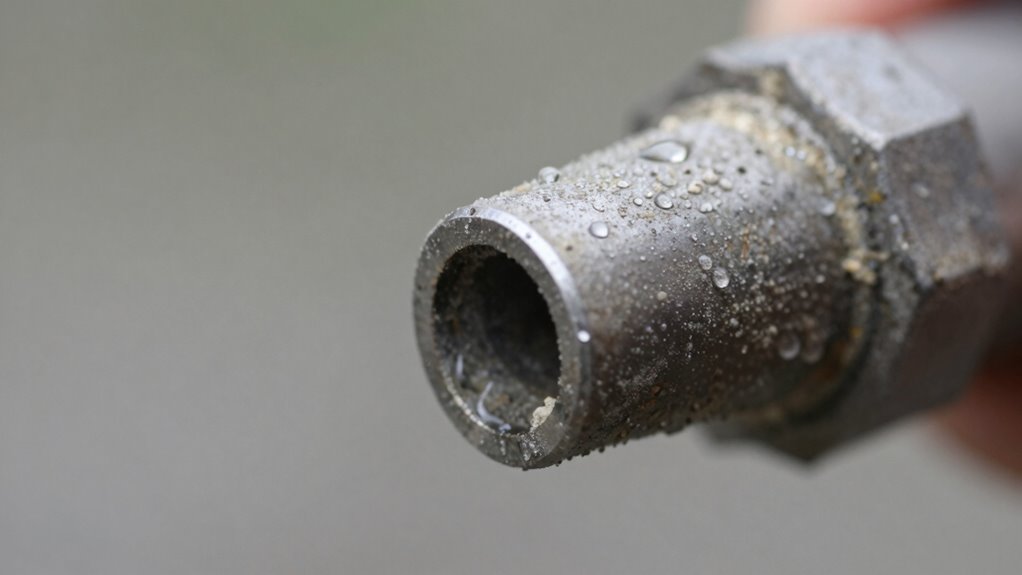
When it’s time to clean a clogged fog nozzle, start by shutting down the water supply and removing the nozzle from the hose or firefighting system. Once detached, you can run clean water through the nozzle to flush out loose debris. For stubborn clogs, a soft brush or compressed air can help dislodge particles stuck deep within the orifice. Avoid using harsh chemicals or tools that might damage the nozzle material, as this could compromise its integrity and fire safety standards. If debris persists, soaking the nozzle in warm, soapy water for a few minutes can loosen stubborn buildup, making it easier to rinse away. Always ensure thorough drying before reattaching to prevent corrosion.
If you find that the clog persists despite these efforts, it’s wise to consult the manufacturer’s guidelines or contact a professional. Sometimes, internal damage or severe buildup requires specialized cleaning techniques or even replacement. Remember, maintaining your fog nozzle isn’t just about equipment longevity—it’s a vital part of your fire safety strategy. Regularly scheduled maintenance routines, combined with careful cleaning practices, ensure the nozzle functions efficiently when you need it most. Taking these small, consistent steps helps prevent clogs and guarantees your firefighting gear performs reliably, ultimately protecting lives and property without resorting to drastic measures.
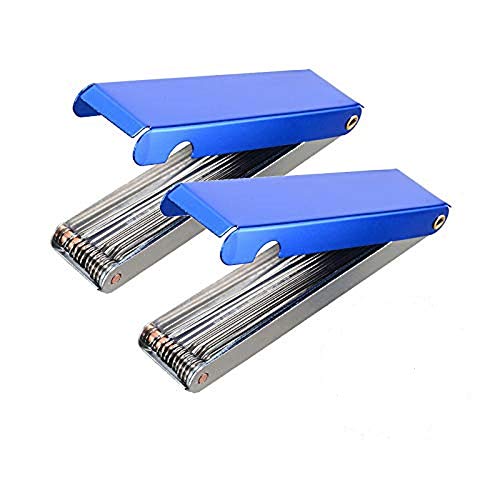
2-Pack Torch Tip Cleaner Set, Universal Jet Cleaner Wire Kit
- Complete 13-Piece Wire Set: Includes various diameters for versatile cleaning
- Durable Stainless Steel Construction: Resistant to wear and corrosion
- Portable Aluminum Case: Easy storage and transport
As an affiliate, we earn on qualifying purchases.
As an affiliate, we earn on qualifying purchases.
Frequently Asked Questions
How Often Should I Clean My Fog Nozzle?
You should clean your fog nozzle regularly, ideally after every few uses or weekly, depending on your maintenance routines. Always consider your nozzle specifications, as some materials may require gentler cleaning methods or specific solutions. Regular cleaning prevents clogs and guarantees ideal spray patterns. By following these guidelines, you maintain consistent performance and extend your nozzle’s lifespan, avoiding costly repairs or replacements down the line.
Can I Use Household Items to Unclog It?
Yes, you can use household solutions to unclog your fog nozzle. Try soaking the nozzle in warm water with a little vinegar or mild dish soap to dissolve debris. Use a soft brush or toothpick to gently clear any buildup. Regularly cleaning with household solutions helps prevent clogs and guarantees proper fog spray. Just avoid harsh chemicals that might damage the nozzle, and always dry thoroughly afterward to prevent future clogging.
What Signs Indicate a Fog Nozzle Is Clogged?
When your fog nozzle struggles to spray uniformly or dribbles instead of a smooth mist, it’s a gentle nudge that fog nozzle maintenance is needed. You might notice reduced spray distance or inconsistent fog patterns. These signs hint at potential clogs, reminding you to follow fire safety protocols carefully. Regular inspection guarantees your equipment functions effectively, keeping everyone safe and preventing the need for drastic measures.
Are There Specific Tools Recommended for Cleaning?
You should use a fine brush or a soft toothbrush for cleaning fog nozzles, as they remove debris without damage. A small pin or needle can also clear stubborn clogs in spray openings. Incorporate these cleaning techniques into your maintenance routines regularly to prevent buildup. Always disconnect the nozzle from the equipment before cleaning and guarantee thorough rinsing to maintain ideal spray patterns and extend your nozzle’s lifespan.
Does Climate Affect Fog Nozzle Clogging?
Like they say, “A chain is only as strong as its weakest link,” and climate impact can influence fog nozzle clogging. Changes in temperature and humidity affect fog formation, leading to more mineral deposits and debris, which can clog nozzles. Warmer, more humid climates often result in increased fog production, but they also raise the risk of clogging. Regular cleaning and maintenance help prevent issues caused by climate-related fog formation.
Conclusion
So, next time you face a clogged fog nozzle, remember the gentle fix—soaking it in warm, soapy water and giving it a soft brush. No need to resort to medieval tactics or a trebuchet; patience is your best ally. Just like a knight tending to his steed, treat your nozzle with care, and it’ll serve you well. After all, even in the age of dragons, a simple fix can save the day without any violence.