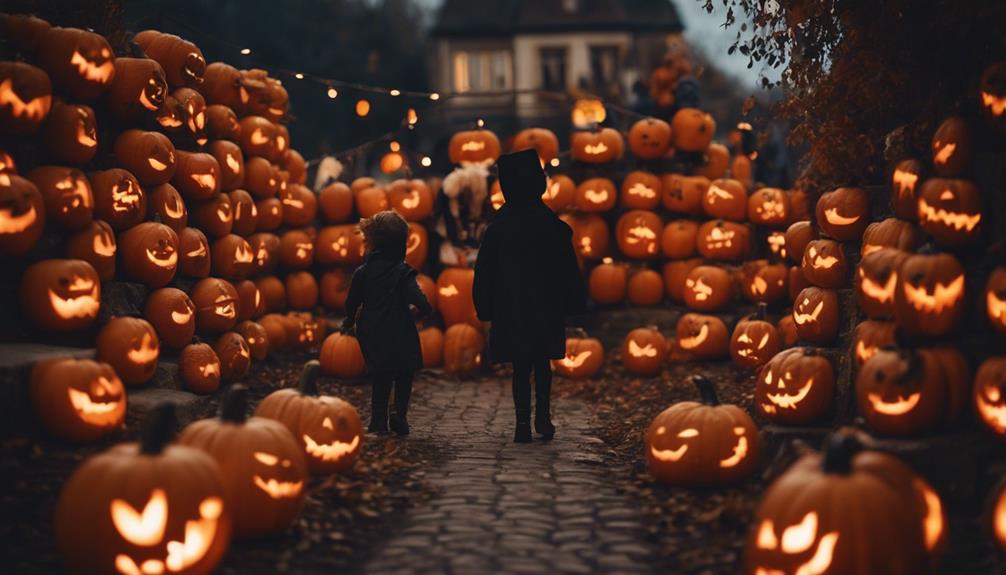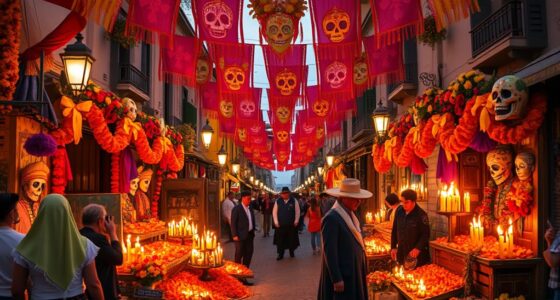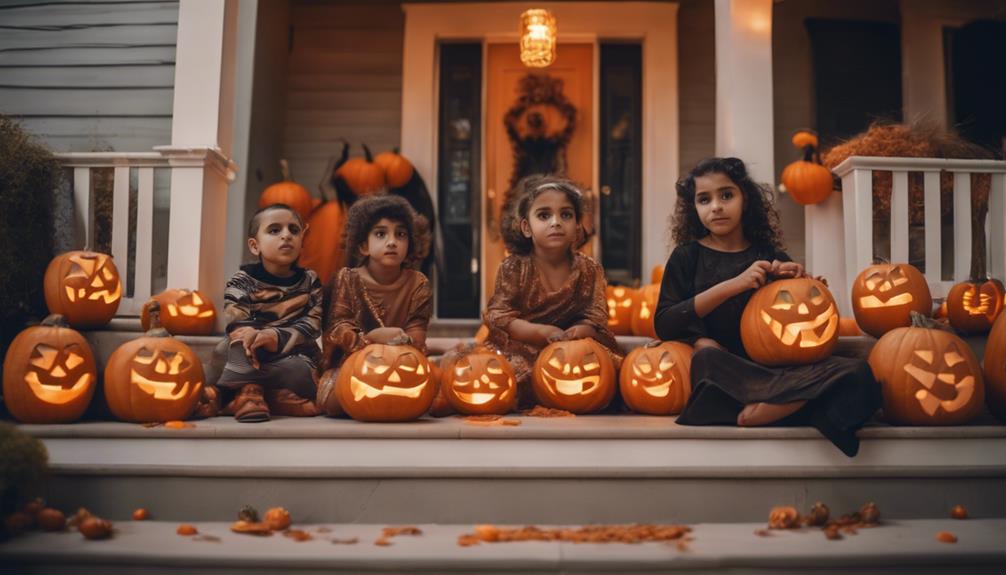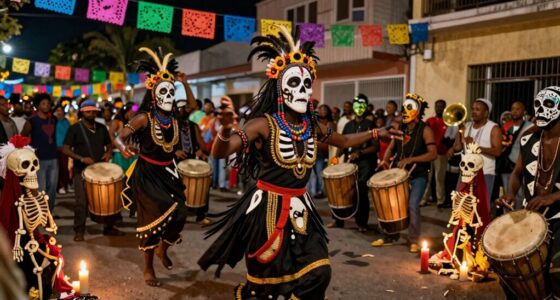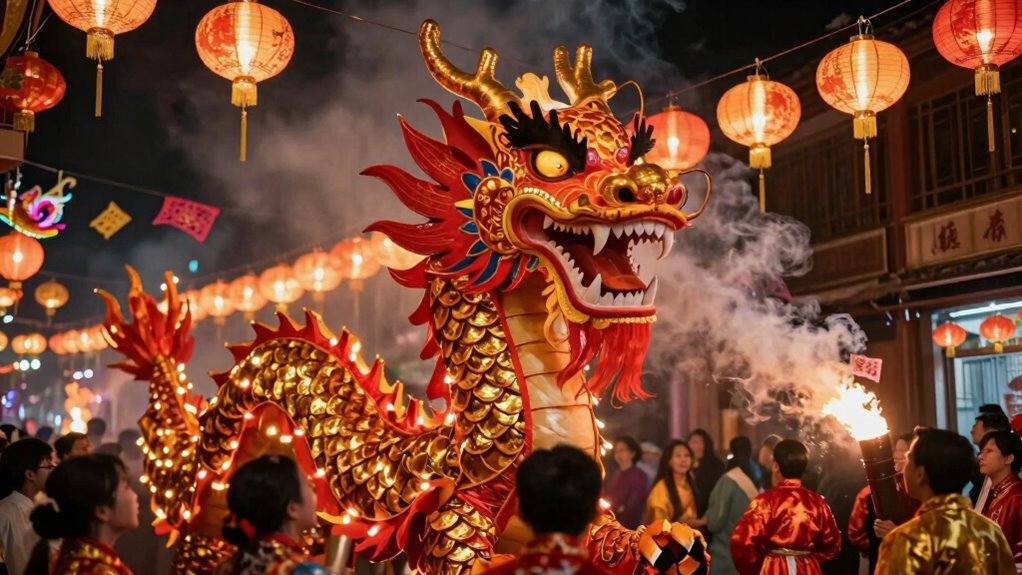

The Nian monster myth highlights how communities worldwide use loud noises and bright colors to scare away evil spirits, inspired by stories of a fierce beast that threatened villages annually. These customs tap into Nian’s vulnerabilities—such as loud sounds, firecrackers, and red decorations—to guarantee protection and renewal during celebrations. By understanding this tradition, you can see how such practices foster resilience and shared identity, which remains relevant across cultures. If you’d like to explore more about this fascinating tradition, keep exploring the story behind it.

Get decor and gifts delivered free — and shop member deals
- Fast, free delivery on millions of items
- Access to Prime Big Deal Days deals on October 6–7
- Prime Video, Amazon Music and more included
Key Takeaways
- The myth’s themes of protection and renewal resonate globally, inspiring similar customs in diverse cultures.
- Scaring beasts with loud noises and bright colors symbolizes warding off evil universally.
- Traditional storytelling about mythical creatures fosters community bonds worldwide.
- The practice reflects a universal human desire for safety, renewal, and overcoming fears.
- Cultural resilience is reinforced through shared rituals of confronting and dispelling darkness or evil.
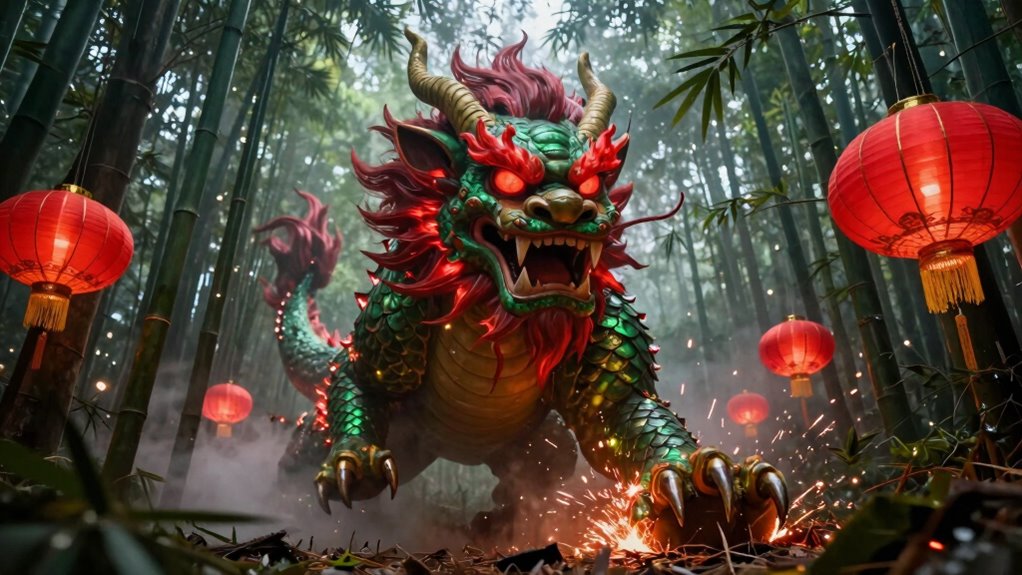
The Nian Monster myth is a fascinating part of Chinese folklore that explains the origins of many traditional Lunar New Year customs. When you observe the celebrations, it’s easy to see why the story of Nian has resonated across generations. This myth isn’t just a tale; it’s a foundation for the vibrant, lively ways people welcome the new year, emphasizing themes of protection and renewal. As you participate in Chinese New Year festivities, you’re engaging with centuries-old traditions rooted in this legendary creature’s story. The myth helps you understand why certain customs, like setting off firecrackers or hanging red decorations, are so prevalent. They’re believed to scare away Nian, a beast that once threatened villages every year, and these practices have become symbolic acts of warding off evil spirits and misfortune.
In traditional folklore, Nian is depicted as a ferocious beast with sharp teeth and horns, emerging from the depths of the mountains or the sea to terrorize communities. The story goes that villagers discovered Nian was afraid of loud noises, bright lights, and the color red. These discoveries led to the development of customs that you see during Chinese New Year. For example, firecrackers are set off to mimic the loud, explosive sounds that frighten Nian away. Red banners and lanterns adorn homes and streets because red is believed to repel evil spirits and Nian’s kind of darkness. These practices are rooted in the myth, and they’ve become a key part of the traditional folklore surrounding the holiday. Interestingly, the story also emphasizes the importance of understanding a creature’s weaknesses, which is why the villagers were able to find effective ways to protect themselves. Recognizing and exploiting mythical vulnerabilities played a crucial role in overcoming the threat. Furthermore, the story highlights how folklore can serve as a cultural resilience tool, helping communities cope with fears and uncertainties across generations. This resilience is reinforced by the storytelling tradition itself, which keeps the legend alive through oral history and cultural practices.
What’s fascinating is how this myth has spread beyond China and become a universal symbol of celebrating the new year with a sense of protection and optimism. You’ll find similar customs in different cultures, where loud noises, fireworks, or bright colors are used to ward off evil spirits or bad luck. This shared idea of “scaring a beast” underscores a universal human desire to start anew with hope and safety. Additionally, the myth of Nian highlights the importance of cultural storytelling in biodiversity and communal identity, illustrating how traditional tales can connect communities through shared practices. The story of Nian, thus, isn’t just about a mythical creature; it’s about confronting fears, cleansing negativity, and welcoming positive energy. It also demonstrates how mythology can serve as a social cohesion tool, fostering community bonds through collective rituals. It’s no wonder that the legend continues to influence celebrations worldwide, reminding everyone of the importance of courage, renewal, and the power of traditional folklore in shaping cultural identity.
Chinese New Year firecracker set
As an affiliate, we earn on qualifying purchases.
As an affiliate, we earn on qualifying purchases.
Frequently Asked Questions
How Did the Nian Monster Originate in Chinese Mythology?
You might find that the legend origins of the Nian monster trace back centuries in Chinese mythology, symbolizing chaos and fears of the unknown. Over time, the myth evolved as communities created stories to explain how they protected themselves from this beast, leading to traditions like setting off fireworks and red decorations. This myth evolution helped reinforce cultural practices, turning the Nian into a symbol of overcoming adversity and celebrating resilience.
Are There Similar Beast Myths in Other Cultures?
You’ll find similar beast myths in many cultures through urban legends and folklore comparisons. For example, European dragons symbolize chaos, while Japanese oni embody malevolent spirits. These stories often serve to teach lessons or explain natural phenomena. Just like the Nian monster, these myths reflect cultural values and fears, showing how societies use storytelling to confront the unknown or dangerous, creating lasting legends that resonate across generations.
What Symbols Are Associated With the Nian Monster?
You’ll find that the Nian monster is associated with symbols like the color red, lanterns, and fireworks, which are central to festive symbolism during celebrations. Cultural representations often depict the beast as fierce but also as a symbol of warding off evil spirits. These symbols help create a lively, protective atmosphere and are integral to traditions like Chinese New Year, emphasizing renewal and safety from the mythical beast.
How Has the Nian Myth Influenced Modern Chinese Festivals?
Like a spark igniting a firework, the Nian myth fuels modern Chinese festivals, especially Lunar New Year celebrations. You observe cultural symbolism and festival traditions come alive through lion dances, firecrackers, and red decorations, all aimed at warding off Nian’s spirit. This myth’s influence turns ancient stories into vibrant symbols of hope and renewal, uniting communities in a shared cultural tapestry that celebrates resilience and prosperity.
What Are Some Regional Variations of the Nian Story?
You’ll find regional variations of Nian folklore, each adding unique twists to the story. In some areas, the monster is depicted as a dragon-like creature, while others see it as a ferocious beast with specific weaknesses. Local storytelling often emphasizes different symbols and rituals, reflecting cultural values. These variations help keep the myth alive, making it a dynamic part of regional traditions and celebrations across China.
Conclusion
So, now you see how the Nian monster myth travels far and wide, showing that fear can unite people through shared stories. Whether it’s scaring away a beast or facing our own monsters, these tales remind us that sometimes, you have to confront what terrifies you head-on. After all, you can’t judge a book by its cover, and behind every legend lies a lesson worth learning. Keep that in mind as you explore these ancient stories.
Fall Picks
fall essentials
As an affiliate, we earn on qualifying purchases.