
TL;DR

Get decor and gifts delivered free — and shop member deals
- Fast, free delivery on millions of items
- Access to Prime Big Deal Days deals on October 6–7
- Prime Video, Amazon Music and more included
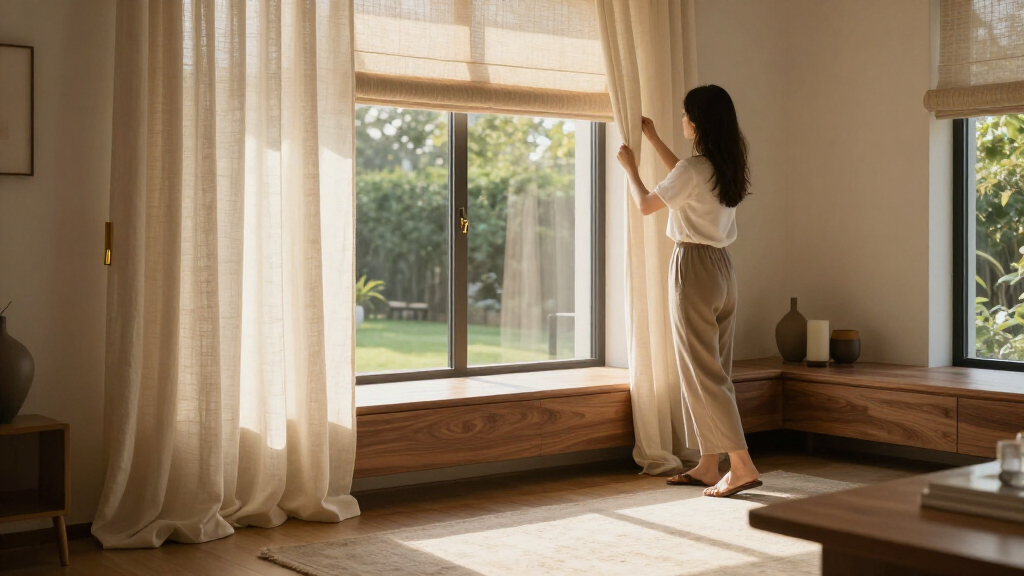
Livingetc has published six designer-led examples of window treatments used as part of a room’s visual design, from woven blinds and sheer curtains to stained glass and unconventional shutters. The examples show how materials and light can shape an interior, though the report does not compare costs, performance or consumer results.
Livingetc has published six modern window treatment ideas drawn from design projects in California, London, Santa Fe, Bondi Beach and elsewhere, showing how blinds, curtains, stained glass and shutters can contribute to a room’s design as well as provide practical window coverage. The examples feature work by interior designers and glass artist Theodore Ellison, and focus on texture, pattern and changing light.
In a La Quinta, California, project, Abbie Naber of A Naber Design selected a linen-and-paper blind to bring texture and depth against simple plaster walls. The fabric, from Zak + Fox, has a woven zigzag pattern that appears semi-transparent when backlit. Naber described the combination of fibers as creating a braided look.
At the Ethel Apartment at HiLight in Battersea, London, Tamara Kaye-Honey of House of Honey used tie-dye sheer fabric to filter daylight. She said the windows were treated as a material in the room, with soft surfaces that shift in appearance as the sun moves. In a Santa Fe project, Ellison designed stained glass depicting sunrise and sunset; he said its geometry was intended to evoke the phases of the sun and moon while addressing the window’s structural demands in the high-desert climate.
Other examples include a patchwork curtain assembled from fabric remnants by Ome Dezin, vintage floral fabric repurposed as Roman blinds in a Bondi Beach apartment by YSG Studio, and unconventional hinged shutters. The report identifies these as design approaches rather than a tested ranking or product comparison.
How Window Treatments Shape Interiors
The examples show why window coverings can affect more than privacy and light control: their material, pattern and transparency can alter how a room feels throughout the day. A sheer may soften direct sunlight, while a patterned or textured fabric can add visual detail without changing the room’s architecture.
Livingetc also notes practical functions, including privacy and reducing the amount of ultraviolet light reaching furniture and flooring. Those benefits depend on the specific material and its construction; the report supplies no performance measurements. For readers planning a room, the projects offer visual references for balancing coverage with daylight and interior style.
Six Projects, Different Materials
The roundup draws on named residential projects and designer comments rather than a survey of the interiors market. Its six approaches range from natural fibers and sheer fabric to stained glass, reused textiles and shutters with more decorative forms. The settings span a desert home in La Quinta, a London apartment, a Santa Fe project and a Bondi Beach apartment.
The shared idea is to treat the window treatment as part of the composition of a room. The report places this alongside current curtain approaches such as layering, pelmets, color blocking and the use of sheers to shape light. It also cautions that extensive fabric can overwhelm a room and says designers advise against eyelet curtains and off-the-shelf roller blinds, without detailing the designers’ criteria or identifying specific products.
““There is such a variety of options available for window treatments nowadays, allowing way more to explore creatively.””
— Claudia Afshar, founder of Claudia Afshar Design
Performance and Costs Remain Unspecified
The report does not provide prices, installation costs or measured light and UV performance for the featured treatments. It also does not assess privacy levels, maintenance requirements, durability or suitability for different window types. Those details can vary by fabric, lining, glazing and installation, so the examples alone do not establish which option will work best in a particular home.
The article refers to six ideas, but its final shutters section describes a range of designs rather than one clearly specified project or product. It does not identify the makers, prices or technical details of those shutters.
Choosing a Treatment for Your Windows
Readers considering a similar approach can start by deciding how much privacy, light filtering and coverage they need, then compare materials and patterns in the room where they will be used. The featured projects suggest looking at fabric texture and transparency in both daylight and artificial light, and considering whether a treatment should recede or act as a visual feature.
Livingetc’s report does not announce a follow-up or provide a buying guide for the examples. Practical next steps, including product selection and installation, remain specific to each home and window.
Key Questions
What are the six window treatment ideas?
The roundup features natural woven blinds, tie-dye sheers, stained glass, patchwork curtains, vintage floral Roman blinds and unconventional shutters.
Do the ideas provide privacy and block ultraviolet light?
Livingetc says window treatments can add privacy and help reduce ultraviolet light reaching furnishings and flooring. It does not give performance measurements for the featured examples.
Which examples use reused or vintage materials?
Ome Dezin’s curtain panel was made from fabric remnants, while YSG Studio used an offcut of vintage floral fabric for two Roman blinds.
Does the report compare prices or recommend a best option?
No. It presents designer projects and ideas, without prices, product testing or a ranking of the treatments.
Source: rss
Fall Picks
fall essentials
As an affiliate, we earn on qualifying purchases.