
TL;DR

Get decor and gifts delivered free with Prime
- Fast, free delivery on millions of items
- Prime Video, Amazon Music and more included
- Member-only deals all year
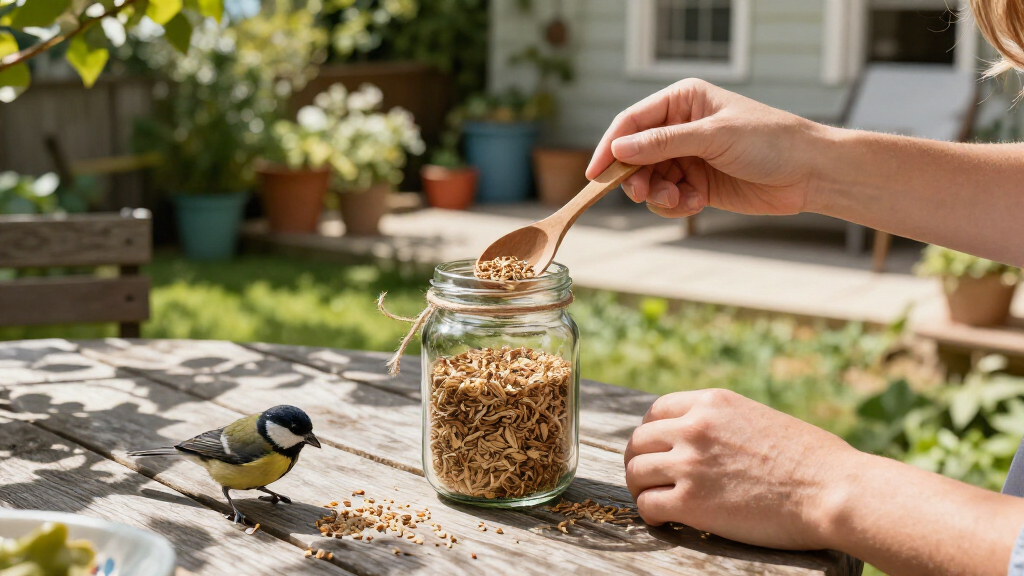
Hunker has published instructions for making a hanging bird feeder from a Mason or repurposed glass jar, a wooden spoon, wire and other craft materials. The spoon serves as a perch; the report also advises regular cleaning and careful placement near or far from windows to reduce collision risks.
Hunker has published a do-it-yourself guide for turning a Mason jar or repurposed glass food jar into a hanging bird feeder, using a wooden spoon as a perch. The project offers a way to reuse household materials, while the report stresses that feeders need regular cleaning and should be positioned with window-collision risks in mind.
The design described by Hunker places the spoon lengthwise along the jar, with its bowl extending from the jar’s open end. The spoon provides a place for birds to perch while feeding. Garden wire wrapped around the jar helps hold the spoon in place, and a handle made with bendable aluminum wire and decorative wooden beads allows the finished feeder to hang.
The listed materials include a glass jar, wooden spoon, jute, garden wire, aluminum wire, wooden beads, bird seed, and paint suitable for glass. The report also lists a glue gun, scissors and paint brushes among the tools. Its instructions call for attaching the spoon, securing it with wire, wrapping the wire in jute, painting the jar and adding the handle after the paint has dried.
Hunker credits Anna King of makinghomematters for the feeder design. The report describes the project as suited to compact outdoor spaces and says the feeder can be accessed for cleaning. It does not provide testing results, measurements, a cost estimate or evidence comparing this design with commercially made feeders.
Reuse Materials for Backyard Feeding
The project gives readers a practical example of reusing a glass jar instead of discarding it, while adding a feeding station to a yard or other outdoor space. Its simple materials and small footprint may appeal to people looking for a hands-on garden project, though the report does not quantify any savings or establish that the feeder is less expensive than store-bought options.
Maintenance is part of the project, not an optional extra. Hunker says the feeder should be cleaned regularly, particularly when colder weather brings more birds to feeding areas. Readers considering the build should weigh that upkeep alongside the decorative appeal and convenient access described in the report.
Popular right now

Shark PowerDetect Corded Stick Vacuum, Self-Cleaning (Eggplant, HZ4002)

Breville Bambino Espresso Machine, Brushed Stainless Steel (BES450BSS)

De'Longhi Rivelia Automatic Espresso Machine with Milk Frother
As an affiliate, we earn on qualifying purchases.
How the Spoon Feeder Is Built
The feeder combines three basic functions: the jar holds seed, the spoon creates a resting and feeding surface, and wire forms the support and hanging structure. The source describes attaching the spoon along the jar before wrapping wire around the top and bottom. Jute is added around the wire as a decorative covering, while the aluminum wire and beads form the hanger.
For placement, Hunker recommends putting the feeder either within three feet of a window or 30 feet away, rather than at an intermediate distance, to help prevent bird collisions. It also suggests keeping native plants nearby and, where possible, trees that birds can use for shelter. These recommendations are part of the source report; it does not cite a separate study or agency in the supplied material.
“That’s something you’ll need to do regularly, particularly once temperatures dip and more birds flock to your feeder.”
— Hunker
Questions About Durability and Care
The supplied report does not say how long the feeder lasts outdoors, how well the glue and painted finish withstand rain or freezing temperatures, or whether the materials need replacement after exposure. It also gives no dimensions, weight limits or detailed cleaning method. Readers should not treat the design as tested for every climate or jar type.
The report recommends cleaning but does not specify a schedule or explain how to sanitize the feeder. It also does not identify which bird species are likely to use it or assess whether the spoon-and-jar arrangement is suitable for all seed types. Those details remain unconfirmed in the material provided.
Build, Place and Maintain the Feeder
Anyone following the guide can assemble the feeder with a clean, intact jar, then allow any paint and adhesive to dry fully before filling it with seed and hanging it. The source suggests choosing a location that follows its window-distance advice and has nearby native plants or trees where birds can find cover.
After installation, the next step is routine inspection and cleaning, with particular attention during colder periods when use may increase. Hunker’s report does not announce a follow-up test or provide a maintenance calendar, so owners will need to monitor the feeder’s condition and cleanliness themselves.
Key Questions
What materials does the bird feeder require?
The guide lists a glass jar, wooden spoon, garden wire, jute, bendable aluminum wire, wooden beads and bird seed, along with paint suitable for glass. It also names a glue gun, scissors and paint brushes as tools.
How does the wooden spoon work?
The spoon is attached lengthwise to the jar, with its bowl extending from the open end. Hunker says it acts as a perch where birds can rest and eat.
Where should the feeder be hung?
Hunker advises placing it either within three feet of a window or 30 feet away to help prevent collisions. The report also recommends nearby native plants and, if possible, trees for shelter.
Does the feeder need regular cleaning?
Yes. Hunker says to clean it regularly, particularly when temperatures fall and more birds may visit. The supplied report does not give a specific cleaning schedule or method.
Source: hunker.com