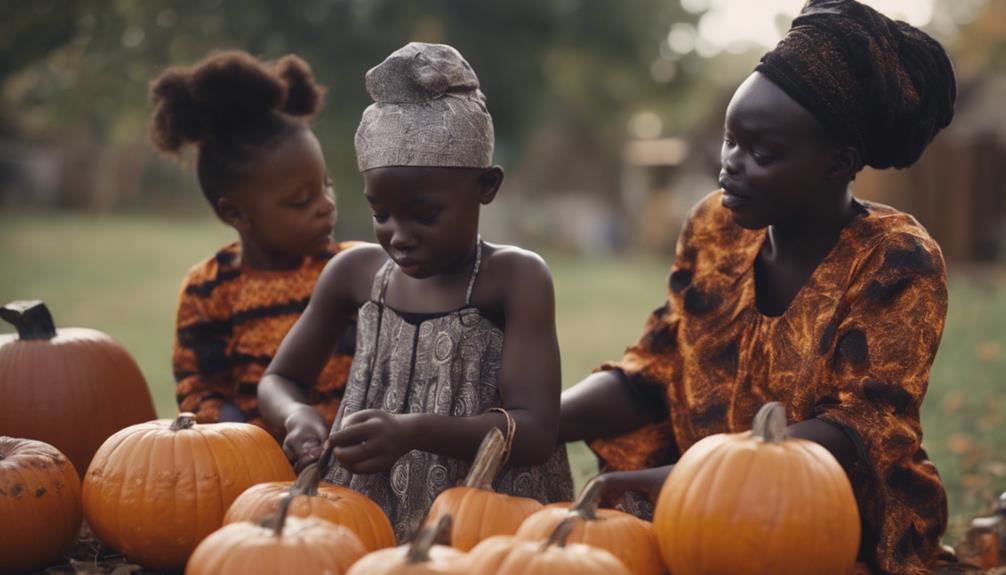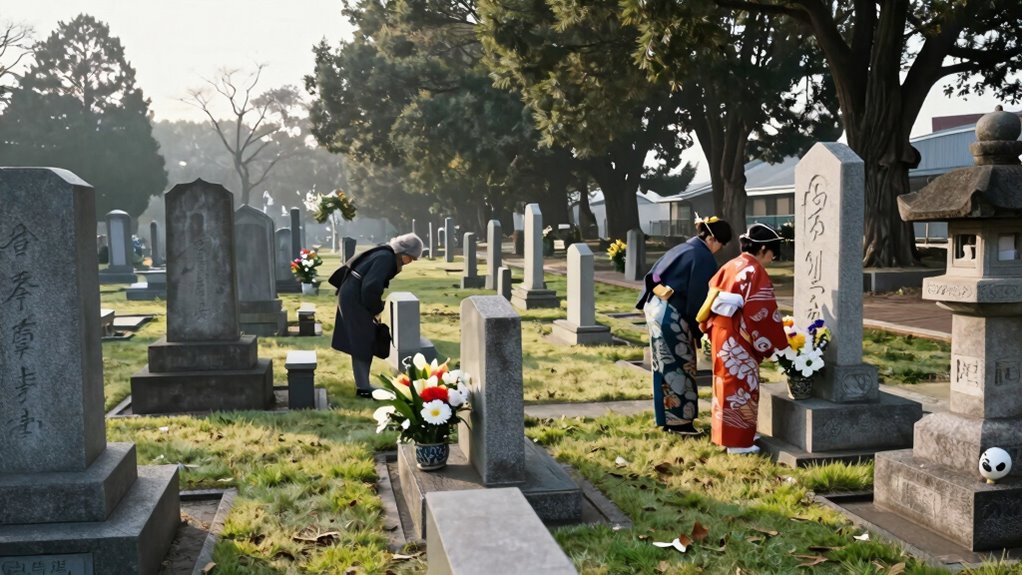

When visiting cemeteries around the world, you might find customs that surprise you, like elaborate ceremonies with singing or dancing, or quiet, respectful atmospheres. You should observe local practices, such as offering flowers, lighting candles, or burning incense, and avoid walking on graves or taking photos without permission. Respecting rituals, asking before taking pictures, and being mindful of the atmosphere show your understanding and respect for cultural traditions. Curious to know more? Keep exploring to uncover additional surprising customs.
Open a free Amazon Business account
Business pricing, bulk buying and tax-exempt orders.
As an affiliate, we earn on qualifying purchases.
Key Takeaways
- Customs for grave decorations and ceremonies vary widely, from elaborate rituals to quiet visits, depending on cultural traditions.
- Respect local practices by observing how others decorate graves, such as flowers, candles, or incense.
- Asking permission before taking photos or participating in rituals shows cultural sensitivity.
- Regular grave tending, especially during holidays or anniversaries, is common and signifies ongoing respect.
- Walking on graves or disturbing rituals is generally considered disrespectful across many cultures.

Visiting cemeteries is a universal act of remembrance, but the customs and etiquette vary widely across cultures. When you step into a cemetery abroad, you might notice differences in funeral customs that can catch you off guard. In some places, elaborate ceremonies with singing and dancing are common, while elsewhere, a quiet, somber atmosphere prevails. It’s essential to observe and respect these traditions, even if they feel unfamiliar. For example, in some cultures, it’s customary to leave small offerings or personal mementos at gravesites, reflecting a belief in ongoing connection with the departed. Understanding this helps you avoid unintentionally offending locals or disrupting their rituals.
Grave decoration practices also differ dramatically worldwide. In Western countries, visitors often place flowers on graves, sometimes fresh or artificial, as a sign of respect. But in other regions, decorations can include candles, incense, or even food items. In Mexico, during Día de los Muertos, graves are decorated with marigolds, photographs, and favorite foods of the departed, turning cemeteries into vibrant places of celebration rather than mourning. Meanwhile, in parts of Asia, it’s common to leave incense sticks or paper offerings that are burned as part of spiritual rituals. When you’re visiting, pay attention to what others are doing and follow their lead, as this shows cultural sensitivity. Additionally, cultural customs surrounding cemeteries often involve specific rituals or behaviors that can vary greatly, so taking the time to learn about local practices can enhance your respectful engagement.
Another aspect that might surprise you is the etiquette surrounding grave visits and maintenance. In many countries, it’s customary to clean and tend to graves regularly, especially on specific holidays or anniversaries. You might see families cleaning headstones, planting fresh flowers, or repairing damaged monuments. If you’re invited to participate, it’s polite to join in, but make sure to ask beforehand if you’re unsure. Avoid stepping over graves or walking on the burial site itself, as many cultures consider this disrespectful. When it comes to photography, always ask permission before taking pictures of graves or mourners, as privacy is highly valued in some traditions. Additionally, learning about funeral customs can help you better understand the significance of various rituals, ensuring your conduct remains respectful during your visit.
As an affiliate, we earn on qualifying purchases.
Frequently Asked Questions
Are There Specific Dress Codes for Visiting Cemeteries Internationally?
Yes, there are specific dress codes for visiting cemeteries internationally. You should respect cultural dress codes and religious attire, which vary by country and tradition. Typically, modest clothing is expected—covering shoulders and knees—and in some places, wearing black or subdued colors demonstrates respect. Research local customs beforehand to guarantee your attire aligns with cultural expectations, helping you honor the traditions and avoid unintended disrespect during your visit.
Is It Appropriate to Take Photographs Inside All Cemeteries?
You should generally avoid taking photographs inside cemeteries, especially when it involves grave decorations or mourners in mourning attire. For example, in some Japanese cemeteries, capturing images of graves or visitors can be seen as disrespectful, particularly during ceremonies. Always respect local customs and ask for permission if unsure. In many places, photographing graves or mourners is considered intrusive, so it’s best to err on the side of caution.
Do Different Cultures Have Unique Funeral Rituals I Should Observe?
Yes, different cultures have unique funeral rituals you should observe. You might encounter varied funeral symbolism, like specific colors, gestures, or offerings that hold deep meaning. Be mindful of cultural taboos—what’s respectful in one culture could be offensive in another. Respect these practices, ask questions if unsure, and follow local customs to honor traditions and show your respect during these meaningful ceremonies.
Are There Forbidden Items or Offerings at Foreign Cemeteries?
At foreign cemeteries, you should avoid forbidden offerings like alcohol, cigarettes, or food, as these can offend local customs. Cultural taboos vary, so it’s wise to research beforehand. For example, some cultures see certain items as disrespectful or inappropriate, so steer clear of them. Respect the traditions and avoid bringing items that might be considered offensive or taboo to honor the deceased properly and show cultural sensitivity.
How Do I Respectfully Address Local Customs During Visits?
To respectfully address local customs during cemetery visits, observe memorial gestures like bowing or offering flowers, and follow ritual variations specific to each culture. Show reverence by dressing appropriately, remaining quiet, and avoiding disruptive behavior. If unsure, ask locals or guides about proper etiquette. By embracing these practices, you demonstrate respect and understanding, ensuring your visit honors the traditions and sentiments of those who are commemorated.
Conclusion
By now, you see that cemetery etiquette varies widely, but respect remains universal. Some customs might surprise you, like leaving coins on graves or whispering quietly. It’s almost as if a shared belief in honoring the dead creates a rhythm that transcends borders. So, next time you visit, remember: understanding and respecting local customs isn’t just polite—it connects you to a deeper, global tradition of remembrance. After all, honoring the dead unites us across cultures.
College move-in / dorm season Picks
dorm essentials
As an affiliate, we earn on qualifying purchases.