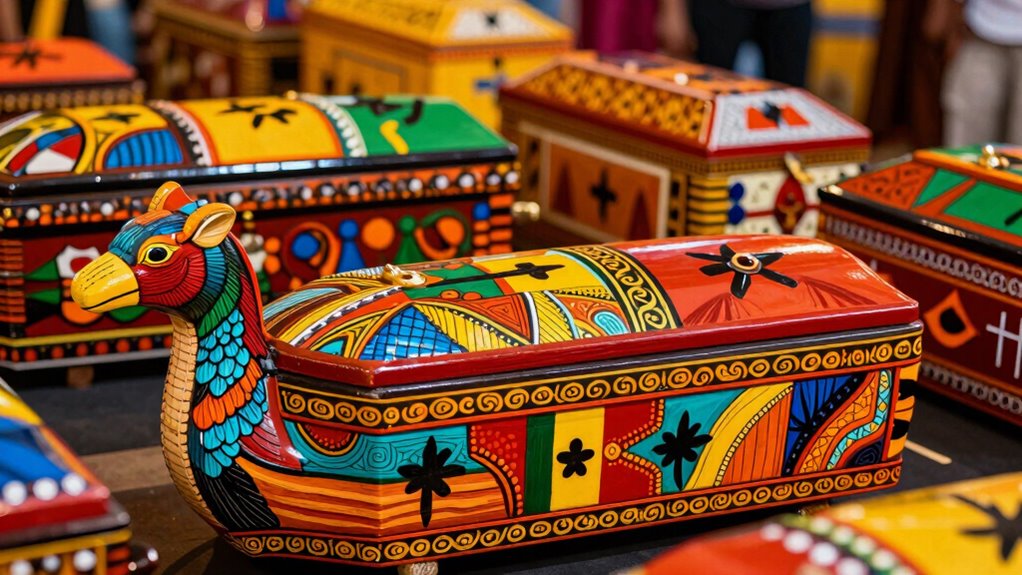

Ghana’s fantasy coffins are vibrant, artistic funeral displays that celebrate life and personality, often resembling Halloween decorations in their vivid colors and creative shapes. These coffins are crafted to honor the deceased’s passions, like boats for fishermen or guitars for musicians, transforming traditional funerals into lively events. The detailed craftsmanship and symbolism reflect deep cultural values and craftsmanship passed down through generations. If you want to explore how these unique traditions continue to thrive, keep uncovering their fascinating stories.

Get decor and gifts delivered free with Prime
- Fast, free delivery on millions of items
- Prime Video, Amazon Music and more included
- Member-only deals all year
Key Takeaways
- Ghana’s fantasy coffins are vibrant, artistically crafted funeral displays that symbolize the deceased’s personality and passions.
- They often feature creative shapes like boats, guitars, or animals, resembling elaborate Halloween decorations.
- The tradition blends cultural symbolism with artistic craftsmanship, transforming funerals into lively celebrations.
- Skilled artisans carefully design and decorate each coffin, preserving traditional techniques and motifs.
- These coffins challenge conventional funeral views, emphasizing cultural storytelling and artistic expression.
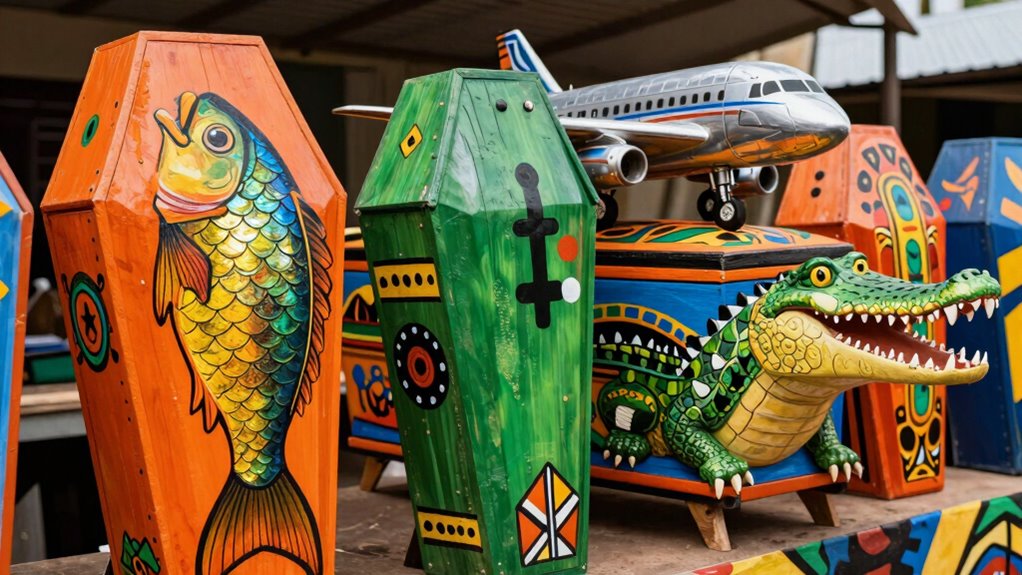
In Ghana, funerals are more than just a somber event—they’re a celebration of life expressed through vibrant, custom-made coffins that reflect the deceased’s personality, profession, or passions. These coffins, known as fantasy coffins, are crafted with remarkable artistic craftsmanship, transforming what might seem like simple graves into vivid tributes. You might think of coffins as basic containers, but in Ghana, they serve as powerful symbols rooted in cultural symbolism, representing not only the individual’s life but also their role in the community and beliefs about the afterlife.
The cultural symbolism embedded in these coffins is profound. Each design is carefully chosen to tell a story about the person inside. For example, a fisherman might be buried in a coffin shaped like a boat, while a musician could be laid to rest in a coffin resembling a guitar or microphone. This approach isn’t just about aesthetics; it’s about honoring the person’s identity and passions. These symbolic designs communicate respect and admiration, turning the funeral into a vivid narrative of a life well-lived. You’ll notice that the craftsmanship involved is highly detailed, often reflecting traditional techniques passed down through generations. Preserving these traditional techniques is crucial for maintaining the cultural authenticity of these unique art forms. Additionally, these techniques often incorporate local materials and methods that are unique to Ghanaian artisans. Recognizing the importance of cultural heritage, many artisans dedicate themselves to passing down these skills to ensure the tradition endures. Engaging in these practices helps sustain a sense of cultural identity that is vital to Ghanaian communities.
The artistic craftsmanship involved in creating these fantasy coffins is truly extraordinary. Artisans spend days, sometimes weeks, meticulously shaping and decorating each piece to ensure it captures the essence of the individual. Bright colors, intricate carvings, and creative shapes come together in a harmonious display of skill and imagination. The process is deeply rooted in Ghanaian culture, blending traditional motifs with personal touches that make each coffin unique. When you see these coffins, you realize they’re more than just containers—they’re works of art that celebrate life’s diversity and richness. The craftsmanship isn’t just about making something beautiful; it’s about conveying meaning, honoring the deceased, and maintaining cultural traditions.
In Ghana, these fantasy coffins challenge the conventional view of funerals, transforming them into lively, expressive celebrations. They remind you that death isn’t just an end but a continuation of cultural storytelling, where art and symbolism come together to honor a life with vibrancy and respect. Their striking appearance, layered with cultural symbolism and crafted with exceptional artistic skill, makes Ghana’s funeral traditions truly extraordinary. Additionally, this tradition emphasizes the importance of preserving traditional artistic techniques passed down through generations, ensuring that these unique practices continue to thrive. This cultural practice underscores the significance of artistic expression as a vital part of Ghanaian heritage and identity.
As an affiliate, we earn on qualifying purchases.
Frequently Asked Questions
How Long Does It Take to Create a Fantasy Coffin?
Creating a fantasy coffin usually takes several days to a few weeks, depending on its complexity. You’ll find that skilled artisans dedicate time to guarantee each piece reflects cultural symbolism and artistic craftsmanship. The process involves designing, sculpting, and painting, all tailored to the individual’s personality or profession. Patience and attention to detail are essential, as these coffins aren’t just containers—they’re meaningful works of art representing the person’s life and beliefs.
Are Fantasy Coffins Used for All Funerals in Ghana?
You might find fantasy coffins in many Ghanaian funerals, but they’re not used for every single one. Their vibrant designs symbolize cultural beliefs and honor the deceased’s personality, blending tradition with modern influences. Sometimes, the coffins resemble animals, cars, or objects, reflecting what mattered most to the loved one. These creative pieces add a unique, meaningful touch, making each funeral a celebration of life through art and symbolism.
What Materials Are Commonly Used in Making These Coffins?
You’ll find that Ghanaian fantasy coffins are crafted using materials like wood, metal, and paint. These materials are chosen for their cultural symbolism and durability. Skilled artisans employ craftsmanship techniques such as carving, painting, and assembling to create vibrant, imaginative designs that reflect the deceased’s personality or profession. The combination of these materials and techniques results in unique, expressive coffins that celebrate life and cultural heritage.
Do Different Regions Have Distinct Fantasy Coffin Styles?
You’ll notice that different regions showcase unique fantasy coffin styles, blending regional craftsmanship with cultural symbolism. These variations reflect local traditions, beliefs, and artistry, making each piece distinct. While some areas favor animal shapes or tools relevant to their livelihood, others embrace abstract or symbolic designs. This diversity highlights how cultural narratives and regional influences shape the vibrant, imaginative world of Ghanaian fantasy coffins, turning funerals into powerful artistic expressions.
Can Anyone Commission a Custom Fantasy Coffin?
Yes, you can commission a custom fantasy coffin, but it often depends on local artisans and their willingness to create personalized designs. These coffins reflect cultural symbolism and require exceptional artistic craftsmanship to bring your vision to life. You’ll need to collaborate with skilled craftsmen who understand the cultural meaning behind the symbols and motifs, ensuring your custom piece honors tradition while showcasing your unique personality or interests.
Conclusion
Imagine attending a funeral in Ghana where the coffin resembles a beloved car or animal, celebrating a person’s passions or profession. This vibrant tradition transforms mourning into a joyous, colorful tribute, reflecting cultural values and personal stories. For instance, a fisherman’s coffin shaped like a boat would honor his life at sea. Such unique art not only honors the departed but also keeps their memory alive in a lively, meaningful way.
Halloween Picks
halloween
As an affiliate, we earn on qualifying purchases.