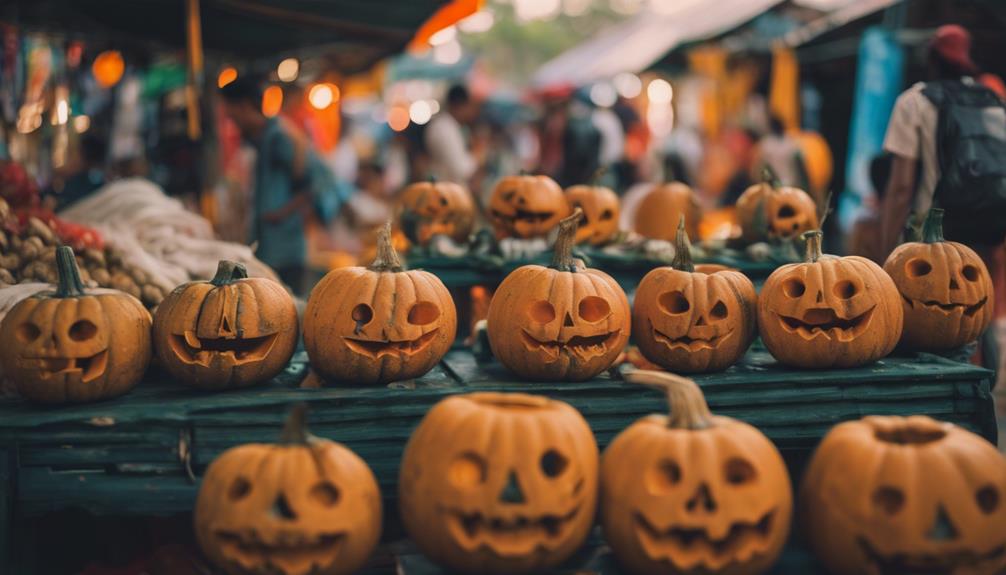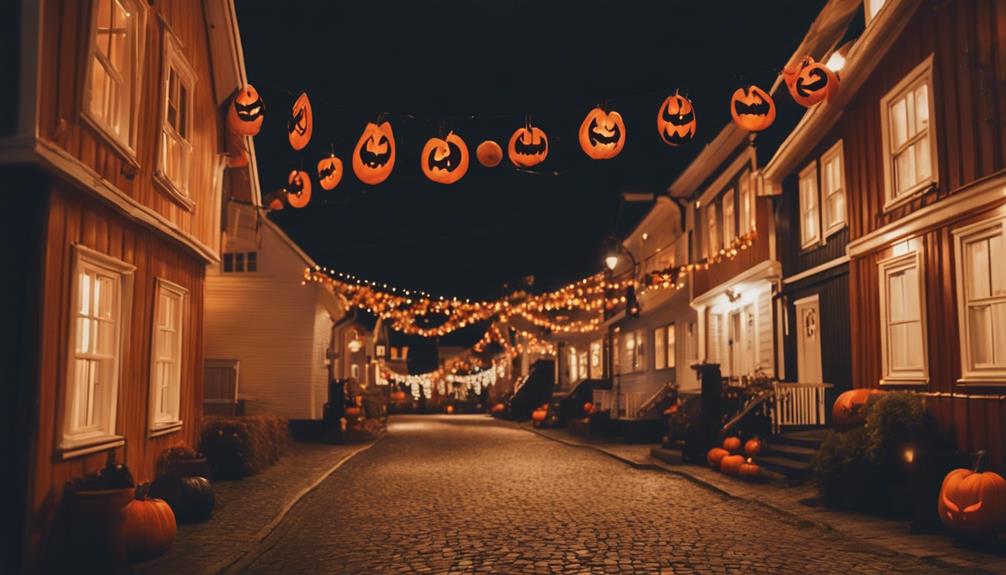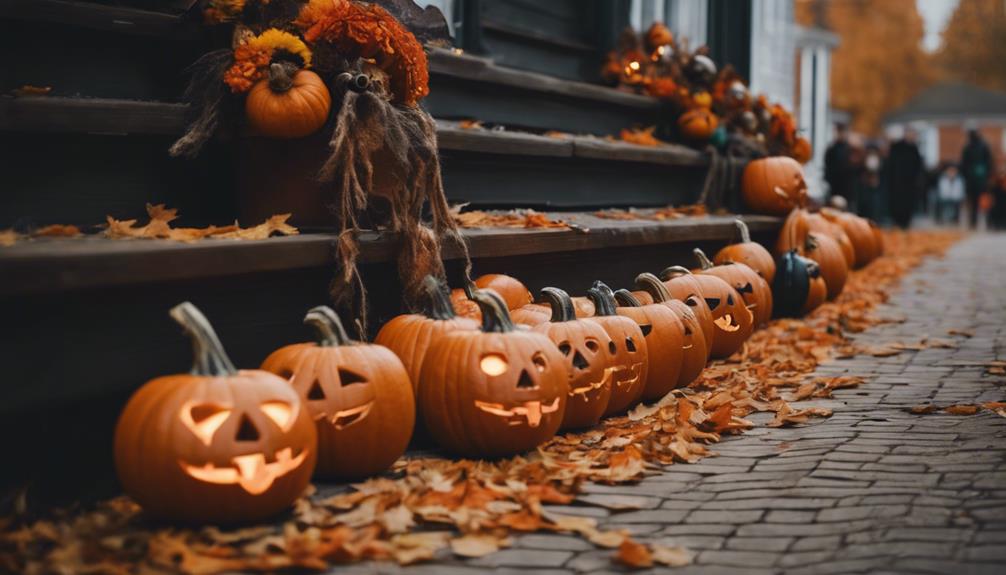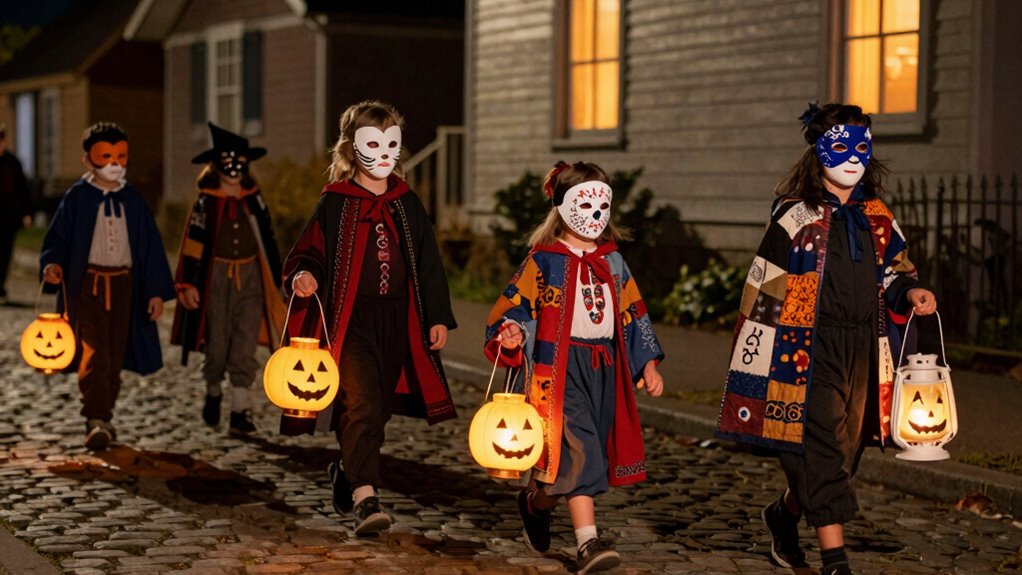

Guising is a historic Halloween custom that predates the focus on candy, involving dressing in traditional costumes inspired by folklore, spirits, or ancestors. You’ll see people wearing outfits that symbolize protection, spirits, or mythical beings to honor traditions and ward off evil. It’s a community activity filled with storytelling, singing, and performances that keep local legends alive. If you want to uncover how these costumes and customs connect to cultural heritage, continue exploring this rich history.

Get decor and gifts delivered free with Prime
- Fast, free delivery on millions of items
- Prime Video, Amazon Music and more included
- Member-only deals all year
Key Takeaways
- Guising is an ancient tradition involving costumes that represent spirits, ancestors, or mythical beings, predating modern Halloween candy customs.
- Participants dress in culturally significant costumes to ward off evil or honor the dead, reflecting local folklore and customs.
- The custom includes storytelling, singing, and performances as part of community activities, fostering social bonds.
- Guising serves to preserve folklore, cultural stories, and heritage across generations through active participation.
- Costumes carry symbolic meanings related to spiritual protection, connecting individuals to their cultural history and legends.
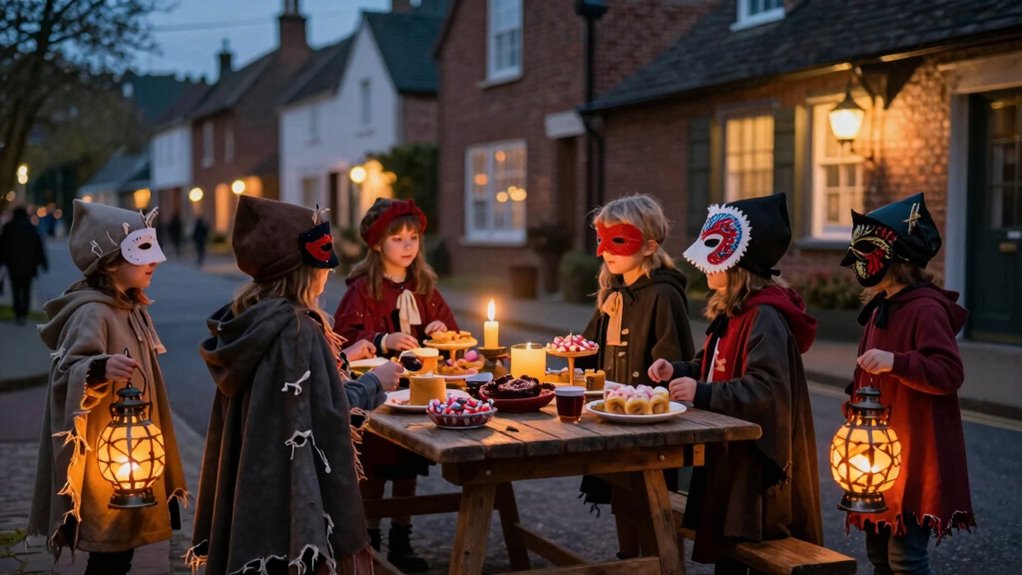
Have you ever wondered what guising really involves? It’s a tradition with roots that go way back, long before candy-filled bags became the main focus of Halloween. Guising is all about dressing up in traditional costumes and taking part in festive activities that celebrate community, creativity, and storytelling. Instead of simply knocking on doors for treats, you dress up in costumes that often reflect folklore, myth, or local customs, transforming yourself into a character or spirit. These traditional costumes can range from spooky ghosts and witches to historical figures or mythical beings, making each costume a small piece of a larger cultural puzzle.
Guising celebrates community through costumes, storytelling, and festive traditions rooted in folklore and local customs.
When you go guising, the aim isn’t just to get candy but to participate in a series of festive activities that connect you with your neighbors and community. You might sing songs, perform short plays, or tell stories as you move from house to house. These activities create a lively, communal atmosphere that’s rooted in centuries-old traditions. Children and adults alike dress up and engage in these performances, making the experience more than just a trick-or-treat run—it’s a celebration of local customs and shared history. The act of guising encourages creativity, as people craft elaborate costumes and come up with entertaining routines, often incorporating elements from folklore or local legends.
You’ll find that these traditional costumes often have symbolic meanings, representing spirits, ancestors, or mythical creatures meant to ward off evil or honor the dead. The festive activities connected to guising serve to carry on stories and customs that have been passed down through generations. In many communities, these events are deeply woven into the cultural fabric, with parades, dances, and communal feasts complementing the costume-wearing and storytelling. Participating in guising keeps these traditions alive, ensuring that the history and stories behind the customs are not lost. Additionally, the costumes often incorporate symbolic meanings that serve to protect or invoke spiritual forces. Understanding the cultural significance of these costumes helps preserve the authentic spirit of the tradition.
Moreover, guising isn’t just about individual costumes or performances; it’s about the shared experience and the sense of belonging it fosters. As you put on your traditional costume and take part in these vibrant festivities, you become part of a collective effort to preserve a unique cultural heritage. It’s a way to connect with those around you, celebrate your community’s history, and enjoy a playful, spirited night that’s rooted in centuries-old customs. Guising reminds us that Halloween is more than just candy—it’s a lively, communal celebration of stories, costumes, and traditions that have stood the test of time.
traditional folklore costume for Halloween
As an affiliate, we earn on qualifying purchases.
As an affiliate, we earn on qualifying purchases.
Frequently Asked Questions
When Did Guising First Originate in History?
You’ll find that guising originated in ancient Celtic times, around 16th-century Ireland and Scotland. Its historical origins are rooted in Celtic festivals like Samhain, which marked the end of harvest and the start of winter. The cultural significance was to ward off spirits and honor ancestors through masks and disguises. Over time, this tradition evolved into the Halloween custom you now recognize, blending folklore, community, and seasonal celebrations.
How Did Guising Evolve Into Modern Trick-Or-Treating?
Did you know that by the 1920s, over 90% of American children participated in trick-or-treating? Guising evolved into modern trick-or-treating through costume evolution and increased community participation. As neighborhoods embraced the tradition, it shifted from house-to-house visits for food or money to children exchanging costumes and performing small acts for candy. This change helped foster a sense of community, making Halloween a widely celebrated, inclusive event today.
Are There Regional Differences in Guising Traditions?
You’ll find regional differences in guising traditions, with variations in costume styles reflecting local culture and history. In some areas, people dress in spooky or humorous costumes, while others favor traditional or historical attire. Local song traditions also play a role, as communities sing specific songs or recite poems during their performances. These regional costume variations and song traditions give each guising celebration its unique flavor, enriching the Halloween experience.
What Are Traditional Foods or Items Used in Guising?
Like a treasure chest of surprises, guising involves traditional foods and small items. You might carry homemade treats, fruits, nuts, or coins as your offerings, paired with Halloween costumes and festive masks. These items are exchanged for songs, jokes, or performances. The focus is on sharing simple, meaningful tokens of goodwill, connecting with neighbors, and celebrating the season’s spirit through humble, heartfelt gifts that predate modern candy.
How Is Guising Celebrated Outside of Ireland and the UK?
Outside Ireland and the UK, you celebrate guising through costume creativity and community participation. In many countries, kids go door-to-door, showcasing inventive costumes, and perform short acts or songs to earn treats. Events like neighborhood parties or parades encourage everyone to get involved, fostering a sense of community. This lively tradition emphasizes fun, creativity, and togetherness, making Halloween a memorable experience beyond its origins.
Conclusion
Understanding guising reveals how Halloween traditions have deep roots, emphasizing community and creativity over just candy. Imagine a neighborhood where kids dress as historical figures, sharing stories instead of sweets—this fosters connection and cultural exchange. Guising isn’t just about treats; it’s about celebrating imagination and heritage. So, next Halloween, consider embracing the original spirit of guising, where fun and tradition take center stage, creating memories that last far beyond that night.
Halloween Picks
halloween
As an affiliate, we earn on qualifying purchases.