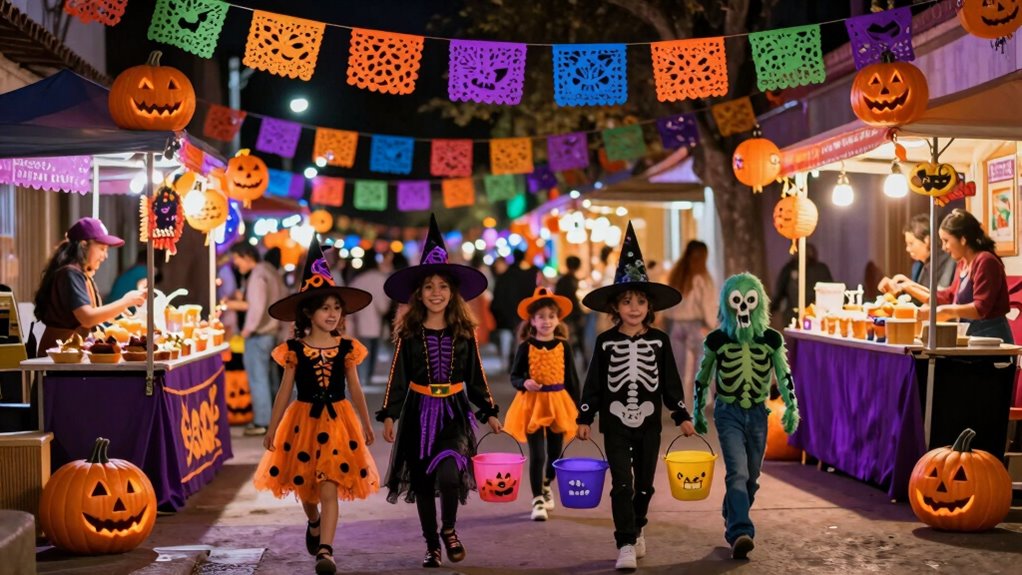

In Mexico, Halloween has become a lively celebration that blends local folklore, vibrant decorations, and festive foods with international customs. You’ll see costumes inspired by legends like La Llorona or mythical creatures, along with colorful papel picado and spooky treats like sugar skull cookies. Celebrations focus on creativity, cultural pride, and community fun, often mixing modern influences with traditional traditions. If you want to discover more about these unique ways Mexicans embrace Halloween, keep exploring!

Get decor and gifts delivered free with Prime
- Fast, free delivery on millions of items
- Prime Video, Amazon Music and more included
- Member-only deals all year
Key Takeaways
- Halloween celebrations in Mexico blend local folklore, legends, and history with traditional spooky customs and vibrant decorations.
- Costumes often depict Mexican myths like La Llorona or figures like Frida Kahlo, emphasizing cultural pride and craftsmanship.
- Festive foods include sugar skull cookies, pan de muerto-inspired treats, and spicy candies with symbolic meanings.
- Decorations feature papel picado, skeletons, pumpkins, and colorful ornaments, reflecting artistic traditions.
- Music, dance, and artisan crafts create lively, community-oriented festivities that showcase cultural heritage beyond Día de Muertos.
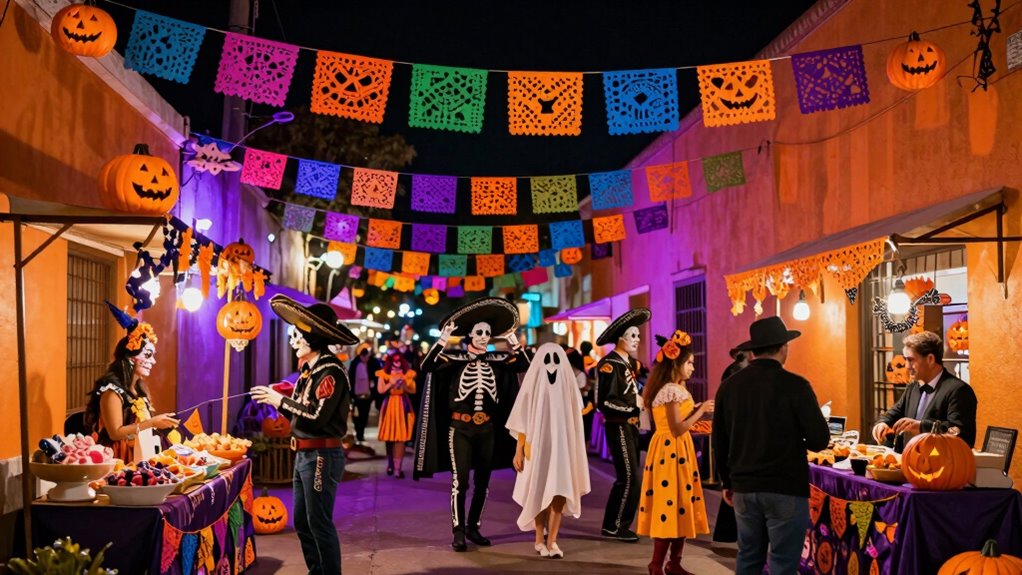
While Día de Muertos remains Mexico’s most iconic celebration of honoring loved ones, Halloween has also gained popularity across the country. You might be surprised to see how Mexicans embrace this holiday, blending it seamlessly with local traditions. When you attend Halloween celebrations in Mexico, you’ll notice that many people embrace traditional costumes inspired by Mexican folklore, such as La Llorona or characters from local legends. These costumes often incorporate vibrant colors, intricate embroidery, and symbolic accessories, reflecting a deep respect for cultural heritage. You’ll find that Halloween parties in Mexico are lively, colorful, and full of energy. These gatherings serve as social hubs where friends and families come together to enjoy themed decorations, music, and festive foods.
In these parties, the costumes aren’t just about spooky characters; they celebrate Mexican history and mythology. You might see people dressed as famous figures like Frida Kahlo or as mythical creatures like chupacabras, blending tradition with modern fun. Many people put effort into creating or purchasing costumes that showcase their creativity and cultural pride. It’s common to see children and adults alike participating in costume contests, where the emphasis is on originality and craftsmanship. Halloween in Mexico isn’t solely about scares; it’s a vibrant expression of identity and community spirit. Additionally, the cultural heritage is reflected in the way traditions are preserved and adapted during these celebrations. This blending of customs demonstrates how Mexican traditions continue to evolve while honoring their roots. Incorporating elements of Mexican folklore into costumes and decorations further highlights the cultural significance of these festivities. Moreover, the artisan crafts involved in creating decorations and costumes showcase Mexico’s rich artistic traditions. You can see how traditional craftsmanship plays a vital role in enhancing the authenticity of these celebrations. Food plays a significant role in these celebrations. You’ll find plenty of themed treats, including sugar skull cookies, pan de muerto-inspired snacks, and spicy candies that add to the festive atmosphere. These foods often carry symbolic meanings tied to Mexican traditions, even as they embrace the spooky theme of Halloween. Decorations also reflect this blend, with pumpkins and skeletons decorated alongside papel picado and other colorful ornaments that mirror local artistry. During Halloween parties, music and dancing further elevate the mood, creating a lively environment where cultural pride and holiday fun go hand in hand.
Mexican papel picado decorations
As an affiliate, we earn on qualifying purchases.
As an affiliate, we earn on qualifying purchases.
Frequently Asked Questions
How Do Mexican Children Typically Celebrate Halloween?
You typically celebrate Halloween by dressing up in fun costumes and participating in local events. Children often join costume contests, showing off their creative outfits. You might go door-to-door for trick-or-treating, collecting candies and treats. Pumpkin carving is also popular, where you create spooky or funny faces on pumpkins. These activities make Halloween exciting and festive, blending traditional Mexican celebrations with fun, community-centered customs.
Are There Traditional Mexican Halloween Costumes?
You’ll find that Mexican Halloween costumes often include traditional masks and folkloric attire, reflecting rich cultural stories and legends. Many children and adults wear vibrant, handcrafted masks representing spirits, animals, or mythical characters. You might also see costumes inspired by regional folklore, like charros or folkloric dancers. These costumes celebrate Mexican heritage, blending fun with cultural pride, making Halloween a lively and meaningful celebration beyond just spooky outfits.
What Are Popular Halloween Candies in Mexico?
You’ll find that popular Halloween candies in Mexico include Mexican candy varieties like tamarind-based treats, spicy lollipops, and sugar skull-shaped chocolates. These candies often reflect local flavors and traditions. As for Halloween costume trends, many people dress up as spooky characters or popular culture icons. You might see kids and adults alike sporting costumes inspired by Mexican folklore or contemporary themes, blending traditional and modern styles seamlessly.
Do Mexican Halloween Celebrations Differ Regionally?
You’ll find that Mexican Halloween celebrations differ regionally, with about 60% of communities incorporating local traditions. In some areas, regional folklore influences costumes and festivities, while traditional music plays a central role in gatherings. For example, in the Yucatán, you might hear lively marimba tunes, whereas in other regions, more somber, folkloric performances prevail. These regional variations enrich the holiday, making it uniquely vibrant across Mexico.
How Do Mexican Families Incorporate Día De Muertos and Halloween?
You’ll notice Mexican families often blend Día de Muertos and Halloween through cultural fusion, creating unique celebrations. They incorporate Halloween’s fun costumes and decorations while honoring the religious significance of Día de Muertos with altars, offerings, and prayers. This blending allows you to experience a vibrant mix of traditions, reflecting both the festive spirit of Halloween and the spiritual reverence of honoring loved ones who have passed away.
Conclusion
As you embrace Mexico’s vibrant Halloween traditions, remember that beneath the playful masks and carved pumpkins lies a deeper symbol: the eternal dance between life and death. Each lantern flicker and costume worn is a proof to honoring ancestors and embracing life’s fleeting beauty. By participating, you become part of this timeless cycle, where darkness illuminates understanding, and spirits guide your way—reminding you that even in shadows, there’s light to be found.
Halloween Picks
halloween
As an affiliate, we earn on qualifying purchases.