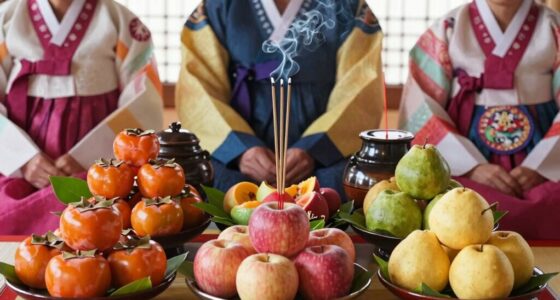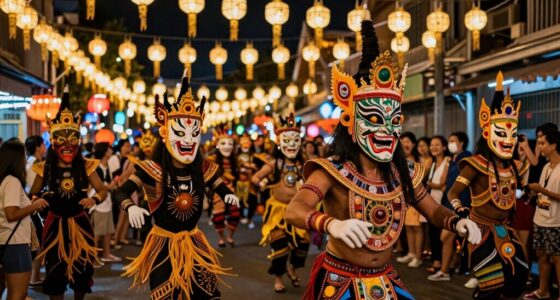
During the Hungry Ghost Festival, you should honor ancestors with offerings like fruit, rice, and incense arranged respectfully on altars. Follow ritual timing, such as lighting incense at designated times, and avoid behaviors like pointing feet toward the altar or leaving offerings uncovered. Show sincerity, keep the environment clean, and avoid disturbing spirits with loud noises or swimming at night. Respecting these customs helps maintain harmony and tradition—you’ll discover more about these meaningful practices as you explore further.

Get decor and gifts delivered free — and shop member deals
- Fast, free delivery on millions of items
- Access to Prime Big Deal Days deals on October 6–7
- Prime Video, Amazon Music and more included
Key Takeaways
- Offer food, incense, and symbolic items at specific times to honor ancestors and appease spirits.
- Follow proper altar arrangements, cleanliness, and respectful gestures during rituals.
- Avoid loud noises, swimming at night, and disrespectful behaviors to prevent disturbing spirits.
- Burn joss paper and lanterns as offerings symbolizing wealth, prosperity, and respect.
- Engage in charitable acts and maintain cultural customs to preserve spiritual harmony and heritage.
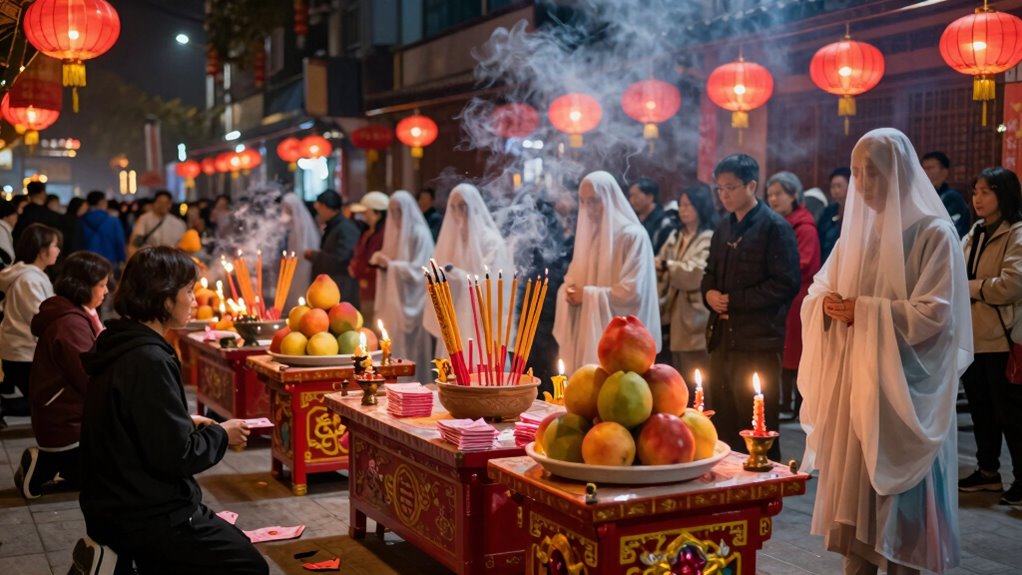
The Hungry Ghost Festival continues to be a significant cultural event today, with traditional rules shaping how people observe the holiday. You’re likely familiar with the customs that honor the spirits of the deceased, especially through practices like ancestor worship. During this time, families pay respect to their ancestors by offering food, incense, and other symbolic items. These traditional offerings are made with care, intended to nourish and please the spirits, ensuring they remain content and protect the living. The act of ancestor worship isn’t just about remembering loved ones; it’s an essential part of maintaining family ties and cultural identity. You might set up an altar in your home, placing photos of ancestors alongside offerings like fruit, rice, and cooked dishes, all arranged with respect and reverence.
During the Hungry Ghost Festival, families honor ancestors with offerings to strengthen family bonds and cultural identity.
When observing these customs, you’re expected to follow certain rules that have been passed down through generations. For example, offering traditional offerings at specific times, such as the evening or during certain days of the month, is considered crucial. You should also avoid disrespectful behaviors like pointing your feet toward the altar or leaving offerings uncovered, as these actions can offend the spirits. Instead, you’re encouraged to show humility and sincerity in your gestures. Burning incense is another key practice; the fragrant smoke is believed to carry your prayers and respect to the spirits. You’re often told to light the incense sticks at the designated times, ensuring they burn evenly and completely, signifying your pure intentions. Additionally, many communities emphasize the importance of maintaining a clean and orderly environment around the altar to show reverence and respect. Recognizing the cultural significance of these offerings helps deepen your understanding of the festival’s importance. Practicing these customs with genuine intention helps preserve the cultural heritage associated with the festival. This respect for tradition also reinforces the spiritual connection between the living and the spirits, fostering harmony and continuity. Understanding the ritual practices involved can help you better appreciate the deep-rooted beliefs behind the festival.
Many communities also observe taboos during the festival to avoid inviting bad luck or offending the spirits. For instance, you might be advised not to swim at night or to avoid loud noises, which could disturb the spirits’ peace. Some families light lanterns or set up paper offerings, like joss paper, which symbolizes wealth and prosperity for the spirits in the afterlife. These acts demonstrate your respect and help maintain harmony between the living and the dead. You’re also encouraged to be generous in giving donations or offerings to street performers or monks, as these acts of charity are believed to bring good fortune and spiritual protection. Recognizing the significance of traditional customs helps preserve the cultural integrity of this meaningful celebration.
incense sticks for ancestor worship
As an affiliate, we earn on qualifying purchases.
As an affiliate, we earn on qualifying purchases.
Frequently Asked Questions
How Do Different Regions Celebrate the Hungry Ghost Festival Uniquely?
You’ll notice regional customs and cultural variations shape how different regions celebrate the Hungry Ghost Festival. In some areas, you might see elaborate street performances and lantern releases, while others focus on offerings and prayers at temples. In Singapore, you might observe large dinners to appease spirits, whereas in Malaysia, burning joss paper is common. These unique practices reflect local traditions, beliefs, and community values, making each celebration distinct and meaningful.
Are There Any Modern Safety Concerns Associated With the Festival?
You should be aware that modern concerns about festival safety have increased during the Hungry Ghost Festival. Crowded events and open flames pose risks, so organizers often implement safety measures to prevent accidents. You might see additional security or fire safety protocols in place. It’s wise to stay vigilant, follow local guidelines, and avoid risky behaviors, ensuring everyone can enjoy the celebration safely and respectfully.
What Are Common Foods Offered During the Festival Today?
During the Hungry Ghost Festival, you’ll find offerings customs that spotlight food symbolism, like lantern-lit dishes and roasted meats, illuminating respect for spirits. Common foods include rice, fruits, sweets, and traditional delicacies, each symbolizing prosperity and good fortune. These offerings act like a bridge, connecting the living and the spirits. You actively participate by preparing and presenting these foods, honoring ancestors and ensuring their peaceful journey in the afterlife.
How Has Technology Influenced Traditional Festival Practices?
Technology has markedly influenced traditional festival practices by enabling digital rituals and expanding social media influence. You might now participate in online offerings or virtual prayers, making the festival accessible from anywhere. Social media allows you to share your experiences, connect with others, and learn about different customs worldwide. This blend of tradition and technology helps keep the festival relevant and engaging, ensuring its customs evolve while still honoring its roots.
Are There Specific Rituals for Children During the Festival?
During the Hungry Ghost Festival, you’ll find special rituals for children that emphasize child safety. Families often modify traditional rituals to keep kids safe, such as avoiding dangerous fire offerings or loud firecrackers. Instead, they might introduce quieter, symbolic acts like offering paper money or lanterns. These ritual modifications help children participate meaningfully without risking harm, ensuring the festival remains a family-friendly event that respects tradition while prioritizing safety.
Conclusion
You might be surprised to learn that over 70% of people in regions celebrating the Hungry Ghost Festival still follow traditional rituals today. These customs, like offering food and lighting incense, help honor ancestors and ward off restless spirits. By keeping these practices alive, you connect with centuries of cultural heritage and community. Embracing these traditions reminds us that even in modern times, respecting the spiritual world remains a meaningful part of life for many.
Halloween Picks
halloween
As an affiliate, we earn on qualifying purchases.