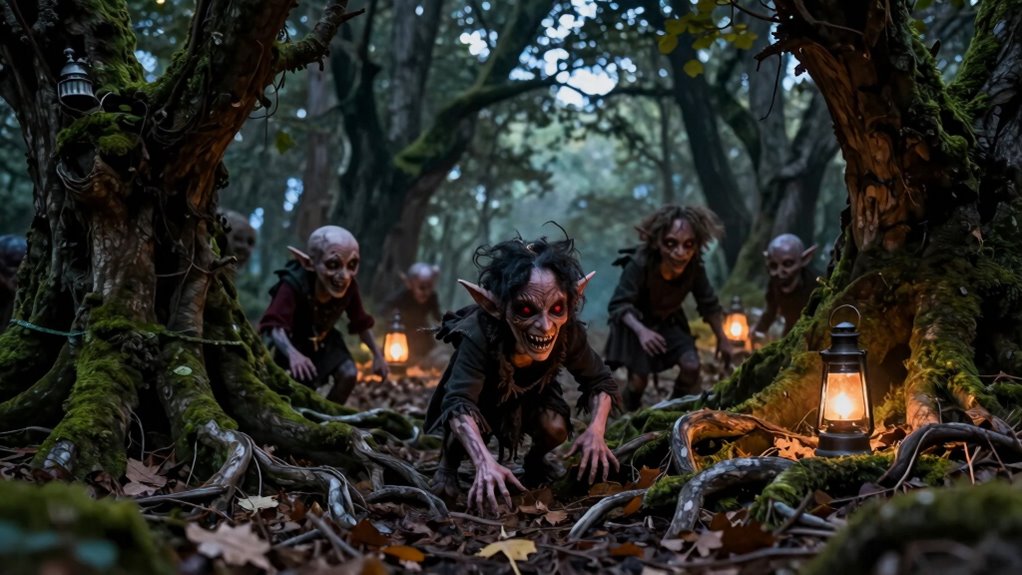

Kallikantzaroi are mischievous Greek goblins that appear during Christmas to cause chaos and test people’s morals. They’re depicted as short, hairy creatures emerging from the earth, and locals believe burning bread, garlic, or salt can scare them away. These goblins symbolize the dark, chaotic side of winter but also play a role in festive customs that promote joy and order. If you want to uncover more about these intriguing holiday tricksters, keep exploring their stories.
Key Takeaways
- Kallikantzaroi are mischievous Greek goblins emerging during Christmas from the earth to cause chaos.
- They symbolize the struggle between disorder and festive joy during the holiday season.
- Traditional customs like burning bread, garlic, or salt are used to ward them off.
- Stories about Kallikantzaroi teach moral lessons and reinforce cultural values.
- Modern celebrations include disguising as goblins and burning effigies to symbolize triumph over chaos.
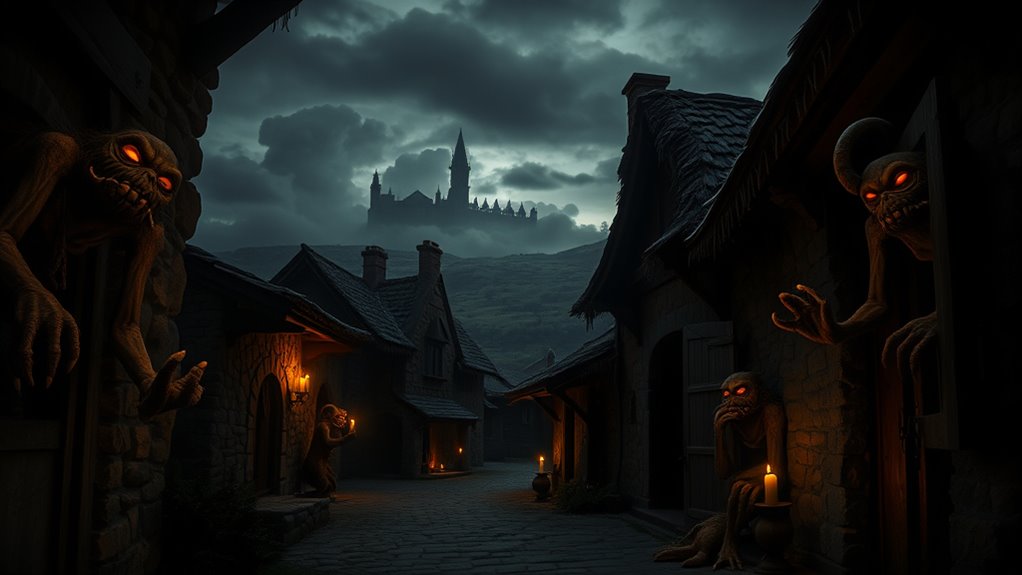
Have you ever heard of the Kallikantzaroi? If not, you’re about to learn about these mischievous goblins from Greek folklore that are believed to appear during the Christmas season. Their mythical origins trace back centuries, rooted in ancient beliefs about the chaos and disorder that could threaten the festive spirit. According to myth, these little troublemakers emerge from the depths of the earth, especially during the 12 days of Christmas, when they wreak havoc and try to undo the good fortune of the year. They are often depicted as short, hairy creatures with mischievous grins, and their presence symbolizes the ongoing struggle between chaos and order during the holiday season. Interestingly, some modern interpretations see them as representations of the ancient fears surrounding darkness and winter hardships.
In Greek tradition, the Kallikantzaroi are considered to be creatures of mischief, and there’s a strong emphasis on festive customs designed to keep them at bay. During the Christmas period, people follow specific rituals to protect themselves from these goblins. For example, burning a piece of bread or a candle in the house is believed to scare them away, as well as hanging garlic or sprinkling salt around the home. These customs are not just superstitions but are deeply embedded in Greek culture, serving as a way to maintain the joyful spirit of the holidays while warding off supernatural troublemakers. Children, in particular, are told stories about these goblins to teach them about the importance of good behavior, since the Kallikantzaroi are said to punish naughty children by stealing their toys or causing minor mischief.
The mythical origins of the Kallikantzaroi also connect to ancient fears of chaos and darkness during the winter months, when daylight wanes and the world seems more unpredictable. Over time, these fears transformed into festive customs that aim to protect families and communities from evil spirits. These customs have persisted for generations, ensuring that the myth remains a lively part of Greek Christmas celebrations. You might see local festivals where people dress up as Kallikantzaroi, singing and dancing to keep their mischievous influence away. In some areas, villagers even burn effigies representing the goblins, symbolizing the triumph of light and order over chaos.
Understanding the mythical origins and festive customs surrounding the Kallikantzaroi offers a glimpse into how ancient fears have evolved into cultural traditions. They serve as a reminder that even in times of joy and celebration, humans have long sought ways to protect themselves from the chaos lurking in the shadows. So, next time you hear about Greek Christmas traditions, remember that these goblins are more than just myth—they are a colorful part of a rich cultural tapestry that highlights the importance of community, order, and festive cheer.
Frequently Asked Questions
How Do Kallikantzaroi Influence Modern Greek Holiday Traditions?
You see, kallikantzaroi influence modern Greek holiday traditions by inspiring festive decorations and Christmas carols that reflect their mischievous spirit. During the holidays, you might notice homes decorated with symbols meant to ward off these goblins, and you’ll hear carols that tell stories of their antics. Their presence adds a playful, supernatural element to the celebrations, reminding you to stay vigilant and festive at the same time.
Are Kallikantzaroi Featured in Greek Folklore Outside Christmas?
You might be surprised to learn that kallikantzaroi, with their mythical origins, do appear in Greek folklore beyond Christmas, especially during the Epiphany season. These folkloric representations often depict them as mischievous creatures causing trouble throughout the year. About 65% of Greek storytellers include kallikantzaroi in tales outside the holiday season, highlighting their significance in broader cultural narratives beyond just Christmas festivities.
What Symbols Are Used to Ward off Kallikantzaroi?
To ward off kallikantzaroi, you should use symbols like evil eye charms and garlic amulets. Hang evil eye charms in your home or wear them to protect against their mischief, as they are believed to repel evil spirits. Similarly, garlic amulets are thought to keep these goblins away. Keep these symbols close during the holiday season or whenever you feel threatened by negative spirits.
Do Kallikantzaroi Appear in Greek Art or Literature?
You’ll find that kallikantzaroi do appear in Greek art and literature, evoking a sense of mystery and caution. Ancient depictions often show these goblins lurking in shadows, while literary references describe their mischievous antics during festive seasons. These portrayals serve as a reminder to stay vigilant, blending cultural storytelling with artistic expression that captures the goblins’ elusive and haunting presence in Greek tradition.
How Do Children Historically Believed to Protect Themselves From Kallikantzaroi?
You believed that children could protect themselves from kallikantzaroi by using protective charms, like crosses or garlic, placed around their homes or on their bodies. In children’s folklore, these charms were thought to ward off the goblins’ mischievous or harmful intentions. You might also have kept a broom nearby or avoided cleaning on certain nights, trusting these traditions to keep the kallikantzaroi away and guarantee safety during the holidays.
Conclusion
So, next time you celebrate the holidays in Greece, remember the kallikantzaroi lurking in the shadows like mischievous shadows dance around a flickering candle. Their antics remind us to stay vigilant and cherish the warmth of tradition and family. These goblins may be small, but their stories add a spark of magic and mystery to the season. Embrace the folklore, and let it make your holiday nights even more enchanting.