
Romania’s Dracula tourism mixes real history with folklore and marketing hype. While sites like Bran Castle attract visitors with spooky stories, many legends are exaggerated or fabricated to boost sales. Other haunted spots, like Hoia Forest, have mysterious tales, but their claims are often amplified for entertainment. If you want to know what’s rooted in fact and what’s just marketing magic, keep exploring to uncover the true story behind Romania’s haunted reputation.

Get decor and gifts delivered free with Prime
- Fast, free delivery on millions of items
- Prime Video, Amazon Music and more included
- Member-only deals all year
Key Takeaways
- Bran Castle is marketed as Dracula’s home, but its historical links to Vlad the Impaler are weak; much of its haunted reputation is storytelling.
- Many haunted sites, like Hoia Forest, blend local legends with sensational tales to attract tourists.
- Folklore and legends significantly influence Romania’s haunted site narratives, often exaggerated for entertainment.
- Tourism marketing emphasizes spooky stories and staged events, sometimes blurring fact and fiction.
- Authentic haunted locations exist, but commercialization often amplifies myths to boost Dracula-themed tourism.

Romania has become a must-visit destination for horror enthusiasts and curious travelers alike, thanks to its association with the legendary Dracula. The country’s rich tapestry of local legends and haunted sites fuels the myth, drawing visitors enthusiastic to experience a taste of the supernatural. As you explore, you’ll find that much of what’s promoted as Dracula-related tourism is a blend of history, folklore, and marketing. While some sites have genuine haunted histories, others are heavily commercialized, designed to capitalize on the Dracula obsession.
Romania’s haunted sites blend history, folklore, and marketing—some genuine, others crafted to feed the Dracula legend.
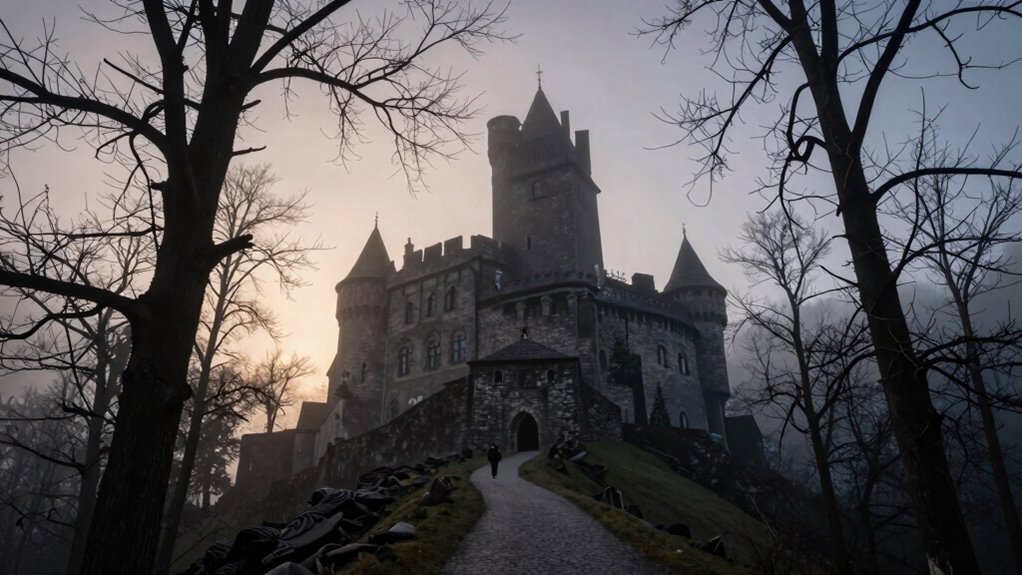
You might start your journey at Bran Castle, often called the “home” of Dracula, even though historical evidence linking Vlad the Impaler—who inspired Bram Stoker’s character—is weak. The castle’s imposing architecture and eerie atmosphere make it a perfect centerpiece of Dracula tourism, but much of its haunted reputation comes from storytelling and its strategic position on the Transylvanian landscape. As you walk through its winding halls, you’ll notice that local legends, such as tales of spirits or cursed rooms, add to its haunted site appeal. These legends are rooted in local folklore, passed down through generations, and give the castle an authentic spine-chilling aura. Still, it’s important to recognize that some stories are exaggerated or fabricated to attract visitors.
Beyond Bran Castle, you’ll discover other haunted sites sprinkled throughout Romania, each with their own stories of ghostly encounters and sinister legends. Places like the Hoia Forest near Cluj-Napoca are famous for reports of unexplained phenomena, including strange lights, apparitions, and feelings of unease. These haunted sites have become part of Romania’s allure, blending genuine local legends with sensational tales to create a compelling narrative for tourists. You might find yourself walking through the forest, feeling a shiver as you imagine the spirits lurking among the trees, a scene that’s often amplified by local storytellers enthusiastic to share ghost stories. Additionally, efforts to promote these sites often emphasize their supernatural reputation, which can sometimes lead to misinterpretations of the actual events or legends. Some experts suggest that the local folklore surrounding these sites plays a significant role in shaping their reputation, whether based on real events or storytelling traditions. Moreover, some of these stories are deliberately amplified during tourist events to heighten the spooky atmosphere and attract visitors seeking an adrenaline rush.
Furthermore, the tourism marketing surrounding Romania’s haunted sites often amplifies their spooky allure, sometimes at the expense of historical accuracy. However, it’s vital to see through the commercialization. Many haunted sites have been transformed into tourist attractions, sometimes with staged events or ghost hunts that blur the line between legend and entertainment. While some legends have real roots, others are embellishments crafted to boost visitor numbers. As you navigate Romania’s Dracula tourism, remember to appreciate the country’s authentic haunted sites and local legends for what they are—fascinating pieces of folklore that have been shaped by history, culture, and marketing. Your experience will be richer when you distinguish the true ghost stories from the stories sold to keep the legend alive.
Romania haunted house tour guide
As an affiliate, we earn on qualifying purchases.
As an affiliate, we earn on qualifying purchases.
Frequently Asked Questions
Are There Official Dracula-Themed Attractions in Romania?
Yes, there are official Dracula-themed attractions in Romania. You can visit Bran Castle, often linked to vampire lore and heavily promoted through tourism marketing as Dracula’s residence. Other attractions include the medieval town of Sighişoara and the Hoia Forest, which add to the vampire mythos. These sites draw visitors interested in vampire lore, and tourism marketing helps emphasize their connection to Dracula, blending history and legend for an unforgettable experience.
How Does Local Culture Influence Dracula Tourism?
Imagine walking through a village where ancient traditions echo in every corner—here, local culture deeply shapes Dracula tourism. Your experience is colored by cultural authenticity, with folk tales, traditional music, and local legends blending seamlessly into the spooky allure. You see how local traditions breathe life into the stories, making Dracula’s myth more than just a commercial spectacle—it’s a reflection of Romania’s rich heritage.
What Are the Environmental Impacts of Dracula Tourism in Romania?
You might notice that Dracula tourism causes environmental degradation, as increased visitors strain local resources and damage natural landscapes. Wildlife disturbance is also common, with animals feeling stressed or displaced due to noise, litter, and infrastructure development. By visiting these sites, you contribute to these impacts, so it’s important to be mindful, support sustainable practices, and respect the environment to help preserve Romania’s natural beauty amidst the tourism buzz.
Are There Any Safety Concerns for Tourists Visiting Dracula Sites?
Visiting Dracula sites is like stepping into a haunted storybook, but safety concerns do exist. You should stay alert to guarantee your tourist safety, as some areas might have crime concerns or poorly lit streets. Always travel with a guide or trusted group, avoid risky neighborhoods at night, and keep your valuables secure. By staying cautious, you can enjoy the spooky allure without falling prey to any danger lurking in the shadows.
How Do Romanian Residents Feel About Dracula Tourism?
You’ll find that local perceptions about Dracula tourism are mixed; some residents embrace it as a boost to the economy, while others feel it distorts cultural authenticity. Many Romanians worry that the commercialization oversimplifies their rich history and traditions. If you visit, be respectful of their views, and try to explore beyond the myth to appreciate the genuine cultural heritage that surrounds these sites.
Conclusion
So, next time you visit Romania, don’t expect a vampire-filled nightmare, but embrace the rich history and stunning landscapes instead. Sure, Dracula’s legend is a big draw, but the country’s real charm lies in its vibrant culture and warm people. If you’re worried about the hype overshadowing authenticity, remember: you can enjoy the legends without losing sight of what makes Romania truly special. Immerse yourself with an open mind—you’ll leave enchanted, not frightened.
Halloween Picks
halloween
As an affiliate, we earn on qualifying purchases.