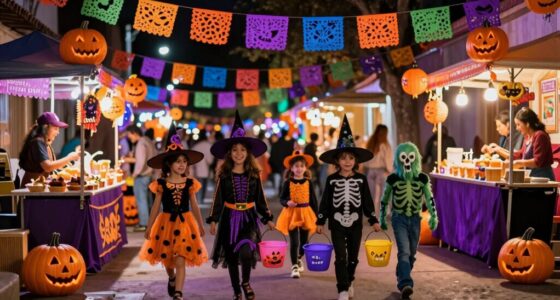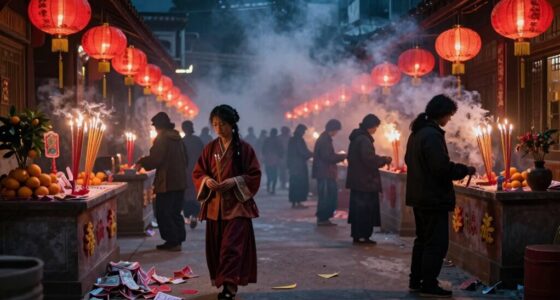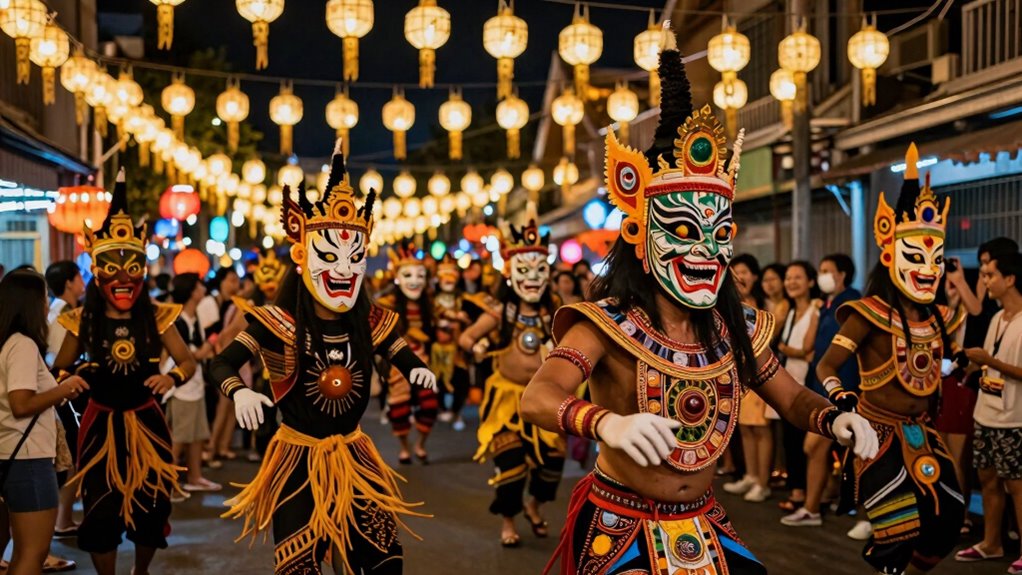

If you think of Halloween’s spooky masks and costumes, you’d find an exciting parallel in Thailand’s Phi Ta Khon festival. Here, vibrant masks, exaggerated features, and lively dance create a surreal, festive atmosphere that resembles a colorful haunted celebration. It’s a lively mix of tradition, community, and storytelling that keeps ancient spirits and legends alive. To discover how this unique event blends ancient customs with a fun, spooky vibe, keep exploring what makes Phi Ta Khon so special.

Get decor and gifts delivered free — and shop member deals
- Fast, free delivery on millions of items
- Access to Prime Big Deal Days deals on October 6–7
- Prime Video, Amazon Music and more included
Key Takeaways
- Phi Ta Khon features elaborate, colorful masks that resemble Halloween costumes, creating a playful, spooky atmosphere.
- The festival includes lively dancing, music, and costumes that evoke a mysterious, otherworldly vibe similar to Halloween celebrations.
- Masks symbolize spirits or mischievous ghosts, blending cultural storytelling with spooky, Halloween-like themes.
- Both events emphasize community participation, tradition, and the celebration of spirits and ancestors.
- Phi Ta Khon’s vibrant costumes and masks evoke a festive, costume-party feel akin to Halloween festivities.
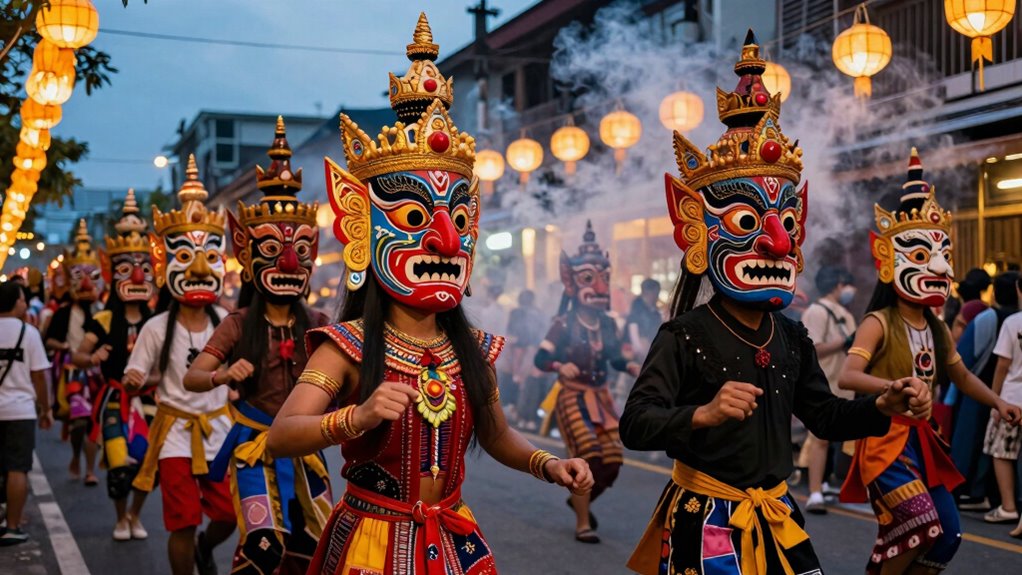
Have you ever wondered what it’s like to witness a vibrant, eccentric celebration that blends ancient traditions with lively spectacle? If you find yourself in Thailand during the Phi Ta Khon Festival, you’ll discover that this event is unlike anything else. It’s a wild, colorful affair packed with masks, music, dancing, and a deep cultural significance that stretches back centuries. As you step into this lively scene, you realize that the festival isn’t just about fun – it’s a way for locals to connect with their history, spirits, and community.
Experience Thailand’s vibrant Phi Ta Khon Festival—masks, music, and centuries-old traditions celebrating community and spirits.
The heart of the festival lies in the traditional costumes, especially the masks that participants wear. These masks are more than just decorative; they’re steeped in symbolism, representing spirits, ancestors, or mischievous ghosts. Crafted from wood, paper, and vibrant paints, each mask is a work of art, often exaggerated with large eyes, wide mouths, and intricate patterns. When you see someone donning one of these traditional costumes, you get a real sense of the cultural significance behind the spectacle. The costumes serve as a bridge to the spirits, inviting protection and good fortune, while also serving as a form of storytelling. Every mask carries a story, and each wearer becomes a living piece of history, embodying the legends and beliefs of the community. Additionally, the traditional artistry involved in mask-making helps preserve these cultural practices for future generations. These intricate masks also reflect the community’s cultural identity, which is celebrated through the craftsmanship and storytelling. This dedication to cultural preservation ensures that these traditions continue to thrive in modern times.
As the festival kicks off, you’ll notice that the costumes are not only visually striking but also play an essential role in the festivities. Participants dance through the streets, their masks shimmering under the sunlight, creating a surreal, almost otherworldly atmosphere. The lively processions, music, and dance are all deeply rooted in tradition, designed to entertain spirits and ward off evil. The costumes and masks help to blur the lines between the living and the spirits, turning the streets into a vibrant canvas of cultural expression. You’ll feel the energy of the crowd, the rhythm of drums, and the infectious joy that fills the air. Connecting with the cultural heritage of Thailand, this festival showcases how traditional costumes and masks serve as vital symbols that preserve stories and beliefs across generations. The cultural significance of the masks is reinforced through community participation and shared storytelling, making the event a collective celebration of identity.
Experiencing the Phi Ta Khon Festival gives you a rare glimpse into Thai cultural heritage. It’s a celebration that honors the past while encouraging community bonding and joy. The traditional costumes and masks aren’t just costumes; they’re powerful symbols that keep ancient stories alive. Watching this festival unfold, you understand that it’s more than just a party – it’s a lively testament to the resilience of tradition and the importance of cultural identity.
As an affiliate, we earn on qualifying purchases.
Frequently Asked Questions
What Is the Origin Story of Phi Ta Khon?
You learn that Phi Ta Khon’s origin story is rooted in a blend of historical significance and cultural symbolism. It commemorates a legendary story from the 18th century, where villagers believed a ghostly spirit helped them defeat a tyrannical ruler. Over time, this event evolved into a lively festival featuring colorful masks and costumes, symbolizing spirits and the cycle of life and death, making it an essential cultural tradition in Thailand.
How Do Participants Create Their Intricate Masks?
You craft your intricate masks through a mix of traditional mask craftsmanship and creative artistry, often using materials like bamboo, paper, and vibrant paints. The process involves shaping, carving, and decorating, reflecting cultural symbolism and local legends. You might add details like feathers or beads to enhance the mask’s significance. This craftsmanship not only showcases skill but also preserves cultural stories, making each mask a meaningful piece of the festival.
Are There Specific Rituals or Ceremonies Involved?
You’re immersed in lively rituals where locals don vibrant masks and costumes, transforming into whimsical spirits during the festival. These ceremonies often include traditional dances and offerings, blending costume design with spiritual symbolism. As you wander through the festivities, savor festival food that complements the colorful atmosphere. The rituals create an engaging sense of community, where every mask and dance celebrates ancestors, inviting you to feel the lively, mystical essence of Phi Ta Khon.
When Is the Best Time to Visit the Festival?
You should visit during the festival’s peak, usually in June or July, to experience the full excitement. Travel tips include arriving early to get the best vantage points, especially for photography opportunities of vibrant masks and traditional dances. Be prepared for lively street parades and enthusiastic crowds. Wearing comfortable shoes and a camera with extra batteries will help you capture the colorful, energetic atmosphere and make the most of your trip.
How Has the Festival Evolved Over the Years?
You’ll notice that the festival has evolved from traditional roots to include modern adaptations, blending old customs with contemporary influences. Its cultural significance remains strong, celebrating community spirit and spiritual beliefs. Over the years, you’ll see more elaborate masks, lively performances, and creative costumes, making the festival more vibrant and accessible. This evolution helps preserve tradition while attracting visitors worldwide, ensuring Phi Ta Khon stays relevant and exciting for future generations.
Conclusion
As you experience Thailand’s Phi Ta Khon Festival, you’ll find it’s more than just a colorful celebration—it’s a vibrant tradition that draws thousands annually, with an estimated 10,000 visitors flocking to Dan Sai each year. This lively event blends ancient customs with playful masks, creating an atmosphere that’s truly unforgettable—almost like Halloween on steroids. So, if you’re craving a unique cultural adventure full of fun, history, and striking visuals, this festival should definitely be on your travel list.
Evergreen bestsellers Picks
bestsellers
As an affiliate, we earn on qualifying purchases.