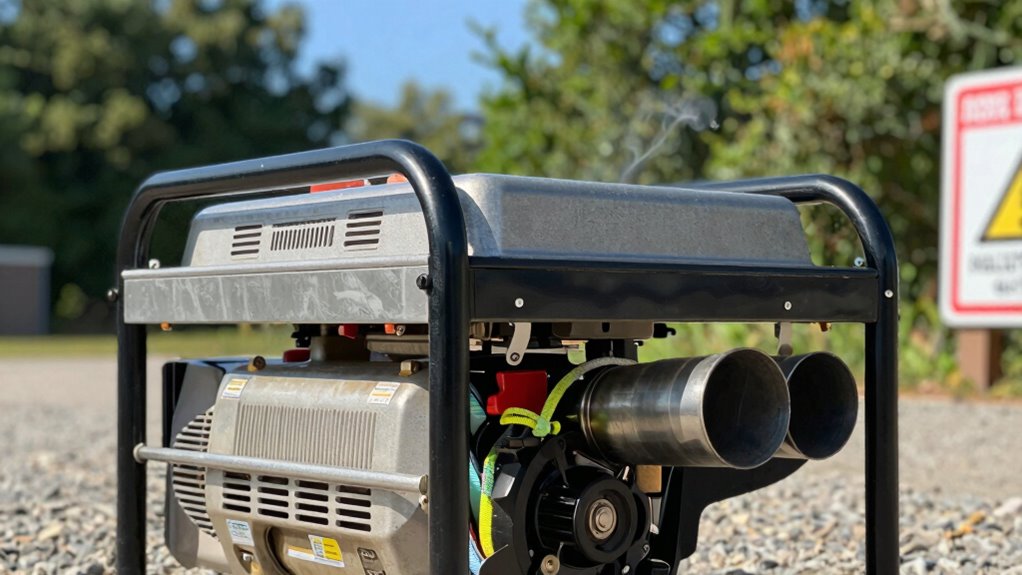

You must operate your generator outside, at least 20 feet away from your home, to prevent carbon monoxide buildup. Never run it indoors, in garages, or enclosed spaces, as CO is odorless and deadly. Always use a carbon monoxide detector nearby to alert you of rising gas levels. Proper ventilation and maintenance are essential to stay safe. Keep these safety rules in mind—if you continue, you’ll discover even more vital tips to protect yourself and your family.

Get decor and gifts delivered free — and shop member deals
- Fast, free delivery on millions of items
- Access to Prime Big Deal Days deals on October 6–7
- Prime Video, Amazon Music and more included
Key Takeaways
- Always operate generators outdoors at least 20 feet away from the home to prevent CO buildup indoors.
- Use carbon monoxide detectors near living areas to alert you of dangerous CO levels.
- Never run a generator in enclosed spaces like garages or basements, even if doors are open.
- Ensure proper ventilation and regularly check exhaust systems to prevent dangerous gas accumulation.
- Follow safety protocols for fuel storage and generator maintenance to reduce the risk of CO poisoning.
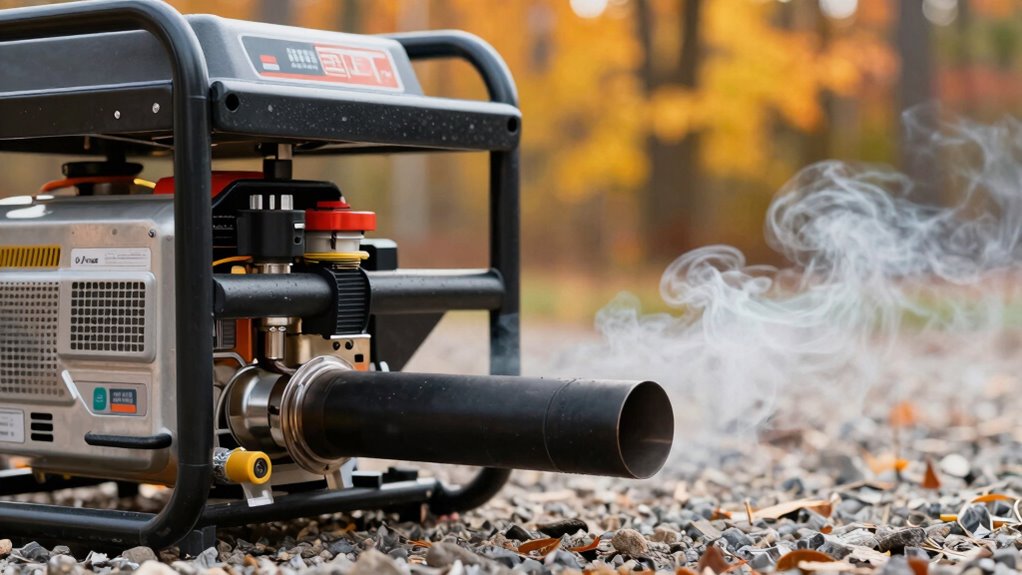
Generators are valuable tools for providing backup power during outages, but they can pose serious safety risks if not used properly. One of the most critical hazards is carbon monoxide poisoning, which can happen quickly and silently if you don’t follow safety protocols. Before operating your generator, you need to understand the importance of proper fuel storage and how it relates to emergency preparedness. Storing fuel safely prevents accidents, fires, and explosions, which could compound the dangers during an already stressful power outage.
Proper fuel storage and safety precautions are essential to prevent fires, explosions, and carbon monoxide poisoning during power outages.
When it comes to fuel storage, never keep gasoline or other flammable liquids inside your home or in unapproved containers. Always use approved, clearly labeled containers designed for fuel storage. Store fuel outdoors in a cool, well-ventilated area away from your generator, house, or any source of heat or sparks. This reduces the risk of accidental ignition. Remember, fuel has a limited shelf life, so regularly check and replace old or contaminated supplies. Proper fuel management is part of your overall emergency preparedness plan, ensuring that you have enough fuel for your generator without creating additional hazards. Being aware of fuel shelf life helps prevent using stale or unsafe supplies. Additionally, understanding fire safety protocols related to fuel storage can further reduce risks. Maintaining awareness of fuel storage guidelines can also help prevent mishandling or unsafe practices.
Your preparedness also involves knowing where and how to operate your generator safely. Never run a generator indoors, in garages, basements, or enclosed spaces—even if doors and windows are open. Carbon monoxide, an odorless, colorless gas, can fill these spaces quickly and cause poisoning within minutes. Always place your generator outside, at least 20 feet away from your home, with the exhaust directed away from windows, doors, and vents. Using a carbon monoxide detector near your living area adds an extra layer of safety, alerting you if CO levels rise unexpectedly. Additionally, understanding proper ventilation is essential to prevent dangerous buildup of gases. Proper ventilation not only involves placement but also regular checks to ensure vents remain unobstructed and functioning correctly. It’s also important to keep up with generator maintenance, which can help prevent malfunctions that might lead to dangerous emissions. Ensuring the proper functioning of your generator’s exhaust system and ventilation pathways is a crucial part of safety.
generator carbon monoxide detector
As an affiliate, we earn on qualifying purchases.
As an affiliate, we earn on qualifying purchases.
Frequently Asked Questions
Can Portable Generators Be Safely Used Indoors?
You should never use portable generators indoors. Proper indoor ventilation is essential because generators produce dangerous carbon monoxide fumes that can quickly accumulate in enclosed spaces. Always place your generator outdoors, away from windows and vents, to prevent fumes from entering your home. Correct generator placement guarantees safety by minimizing carbon monoxide risks, and maintaining good outdoor ventilation helps keep everyone safe during power outages.
What Are the Signs of Carbon Monoxide Poisoning?
You might feel dizzy, headache, or nausea—early signs of carbon monoxide poisoning. As symptoms worsen, you could experience confusion, weakness, or chest pain. These health symptoms signal poisoning risks that can be deadly if ignored. Unlike other hazards, carbon monoxide is invisible and odorless, making these signs essential clues. Recognize these symptoms fast, and seek fresh air and medical help immediately to prevent tragic consequences.
How Often Should I Service My Generator?
You should service your generator at least once a year for peak performance and safety. Regular generator maintenance helps identify potential issues early and keeps safety protocols in check, especially regarding carbon monoxide risks. If you use it frequently or in harsh conditions, consider more frequent inspections. Always follow the manufacturer’s guidelines, and if you notice any irregularities, schedule maintenance promptly to prevent dangerous malfunctions.
Are There Specific Distances Recommended for Outdoor Generator Placement?
For outdoor safety, you should place your generator at least 20 feet away from your home or any enclosed area to prevent carbon monoxide buildup. Proper generator placement is essential for safety and efficiency. Always position it on a dry, flat surface, and avoid covered or enclosed spaces to guarantee good ventilation. Staying mindful of these outdoor safety guidelines helps protect you and your loved ones during power outages.
What Safety Gear Should I Use When Operating a Generator?
When operating a generator, you should wear safety gloves, eye protection, and a respirator or mask to protect against fumes. Regular generator maintenance keeps it running safely, while proper fuel safety prevents leaks and fires. Always make certain the generator is on a stable surface, away from windows and vents, and keep a fire extinguisher nearby. Using the right safety gear helps prevent accidents and keeps you safe during power outages.
Conclusion
Think of your generator as a trusted but cautious friend—powerful yet delicate. If you ignore the safety rules, it’s like inviting a storm into your home without warning. Respect its strength, keep it outdoors, and guarantee proper ventilation. By doing so, you’re steering clear of unseen dangers, much like a captain steering a steady ship through treacherous waters. Stay vigilant, and your home remains a fortress, safe and sound amidst any storm.
Halloween Picks
halloween
As an affiliate, we earn on qualifying purchases.