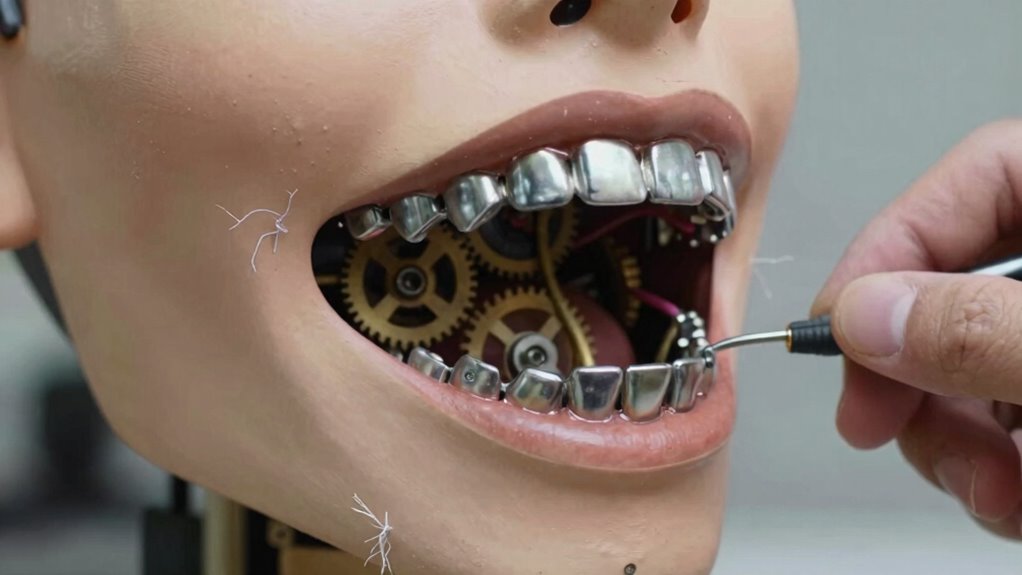

If your animatronic jaw gets stuck, start by turning off and unplugging it to stay safe. Gently inspect the area around the jaw for loose wires, debris, or misaligned parts. Check mechanical components like gears and servos for wear or misalignment, and make sure all connections are secure. If you see any issues, carefully re-align or tighten parts. To learn more about fixing your animatronic jaw properly, keep going for detailed tips and tricks.
Listen free for 30 days with Audible
Thousands of audiobooks and originals — cancel anytime.
As an affiliate, we earn on qualifying purchases.
Key Takeaways
- Turn off and disconnect power before inspecting the jaw to prevent electrical hazards.
- Gently check for obstructions or debris blocking jaw movement and clear carefully.
- Inspect and tighten loose wires or mechanical components causing misalignment.
- Lubricate moving parts to reduce friction and improve jaw functionality.
- Reassemble and test the jaw movement carefully, seeking professional help if needed.

Have you ever wondered how to quickly and effectively fix a malfunctioning animatronic jaw? When it gets stuck, your first instinct might be to panic, but staying calm is key. The issue often stems from a simple mechanical or electrical glitch that can be resolved with some basic troubleshooting. Before rushing into drastic measures, you should consider the importance of proper robot maintenance. Regular inspections and preventive upkeep help prevent these problems from arising in the first place. If your animatronic is part of a costume or display, costume repairs might also be involved, especially if the jaw’s movement is integrated into the costume’s structure.
Start by turning off the animatronic and disconnecting it from power sources. This safety step ensures you don’t accidentally cause further damage or injure yourself. Once powered down, gently examine the area around the jaw. Look for anything obvious, like loose wires, debris, or misaligned components. Sometimes, a simple jam or obstruction can cause the jaw to stick. Clearing any obstructions with care can often restore normal operation without extensive repairs. If the jaw still won’t move, check the mechanical parts—gears, servos, or motors—that drive the jaw’s movement. Over time, these components can wear out or become misaligned. Tightening or realigning these parts may be enough to fix the problem. Additionally, understanding robot maintenance and regularly inspecting your animatronic can help prevent recurring issues. Conducting routine preventive maintenance can also extend the lifespan of your equipment and ensure smooth operation. Incorporating proper lubrication into your maintenance routine can further help reduce wear on moving parts.
Turn off and disconnect the animatronic, then check for loose wires, debris, or misaligned parts around the jaw.
Furthermore, paying attention to the signs of wear can alert you early to potential failures before they become serious issues, saving you time and effort in repairs. If you suspect an electrical issue, carefully inspect the wiring connections. Loose or damaged wires can interrupt power flow, causing the jaw to malfunction. Use a multimeter to test continuity and ensure all connections are solid. Sometimes, electrical problems may be hidden behind panels, so removing covers carefully can reveal underlying issues. For more stubborn problems, it might be necessary to replace a faulty servo or motor. When doing so, remember that proper robot maintenance involves not just fixing the current issue but also inspecting related components to prevent future failures.
In cases where the jaw is part of a costume, ensure that all costume repairs are secure—straps, hinges, or fabric attachments that support the jaw’s movement should be checked and reinforced if needed. This helps maintain the integrity of the costume and prevents similar issues down the line. Additionally, keeping detailed records of repairs and maintenance can help identify patterns and improve overall costume durability. After completing repairs, reassemble everything carefully, reconnect the power, and test the movement. If the jaw still sticks, consult the manufacturer’s guidelines or seek professional help to avoid causing further damage. Taking your time and following these troubleshooting steps keeps the process smooth and safe, helping you fix the animatronic jaw efficiently and avoid unnecessary panic.
As an affiliate, we earn on qualifying purchases.
Frequently Asked Questions
Can I Fix the Jaw Myself Without Professional Tools?
Yes, you can try DIY troubleshooting if you’re comfortable, but be cautious. You likely won’t need professional tools—basic screwdrivers or pliers might suffice. First, turn off the power to avoid injury. Carefully inspect the jaw mechanism for obstructions or loose parts. Gently realign or loosen stuck components. If you’re unsure or the problem persists, it’s best to consult a professional to avoid damaging your animatronic.
How Long Does a Typical Animatronic Jaw Repair Take?
A typical animatronic jaw repair usually takes between one to three hours, depending on the issue’s complexity. You should start with mechanical troubleshooting to identify the problem, but always follow safety precautions to avoid injury. If you’re comfortable with basic repairs, you can attempt the fix yourself, but for more complicated issues, it’s best to consult a professional to guarantee safety and proper functioning.
Are There Safety Risks When Fixing the Jaw?
Yes, there are safety risks when fixing the animatronic jaw. You should always follow safety precautions, like disconnecting power and wearing protective gear, to prevent injury. It’s also wise to familiarize yourself with emergency procedures in case something goes wrong. Being cautious and prepared minimizes risks, ensuring you can fix the issue safely without causing damage to the animatronic or risking personal injury.
What Should I Do if the Fix Doesn’T Work?
If your fix doesn’t work, don’t throw in the towel just yet—think of it as troubleshooting tips guiding you through a maze. Try cost-effective solutions like checking connections or resetting the system. If issues persist, consider consulting a professional to prevent further damage. Remaining calm and methodical keeps your project on track, turning a stuck jaw into a minor hiccup rather than a costly disaster.
Is It Necessary to Replace the Entire Jaw Assembly?
You usually don’t need to replace the entire jaw assembly if it’s stuck. First, focus on cosmetic enhancements and sound calibration to make certain everything aligns properly. Carefully inspect the mechanical parts and lubricate if needed. If the issue persists, consulting a professional for precise adjustments can save you time and money. Replacing the full assembly is a last resort, typically only necessary if there’s significant damage or malfunction.
Conclusion
Remember, even the most stubborn animatronic jaws can be tamed with patience and a gentle touch—think of it as channeling the calm of a seasoned maestro conducting their orchestra. When things seem to grind to a halt, don’t panic; instead, approach with careful hands and a steady mind. Like a wise old storyteller, your calm will guide the repair, turning chaos into harmony and ensuring your show goes on without a hitch.
Fall Picks
fall essentials
As an affiliate, we earn on qualifying purchases.