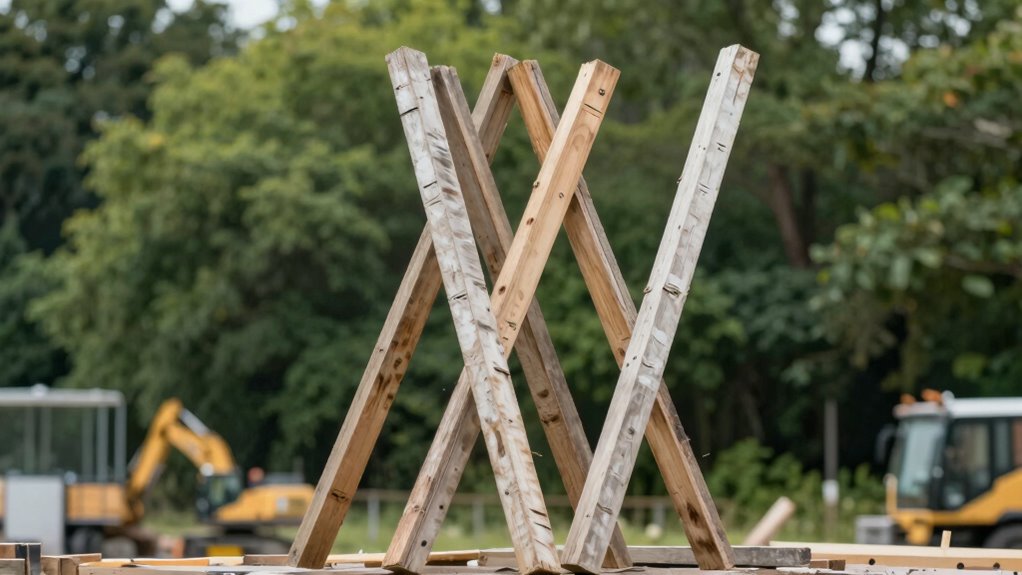

If your tall props keep toppling, the fix is to improve their stability with proper anchoring. Use sturdy bases like steel supports and consider adding guy wires or tension cables to prevent tipping. Guarantee the foundation is solid and tailored to your site’s soil and environmental conditions. Proper installation is key—secure anchors and balanced weight distribution will save you time, money, and safety hazards. Keep going to discover more proven stabilization methods to keep your props upright and secure.

Get decor and gifts delivered free — and shop member deals
- Fast, free delivery on millions of items
- Access to Prime Big Deal Days deals on October 6–7
- Prime Video, Amazon Music and more included
Key Takeaways
- Use heavy, stable bases or anchors tailored to the prop’s size and weight.
- Incorporate guy wires or tension cables for added support without affecting appearance.
- Ensure proper installation with reinforced anchoring systems for maximum stability.
- Assess soil and environmental conditions to select appropriate foundation methods.
- Choose durable materials resistant to weathering to maintain long-term stability.

Have you ever struggled with tall props toppling over on your construction site or during your event setup? It’s a common issue that can cause delays, safety hazards, and added costs. When working with tall props, stability becomes essential, especially if you want to maintain an appealing aesthetic design while guaranteeing safety. The good news is that there’s a reliable stabilization method that addresses these concerns effectively, allowing you to keep your props upright and secure.
The key to a successful stabilization method lies in understanding the importance of material durability. You need solutions that can withstand environmental stresses like wind, vibrations, or accidental bumps without compromising the integrity of your props. Using high-quality materials, such as steel bases or reinforced anchoring systems, guarantees long-lasting support. These materials are designed to resist corrosion and wear, which is essential for outdoor setups or prolonged projects. When you choose durable materials, you’re not only preventing toppling but also extending the lifespan of your props, making your investment worthwhile. Additionally, foundation stability is crucial for ensuring long-term support for tall structures. Properly assessing the soil conditions at your site can further enhance the effectiveness of your stabilization efforts. Incorporating site-specific considerations into your planning can help address unique environmental factors that might affect stability.
Durable materials like steel bases prevent toppling, resist weathering, and extend your props’ lifespan for reliable stability.
Incorporating this stabilization method into your setup is straightforward. You start by selecting sturdy bases or anchors that fit the size and weight of your props. Weight distribution plays a significant role; ensuring the base is heavy enough or properly secured to the ground prevents tipping. You might also consider adding guy wires or tension cables, which provide additional support without detracting from the aesthetic design. These cables can be discreetly integrated, maintaining a clean and professional look while adding extra stability. The combination of durable materials and thoughtful anchoring creates a resilient support system that keeps your tall props steady. Ensuring proper installation techniques further enhances the effectiveness of your stabilization efforts.
As an affiliate, we earn on qualifying purchases.
Frequently Asked Questions
How Long Does It Take to Stabilize Tall Props Effectively?
You can stabilize tall props effectively within a few hours to a day, depending on their height and the stabilization method used. To save costs, opt for cost-effective solutions like guy wires or braces, but always prioritize safety considerations. Make sure the area is secure, and follow proper procedures to avoid accidents. Properly evaluating the situation and using the right stabilization techniques will speed up the process and maintain safety.
Can This Stabilization Method Be Used Outdoors in Windy Conditions?
Yes, this stabilization method can be used outdoors in windy conditions. It enhances wind resistance and improves outdoor stability by securing tall props firmly in place. Make sure to adjust the stabilization techniques according to wind strength, and consider additional anchors if needed. Regularly check the stability during high winds to prevent accidents. Properly implemented, this method keeps your tall props safe and steady outdoors.
What Tools Are Needed for This Stabilization Process?
Think of stabilizing tall props like assembling a sturdy bookshelf; you need the right tools for the job. You’ll typically need braces, anchors, a level, and possibly a drill. Always check equipment compatibility to guarantee the tools fit your specific props. Remember safety precautions—wear gloves, eye protection, and work in a clear area. Proper tools and safety measures make the stabilization effective and keep you safe during the process.
Is There a Weight Limit for the Props This Method Can Support?
Yes, there is a weight limit for the props you can stabilize with this method. Always check the manufacturer’s specifications for the maximum weight capacity, as exceeding it can compromise safety. You should also consider safety considerations, such as the stability of the base and proper placement, to guarantee the props support the load effectively. Staying within the recommended weight limits helps prevent accidents and maintains a safe working environment.
How Often Should the Stabilization Be Checked or Maintained?
You should check your stabilization regularly, ideally before each use, to guarantee safety precautions are maintained. Frequent inspections help identify any signs of wear or looseness in the equipment, preventing accidents. Regular equipment maintenance not only prolongs the life of the stabilization system but also ensures your props stay secure. Make it a habit to verify the stability each time you set up, keeping safety a top priority.
Conclusion
Now that you know how to stabilize tall props, you can prevent them from toppling and keep your project on track. Applying these methods is like hitting two birds with one stone—you save time and avoid costly setbacks. Don’t wait until it’s too late; take action now and give your setup the sturdy support it needs. Remember, a stitch in time saves nine, so address the stability issues before they become bigger problems down the line.
Fall Picks
fall essentials
As an affiliate, we earn on qualifying purchases.