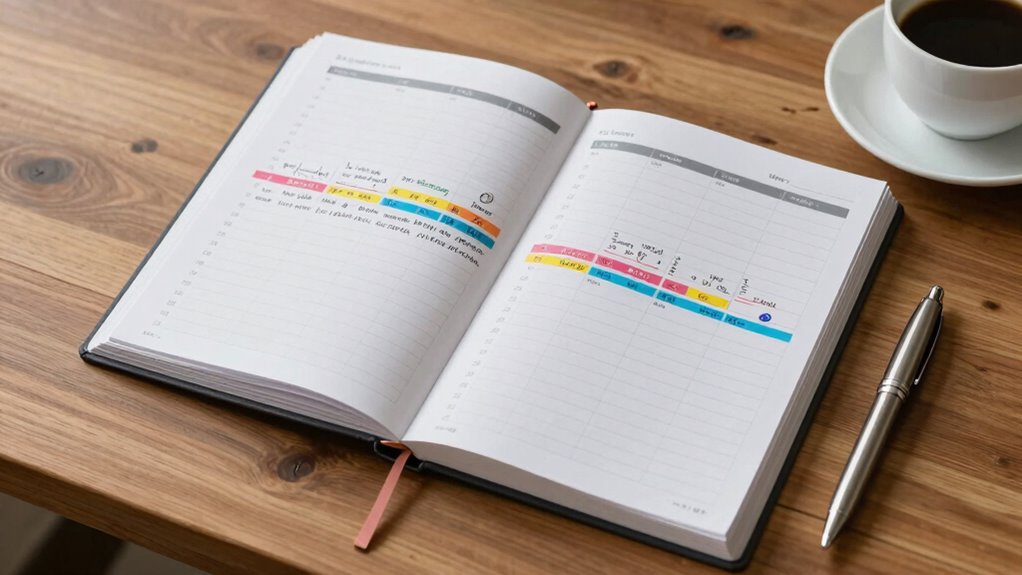

To build a budget timeline backwards from October 31, start by clearly defining your end-of-year financial goal. Then, identify key milestones and deadlines leading up to that date, breaking your plans into manageable monthly tasks. Focus on tracking income, cutting unnecessary expenses, and adjusting your strategies as needed. Incorporate flexibility to adapt to changing circumstances without losing sight of your ultimate goal. Keep going, and you’ll discover how to stay on track effectively.
Key Takeaways
- Define your ultimate financial goal for October 31 to serve as your endpoint.
- Work backward month-by-month, setting smaller milestones to track progress toward that goal.
- Identify key deadlines, such as bill payments or savings targets, within each month.
- Incorporate flexibility by allowing adjustments based on changing circumstances or new opportunities.
- Track cash flow and expenses regularly to ensure alignment with your backward-planned timeline.

Creating a budget timeline helps you stay organized and guarantees you meet your financial goals. When you plan backwards from October 31, you gain clarity on what needs to be done to finish the year strong. Starting at the end of your timeline, you can identify key milestones, deadlines, and targets to hit along the way. This approach keeps you focused and ensures that you allocate enough time for necessary adjustments. Incorporating Free Floating concepts allows for greater flexibility in adjusting your plan as new financial opportunities or challenges arise. To build this timeline effectively, begin by pinpointing your ultimate financial goal for October 31. Maybe it’s saving a specific amount, paying off debt, or hitting a certain investment milestone. Once you’ve set that target, work backward month by month, breaking down what you need to accomplish each period. This method allows you to see the big picture and understand how daily and weekly actions contribute to your end goal. It also helps you stay flexible, making adjustments as your circumstances change without losing sight of your overall objective.
A critical aspect of creating this timeline is establishing solid cash flow strategies early on. You want to ensure your income is optimized and your expenses are manageable. Consider how much money is coming in each month and identify ways to increase cash flow if needed—such as side gigs or freelance work. Simultaneously, develop expense tracking techniques to monitor where every dollar goes. By keeping detailed records of your spending, you can spot patterns, eliminate unnecessary costs, and free up funds to accelerate your progress toward your goals. These techniques provide real-time insights, helping you stay on track and avoid surprises that could derail your timeline.
Frequently Asked Questions
How Do I Adjust My Timeline for Unexpected Expenses?
To adjust your timeline for unexpected expenses, reevaluate your saving strategies and identify which expense categories need flexibility. Allocate extra funds to cover surprises without disrupting your overall budget. Consider postponing non-essential expenses or cutting back temporarily on discretionary spending. Regularly review your budget, and if needed, build an emergency fund to buffer future surprises. This proactive approach keeps your finances resilient and ensures you’re prepared for any unforeseen costs.
What Tools Can Help Me Track My Budget Backwards?
Think of your budget as a GPS guiding your cash flow journey. Tools like YNAB or Mint serve as your navigation apps, helping you track expenses across categories and see how your money flows backward from October 31. They let you set goals, monitor spending, and adjust as needed. Using these tools keeps your financial path clear, ensuring you stay on course toward your end-of-year budget goals.
How Often Should I Review and Revise My Budget Plan?
You should review your budget plan monthly to stay on track and catch any issues early. During these reviews, revise your plan as needed, especially if your income or expenses change. Incorporate emergency planning into your revisions by setting aside funds for unexpected costs. Regular check-ins help you stay aligned with your financial goals, allowing you to adjust your budget proactively and make certain you’re prepared for unforeseen expenses.
What Are Common Pitfalls When Building a Backwards Budget?
When building a backwards budget, you might overlook cash flow management or underestimate expenses, leading to cash shortages. You could also focus too much on debt reduction without accounting for irregular costs, causing imbalance. A common pitfall is not adjusting your plan as circumstances change, which hampers progress. To avoid these, regularly review your budget, stay flexible, and prioritize both cash flow stability and debt reduction to stay on track.
How Can I Prioritize Expenses in My Backwards Timeline?
Imagine finding a forgotten note with your priorities—this coincidence can spark your focus. To prioritize expenses in your backwards timeline, start with priority planning, identifying essential costs first. Use expense categorization to organize items by necessity, ensuring key bills like rent or utilities get top attention. This method streamlines your budgeting process, helping you allocate funds efficiently and avoid overspending on less critical expenses.
Conclusion
By working backwards from October 31, you’ve set a clear roadmap to meet your financial goals. Think of your timeline as a GPS guiding you through each milestone, keeping you on track and focused. Remember, a well-planned budget is like a sturdy bridge—connecting your current finances to your future dreams. Stay committed, adjust as needed, and watch your financial journey unfold smoothly. You’ve got this—your path to financial success is within reach!