
To prevent flicker and failure with DMX dimmers, guarantee proper grounding and load management. Check wiring for damage and make sure connections are tight. Use circuit protection devices like ground fault interrupters, and avoid overloading circuits by calculating total wattage of connected fixtures. Proper circuit distribution and regular maintenance also boost safety and reliability. Following these safety rules keeps your system stable and prevents electrical issues, so there’s always more to discover for a smooth setup.
Listen free for 30 days with Audible
Thousands of audiobooks and originals — cancel anytime.
As an affiliate, we earn on qualifying purchases.
Key Takeaways
- Proper grounding of DMX dimmers ensures a safe path for electrical faults, reducing flickering and equipment failure.
- Overload protection prevents exceeding device capacity, minimizing flicker caused by electrical stress.
- Regular inspection of wiring connections avoids loose or damaged wires that can lead to flickering.
- Effective circuit management distributes loads evenly, preventing overloads that cause dimmer flicker or failure.
- Incorporating safety devices like ground fault protection ensures quick disconnection during faults, maintaining system stability.
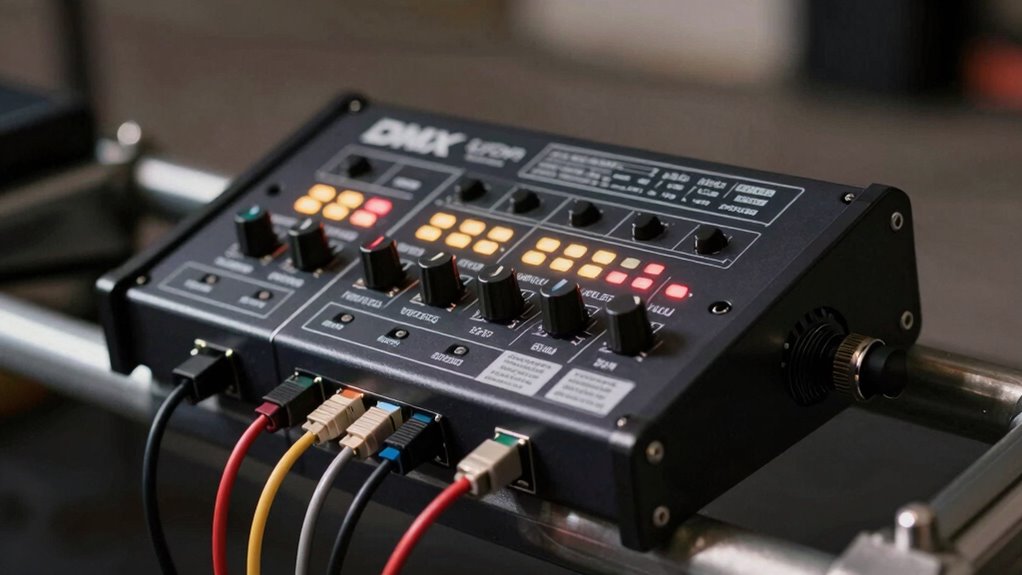
When working with DMX dimmers, safety isn’t just a suggestion—it’s a critical responsibility. These devices control lighting setups, but if you overlook key safety protocols, you risk flickering lights, equipment failure, or even personal injury. One of the most fundamental safety rules you need to follow involves ensuring proper electrical grounding. Proper grounding creates a safe path for stray electrical currents, preventing shocks and reducing the risk of damage caused by electrical faults. Always verify that your dimmer and associated wiring are correctly grounded before powering up your setup. Neglecting grounding not only jeopardizes your safety but also increases the chances of flickering lights, which can be distracting or even hazardous during performances or events. Additionally, understanding smart home technology insights can help you implement more advanced safety features in your lighting system.
Prioritize proper grounding to ensure safety and prevent flickering or equipment failure during your lighting setup.
In addition to grounding, overload protection is essential to prevent damage to your dimmer and connected equipment. Overloading occurs when the electrical load exceeds the device’s capacity, leading to overheating or failure. To avoid this, you must calculate the total wattage of all lighting fixtures connected to a single dimmer and ensure it stays within the manufacturer’s specified limits. Many DMX dimmers come equipped with built-in overload protection, but it’s still your responsibility to monitor the load. If your system is overloaded, the dimmer may trip, shutting down to prevent damage. This safety feature not only protects your equipment but also reduces the risk of fires or electrical failures that could cause injury or property damage. Regular maintenance and inspection of your electrical system can help identify potential issues before they lead to problems. Incorporating proper circuit management techniques can also help distribute loads evenly and prevent overloads. Implementing ground fault protection devices can further enhance safety by quickly disconnecting power during electrical faults.
Furthermore, always inspect your wiring and connections for signs of wear or damage before use. Loose or frayed wires can compromise electrical grounding and overload protection, increasing the risk of flickering or failure. Use high-quality cables and connectors, and regularly maintain your equipment to ensure everything is in optimal condition. When setting up your lighting system, avoid daisy-chaining multiple devices without proper circuit protection, as this can overload the system and cause flickering issues or complete failure. Proper circuit management is vital for maintaining a safe and reliable lighting setup.
Ultimately, adhering to the safety rule that emphasizes proper electrical grounding and overload protection keeps your lighting setup reliable and safe. It minimizes flicker, prevents equipment damage, and protects everyone involved. Remember, safety isn’t just about avoiding technical issues—it’s about ensuring a secure environment for your crew and audience. By taking these precautions seriously, you’ll create a seamless lighting experience that’s both stunning and safe.

DMX 4-Channel Dimmer Pack with DMX512 Protocol Compatible with High-Voltage Halogen and LED Bulbs, 20A Max, Silicon Box for Stage Lighting Control
- Compatibility: Works with high-voltage halogen and LED bulbs
- Operation Modes: Supports chaser and DMX dimmer modes
- Channels and Sockets: Four channels with eight sockets
As an affiliate, we earn on qualifying purchases.
As an affiliate, we earn on qualifying purchases.
Frequently Asked Questions
How Often Should DMX Dimmers Be Inspected for Safety?
You should inspect your DMX dimmers for safety at least once every six months. Regular maintenance guarantees electrical compatibility and helps prevent flicker or failure. During inspections, check connections, wiring, and control modules for signs of wear or damage. Consistent maintenance frequency keeps your lighting system reliable and safe, reducing potential hazards. Staying proactive with safety checks is essential for peak performance and longevity of your DMX dimmers.
Can DMX Dimmers Be Used Outdoors Safely?
Yes, you can use DMX dimmers outdoors safely if they have a weatherproof design and are intended for outdoor installation. Make sure to select models specifically rated for outdoor use, which feature proper sealing against moisture and dust. Also, double-check that all connections are secure and protected from the elements. Properly installed outdoor DMX dimmers guarantee safe operation, prevent flickering, and minimize failure risks in challenging weather conditions.
What Are Common Signs of a Failing DMX Dimmer?
Think of your dimmer as the heartbeat of your lighting setup; if it’s failing, signs show like flickering shadows or uneven brightness. You’ll notice compatibility issues, with lights not syncing properly, causing inconsistent lighting. Dimming becomes choppy, and the system may respond slowly or unpredictably. These signs warn you that your dimmer’s liveliness is waning, risking lighting failure. Keep an eye out to preserve perfect lighting synchronization and avoid unexpected dark spots.
Do DMX Dimmers Require Special Grounding?
Yes, DMX dimmers require proper grounding to guarantee safety and reliable operation. You should follow grounding requirements carefully, such as connecting to a grounded electrical system and using grounding conductors as specified by the manufacturer. This helps prevent electrical shocks, reduces interference, and minimizes flickering or failure. Always adhere to safety precautions, including inspecting grounding connections regularly, to keep your setup safe and functioning smoothly.
Are There Specific Certifications for Safe DMX Dimmer Use?
Think of certifications as the traffic lights guiding your journey—without them, you’re risking chaos. Yes, there are specific certifications for safe DMX dimmer use, like UL, ETL, or CE, which guarantee electrical compliance and safety standards. These certification standards verify that your dimmers meet essential safety requirements, reducing risks of flicker or failure. Always check for these labels before installing or operating your equipment to keep your lighting setup safe and reliable.
Conclusion
Remember, safety first keeps the show running smoothly. By following the DMX dimmers safety rule, you prevent flicker and avoid failures, ensuring your lighting stays flawless. Think of it like a well-oiled machine—when you maintain it properly, everything works seamlessly. Don’t overlook this simple step; it’s the secret to a perfect performance. As the saying goes, “A stitch in time saves nine.” Stay vigilant, stay safe, and let your lights shine bright!
Grilling season Picks
grills
As an affiliate, we earn on qualifying purchases.