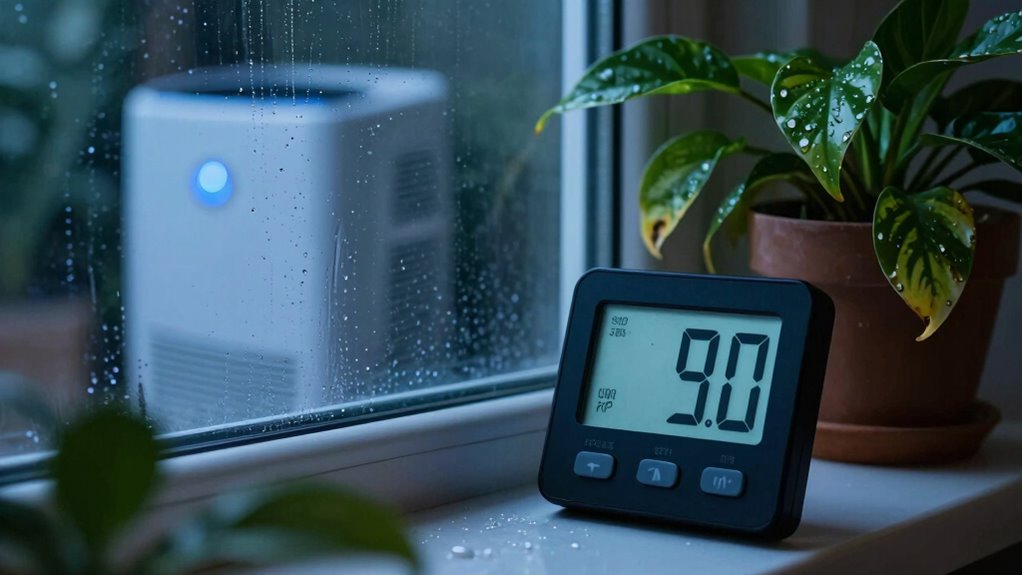

High indoor humidity can quietly foster mold growth, which harms your health and air quality. To control it, use dehumidifiers and maintain humidity levels between 30-50%. Ventilate damp areas, fix leaks, and seal cracks to prevent moisture buildup. Regularly clean appliances like dehumidifiers and guarantee proper airflow with exhaust fans or open windows when possible. If you want to keep your space safe and mold-free, there’s more you should know to stay ahead of these hidden risks.

Get decor and gifts delivered free with Prime
- Fast, free delivery on millions of items
- Prime Video, Amazon Music and more included
- Member-only deals all year
Key Takeaways
- Maintain indoor humidity between 30-50% using dehumidifiers and ventilation to prevent mold growth.
- Fix leaks and seal gaps around windows, doors, and pipes to reduce moisture intrusion.
- Use exhaust fans in bathrooms, kitchens, and laundry areas to vent humid air outside.
- Regularly clean and empty dehumidifiers to ensure optimal moisture removal.
- Inspect moisture-prone areas regularly and address dampness immediately to prevent health hazards.
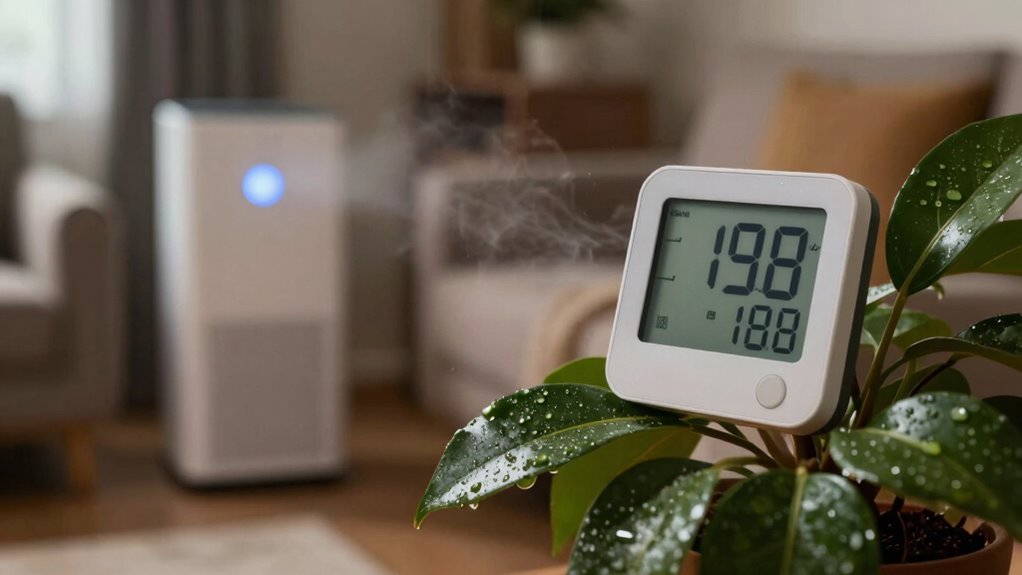
Humidity might seem harmless, but it can quietly sabotage your health and home if left unchecked. When the air around you holds too much moisture, it creates the perfect environment for mold growth, which isn’t just an aesthetic issue but a serious health hazard. Mold spores thrive in damp, humid conditions, and once they start to develop, they can quickly spread, contaminating surfaces and indoor air. This proliferation of mold increases your exposure to allergens, leading to respiratory problems, allergies, and asthma flare-ups. If you notice a musty smell or see visible mold patches, it’s a clear sign that humidity levels are too high, and immediate action is needed.
Controlling humidity is vital to prevent these issues from escalating. You can start by using a dehumidifier, which actively pulls excess moisture from the air, maintaining a healthy indoor humidity level—ideally between 30 and 50 percent. Regularly emptying and cleaning your dehumidifier ensures it works efficiently and doesn’t become a breeding ground for bacteria or mold itself. Ventilation also plays an essential role; make sure your bathrooms, kitchens, and laundry areas are adequately ventilated. Use exhaust fans or open windows when cooking, showering, or doing laundry to reduce moisture buildup. Installing exhaust fans in these areas helps vent humid air outside, preventing it from settling and increasing indoor moisture.
Another simple yet effective step is to fix leaks and seal any cracks or gaps around windows, doors, and pipes. Water intrusion from leaks can greatly raise indoor humidity and provide the damp environment mold needs to thrive. Keep an eye on areas prone to moisture, like basements and crawl spaces, and address any water issues promptly. Proper ventilation is crucial, as it helps remove excess moisture and improve air circulation. Maintaining good indoor air circulation by opening windows when weather permits can help dilute indoor humidity and prevent allergen proliferation. Using air conditioners can also help dehumidify the air, especially during hot, humid days, providing relief and reducing mold risks. Additionally, selecting humidity control devices can help maintain optimal moisture levels automatically, reducing the need for manual adjustments. Being aware of and managing indoor humidity not only protects your health but also supports overall biodiversity by reducing mold spores and other airborne allergens that can affect surrounding environments.
Popular right now

Ninja Foodi 8-Quart DualZone 6-in-1 Air Fryer, Grey (DZ201)

Ninja Foodi Smart Dual Heat Air Fry Oven, 13-in-1, Silver (SP351)

Shark PowerDetect Corded Stick Vacuum with HEPA Filtration, Purple (HZ4001AMZ)
As an affiliate, we earn on qualifying purchases.
Frequently Asked Questions
How Does Humidity Affect Indoor Air Quality?
Humidity substantially impacts your indoor air quality by promoting mold growth and dust mites, which can worsen allergies and respiratory issues. Using air purification systems with humidity sensors helps you maintain ideal levels, preventing excess moisture. By controlling humidity, you reduce airborne pollutants and improve overall air quality, creating a healthier environment. Regularly monitoring with humidity sensors ensures you keep moisture levels in check and avoid the silent dangers of high humidity.
Can Humidity Levels Impact Allergy Symptoms?
Think of your allergy symptoms as a wildfire, sparked by allergy triggers. Humidity fluctuations act like gusts of wind, spreading the flames and worsening your symptoms. When humidity levels are too high or too low, mold, dust mites, and mold spores thrive, intensifying allergies. Keeping humidity steady around 40-50% helps tame these triggers, reducing flare-ups and bringing relief, just like putting out the fire before it spreads.
What Are the Signs of Excessive Indoor Humidity?
You’ll notice signs of excessive indoor humidity through mold growth on walls or ceilings and a persistent musty smell. Dust mites thrive in humid environments, so increased allergy symptoms and respiratory issues may also appear. You might see condensation on windows or feel dampness in your home. These indicators signal that humidity levels are too high, making it essential to reduce moisture to prevent mold and dust mites from taking hold.
How Do Different Climates Influence Humidity Control?
You’re swimming against the tide with climate zones, which heavily influence humidity control. In humid areas, you need dehumidifiers and proper ventilation, while dry climates may require humidifiers to prevent dryness. Adapt your humidity management strategy based on your local climate zone. Remember, what works in a temperate zone might not suit a tropical or arid environment. Tailoring humidity adaptation keeps your indoor air comfortable and safe, no matter the weather outside.
Are There Natural Ways to Reduce Indoor Humidity?
Yes, you can naturally reduce indoor humidity by using natural dehumidifiers like charcoal or silica gel, which absorb moisture without chemicals. Additionally, placing indoor plants such as peace lilies or Boston ferns helps maintain humidity levels and improves air quality. Make certain of good ventilation and fix leaks to prevent excess moisture. These methods work well together, creating a healthier environment without relying on mechanical dehumidifiers.
Conclusion
By mastering humidity, you’re steering clear of its silent destruction—like a captain steering through foggy waters, you keep your home’s foundation steady and your belongings safe. Think of humidity as an invisible thief sneaking into your space, slowly stealing comfort and integrity. When you control it, you shield your sanctuary from unseen damage, letting your home breathe freely and stay resilient. Take charge now, and breathe easy in a fortress built on balance and awareness.