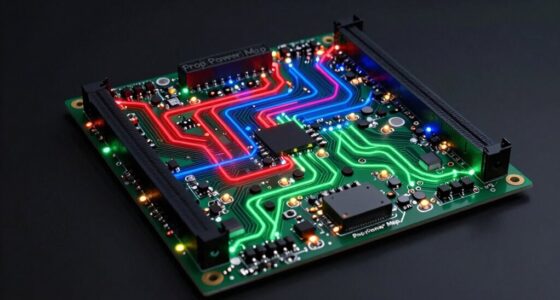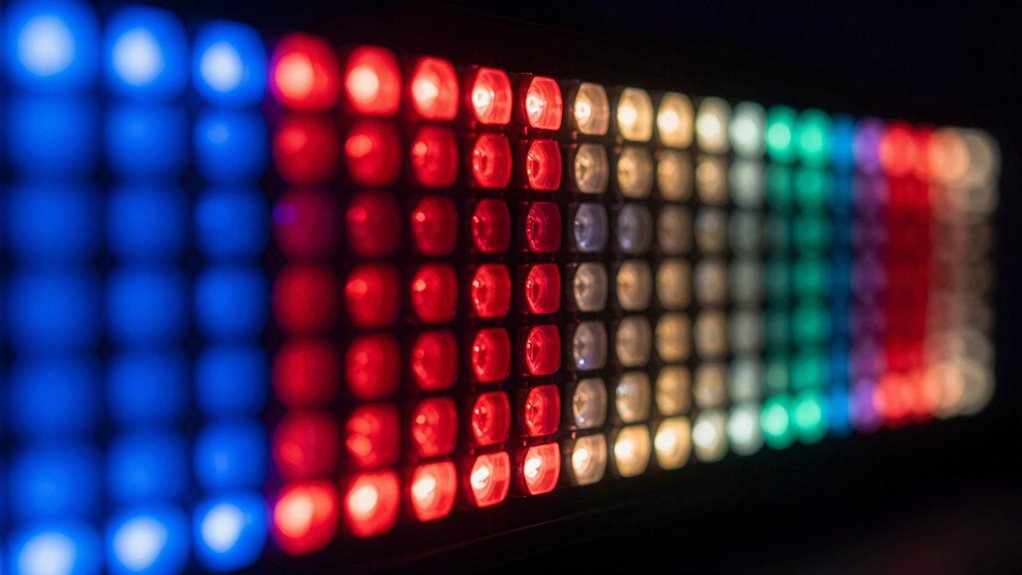

Power injection adds energy to maintain voltage levels along your network, keeping pixels lit and functioning properly. When power injection is insufficient, voltage drops halfway down the line, causing pixels to flicker or fail. This often happens if batteries are depleted or system design isn’t optimized. Proper monitoring and management help prevent these issues and guarantee consistent performance. Keep exploring to understand how to improve your system’s reliability and avoid pixel failures.

Get decor and gifts delivered free with Prime
- Fast, free delivery on millions of items
- Prime Video, Amazon Music and more included
- Member-only deals all year
Key Takeaways
- Inadequate power injection causes voltage drops, leading to pixel failures halfway down the line.
- Poor system design or overloads result in insufficient energy reaching downstream pixels.
- Battery inefficiency or depletion reduces available power, causing signal loss at distant pixels.
- Lack of proper monitoring prevents early detection of voltage issues, increasing failure risk.
- Proper system balancing and maintenance ensure consistent power delivery, preventing halfway pixel failures.
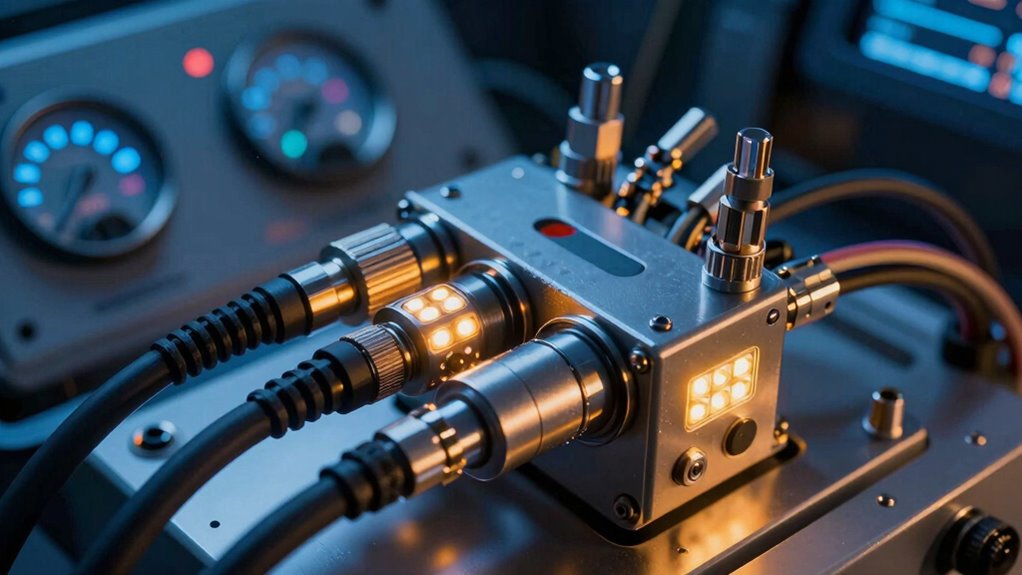
Power injection is a fundamental concept in electrical systems, referring to the process of adding energy into a network to maintain voltage levels or support power flow. When you inject power into a line, you’re essentially boosting the electrical energy to guarantee the system remains stable and efficient. This process plays a critical role in voltage regulation, which is essential for keeping your equipment operating within safe and optimal parameters. Without proper power injection, voltage levels can fluctuate, leading to potential malfunctions or damage to sensitive devices. You need to carefully control how much power is injected to prevent overvoltage or undervoltage conditions, both of which can cause significant issues in your system.
Power injection stabilizes voltage and ensures efficient, safe system operation.
In the context of power injection, battery efficiency becomes especially important. Batteries are often used as sources of injected power, providing quick and reliable energy support when the grid is under stress or experiencing fluctuations. When you utilize batteries for power injection, their efficiency directly impacts the effectiveness of the entire system. If your batteries aren’t operating efficiently—perhaps due to aging, improper charge cycles, or suboptimal management—you won’t be able to deliver the required energy consistently. This inefficiency can cause voltage regulation problems, leading to unstable power delivery and potentially harming connected devices. Hence, maintaining high battery efficiency is essential for guaranteeing that power injections are both effective and sustainable over time. Proper battery management ensures that energy is stored and released optimally, reducing waste and prolonging battery lifespan.
Moreover, when you’re injecting power into a line, you need to take into account the line’s capacity and the overall network design. Injecting too much power can overload the system, causing voltage spikes that might damage hardware or disrupt other parts of the network. Conversely, insufficient power injection can result in voltage drops, especially halfway down the line where resistance and load may be higher. This is precisely why understanding the dynamics of power injection, including how it influences voltage regulation and battery efficiency, is essential. You want to achieve a balance where the right amount of energy is injected to keep voltage stable without risking system overload or energy wastage. Additionally, system design plays a crucial role in ensuring that power injection is optimized for the specific layout and load conditions of your network. Awareness of network capacity can help prevent system failures caused by overloading or undersupply.
Furthermore, proper monitoring systems can help detect issues like voltage drops or inefficient power injection before they cause system failures. Regularly tracking system performance allows for adjustments that maintain stability and prevent pixel failures, especially in critical points halfway down the line. In some cases, you may also need to troubleshoot why pixels—or parts of your system—fail halfway down the line. Often, these failures are linked to inadequate power injection, poor voltage regulation, or depleted batteries. When the line’s voltage drops or the batteries can’t supply enough energy, the pixels lose their signal or stop functioning altogether. By understanding how power injection works and optimizing your battery efficiency, you can prevent these halfway failures, ensuring a consistent and reliable power supply from start to finish.
As an affiliate, we earn on qualifying purchases.
Frequently Asked Questions
How Do Power Injections Differ Between LED and LCD Displays?
You’ll find that power injections differ between LED and LCD displays mainly in how they handle power distribution and voltage regulation. LEDs require more precise power injection points to guarantee consistent brightness, as poor distribution causes flickering or pixel failure. LCDs, on the other hand, are less sensitive but still benefit from proper voltage regulation to prevent dimming or image issues. Proper power injection ensures stable operation for both display types.
What Are Common Signs of Inadequate Power Injection?
You might notice subtle signs of inadequate power injection, like uneven brightness or flickering pixels, which hint at issues in power distribution. Poor voltage regulation often causes some areas to appear dimmer or overly bright. These visual cues suggest your system isn’t receiving consistent power, leading to pixel failures. Addressing these signs early guarantees your display maintains peak performance, preventing more serious problems down the line.
Can Power Injection Improve Image Quality in Long Cable Runs?
Yes, power injection can improve image quality in long cable runs by ensuring voltage stabilization and consistent power distribution. When you add power injection points, you prevent voltage drops that cause pixel failure and color inconsistencies. This maintains uniform brightness and clarity across the display. By optimizing power delivery, you reduce flickering and artifacts, resulting in a sharper, more vibrant image even over extended distances.
What Safety Precautions Are Necessary During Power Injection?
You should always prioritize grounding safety and follow insulation requirements during power injection. Guarantee all equipment is properly grounded to prevent electrical shocks or damage. Use insulated cables that meet safety standards to avoid shorts or fire hazards. Regularly inspect connections for wear or damage, and keep the setup dry and secure. These precautions protect you and maintain reliable power delivery, reducing risks during power injection.
How Does Ambient Temperature Affect Power Injection Efficiency?
Ambient temperature can dramatically impact power injection efficiency, sometimes causing voltage stability issues that feel like a rollercoaster ride. When temperatures rise, thermal impact increases resistance, reducing power flow and risking pixel failure. Conversely, cooler environments help maintain steady voltage levels, ensuring peak performance. You should monitor ambient conditions closely, as temperature fluctuations directly influence thermal impact and, ultimately, the success of your power injection system.
Conclusion
Understanding power injection is like fixing a leaky pipe—you need to identify where the flow drops off before it causes damage. When pixels fail halfway down the line, it’s a clear sign that your power supply isn’t reaching all parts evenly. By properly injecting power, you keep the entire line flowing smoothly, like a well-orchestrated symphony. Don’t let weak links ruin your display—ensure every pixel gets the juice it needs to shine brightly.
Columbus Day / Indigenous Peoples' Day Picks
long weekend sales
As an affiliate, we earn on qualifying purchases.