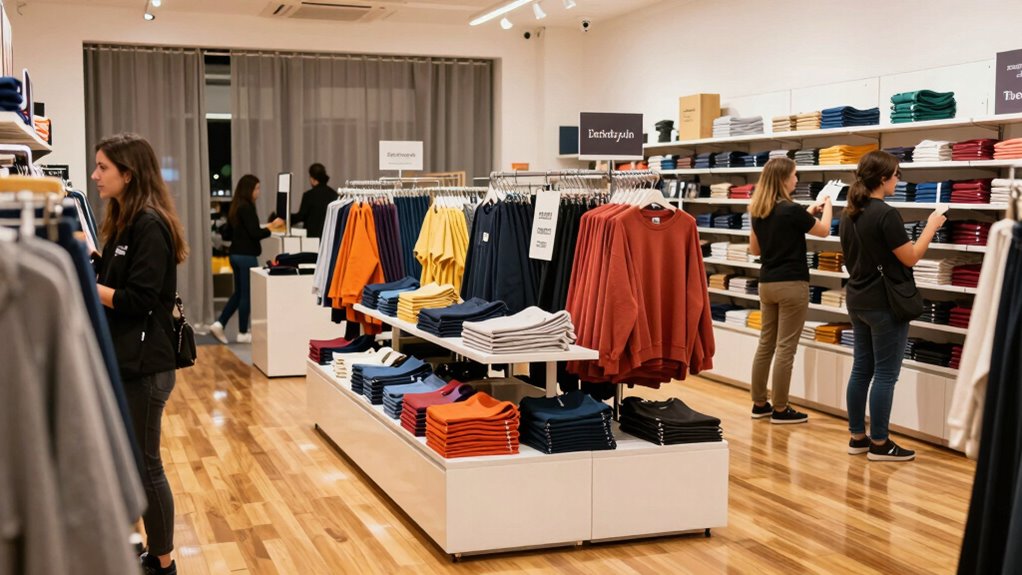

A soft opening lets you test your displays and customer engagement strategies before your busy October launch. Use this opportunity to see how customers interact with your setup, gather honest feedback, and make adjustments with minimal disruption. It helps you spot issues early, refine visual displays, and guarantee your staff are prepared. If you want to know how this trick can boost your success further, keep going to discover more tips and insights.
Key Takeaways
- Use a soft opening to evaluate and refine visual displays based on real customer reactions.
- Gather feedback to identify display issues and make adjustments before the grand launch.
- Train staff in customer engagement and merchandising techniques during the soft opening.
- Experiment with lighting, signage, and arrangements to optimize visual appeal and audience attention.
- Leverage insights from the soft opening to enhance displays and set the stage for October’s success.

A “soft opening” is a strategic move used by businesses to test their operations before a grand launch, but many overlook how effectively it can be used as a trick to manage customer expectations and generate buzz. When you plan a soft opening, you create an opportunity to refine your visual merchandising and boost customer engagement without the pressure of a full-scale launch. This approach allows you to observe how customers interact with your displays, products, and overall store environment, giving you invaluable insights into what works and what doesn’t.
By carefully curating your visual merchandising during this phase, you can subtly guide customer attention toward key products and create an inviting atmosphere. Think of your displays as silent salespeople—they’re the first thing customers see and can influence their perception of your brand. During a soft opening, you have the chance to experiment with different arrangements, lighting, and signage, adjusting them based on real customer reactions. This not only enhances visual appeal but also encourages customer engagement by making the shopping experience memorable and interactive.
Customer engagement is vital during this period because it helps you gather honest feedback and foster a sense of exclusivity. When customers realize they’re part of a select group testing out your offerings, they’re more likely to share their opinions and become loyal patrons. Use this time to train your staff to be attentive and personable, ensuring they understand the importance of creating a welcoming environment that invites conversation. Engaged customers are more likely to spread positive word-of-mouth, which can markedly amplify your buzz ahead of the official launch.
Moreover, a soft opening allows you to troubleshoot operational issues quietly. You might discover that certain displays aren’t working as planned or that your staff needs extra training to handle customer inquiries smoothly. These adjustments can be made with minimal disruption, preventing potential problems from escalating during a grand opening. The feedback you gather from this phase can also inform your future visual merchandising strategies, helping you craft displays that truly resonate with your audience.
In essence, leveraging a soft opening isn’t just about testing operations; it’s about fine-tuning customer engagement strategies and visual merchandising to maximize impact. When you treat this phase as an opportunity to learn and adapt, you set the stage for a successful grand launch that’s already backed by loyal, engaged customers and visually compelling displays. This strategic approach ensures your business steps into October with confidence, buzz, and a loyal customer base enthusiastic to see what’s next.
Additionally, understanding the importance of contrast ratio in your displays can significantly enhance the visual appeal and clarity, making your setup stand out even more.
Frequently Asked Questions
How Early Should I Start Testing My Display Before October?
You should start testing your display at least 4-6 weeks before October. This timing strategy allows ample opportunity for display calibration, ensuring colors and visuals look perfect. Early testing helps you identify and fix issues, avoiding last-minute stress. By giving yourself this buffer, you can fine-tune everything smoothly, making sure your display is fully optimized and ready for the busy season.
What Tools Are Best for a Soft Opening Display Test?
You should use versatile tools like adjustable lighting and modular display setups for your soft opening test. Lighting adjustments help you see how the display looks under different conditions, while layout flexibility allows you to reconfigure easily based on feedback. Use portable lighting kits, tape measures, and flexible display panels to experiment with arrangements. These tools let you refine your setup efficiently, ensuring it’s polished and attractive come October.
Can the Soft Opening Approach Be Used for Online Displays?
Yes, you can use the soft opening approach for online displays. Did you know that a well-executed virtual walkthrough can boost user experience by up to 30%? This method lets you gather feedback, identify issues, and make improvements before a full launch. By testing your online display with a soft opening, you make certain visitors get a smooth experience, increasing engagement and satisfaction right from the start.
How Do I Gather Feedback During the Soft Opening?
You gather feedback during the soft opening by actively engaging customers with surveys or quick questions about your display. Encourage honest opinions and note their suggestions for display adjustments. Use digital tools like comment cards or social media polls to collect insights easily. Pay close attention to what customers say, observe their reactions, and make quick display adjustments based on their feedback. This helps guarantee your display resonates well before the official opening.
What Common Mistakes Should I Avoid During Testing?
You should avoid common mistakes like neglecting visual alignment and inconsistent lighting during testing. Make certain your display elements are aligned properly to create a cohesive look, and check that lighting is uniform to avoid shadows or overly bright spots. Don’t rush the process—take time to review every detail. This helps you spot issues early, so your display looks professional and inviting when it officially opens.
Conclusion
Remember, a soft opening isn’t just about testing your display; it’s about embracing the vulnerability of imperfection before the big reveal. While the spotlight shines brightly in October, take solace in these small, quiet trials now. Just like a sunrise quietly heralds a new day, these subtle tests prepare you for the grand showcase ahead. Embrace the calm before the storm—behind every polished display lies the quiet strength of genuine preparation.